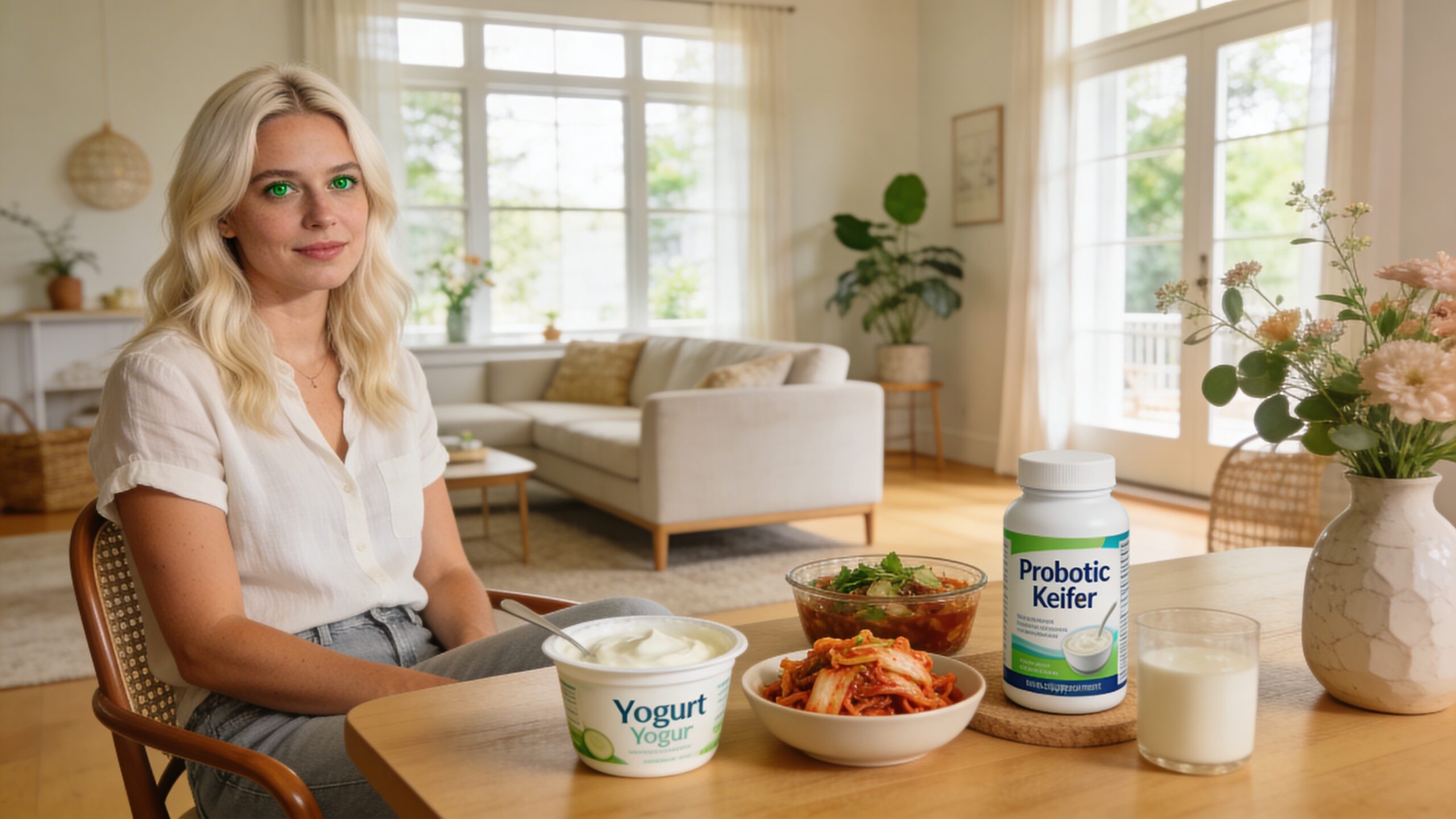
If your stomach often feels heavy, bloated, gassy, or simply “not right,” you are not alone. These are some of the most common digestive concerns today. Many people turn to probiotics as a simple daily option that may help support gut balance, digestion, and overall comfort without needing major lifestyle changes. Probiotics are often promoted for their potential role in supporting a healthy gut microbiome, improving regularity, and easing occasional digestive discomfort. However, their effects can vary from person to person, and they are not a quick fix. Understanding how they work and what they can realistically do is important before adding them to your daily routine.
What Are Probiotics?
Click here to visit the official website
Probiotics are live bacteria and yeasts that are intended to support health when consumed in sufficient amounts. They are found in some fermented foods and in dietary supplements. Most of their activity happens in the digestive tract, where they interact with the gut microbiome. Your gut microbiome is the large community of microorganisms living mainly in the intestines. It plays a role in digestion, gut barrier function, and how your body responds to food and microbes. That is why people are so interested in supporting it. In simple words, probiotics are often used to help support a healthier gut environment.
Table of Contents
Why Choose a Probiotic for Daily Digestive Support?
Not everyone takes probiotics; only those with major digestive disorders do. In fact, most people are simply looking for better day-to-day comfort.
Common reasons include:
- Occasional bloating
- Mild gas after meals
- Irregular bathroom habits
- Support after antibiotics
- General gut wellness
The NIH Office of Dietary Supplements says probiotics may help protect the digestive tract from harmful microorganisms, improve digestion and gut function, and possibly provide other health benefits. But those effects depend on the exact microorganisms in the product and how many of them it contains. That is the key point many buyers miss. A probiotic is not just “a probiotic.” The strain matters. The formula matters. And the reason you are taking it matters too.
Possible Benefits of Probiotics for Digestion
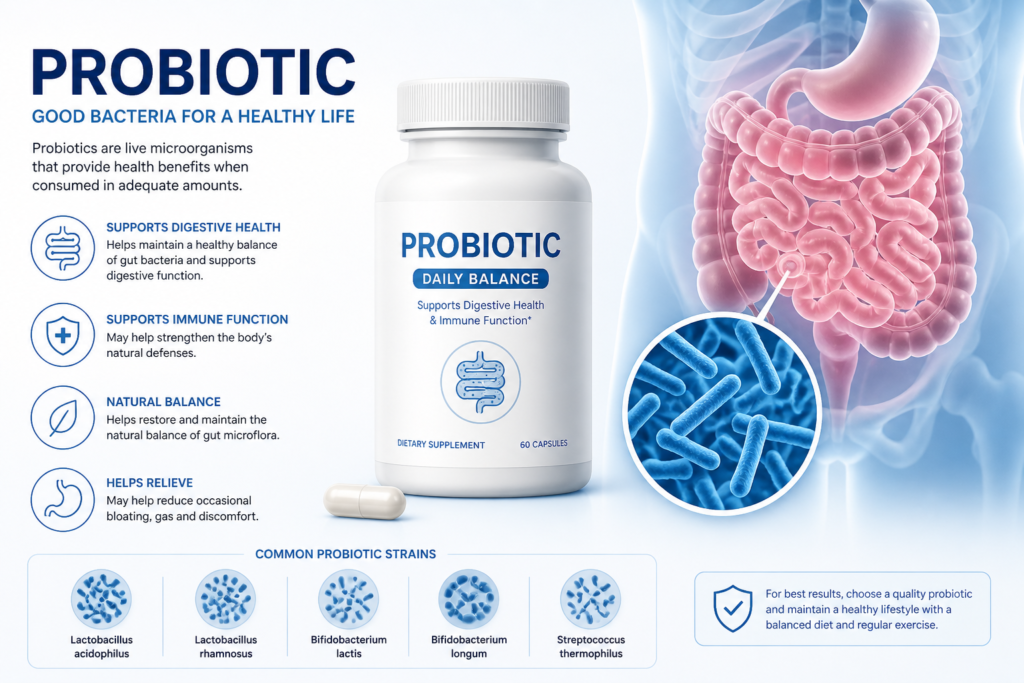
They may help support gut balance
Many things can affect the balance of microorganisms in the gut, including diet, travel, stress, illness, and antibiotics. Probiotics are often used to help support a healthier digestive environment.
They may help after antibiotics
One of the better-studied uses of probiotics is helping reduce the risk of antibiotic-associated diarrhea. The NIH notes that some probiotic strains may help, especially when started within 2 days of the first antibiotic dose.
They may help some people with mild digestive discomfort
Research suggests some probiotics may help certain digestive complaints, but results are mixed and not everyone responds the same way. NCCIH notes that researchers still do not know exactly which probiotics are helpful for which people in many situations.
They may be a convenient daily support tool
Some people prefer to get probiotics from food, while others prefer the convenience of capsules or powders. Supplements may be easier to use consistently and may offer strain-specific formulas that foods do not.
What Probiotics Can’t Do
This is important. Probiotics are not miracle pills. They may support digestive wellness, but they are not guaranteed to solve every gut problem. The evidence is promising in some areas, but still incomplete in others. NCCIH says probiotics have shown promise for various health purposes, but more research is needed to know which probiotics help which conditions. That means the smartest way to view them is this: Think of probiotics as a support tool, not a cure. If you have ongoing pain, blood in the stool, unexplained weight loss, persistent diarrhea, severe digestive symptoms, or magnesium deficiency, a supplement should not replace medical evaluation.
Who Might Benefit Most From a Daily Probiotic?
A daily probiotic may be worth considering if you:
- Want steady digestive support
- Deal with occasional bloating or gas
- Want support after antibiotics
- Do not eat many fermented foods
- Trying to build a more gut-friendly routine
For healthy people, probiotics are generally considered safe, but risks can be higher in people with severe illnesses or weakened immune systems. So for most healthy adults, a probiotic may be reasonable to try. For people with complex medical conditions, it is smarter to check with a clinician first.
Best Types of Probiotic Supplements for Daily Digestive Support
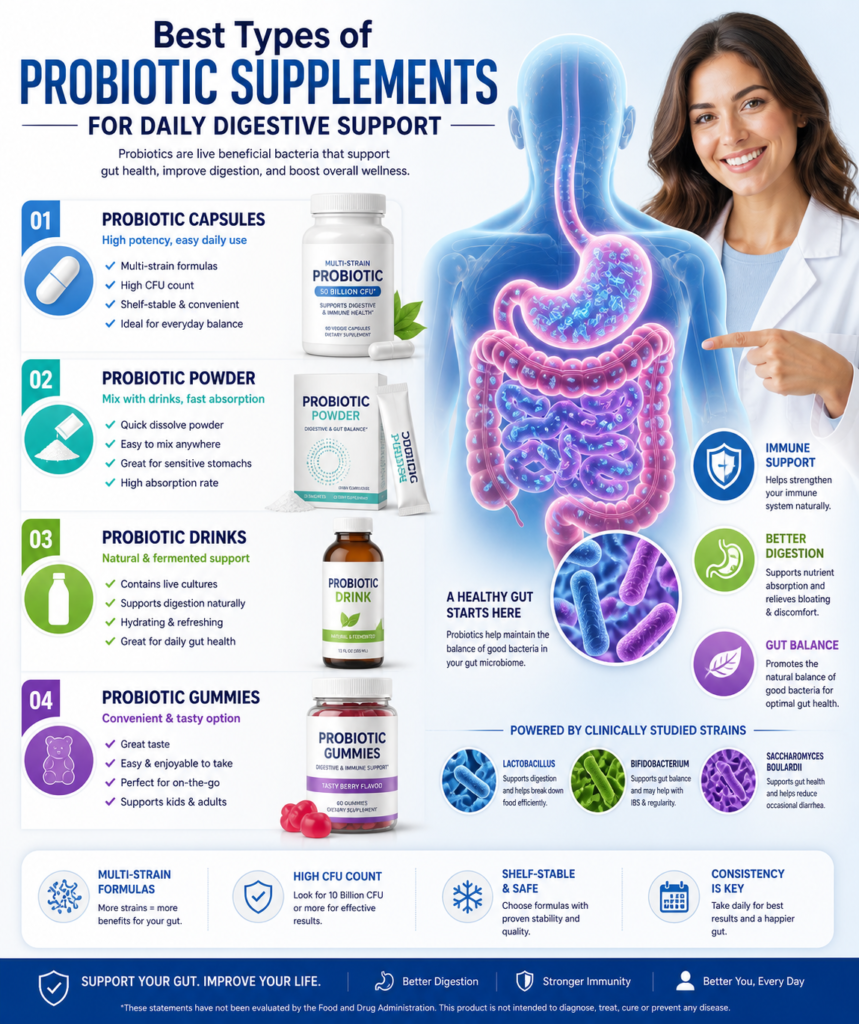
1. Broad-spectrum daily probiotics
These are the most common choices for general digestive support. They usually contain multiple strains and are marketed for bloating, gut balance, regularity, and everyday comfort.
2. Women’s probiotics
These products are often marketed for a mix of digestive and vaginal health support. They can become strong review or comparison content later.
3. Yeast-based probiotics
These are different from traditional bacteria-based probiotics. This is where a product like Florastor stands out because it uses Saccharomyces boulardii, a probiotic yeast with a specialized positioning.
4. Synbiotics
These combine probiotics with prebiotics. They are often marketed as a more complete gut-support approach because they include both the live microorganisms and the fibers that may help support them.
How to Choose the Right Probiotic Supplement
Look for named strains
A good product should tell you more than “contains probiotics.” The label should clearly identify the strains or at least the organisms used.
Do not chase CFU numbers alone
A very high CFU count sounds impressive, but NIH says higher CFU counts alone do not necessarily mean greater health benefits. What matters is the combination of strain and amount.
Choose based on your goal
Some products are made for:
- Daily digestive support
- Bloating and gas
- Use after antibiotics
- Women’s health
- Travel or regularity
The better the match between your goal and the product’s formula, the more likely it is to feel like a smart purchase.
Check storage and convenience
Some probiotics need refrigeration, while others are shelf-stable. If a supplement is hard to store or remember, you are less likely to use it consistently.
Review the full ingredient label
Look for:
- Transparent labeling
- Allergen information
- Added prebiotics
- Serving size clarity
- Brand trust signals
Can You Get Probiotics From Food?
Yes, and for some people, that is the best place to begin.
Common food sources of probiotics include:
- Yogurt with live cultures
- Kefir
- Sauerkraut
- Kimchi
- Miso
- Other fermented foods
Harvard Health notes that fermented or cultured dairy products are major sources of probiotics.
Food can be a smart first step, but supplements may make more sense if you want a strain-specific formula or a more consistent daily routine.
How Long Do Probiotics Take to Work?
There is no single answer. Some people notice a change within days. Others may need a few weeks. And some people do not notice much difference at all. That does not always mean the supplement is bad. It may simply mean:
- The strain is not a good fit
- The formula is too broad or too weak
- Your digestive issue has a different cause
A more realistic way to judge a probiotic is to ask:
- Do I feel less bloated?
- Am I more regular?
- Is my digestion more comfortable after meals?
- Do I feel better overall?
Are Probiotics Safe?
For many healthy people, yes, probiotics are generally considered safe. But they are not risk-free. NCCIH says probiotics have a long history of apparently safe use in healthy people, while also noting that the risk of harmful effects is greater in people with severe illness or compromised immune systems. Mild digestive side effects can happen at first, such as gas or stomach adjustment. Serious symptoms are not normal and should not be ignored.
The Best Way to Support Digestion Every Day
A probiotic works best when it is part of a bigger routine. That routine may include:
- Eating more fiber-rich whole foods
- Getting fermented foods when tolerated
- Limiting ultra-processed foods
- Sleeping well
- Managing stress
- Staying consistent with a supplement that matches your needs
Harvard Health also emphasizes the importance of dietary patterns, including fiber-rich foods and limiting heavily processed foods, for supporting the gut environment. In other words, the best probiotic plan is never just about a bottle. It is about the habits around it, too.
Conclusion
Probiotics can be a smart option for daily digestive support, especially for people who want help with general gut wellness, occasional bloating, or support after antibiotics. But the biggest mistake is assuming every probiotic is the same.
The better approach is to choose a product based on:
- Strain transparency
- Your digestive goal
- Practical daily use
- Clear labeling
- Overall brand trust
Trying to find the best probiotic for daily digestive support? Start with products that clearly list their strains, purpose, and serving details. In our next guides, we’ll break down beginner-friendly options, probiotics for bloating, women’s formulas, and side-by-side brand comparisons.
FAQ
Do probiotics help with daily digestion?
They may support digestion and gut function in some people, but results vary by the specific probiotic and the person using it.
Should I take probiotics every day?
Many probiotic supplements are designed for daily use, but the best choice depends on your digestive goals, the product formula, and how your body responds.
Are higher CFU probiotics better?
Not necessarily. NIH says higher CFU counts alone do not automatically mean better health benefits.
Can probiotics help after antibiotics?
Some strains may help reduce the risk of antibiotic-associated diarrhea, especially when started early.
What foods naturally contain probiotics?
Yogurt, kefir, and other fermented foods can contain probiotics.
References
Harvard Health, Probiotics and prebiotics: what’s really important.
NIH Office of Dietary Supplements, Probiotics Fact Sheet for Consumers.
NCCIH, Probiotics: Usefulness and Safety.
Harvard Health, The benefits of probiotic bacteria.
NIH ODS consumer PDF fact sheet.
Head of Editorial Team. Zainab Warraich, BBA, ICS.