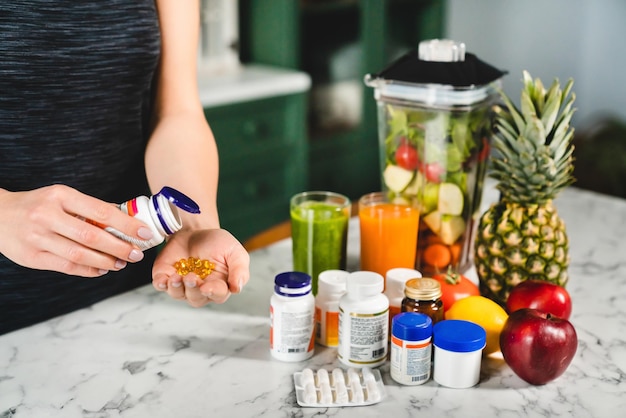
Enter any health shop, and what stands before you are the walls of the colorful bottles that promise unlimited energy to instant fat loss among others. It is too much, too many and can be very costly. So many daring assertions in it, how do you draw the necessary out of the gimmicks?
At Vitality Nexus, we are of the opinion to cut through the noise. This guide will make you see the supplements and vitamins as not magic pills but as a tool that can really work wonders to support your health in case it is used properly.
Supporting casts are the supplements as we talked about in our last Ultimate Fat Loss Guide. The stars of the show are your diet, exercise and lifestyle. On that basis, let us develop.
To begin with, The Golden Rule: Food First.
Then it is essential to realize the fact that Supplements are referred to as such before we jump into bottles and powders. They are not made to substitute a healthy diet but to complement it.
Whole foods contain a rich combination of nutrients, fiber and phytonutrients that interact in a complex manner that cannot be duplicated by a single pill. Imagine a healthy meal with colorful vegetables, fruits, low-protein foods, and whole grains as the base of your health. It is then possible to fill certain gaps or meet certain needs that your diet may not meet by the use of supplements.
The Must-Know Supplements: Do You Need Them?
Although needs are different, some of these supplements have solid science support among the general population.
The Vitamin D: The Sunshine Vitamin.
It is also approximated that more than 40 percent of the adult population can be deficient. Vitamin D plays a vital role in the health of the bones, the immune system and mood stability. And since you live in the north, or spend the majority of your time indoors, or wear sunscreen all year round (that is good in skin cancer prevention!), you may need a supplement. One blood test would determine your levels.
Omega-3 Fatty Acids: Heart And Brain.
Omega-3s (EPA and DHA) are found in fatty fish such as salmon and they are powerful anti-inflammatories. They are beneficial in cardiovascular health, brain functionality and even mood. Unless you consume fish twice a week, a good fish oil or supplement made of algae is a good option.
Magnesium: The Relaxation Mineral.
There are more than 300 biochemical reactions in your body which involve magnesium such as in muscle activity, sleep and stress. Most of us are small through soil erosion and stress. An antidepressant like magnesium glycinate taken at bedtime can become a game-changer in relaxation and sleep quality which is one of the major pillars we discussed in our Mental Health and Wellness category.
Protein Powder: The Convenience Builder.
Protein is important as a source of satiety and muscle maintenance as pointed out in our fat loss article. An excellent plant or whey protein powder is just an easy method to achieve your daily protein goals, particularly following some exercise or a hectic day.
How to Spot Quality: Reading Beyond the Label.
The supplement industry is huge and quality can be a significant deviation. This is the way to be a smart consumer:
Seek Third-Party Testing: Brands that invest in third-party testing by a company such as USP, NSF International or ConsumerLab.com demonstrate a quality concern. Their labels indicate that the product is what the label claims and it is not dangerous in that it does not have harmful contaminants.
Read the Labels: Do not be fooled by the front of package claims. Turn the bottle inverted and look at the Supplement Facts panel. Check the real chemical names (e.g. instead of magnesium oxide, it is better magnesium glycinate).
Watch out on the Megadooses: Sometimes more is not better. Fat-soluble vitamins (A, D, E, K) are also easily accumulated in your system and toxic. Pharmacists recommend taking doses of approximately 100 percent of the Daily Value unless prescribed otherwise by a physician.
Study the Brand: Within a couple of clicks by typing the brand name with the word review, one can learn a lot about a company and its reputation.
Specific Goals Supplements.
The selection of supplements must be according to personal health objectives.
For Energy and Vitality
When you are always feeling fatigued, it is not necessarily a stimulant. B-Complex vitamins may also be essential in the transformation of food into energy. Other usual culprits of fatigue include Iron (in women) and Vitamin D. Then sustainable energy is also constructed on the good Lifestyle and Productivity habits such as sleep and stress management.
For Immune Support
Along with Vitamin D, Vitamin C and Zinc are not introduced because they are so old-fashioned. Zinc is needed in the growth of immune cells, and Vitamin C is an effective antioxidant. The immunity is also massively supported by a diet containing a high amount of fiber and fermented foods that help to promote a healthy gut.
For Joint and Bone Health
Joint health takes precedence as we age or as we turn more active. Popular options include Glucosamine and Chondroitin but research is inconclusive. A combination of Calcium and Vitamin D has continued to be the foundation of bone density particularly among postmenopausal women. This should always be combined with weight-bearing exercise as we talked about in our Health and Fitness section.
Safety First: Contacts and Measures.
This is the most important section of a supplement manual.
- Talk to Your Doctor: It is always, always important to consult with your health care provider before you begin taking a new supplement, more so when pregnant, on the breast, taking prescription drugs, or have a pre-existing condition. As an illustration, St. John’s Wort has the ability to disrupt birth control and Vitamin K is likely to interact with blood thinners.
- Take Just One Source: Do not use several supplements with similar substances like they may cause unwelcome overdose.
- Take Time: Supplements do not act like drugs. It can take weeks or months of regular use before you can have a visible impact of their effect on the nutrient contents of your body.
Your Supplement Checklist
Are you going to have a smart journey in the world of supplements and vitamins? Use this checklist:
- Determine Your Need: What is your reason for taking a supplement? (e.g., lack of energy, insomnia, dietary restriction)
- Test, Don’t Guess: Have a blood test to determine whether there are actual deficiencies or not.
- See a Professional: See your physician or a registered dietitian.
- Research the Brand: Select a company that is well known and one that utilises third-party testing.
- Begin with Less: GM Start with one supplement at a time to monitor your response.
- Reevaluate Periodically: The needs will vary with time. This should be periodically checked whether you still need your supplements.
Our mission at vitality nexus is to enable you by providing knowledge to make informed decisions. Supplements may be amazing benefits to your wellness path, yet they are most effective when used well, safely and as a supplement to good nutrition, exercise and a healthy mind.
To keep up with all the recent studies and news on what is going on in the wellness world, check our Health News Updates.