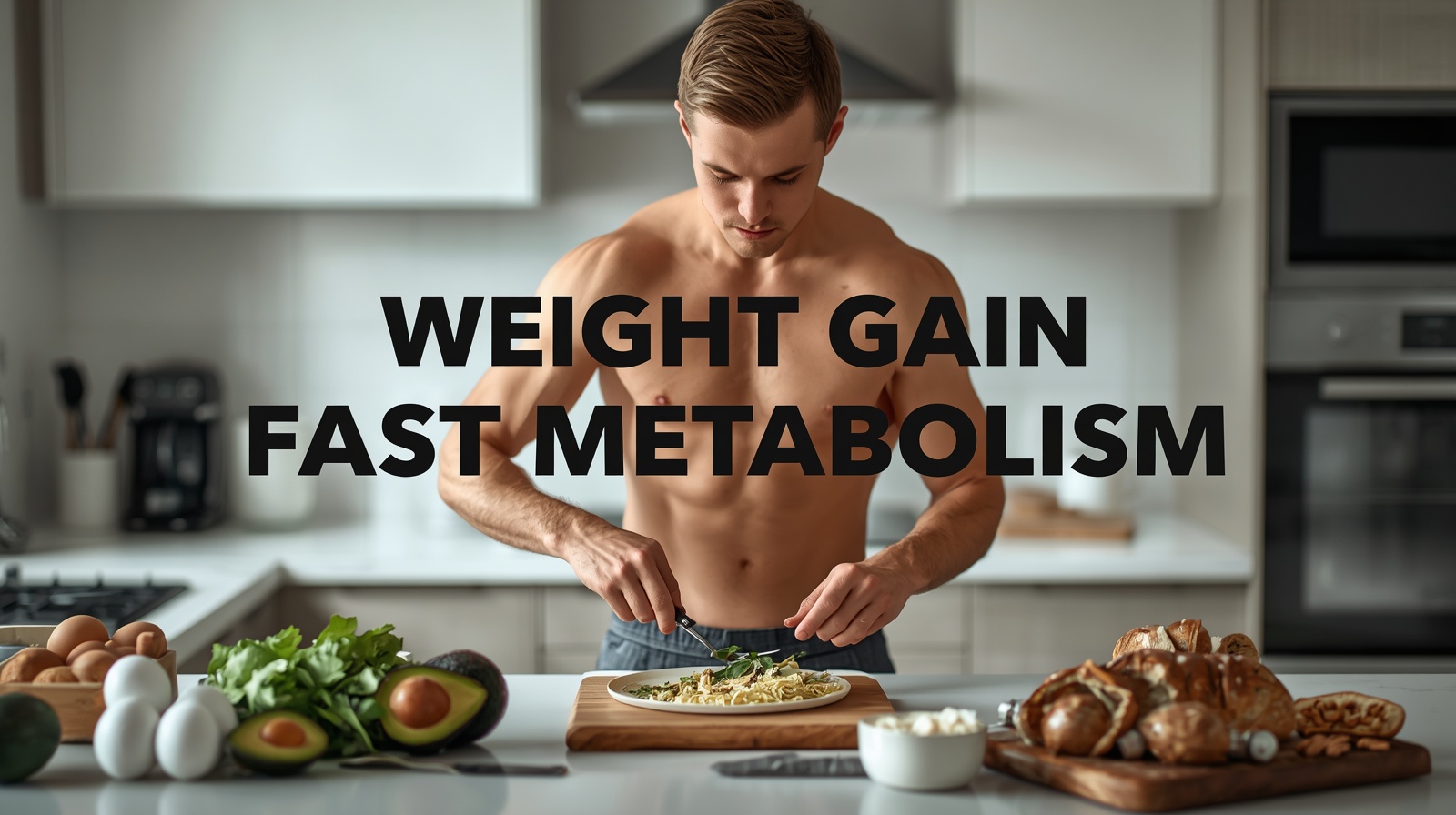
If you have a fast metabolism, then you understand that you need to gain weight. If you have a fast metabolism, then you know that you’re not going to gain weight by chance, but you have to.
Introduction
For most people, losing weight is a lifelong process. For many people, however, it’s the exact opposite of that and just as harsh. People with a fast metabolism tend to eat all the time, not gain weight, and feel hungry all the time. Others may be jealous of you, but for some, weight gain with a fast metabolism can be very frustrating and physically draining.
Chronic underweight can be a health problem, too, as poor bone density, hormonal imbalance, low energy, and weak immunity are all risks of being underweight. It’s not only about consuming more junk food to gain weight if you have a fast metabolism. It takes a smart, strategic, and consistent approach.
In this guide, you’ll discover exactly why your body is not gaining weight, what science actually suggests for gaining muscle on a high metabolism, and the exact steps that you must take to finally get scale and mirror results without compromising your diet or exercise routine.
Table of Contents
The reason why fast metabolism makes it hard to gain weight.
Metabolism is the total of the metabolic processes that take place in the body to obtain energy from food. A high metabolism just implies that you do these things more rapidly, and so burn more calories than someone with an average metabolism.
It would seem like a good thing. To be honest with you, it is in some aspects. But if you’re looking to gain weight, a fast metabolism can pose a challenge.
To put on weight, you need to eat more calories than your body uses, known as a caloric surplus. An extra 250-500 calories per day is a healthy amount of weight gain for most people. However, if your body requires 500-1,000 more calories than the average person’s daily, it is really difficult to get that amount of calories, particularly if you’re not feeling hungry, or if you want more food and calories than your body needs.
There’s another term called adaptive thermogenesis, which means that the body burns more calories when it consumes more food. This adaptation is more common in individuals who have a high metabolism. The more you eat, the more the body will “speed up” the more, and so on.
Also, fast metabolism individuals tend to have small appetites in comparison to their body’s nutritional requirements. They can get full easily, have difficulty with eating big meals, or not eat enough food during the day.
It is important to take the first step in defeating these facts of biology, which is to know them.

Does Your Metabolism Work Too Fast? Key Signs
First, it’s important to establish that it is truly your metabolism that’s the problem, and not that you’re just not eating enough without knowing it (which is a problem that many people face, but few would admit to).
The true signs of a fast metabolism are:
- Weight loss or failure to gain weight, even though eating a lot of food
- Always hungry, hungry again, soon after eating
- Receiving frequent exposure to cold – when you feel cold, you do it often!
- Restlessness or high energy levels most of the time.
- Regular defecation, food passes through digestion system rapidly
- Do not intentionally limit calories, but rather stay thin naturally
- Fast resting heart rate (HR >80 when not doing physical activity)
- Quick recovery from exercise with little soreness.
If you have one or more of these, you probably have a quick metabolism, which is why it’s hard for you to gain weight.
If your symptoms of a fast metabolism are severe, however, especially if you have a fast heart rate, you are hot, you sweat a lot, and you are experiencing anxiety for no apparent reason, it is important to rule out an underlying hypermetabolism or hyperthyroidism. Check out our comprehensive hypermetabolism symptoms guide to learn when a fast metabolism becomes medical.
How many calories do you really require?
It’s the most significant question you’ll ever ask regarding a weight gain diet for a fast metabolism, and most people vastly underestimate the answer.
Eating more than your Total Daily Energy Expenditure (TDEE) is the key to weight gain. The TDEE can be quite high for a person with a high metabolism.
A sedentary person may have an average metabolism of 1,800-2,200 calories per day. A person who is active and has a quick metabolism may burn 2800 to 3500 calories a day, or more. In this case, a person needs to increase their eating by 3,000 to 4,000+ calories per day to gain weight.
Many people trying to gain weight with a high metabolism aren’t consuming 2,000 to 2,500 calories, which is below your needs, but rather a lack of calories. They think that they’re eating a lot, but they’re not.
Most people find it very rewarding to be honest about what they are eating even for seven to 14 days. Before making other changes, use the tools below to estimate how much you really need.
Visit our Tools page to determine your needs.
Maintaining a proper calorie balance is crucial to achieving weight gain. They are all free and take the hard work off your shoulders.
Use the calculator to determine your BMR.
BMR is the number of calories burned when your body is totally at rest. The number may be much higher than average in fast metabolizers. Use our BMR Calculator to determine your personal baseline this is your starting point for all things!
Let’s determine your total daily energy expenditure (TDEE).
Your TDEE is based on your daily activity level plus your BMR. It’s the amount of calories required to keep your weight where it is. If you want to put on weight, then you must consume foods that are above this number. Use our TDEE Calculator to calculate your personalized TDEE.
👉 Set Your Calorie Target for Weight Gain
If you know your TDEE, then increase it by 300-500 calories to gain lean mass and 500-750 calories for accelerated but controlled weight gain. Thanks to our Calorie Calculator, create your own daily calorie goal.
👉 Find Your Ideal Weight Target
With a healthy weight range, you have a target to aim for. Take advantage of our Ideal Weight Calculator to calculate a healthy and realistic ideal weight for all of you, depending on your height and frame.
👉 Track Your Body Composition
Weight gain is not a matter of pounds and pounds; it’s about gaining muscle, not fat. Track your body fat composition over time with our Body Fat Calculator and make sure your body fat gains are healthy!

Healthy foods that work for rapid weight gain in a high metabolism.
The quality and calorie density of food are important when the body is burning calories fast. Don’t just think “one for the size of your mouth,” you need foods that fit in your mouth and deliver maximum nutrition and calories.
Calorie-Dense Whole Foods
These are the basic elements of a successful weight gain program for rapid metabolizers:
- Nuts and nut butters (almonds, cashews, peanut butter, almond butter). Peanut butter is found in 2 tablespoons, which contains almost 200 calories.
- One avocado contains approximately 300 calories, which is due to the healthy monounsaturated fats it contains.
- Whole eggs are a complete protein and provide approximately 70-90 calories per egg, with healthy fats.
- Fatty fish is salmon, mackerel, and sardines; They are sources of protein, omega-3 fatty acids, and contain 200 to 300 calories per serving.
- Full-fat dairy is high in calories and protein, including whole milk, Greek yogurt, cheese, and kefir.
- Olive oil and coconut oil Use for cooking and meals to help add calories (120 calories per tablespoon)
- Dried fruit: raisins, dates, apricots. High-calorie snack foods are foods that are easy to eat and have a high calorie content.
Whole grains, such as brown rice, oats, quinoa and breads made from whole grains, are a source of complex carbohydrates and sustained energy.
The reason why fast metabolism makes it hard to gain weight.
Metabolism is the total of the metabolic processes that take place in the body to obtain energy from food. A high metabolism just implies that you do these things more rapidly, and so burn more calories than someone with an average metabolism.
It would seem like a good thing. To be honest with you, it is in some aspects. But if you’re looking to gain weight, a fast metabolism can pose a challenge.
To put on weight, you need to eat more calories than your body uses, known as a caloric surplus. An extra 250-500 calories per day is a healthy amount of weight gain for most people. However, if your body requires 500-1,000 more calories than the average person’s daily, it is really difficult to get that amount of calories, particularly if you’re not feeling hungry, or if you want more food and calories than your body needs.
There’s another term called adaptive thermogenesis, which means that the body burns more calories when it consumes more food. This adaptation is more common in individuals who have a high metabolism. The more you eat, the more the body will “speed up” the more, and so on.
Also, fast metabolism individuals tend to have small appetites in comparison to their body’s nutritional requirements. They can get full easily, have difficulty with eating big meals, or not eat enough food during the day.
It is important to take the first step in defeating these facts of biology, which is to know them.
Does Your Metabolism Work Too Fast? Key Signs
First, it’s important to establish that it is truly your metabolism that’s the problem, and not that you’re just not eating enough without knowing it (which is a problem that many people face, but few would admit to).
The true signs of a fast metabolism are:
- Weight loss or failure to gain weight, even though eating a lot of food
- Always hungry, hungry again, soon after eating
- Receiving frequent exposure to cold – when you feel cold, you do it often!
- Restlessness or high energy levels most of the time.
- Regular defecation, food passes through digestion system rapidly
- Do not intentionally limit calories, but rather stay thin naturally
- Fast resting heart rate (HR >80 when not doing physical activity)
- Quick recovery from exercise with little soreness.
If you have one or more of these, you probably have a quick metabolism, which is why it’s hard for you to gain weight.
If your symptoms of a fast metabolism are severe, however, especially if you have a fast heart rate, you are hot, you sweat a lot, and you are experiencing anxiety for no apparent reason, it is important to rule out an underlying hypermetabolism or hyperthyroidism. Check out our comprehensive hypermetabolism symptoms guide to learn when a fast metabolism becomes medical.
Healthy foods that work for rapid weight gain in a high metabolism.
The quality and calorie density of food are important when the body is burning calories fast. Don’t just think “one for the size of your mouth,” you need foods that fit in your mouth and deliver maximum nutrition and calories.
Calorie-Dense Whole Foods
These are the basic elements of a successful weight gain program for rapid metabolizers:
- Nuts and nut butters (almonds, cashews, peanut butter, almond butter). Peanut butter is found in 2 tablespoons, which contains almost 200 calories.
- One avocado contains approximately 300 calories, which is due to the healthy monounsaturated fats it contains.
- Whole eggs are a complete protein and provide approximately 70-90 calories per egg, with healthy fats.
- Fatty fish is salmon, mackerel, and sardines; They are sources of protein, omega-3 fatty acids, and contain 200 to 300 calories per serving.
- Full-fat dairy is high in calories and protein, including whole milk, Greek yogurt, cheese, and kefir.
- Olive oil and coconut oil Use for cooking and meals to help add calories (120 calories per tablespoon)
- Dried fruit: raisins, dates, apricots. High-calorie snack foods are foods that are easy to eat and have a high calorie content.
Whole grains, such as brown rice, oats, quinoa and breads made from whole grains, are a source of complex carbohydrates and sustained energy.
High-Quality Protein Sources
Protein is necessary to create muscle tissue the healthiest type of weight gain. The protein for fast metabolizers should be 1.6 to 2.2 g/ kg/ day.
Some of the best sources of protein are:
- Lean beef and poultry is a good choice.
- Eggs and egg whites
- Cottage cheese and ricotta
- Legumes such as lentils, chickpeas and black beans
- Whey or casein protein powder (for easy calorie and protein additions)
- For plant-based options, tofu and tempeh are great choices.
- Healthy, Calorie-Rich Carbohydrates
Carbohydrates replenish Glycogen stores and provide energy for training. Carbohydrates are your friend for weight gain, particularly when it comes to working out.
- Sweet potatoes and normal potatoes
- Brown rice, white rice (after exercising)
- Oats and granola
- Bananas and mangoes (which contain more calories than other fruits)
- Whole-grain pasta and breads
The secret is to include calories from a combination of high-energy carbohydrates, proteins and fats in each meal to build up calories without overloading the stomach.
If you are a fast metabolizer, use the following meal planning strategies:
It’s not enough to know what to eat; you should also learn how to prepare it. It’s not just what you ate, but also when and how you ate it.
Eat Every 2.5 to 3 Hours
Most people with high metabolisms who want to put on weight need more than 3 meals per day. Try to get 5 – 6 meals and snacks throughout the day. This ensures a constant flow of food and calories to the body and helps to avoid the catabolic (muscle-wasting) state, which fast metabolizers fall into between meals.
The following is an example daily eating plan:
- 7:00 AM Breakfast: 3 whole eggs, 2 slices whole grain toast with avocado, a glass of whole milk
- 11:40 AM Snack: Snack, Handful of mixed nuts, banana, Greek yogurt
- 1:00 PM Lunch: Large chicken breast, 1.5 cups brown rice, roasted vegetables, olive oil
- 5:15 PM Snacks or meal: Peanut butter and whole grain bread; apple
- After exercising: Whey protein with Whole milk and Banana
- 8:00 PM Dinner: Salmon fillet, sweet potato, steamed broccoli with olive oil
- 10:00 PM Even snack: Cottage cheese with walnuts and honey
This creates 7 eating opportunities throughout the day, which ensures your body remains in a continual building mode (anabolic).
Don’t skip breakfast! Don’t pass over breakfast!
Fast metabolizers need breakfast the most. The body is in a mild catabolic state after 7-9 hours of sleep. Eating this kind of breakfast really tells the body that it’s time to get building!
Prioritize Liquid Calories
Solid food is filling and fast to eat. Liquid calories are calorie-for-calorie not they are a great option for people with fast metabolism and poor appetite. One of the best tools at their disposal is high-calorie smoothies.
The ingredients of a simple weight gain smoothie may consist of: 2 cups of whole milk, 2 tablespoons of peanut butter, 1 banana, 1 cup of oats, 1 scoop of protein powder, and 1 tablespoon of honey. In a mere 1 smoothie, you can fill up on 800-1,000 calories with little volume.
Eat Before Bed
A meal that is low in protein and fat, but high in amylase substrates, before bedtime will aid in muscle repair during sleep while helping to minimize the catabolic response to the overnight fast. Ideal pre-sleep foods are cottage cheese with walnuts, greek yogurt with almonds or a casein protein shake.

Strength Training: The missing part.
While in a caloric excess without resistance training, it’s primarily fat building up, not muscle. Strength training will help focus the extra calories into the growth of lean muscle mass, which is the type of weight to gain that is healthful, attractive, and performance-enhancing.
Work on compound movements. Practice compound movements.
Compound exercises involve multiple muscle groups and elicit the highest hormonal response (testosterone and growth hormone) that is responsible for building muscle. Prioritize:
- The squat is definitely the most significant lower-body exercise.
- Deadlifts are a total body strength and mass builder.
- Bench press – chest, shoulders, and triceps
- The overhead press will help to build your shoulders and upper body.
- This exercise is essential for building thickness and general mass in the back. Barbell rows – back thickness and overall mass
- Pull-ups or Chin-ups – back width and biceps
- Progressive Overload is a must!
Progressive overload is the gradual and progressive increase in the demand placed on the muscles over time whether it’s increased weight, increased repetitions, or decreased rest between sets. Not progressive overload, muscles don’t grow. Log your lifts and strive to improve gradually each week.
This is a training program that lasts for 3-5 days per week.
High-intensity cardio exercises are too intense for fast metabolizers, as they can actually hinder weight gain efforts. Do not do excessive cardio (such as running) and concentrate most of your workout on resistance training. Check out the article on morning vs night walks for weight loss to learn how to easily add light cardio without compromising your caloric surplus.
Allow Adequate Recovery
Muscles DO NOT build during workout, only when rested. If you are a fast metabolizer, and you may have a high level of cortisol or nervous system activity, recovery becomes even more critical. Get 1 or more complete rest days between workouts for the same muscle group.
The most important supplements to help gain weight.
Although the food is always the priority, some supplements can be helpful in achieving weight gain for a quick metabolism, provided they are used appropriately.
Creatine Monohydrate
Creatine is the best-studied and most effective supplement for enhancing muscle strength and size. It takes water to the muscle cells, enhances energy supply during intense exercise, and has repeatedly demonstrated to promote lean mass increase. This is the regular dosage, between 3 and 5 grams a day.
Whey Protein
As a complete protein, whey protein is quickly absorbed and easy to digest, making it easier to get your daily protein especially after exercise. It’s not a magic pill, but it’s handy for those with fast metabolisms who can’t consume adequate amounts of whole food protein in their diet.
Casein Protein
Casein is a slow-digesting protein that is great to eat before bed. It offers a prolonged amino acid release of 6-8 hours, so helping to minimise the overnight catabolic state, which fast metabolisers are at great risk of experiencing.
Magnesium
Magnesium has a variety of benefits, including helping the body with muscle function, nervous system regulation, protein synthesis and sleep quality. The higher sweat rates and metabolic rates of the fast metabolizers increase rates of magnesium depletion. To pick the right form of magnesium consult our complete guide on 7 types of magnesium and their benefits.
Vitamin D3 and K2
Vitamin D3 actually helps to boost lean muscle mass and testosterone production, both of which are vital to weight gain. K2 helps calcium to be deposited in bones not arteries. For more detailed information, read our article about the benefits of vitamin D3 and K2.
Omega-3 Fatty Acids
Omega-3s lower muscle protein breakdown, promote anabolic signaling, and decrease exercise-induced inflammation all of which contribute to better muscle-building. Learn more about the benefits of omega-3 fatty acids and where they can be found.
To learn more about other supplements for health and body composition, look at our nutrition and supplements category.
Other factors of lifestyle that can impact weight gain.
There are two key factors for gaining weight: nutrition and training. However, there are a number of lifestyle habits that can help speed up or hinder your results.
Sleep Is Non-Negotiable
Most recovery and growth hormone production takes place during REM sleep. Sleeping less than 7 hours on a regular basis causes a marked decrease in muscle protein synthesis and an increase in cortisol (a hormone that contributes to muscle breakdown).
Get your perfect sleep routine with our Sleep Calculator by taking into account your natural sleep cycles.
Manage Stress
A chronic stress will increase cortisol levels, which in turn will actively dissolve muscle tissue and stimulate fat storage. Extremely high levels of stress for a fast metaboliser who is already in a catabolic state can negate even the best nutrition and training. To learn about the effects of stress hormones on body composition, read our article on low cortisol vs high cortisol.
Reduce Unnecessary Cardio
High intensity cardio like running, cycling, and other activities expend a lot of calories, making it more challenging to maintain a positive calorie balance. This is not to say that there’s a need to avoid any form of cardiovascular exercise. Walking, swimming or yoga are okay. Long cardio sessions, however, are counterproductive when it comes to weight gain for a fast metabolism.
Limit Alcohol
Alcohol lowers T levels, decreases protein building, hampers sleep quality, and is burned off before macronutrients all of which make it harder to build muscle.
Stay Consistent
This is likely to be the most important lifestyle factor. If you have a quick metabolism, it takes time to put on weight, at least months, and not weeks. With good eating and training, results will not come in less than 6-8 weeks. Skipping meals, skipping exercise, or stress-eating garbage will stop progress in no time.
Common weight gain hindering errors and how to avoid them.
These are common mistakes that even the best-intentioned individuals with high metabolisms can make:
Mistake 1: Mistakenly underestimate calorie requirements.
The one most frequent error. Most fast metabolizers eat what feels like a lot but is still below their actual TDEE. But remember to always determine your TDEE and then honestly monitor your calories before thinking you are getting enough.
Mistake 2: Consuming poor food quality, low calorie foods.
The large amounts of salad, lean chicken breast, and vegetables are great for weight loss, but not weight gain. Calorie density matters. Eat foods that are high in nutrients and calories, as listed above.
Mistake 3: Skipping Meals
After several hours of fasting, the fast metabolism gets into a catabolic state, which means breaking down of muscle as fuel. Do not skip meals – particularly breakfast and night meal.
Mistake 4: Doing Too Much Cardio
A lot of people do excess cardio along with their weight gain routine because they are afraid of getting fat or they do it just because they are used to it. This is counterproductive. Reduce the amount of cardio and focus on resistance training.
Mistake 5: Not using Progressive Overload when training.
When one consumes a caloric excess, without a planned strength training program, one is primarily gaining fat. The additional calories go to muscle tissue when the workout is progressive resistance training.
Mistake 6: Thinking of getting things done quickly.
Healthy, lean weight gain is a slow process even with optimal nutrition and training. For natural lifters, an average of 0.5 to 1 kg (1 to 2 pounds) of lean mass gained per month is realistic. Procrastination is the result of impatience, which results in the departure from a good plan at an early stage.
Mistake 7: Ignoring Hormonal Health
There are a lot of hormonal reasons behind why it may be difficult to gain weight, even when eating right, such as low levels of testosterone, thyroid malfunction, etc. If all efforts are made and no gain is observed, it is worthwhile to perform a hormone test. For more information on low testosterone symptoms in men, read our article.
When to visit a Doctor
Having a fast metabolism is sometimes just a matter of genetics, but there are circumstances where a medical evaluation is necessary:
- Weighing down even though consuming a lot of food, not maintaining
- Have heart palpitations, sweat, or shaking in addition to problems losing weight
- You feel fatigued, anxious, or have a poor sleep pattern for some reason.
- As a woman, you have irregular or absent periods.
- You’ve lost a lot of weight over a short period of time, but not on purpose.
You have done the right training and eating program for 3-4 months, and still haven’t seen the expected results!
The signs could signal hyperthyroidism, malabsorption disorders such as Crohn’s disease or other metabolic disorders. An accurate diagnosis and elimination of medical causes can be obtained from a doctor. As a reference, check out an article about Crohn’s disease symptoms, causes, and treatment, a common cause of difficulty in gaining weight because of malabsorption.
FAQ Weight Gain For Fast Metabolism
Why can’t I gain weight even though I eat a lot?
The most common explanation is that you are still eating fewer calories than you need – and you do need more calories than the average person, since you are a person with a quick metabolism. Get a precise estimation of your TDEE and record what you eat truthfully for 7-14 days. Most people are surprised to discover they’re consuming much less than they believe.
How many calories do I need to consume to put weight on if I have a high metabolism?
Use our TDEE Calculator to determine your TDEE and then add 300-500 calories over your TDEE to slowly add lean muscle mass. Fast metabolizers require 3,000-4,500 calories or more to create a calorie surplus.
What is the quickest method to increase weight on a high metabolism?
The best strategy is: 400 to 500 calories above TDEE, 1.6 to 2.2g of protein per kg of body weight, progressive overload and resistance training, creatine supplementation, and 7 to 9 hours of good sleep each night.
Any supplements for weight gain for fast metabolism?
Creatine monohydrate has the most research supporting it for lean mass improvements. Whey and casein protein powders are easier to use to reach calorie and protein goals. Magnesium, vitamin D3, and omega 3 fatty acids help to ensure the hormonal and physiological conditions that promote muscle growth.
Is it possible to slow down the metabolism?
To a degree, yes. Muscle is a metabolically active tissue that takes more maintenance calories, and thus a natural boost in muscle mass will increase the calories you burn while you are at rest which helps you gain weight. Strength training has little effect on slowing down metabolism but alters the energy expenditure. Consistent eating and not going on extended energy deficits also stop the body from accelerating additional metabolism by adaptive thermogenesis.
Do you believe that a high metabolism is damaging to your health?
It’s not a bad thing to have a fast metabolism. But having a fast metabolism (which can cause chronic underweight) can have serious health problems, such as bone loss, hormone imbalance, poor immunity, and heart problems. Even if a person is not particularly active, it is important for him/her to control their weight intentionally by nutrition and training.
How long will it take if you have a fast metabolism?
Most people are able to see results in 6-10 weeks if they are doing the right amount of calories, training correctly, and getting enough sleep. Noticeable muscle changes require 3-6 months of regular effort. Patience and consistency are the two most important variables.
Conclusion
It’s true that with a fast metabolism, it’s hard to gain weight, but it’s still doable. There are no difficult concepts; enforce the following rules: Consume more calories than expended, focus on protein and calories-rich whole foods, train with progressive resistance, sleep well, reduce stress, and be consistent over time.
Don’t underestimate the number of calories you need. Stop skipping meals. Cut down on excessive cardio practice. And begin to use real data – your BMR, TDEE, and body composition to create a plan that reflects your true physiology.
Take advantage of the complimentary tools on Vitality Nexus to determine your own goals, dive into our health and fitness section for even more detailed instructions, and check out our nutrition and supplements section to create a supplement stack for your goals. Your Body’s Metabolism may be high but it’s not that high, when you have an effective and consistent plan.