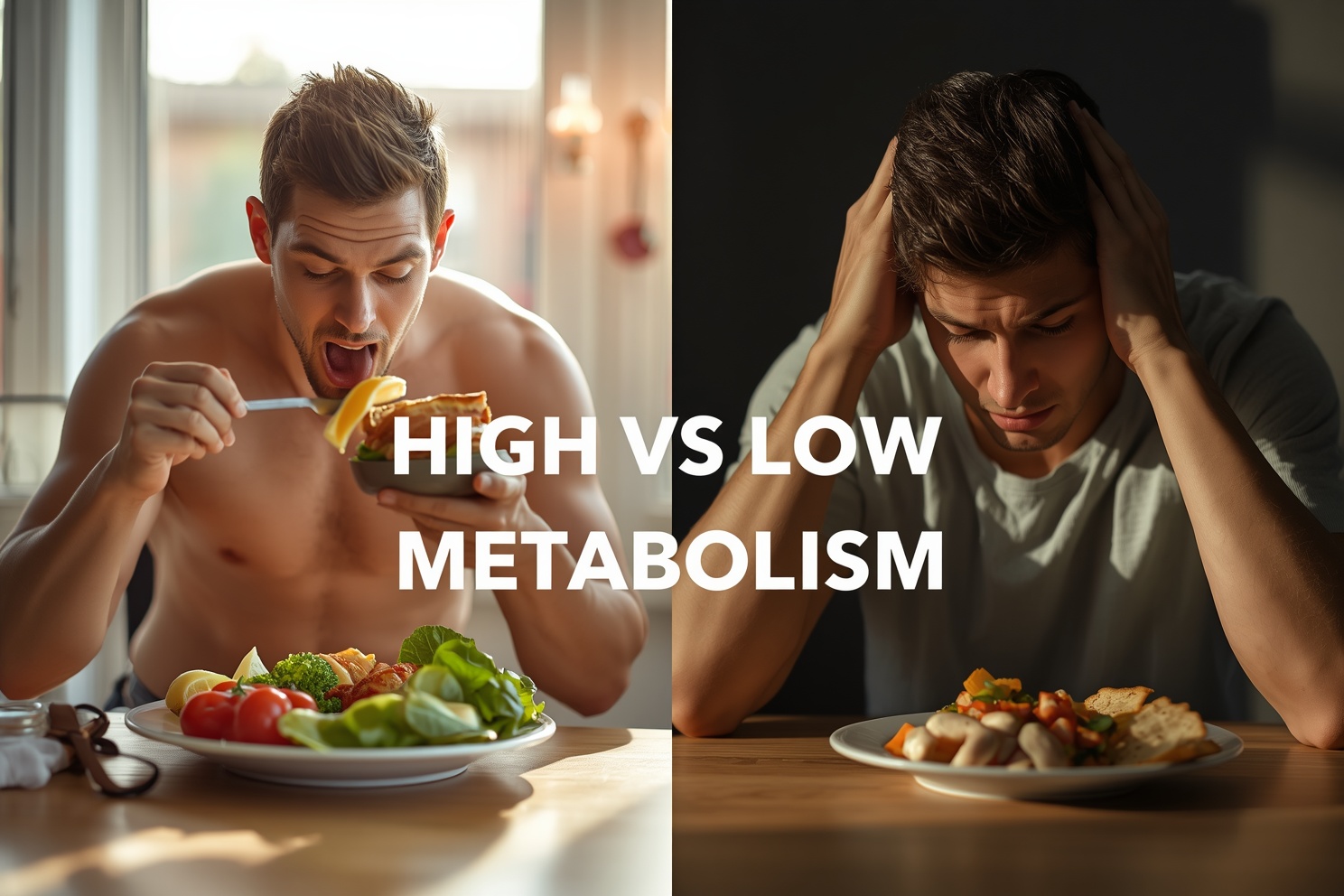
We all know that one person. They eat like there is no tomorrow, burgers, pasta, late-night snacks, and somehow stay stick-thin without even trying. Then there is someone else in the same friend group who gains three pounds just from looking at a dessert menu.
Unfair? Absolutely. But there is real biology behind it.
The difference almost always comes back to high metabolism vs low metabolism and understanding which one you have can genuinely change the way you approach your health, your diet, and your daily energy.
This is not about blaming your genes or giving up. It is about understanding your body honestly so you can actually work with it rather than constantly fight against it.
Table of Contents
So What Actually Is Metabolism?
People throw the word “metabolism” around constantly, but very few can actually explain what it means. So let us clear that up first without the textbook lecture.
Your metabolism is basically your body’s engine. It is the collection of all the chemical processes happening inside you right now, converting the food you eat into energy that keeps your heart beating, your lungs breathing, your brain thinking, and your muscles moving.
The part most people care about is called the Basal Metabolic Rate, or BMR. This is how many calories your body burns just to stay alive, even if you literally did nothing all day but lie in bed and stare at the ceiling. No exercise, no movement, nothing. Your organs still need fuel, and that fuel comes from your BMR.
For most people, BMR accounts for somewhere between 60 and 75 percent of the total calories they burn each day. That is a big deal. It means the speed of your engine at rest has an enormous impact on your weight, your energy, and your overall health.
When people talk about having a “fast” or “slow” metabolism, they are really talking about whether their BMR runs high or low compared to what is typical for someone their age, height, and sex.
High Metabolism vs Low Metabolism: What Makes Them Different?
Here is the simplest way to think about it.
Imagine two cars. One has a massive, powerful engine that burns through fuel rapidly even while idling. The other has a small, efficient engine that sips fuel carefully and gets every last drop of mileage out of the tank.
A high metabolism is the big engine. It burns through calories fast. It runs hot. It needs constant refueling. People with high metabolisms often struggle to gain weight because their engine consumes fuel so quickly that little is ever left over to store.
A low metabolism is an efficient engine. It conserves fuel carefully. It does not waste a calorie. People with low metabolisms gain weight more easily because their bodies are excellent at storing what they consume, even modest amounts.
Here is the important thing, though: neither is necessarily better or worse. Both come with real advantages and very real challenges. And crucially, both can be influenced by how you live, eat, sleep, and train.
Signs You Might Have a High Metabolism
You do not need a lab test to get a pretty good sense of where your metabolism sits. Your body is already dropping clues every single day.
You Can Eat a Ton and Not Gain Much
This is the big one. You finish a massive meal and somehow feel hungry again two hours later. You eat what most people would consider a ridiculous amount of food, and your weight barely moves. This is not willpower or some magical gift it is your metabolic engine burning through calories faster than your food intake can keep up.
You Are Always Hungry
And we mean always. People with fast metabolisms often feel like their stomachs are a bottomless pit. They eat a full meal and feel satisfied for maybe an hour before hunger starts creeping back. The body is burning through what it received and signaling for more.
You Run Warm Like, All the Time
Metabolism generates heat as a natural byproduct. Fast metabolizers tend to feel warm even when everyone around them is reaching for a sweater. They sweat easily, they sleep with the window cracked open in winter, and they generally prefer cooler environments.
Your Energy Levels Are High Sometimes Too High
Many high metabolizers describe feeling wired, restless, or like they constantly need to be doing something. Sitting still for long periods feels genuinely uncomfortable. This is partly because their bodies are producing energy at such a high rate that it needs somewhere to go.
Your Digestion Is Very Fast
Food moves through your system quickly. You might notice you need to use the bathroom shortly after eating. Loose stools or very frequent bowel movements are common in fast metabolizers — particularly when stress or anxiety is also present.
You Have a Naturally Thin Build
This one is obvious, but worth mentioning. Maintaining a lean physique without deliberate calorie restriction is one of the clearest signs that your metabolism is running fast.
Worth checking: If these signs are very intense especially rapid heartbeat, tremors, anxiety, or excessive sweating it is worth reading our detailed guide on hypermetabolism symptoms. Sometimes what feels like a fast metabolism is actually a medical condition like hyperthyroidism that deserves proper attention.
Signs You Might Have a Low Metabolism
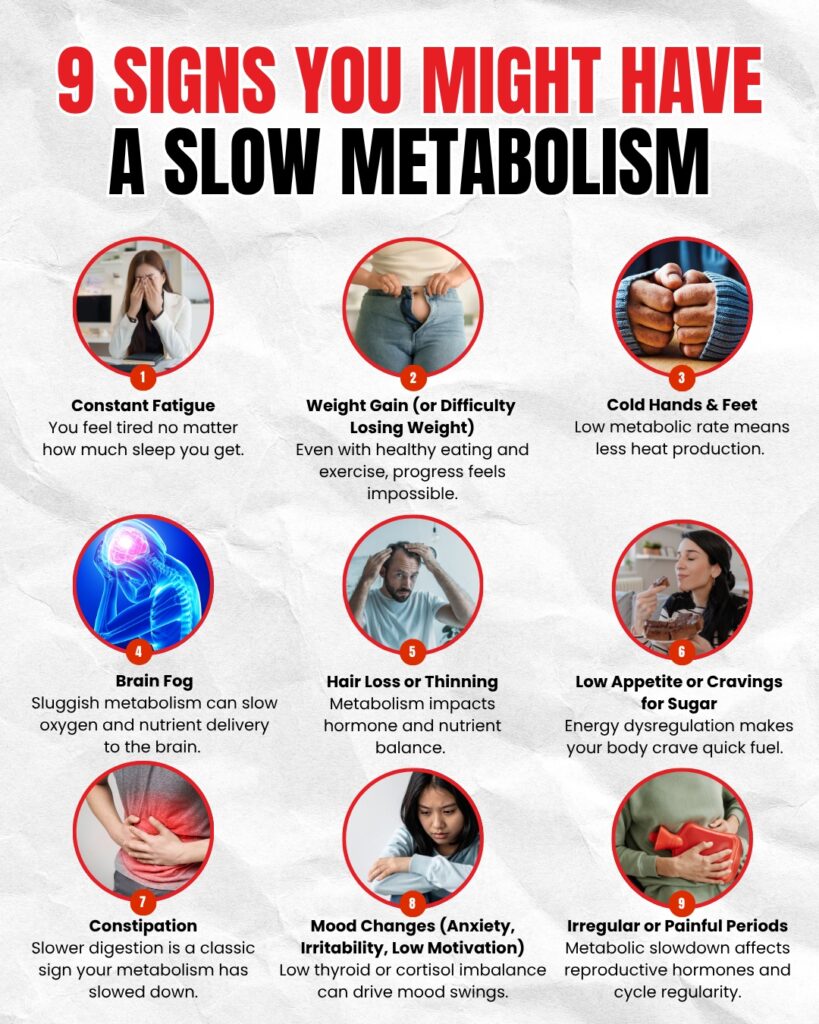
Low metabolism gets a bad reputation; people assume it just means being overweight or lazy. That could not be further from the truth. A slow metabolism is a physiological reality that affects millions of people, and it goes far beyond the scale.
You Gain Weight Easily — Even When You Are Careful
This is probably the most frustrating experience a person can have. You are watching what you eat, you are not going overboard, and you are still gaining weight or struggling to lose even a single pound. It feels deeply unfair, and in a very real sense, it is. A low metabolism means your body simply needs fewer calories than average to maintain itself.
You Feel Tired All the Time
Not just normal end-of-day tiredness. We are talking about the kind of fatigue that follows you from the moment you wake up. You sleep a full eight hours and still wake up feeling like you barely slept at all. Your body is generating energy slowly and inefficiently, and the result is a constant, low-grade exhaustion that is hard to shake.
You Are Almost Always Cold
Low metabolic activity means less heat production. If you are the person who always has cold hands and feet, who layers up while others are in t-shirts, and who turns the heating on before anyone else your metabolism may be running slower than it should.
Your Thinking Feels Foggy and Slow
Brain fog is a genuinely underrated symptom of a slow metabolism. Difficulty concentrating, forgetting things easily, feeling mentally sluggish even after coffee these are all signs that your body is not generating energy efficiently enough to fully fuel your brain.
You Feel Bloated and Heavy After Meals
When digestion slows down, food sits in the gut longer than it should. The result is that familiar uncomfortable feeling of fullness, bloating, and heaviness that lingers for hours after a meal. Constipation is also common.
Your Hair and Skin Are Suffering
Your hair follicles and skin cells are sensitive early indicators of metabolic slowdown particularly when it is driven by thyroid issues. Dry, flaky skin, brittle nails, and increased hair shedding are worth paying attention to, not just writing off as seasonal dryness.
Your Mood Has Been Low for No Obvious Reason
This one surprises people. A slow metabolism genuinely affects how the brain produces and regulates neurotransmitters like serotonin and dopamine. Low mood, reduced motivation, and mild depression can all be downstream effects of chronic metabolic slowdown, not just psychological issues to push through.
High vs Low Metabolism: A Clear Comparison
Sometimes it just helps to see everything laid out clearly side by side.
| What You Notice | High Metabolism | Low Metabolism |
|---|---|---|
| Weight tendency | Hard to gain, stays lean | Gains easily, hard to lose |
| Hunger | Frequent and intense | Moderate or lower than expected |
| Energy levels | High, sometimes restless | Consistently low and fatigued |
| Body temperature | Warm, dislikes heat | Cold, always layering up |
| Digestion | Fast, frequent bathroom trips | Slow, bloating, constipation |
| Heart rate at rest | Above average | At or below average |
| Skin and hair | Generally healthy | Dry skin, thinning hair |
| Mental sharpness | Alert, sometimes anxious | Foggy, slow, unmotivated |
| Sleep pattern | Light sleeper, sometimes restless | Heavy sleeper, hard to wake |
| Primary frustration | Cannot gain weight or muscle | Cannot lose weight despite trying |
Looking at this honestly should give you a pretty clear picture of where you land.
What Actually Causes Your Metabolism to Be Fast or Slow?
This is where things get genuinely interesting because the answer is not simply “genetics.”
Your Thyroid Is Running the Show
The thyroid gland is the master controller of your metabolism. It produces hormones primarily T3 and T4 that regulate the speed of essentially every metabolic process in your body.
An overactive thyroid (hyperthyroidism) speeds everything up, creating classic high metabolism symptoms. An underactive thyroid (hypothyroidism) slows everything down, creating the classic low metabolism experience. Thyroid dysfunction is one of the most commonly undiagnosed conditions in adults, and it affects far more people than most realize.
How Much Muscle You Carry
Muscle is metabolically expensive. It burns calories around the clock even while you sleep simply because it requires energy to maintain. This is why two people of the same weight can have dramatically different metabolic rates depending on how much of that weight is muscle versus fat.
Building muscle is genuinely one of the most powerful things you can do to shift your metabolism in a positive direction. We go into this in detail in our article on muscle mass and metabolic health.
Your Age — Whether You Like It or Not
Here is an uncomfortable truth. Starting around your late twenties, metabolism begins to slow gradually, primarily because most people start losing muscle mass without replacing it. By the time you hit your forties and fifties, the difference from your younger years can be significant.
The good news? This is almost entirely driven by muscle loss, not aging itself. People who maintain their muscle mass through consistent strength training show less metabolic decline dramatically as they get older.
Your Sex and Your Hormones
Men generally have higher metabolic rates than women, mostly because men carry more muscle mass on average and produce more testosterone a hormone that actively supports metabolic rate and body composition.
For women, hormonal shifts throughout life, including those surrounding the menstrual cycle, pregnancy, and menopause, have a real and significant impact on metabolism. If you are navigating these transitions, our article on perimenopause vs menopause covers how these hormonal changes affect your body and your metabolism specifically.
For men, testosterone levels have a direct relationship with metabolic health. Read our article on low testosterone symptoms in men to understand how this hormone shapes how your body burns fuel every day.
How Well or Poorly You Sleep
This one catches most people off guard. Poor sleep does not just make you tired it actively disrupts your metabolism. Even a few nights of insufficient sleep can meaningfully reduce insulin sensitivity, throw hunger hormones completely out of balance, and suppress your BMR.
Sleep is not passive recovery. It is active metabolic maintenance. Our article on sleep and type 2 diabetes blood sugar control explores exactly how this connection plays out inside the body.
Chronic Stress That Just Will Not Let Up
Cortisol, your primary stress hormone, is a genuine metabolic disruptor when it stays elevated for too long. It promotes fat storage, especially around the belly, breaks down muscle tissue, and actively works against insulin sensitivity. If your stress has been high for weeks or months, your metabolism has almost certainly felt the effects. We cover the full picture in our article on low cortisol vs high cortisol.
Nutritional Deficiencies You Might Not Even Know About
Several vitamins and minerals are directly involved in metabolic function, and most people have no idea they are deficient in them. Magnesium, vitamin D, iodine, selenium, iron, and zinc all play specific roles in how efficiently your body converts food to energy.
Magnesium alone is involved in over 300 enzymatic reactions in the body, many of which are directly tied to energy metabolism. If you are low in magnesium, your metabolism is almost certainly paying the price. Read our comprehensive guide on magnesium benefits, deficiency symptoms, and food sources to understand exactly what you might be missing.
How Your Metabolism Affects Your Weight
Let us be honest about this: metabolism is one of the biggest factors in how your body manages weight but it is not the only one, and it does not make weight change impossible in either direction.
For people with a high metabolism, maintaining or gaining healthy weight requires consistent, deliberate eating — often much more food than feels socially normal. If this sounds like you and you are struggling to build muscle or maintain mass, our article on weight gain for fast metabolism lays out a practical, step-by-step strategy that actually works.
For people with a low metabolism, losing weight requires a smarter, not necessarily smaller, approach. Crash diets actually make things worse, because the body responds to severe calorie restriction by slowing metabolism even further through a process called adaptive thermogenesis. The goal is sustainable, gradual fat loss that preserves muscle and keeps the metabolism from downshifting. Our article on healthy fat loss and sustainable weight loss strategies walks through exactly how to do this without making it worse.
Use These Free Tools to Understand Your Own Metabolism
Guessing does not work when it comes to metabolism. You genuinely need numbers to understand what is happening in your body and whether your current eating habits are aligned with your metabolic needs.
These free tools on Vitality Nexus take just a couple of minutes and give you surprisingly useful, personalized information.
👉 Find Your BMR
Your Basal Metabolic Rate is your resting calorie burn the foundation of everything. Use our BMR Calculator to find yours. If your number sits significantly higher or lower than average for your age and body size, that is a meaningful signal worth paying attention to.
👉 Find Your TDEE
Your Total Daily Energy Expenditure tells you how many calories your body actually needs in a full day, accounting for your activity level. This is the most important number for anyone trying to manage their weight intelligently. Use our TDEE Calculator to get your personalized figure.
👉 Check Your BMI
Use our BMI Calculator to see where your current weight sits relative to healthy ranges. It is not a perfect measure on its own but it is a useful starting point for context.
👉 Measure Your Body Fat Percentage
Body weight alone does not tell you much. Body fat percentage tells you how much of your weight is lean, metabolically active muscle versus stored fat. Use our Body Fat Calculator to get a clearer and more honest picture of your actual body composition.
👉 Set a Realistic Weight Goal
Use our Ideal Weight Calculator to find a healthy weight range that makes sense for your specific height, age, and sex not some generic one-size-fits-all chart.
Real Health Risks on Both Ends
People assume that having a high metabolism is always the lucky outcome. But both extremes carry legitimate health risks when they are left unmanaged and ignored.
If Your Metabolism Runs Too Fast
Your body may start breaking down muscle for energy when calorie intake cannot keep up a process called catabolism that gradually hollows out your physical strength and resilience. Chronic underweight weakens your immune system, reduces bone density, and throws hormonal health off balance. The cardiovascular system takes a real hit when the heart is consistently working above its normal pace. Key vitamins and minerals get depleted rapidly, leaving you deficient in nutrients that most people never think to check. Women may experience irregular or even absent menstrual cycles as the body redirects resources away from reproduction.
If Your Metabolism Runs Too Slow
Weight gain becomes almost unavoidable without very careful management. Insulin resistance develops over time, raising the risk of type 2 diabetes read our article on early warning signs of type 2 diabetes to know exactly what to look for before it progresses. Cholesterol and triglyceride levels tend to rise as the body’s ability to clear blood lipids slows. Persistent fatigue and brain fog reduce quality of life in ways that feel invisible to everyone except the person experiencing them. Depression and low motivation become quietly common companions. The risk of non-alcoholic fatty liver disease and sleep apnea both increase meaningfully with metabolic dysfunction.
Neither side of this is minor. Both deserve to be taken seriously with real strategy, not just wishful thinking.
How to Actually Optimize Your Metabolism
The genuinely good news is that your lifestyle has more influence over your metabolic rate than most people realize. Here is what actually works — and why.
Build Muscle. This Is the Big One.
If there is one single thing you could do to improve your metabolism, regardless of whether it runs fast or slow, it is building and preserving muscle mass. Muscle burns calories around the clock. More muscle means a higher BMR, full stop. You do not need to become a bodybuilder. Three to four sessions per week of progressive resistance training, such as squats, deadlifts, rows, presses, is enough to make a real, measurable difference over time.
Eat Enough Protein, Every Single Day
Protein has a significant thermic effect, meaning your body burns more calories just digesting it compared to carbohydrates or fat. It also preserves muscle during periods of calorie restriction making it doubly important for metabolic health. Aim for somewhere between 1.6 and 2.2 grams of protein per kilogram of your body weight each day. Eggs, chicken, fish, Greek yogurt, legumes, and cottage cheese are your best options.
Stop Skipping Breakfast
When you wake up after 7 to 9 hours of sleep, your body has been mildly catabolic overnight. Breakfast signals the end of the fast and activates thermogenesis for the day ahead. People who eat a high-protein breakfast consistently show better metabolic function and significantly reduced cravings throughout the day. It genuinely matters.
Drink More Water Than You Think You Need
Mild dehydration quietly suppresses metabolic rate in ways most people never connect to their energy or weight struggles. Research shows that drinking around 500 ml of cold water produces a temporary 10 to 30 percent bump in metabolism for roughly half an hour afterward. It is a small effect, but it adds up meaningfully across a full day. Aim for at least 2.5 to 3 liters daily.
Take Your Sleep Seriously — It Is Not Optional
Seven to nine hours per night is not a suggestion. It is a metabolic requirement. While you sleep, your body repairs muscle tissue, regulates hunger hormones, processes blood sugar, and restores the neural systems that govern energy and appetite. Cutting sleep short consistently, and your metabolism quietly suffers in ways that no diet or supplement can fully compensate for.
Use our Sleep Calculator to find the sleep timing that actually works for your natural rhythm.
Move More Throughout the Day — Not Just at the Gym
This is called NEAT Non-Exercise Activity Thermogenesis, and it refers to all the calories you burn through movement that is not formal exercise. Walking to get your coffee, taking the stairs, standing at your desk, pacing while you are on a call. Research shows NEAT can account for anywhere from 200 to nearly 900 extra calories burned per day, depending on how active your general lifestyle is. That is enormous. Our article on morning vs night walks for weight loss is a great place to start building more effortless movement into your day.
Get Your Nutrient Levels Right
Getting your micronutrient levels right is honestly one of the most overlooked metabolic interventions available and it costs almost nothing compared to fancy diets or supplement stacks. Magnesium, vitamin D3, omega-3 fatty acids, zinc, and iodine all play specific, important roles in how efficiently your body generates and uses energy. Start with our articles on vitamin D3 and K2 benefits and omega-3 fatty acids benefits and food sources to understand what you might quietly be missing.
The Best Foods for a Healthier Metabolic Rate
What you eat has a direct effect on how efficiently your metabolism operates. These foods consistently show up in the research as genuinely useful.
Eggs are one of nature’s most complete metabolic foods full protein, B vitamins, choline, and healthy fats all in one convenient package. If you are not eating eggs regularly, start today.
Fatty fish like salmon, mackerel, and sardines deliver omega-3 fatty acids that reduce metabolic inflammation and support insulin sensitivity. Read our article on omega-3 fatty acids benefits and food sources for the full breakdown.
Green tea contains EGCG alongside caffeine a combination that has been shown to boost fat oxidation and temporarily raise metabolic rate in multiple studies. Our article on how to lose weight by drinking green tea covers exactly how to get the most from it.
Legumes lentils, chickpeas, black beans are high in protein and fiber, produce a strong thermic effect, and help stabilize blood sugar over the long term. They are also affordable and genuinely filling.
Leafy greens are loaded with magnesium, iron, and folate three nutrients critical for mitochondrial energy production. Spinach, kale, and Swiss chard belong in your regular rotation.
Chili peppers contain capsaicin, which provides a temporary but real boost to metabolic rate of around 4 to 8 percent. Add them to your meals without overthinking it.
Greek yogurt is dense in protein and probiotics both of which support the gut-metabolism connection that researchers are increasingly recognizing as central to overall metabolic health.
Nuts and seeds particularly almonds, walnuts, and pumpkin seeds deliver magnesium, zinc, and healthy fats in calorie-dense, portable packages that are especially useful for high metabolizers trying to maintain their weight.
On the flip side, what you genuinely want to cut back on includes highly processed foods, refined sugars, excess alcohol, and trans fats. These actively promote insulin resistance, chronic inflammation, and metabolic dysfunction quietly, in ways that compound over months and years before most people connect the dots.
When You Should Probably See a Doctor
Most metabolic variation between people is completely normal and manageable with lifestyle changes. But there are situations where something deeper might be going on and those situations deserve professional attention, not just another diet plan.
Go and talk to your doctor if you notice any of the following:
Rapid, unexplained weight loss or gain that has nothing to do with changes in your eating habits. Persistent fatigue that does not improve, no matter how consistently you sleep. Heart palpitations, hand tremors, or excessive sweating without a physical cause are genuine red flags for thyroid overactivity. Extreme sensitivity to cold, persistent constipation, and unusual hair loss are classic signs of an underactive thyroid that is slowing your metabolism from the inside. Blood sugar symptoms include excessive thirst, frequent urination, or blurred vision. Mood changes or cognitive decline that feel out of proportion to your life circumstances.
A simple blood test including a full thyroid panel covering TSH, Free T3, and Free T4 can reveal a great deal in a very short time. For context on how metabolic dysfunction connects to broader health risks, our articles on prediabetes vs type 2 diabetes and new diabetes care guidelines 2026 are worth reading before your appointment.
FAQ
1. What is the real difference between high metabolism and low metabolism?
At its simplest, it is the speed at which your body converts food and stored energy into fuel. A high metabolism burns through calories fast, making weight gain difficult and energy levels typically high. A low metabolism conserves energy carefully, making weight loss harder and fatigue more common. Both are shaped by genetics, muscle mass, hormones, sleep quality, and daily lifestyle habits — and both can shift meaningfully with the right approach.
2. Can you actually change your metabolism?
Yes — and more than most people realize. While your genetic baseline plays a role, building muscle mass, eating enough protein, fixing nutritional deficiencies, improving sleep quality, and managing chronic stress all produce real, measurable improvements in metabolic rate. The influence of lifestyle on metabolism is consistently underestimated.
3. Is having a high metabolism always a good thing?
Not necessarily. While it makes weight loss easier, a high metabolism comes with its own set of challenges — constant hunger, difficulty building muscle, rapid nutritional depletion, and sometimes persistent anxiety or disrupted sleep. The goal is a balanced, healthy metabolic rate not simply a fast one.
4. What is the most common cause of a slow metabolism?
Hypothyroidism is the most common medical cause. But for the general population, the biggest drivers are muscle loss with age, chronic undereating, consistently poor sleep, prolonged stress, and nutritional deficiencies particularly in magnesium, vitamin D, and iodine.
5. How can I tell whether my metabolism is high or low without a lab test?
Start by calculating your BMR and TDEE comparing those numbers honestly against your actual food intake and weight trend will tell you a great deal. Beyond numbers, your body gives you daily signals. Constant hunger and feeling warm point toward a faster metabolism. Persistent fatigue, cold intolerance, and easy weight gain despite careful eating point toward a slower one.
6. Does eating more really boost your metabolism?
Eating consistently at the right amount for your body prevents the metabolic suppression that happens during chronic undereating. It does not boost metabolism indefinitely but it absolutely prevents the body from downshifting into energy-conservation mode, which is what tends to happen after prolonged calorie restriction or frequent meal skipping.
7. Does metabolism inevitably slow down with age?
Age-related metabolic slowing is real, but far less dramatic than most people assume and it is almost entirely driven by muscle loss rather than aging itself. People who maintain their muscle mass through consistent resistance training show remarkably little metabolic decline compared to their sedentary peers. Age is not destiny when it comes to your metabolic rate.
Conclusion
Understanding the difference between high metabolism vs low metabolism is genuinely one of the most useful things you can learn about your own body. It explains so much why weight management feels effortless for some people and like a constant uphill battle for others, why your energy behaves the way it does, and why certain approaches work brilliantly for your friends but fall flat for you.
The important thing to remember is this: your metabolism is not a fixed sentence you are stuck with forever. It is a living, responsive system that reflects how you eat, move, sleep, manage stress, and take care of your nutritional needs. Change those inputs consistently, and your metabolism will respond.
Use the free calculators at Vitality Nexus to get your real numbers and stop guessing. Explore our health and fitness resources for practical, actionable guidance. And visit our nutrition and supplements section to start closing the nutritional gaps that may be quietly holding your metabolism back.
Your metabolism may be fast, slow, or somewhere in the middle right now but where it goes from here is largely, genuinely up to you.