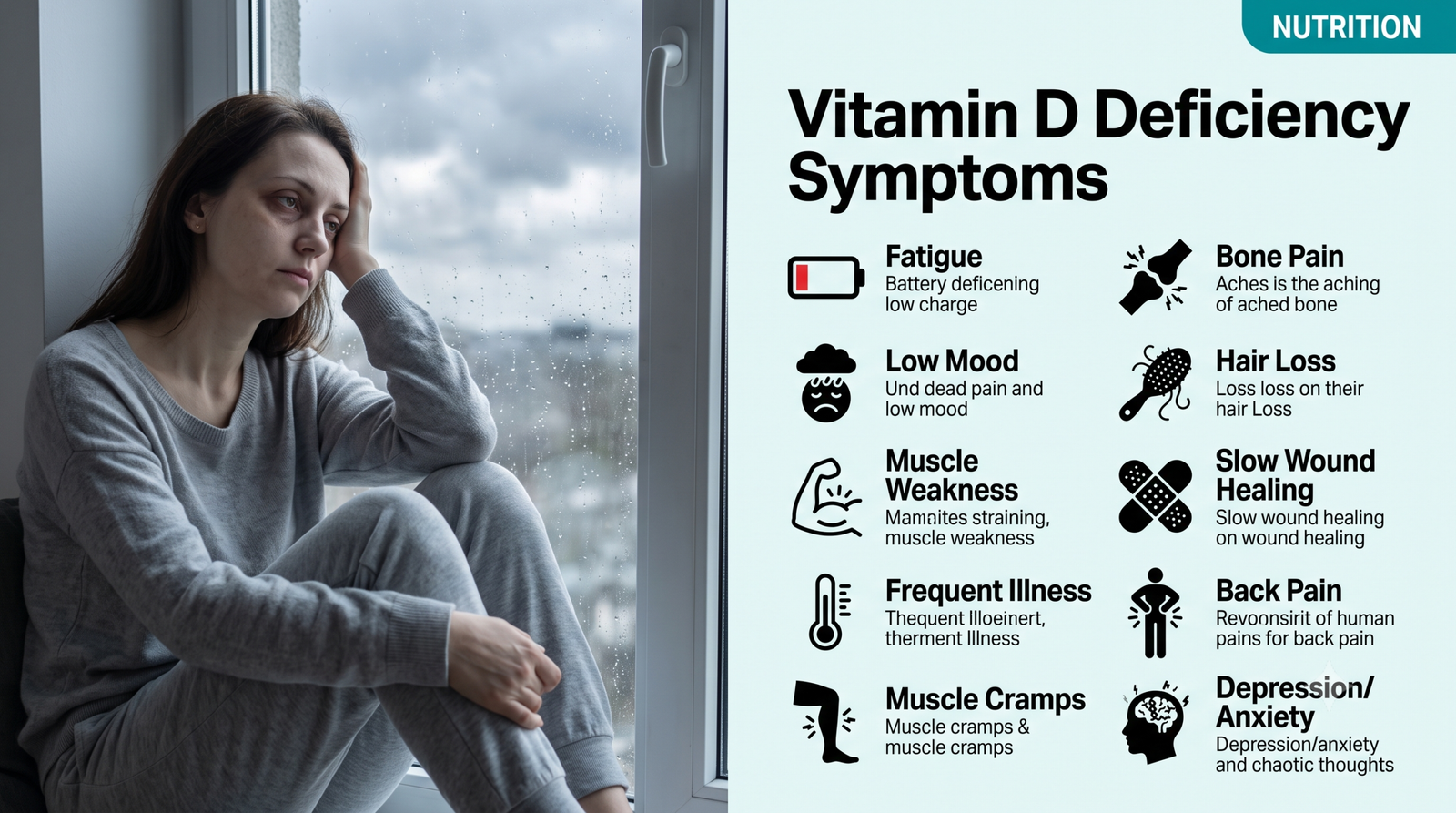
If you often feel tired, achy, or low in mood without a clear reason, vitamin D deficiency symptoms might be behind it. Vitamin D is one of the most important nutrients your body needs, yet deficiency is one of the most common nutritional problems in the world.
Your body makes vitamin D when your skin is exposed to sunlight. But with modern indoor lifestyles, office jobs, sunscreen use, and long winters, billions of people simply do not get enough. The problem is that the symptoms develop slowly and quietly, so most people live with them for months or even years without connecting them to this one missing nutrient.
In this guide, you will learn the 10 most important vitamin D deficiency symptoms, what causes levels to drop, how to test your levels, and the best ways to restore them naturally. Knowing the signs early gives you the best chance to act before deficiency causes lasting harm.
Table of Contents
What Does Vitamin D Actually Do?
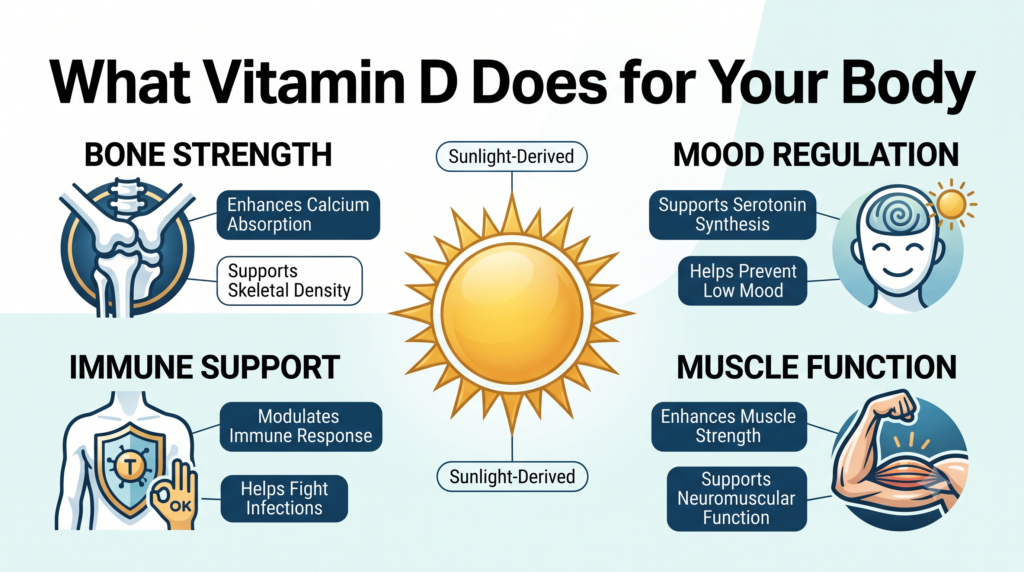
Vitamin D is far more than a bone nutrient. It functions more like a hormone than a vitamin, and its receptors are found in nearly every tissue in your body.
It controls how much calcium your intestines absorb, which determines bone density. It regulates your immune system, helping your body recognize and fight pathogens. It supports muscle function and coordination. It influences the production of serotonin, the neurotransmitter most associated with mood stability. And it plays a role in regulating insulin, blood pressure, and cellular growth.
When vitamin D is low, all of these systems are quietly impaired. The result is a diffuse cluster of symptoms that are easy to dismiss as stress, aging, or being run down, which is exactly why vitamin D deficiency symptoms go unrecognized for so long.
10 Key Vitamin D Deficiency Symptoms
These are the ten most telling vitamin D deficiency symptoms in adults. If you recognize several together, that pattern is worth discussing with a doctor and following up with a simple blood test.
1. Persistent Fatigue and Low Energy
Fatigue that does not improve with rest is one of the most frequently reported vitamin D deficiency symptoms. Studies have found that even mildly low vitamin D levels are associated with significantly higher rates of fatigue, and that supplementing in people with deficiency produces measurable improvements in energy.
This is not ordinary tiredness. It is a heavy, persistent exhaustion that sits over your day regardless of how much sleep you get, and it often improves noticeably within weeks of restoring vitamin D levels.
2. Bone Pain and Achiness
Vitamin D is essential for calcium absorption, and without enough of it, bones gradually lose density and begin to ache. The pain often shows up as a deep, dull ache in the lower back, hips, legs, or ribs, and is sometimes mistaken for general joint pain or fibromyalgia.
This symptom is one of the classical signs of severe deficiency, known as osteomalacia in adults. Catching it early prevents progression to more serious bone loss.
3. Muscle Weakness and Cramps
Vitamin D receptors in muscle tissue mean that low levels directly impair how muscles contract and recover. Unexplained muscle weakness, cramping, or difficulty with movements that used to feel easy are all recognized vitamin D deficiency symptoms that often resolve with supplementation.
4. Low Mood and Depression
One of the most significant but least-known vitamin D deficiency symptoms is its effect on mood. Vitamin D influences serotonin production, and multiple studies have linked low levels to higher rates of depression and seasonal affective disorder.
People living in northern latitudes or spending most of their time indoors are particularly vulnerable to mood changes driven by low vitamin D, especially in winter months. Our guide on how to improve mental health covers how nutrition, including vitamin D, connects to emotional wellbeing.
5. Frequent Illness and Slow Healing
Vitamin D is a core regulator of the immune system. It activates the immune cells that fight bacteria and viruses. When levels are low, your defenses are weakened, and you may notice that you catch colds and infections more easily than usual, or that wounds and illnesses take longer to resolve.
This connection between vitamin D and immunity is one of the reasons deficiency has been associated with higher vulnerability to respiratory infections.
6. Hair Loss
While hair loss has many causes, vitamin D deficiency is a recognized but often overlooked contributor. Vitamin D plays a role in hair follicle cycling, and deficiency can push follicles into a resting phase, causing noticeable shedding.
If you have noticed increased hair loss alongside other symptoms on this list, low vitamin D is worth investigating before assuming it is purely genetic or hormonal.
7. Impaired Wound Healing
Vitamin D is involved in the production of compounds that control inflammation and skin repair. Low levels have been linked to slower healing after surgery, injuries, and skin damage. If small cuts or grazes seem to take longer than expected to heal, vitamin D status is worth checking.
8. Brain Fog and Poor Concentration
Cognitive symptoms including difficulty concentrating, slower processing, and poor memory are reported by many people with vitamin D deficiency. These symptoms are diffuse and easy to attribute to stress or sleep, but they often improve meaningfully when vitamin D is restored to healthy levels.
9. Bone Loss and Increased Fracture Risk
In the longer term, sustained vitamin D deficiency leads to bone loss and an elevated risk of fractures. This becomes especially important for women after menopause, when estrogen-related bone protection declines, and for older adults generally. Our guide on vitamin D3 and K2 benefits explains how these two nutrients work together to direct calcium into bones rather than arteries.
10. Sleep Problems
Vitamin D receptors in the brain regions that regulate sleep mean that deficiency can disrupt sleep architecture, making it harder to fall asleep, stay asleep, or reach the deep sleep stages where the most restoration happens. If you struggle with poor sleep alongside several other symptoms on this list, your vitamin D levels are worth checking. Our guide on magnesium for sleep covers another nutrient that works alongside vitamin D to support rest.
Who Is Most at Risk of Vitamin D Deficiency?
Certain groups are significantly more likely to develop vitamin D deficiency symptoms than others. Knowing your risk helps you act proactively rather than waiting for symptoms to worsen.
People who spend most of their time indoors are at the top of the list. Office workers, shift workers, and anyone who rarely gets midday sun exposure make very little vitamin D through their skin. People with darker skin tones need more sun exposure to produce the same amount, putting them at higher risk in low-sunlight regions.
Older adults produce vitamin D in the skin less efficiently and often spend less time outdoors. People who are overweight store vitamin D in fat tissue, reducing the amount available in the bloodstream. Breastfed infants without supplementation are also at risk, since breast milk contains minimal vitamin D.
According to the National Institutes of Health, people living above 35 degrees latitude face reduced sun intensity for much of the year, making dietary and supplemental vitamin D especially important. Pakistan, despite its sunny climate, still sees significant deficiency due to sun avoidance, clothing coverage, and indoor lifestyles.
How to Test Your Vitamin D Levels
A simple blood test measures your 25-hydroxyvitamin D level, which is the most accurate marker of your vitamin D status. Most doctors recommend testing in late winter or early spring when levels are naturally lowest.
Optimal levels are generally considered to be between 40 and 60 nanograms per milliliter, though some researchers suggest higher is better for immune and mood function. Levels below 20 are considered deficient, while 20 to 30 is insufficient for most people’s needs.
If you have been experiencing several vitamin D deficiency symptoms, request this test at your next doctor’s visit. It is inexpensive, widely available, and gives you a clear number to work with.
How to Boost Vitamin D Naturally
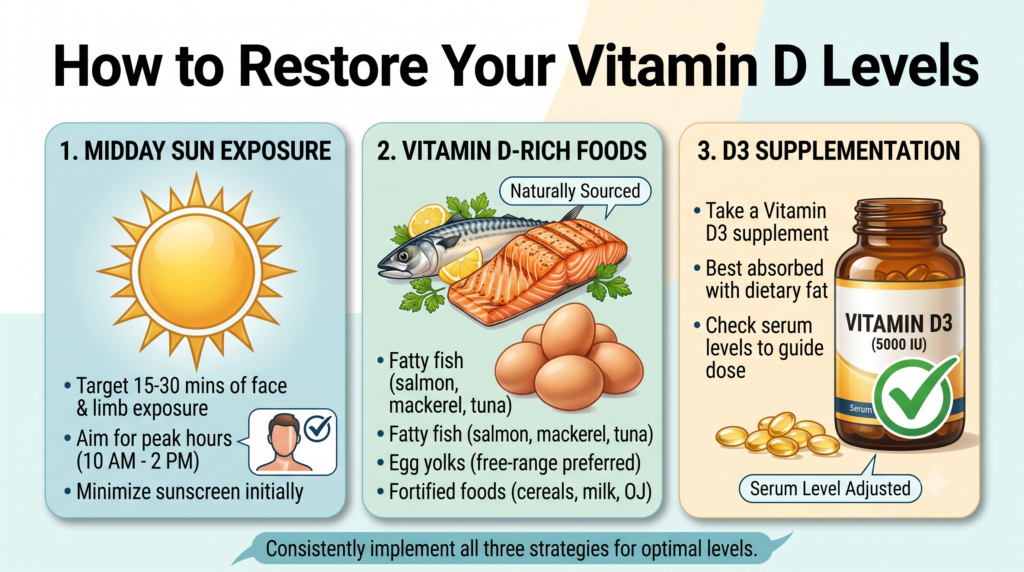
Once you know your level, restoring vitamin D is straightforward. Most people need a combination of sun exposure, dietary sources, and supplementation.
Sun exposure is the most efficient source. Ten to thirty minutes of midday sun on your arms and legs several times a week is enough for many people with lighter skin to maintain healthy levels. Avoid sunburn, but do not cover up entirely before you have had enough exposure. In winter months or at higher latitudes, sun alone is rarely sufficient.
Dietary sources include fatty fish, egg yolks, fortified milk, and fortified cereals. These provide modest amounts that are useful but rarely enough to correct a deficiency on their own. Our article on omega-3 fatty acids and food sources covers fatty fish in more detail, since these foods offer both vitamin D and other valuable nutrients.
Supplementation is the most reliable way to restore levels if you are deficient. Most adults with confirmed deficiency need between 2,000 and 4,000 IU of vitamin D3 daily, taken with a meal containing fat for best absorption. The Mayo Clinic recommends getting levels tested before starting high-dose supplementation, since the right dose depends on your baseline. Vitamin K2 is an important companion to vitamin D supplementation, since it helps direct calcium to bones rather than soft tissue. Our article on vitamin D3 and K2 benefits explains this pairing in practical detail.
Vitamin D and Your Overall Health
The effects of vitamin D ripple through your entire body, which is why correcting a deficiency often produces improvements in areas that seem unrelated to bone or immune health.
Better vitamin D levels are associated with more stable blood sugar and improved insulin sensitivity, which is directly relevant if you are managing prediabetes or metabolic health. Our article on early warning signs of type 2 diabetes explains how nutritional status and metabolic risk connect.
Vitamin D also interacts with magnesium, since magnesium is needed to activate vitamin D in the body. Many people who supplement with vitamin D while being magnesium deficient see limited improvement. Our guide on magnesium benefits, deficiency, and food sources makes for essential companion reading. Together these two nutrients support bone density, sleep, mood, immune function, and energy in ways that neither does as well alone.
Track Your Health and Progress
If you have confirmed low vitamin D and started supplementing, retesting in two to three months gives you clear evidence of whether your levels are improving. Most people see measurable improvements in fatigue, mood, and muscle symptoms within four to eight weeks of consistent supplementation at an appropriate dose.
Track how you feel each week alongside your supplement routine. Note changes in energy, sleep quality, mood, and bone comfort. Use our free BMI and calorie calculators to ensure your overall nutrition supports your recovery, since vitamin D works best as part of a genuinely balanced diet rather than as a standalone fix.
Frequently Asked Questions
What are the most common vitamin D deficiency symptoms?
The most common symptoms include persistent fatigue, bone and muscle pain, low mood, frequent illness, brain fog, hair loss, and poor sleep. Recognizing several together is the strongest signal to get your levels tested.
How do I know if I am vitamin D deficient without a blood test?
While a blood test is the only accurate way to confirm deficiency, a cluster of symptoms including constant tiredness, bone achiness, low mood, and frequent infections that cannot be explained by other causes is a strong indicator worth investigating.
How quickly do vitamin D deficiency symptoms improve with supplementation?
Many people notice improvements in energy and mood within four to eight weeks of consistent supplementation. Bone pain and muscle weakness may take longer, and some symptoms such as hair loss can take several months to fully resolve.
What is the best form of vitamin D supplement?
Vitamin D3 is the preferred form as it is more potent and longer lasting in the body than D2. Taking it with a meal containing healthy fat improves absorption. Pairing it with vitamin K2 helps ensure calcium is directed to bones rather than soft tissue.
Can you get enough vitamin D from food alone?
Food sources of vitamin D are limited and usually insufficient to correct a deficiency on their own. Fatty fish, egg yolks, and fortified foods provide modest amounts that support maintenance but rarely enough to raise low levels significantly without sun exposure or supplementation.
Who should take vitamin D supplements?
People who spend most of their time indoors, live at higher latitudes, have darker skin, are older, overweight, or who have confirmed low blood levels should consider supplementing. Always test first and follow a doctor’s guidance on dose.
Can vitamin D deficiency cause depression?
Yes. Vitamin D influences serotonin production, and multiple studies link low levels to higher rates of depression and low mood. Restoring vitamin D does not replace professional mental health treatment, but correcting deficiency often produces meaningful mood improvements.
Final Thoughts
Vitamin D deficiency symptoms are common, wide-ranging, and often mistaken for other problems. Fatigue, bone pain, low mood, frequent illness, and poor sleep are all signs that your body may be running low on this essential nutrient.
The fix is usually simple. Get some midday sun when you can, eat fatty fish and eggs regularly, and consider a quality D3 supplement if your blood test confirms low levels. Pair it with magnesium and vitamin K2 for the best results.
Use the free tools on Vitality Nexus to support your broader nutrition, and explore our supplement and nutrition guides for more practical, evidence-based guidance on the nutrients your body needs most.
Medical Disclaimer: This article is for general information only and is not medical advice. If you suspect vitamin D deficiency or plan to supplement at higher doses, please consult a qualified doctor for proper testing and personalized guidance.