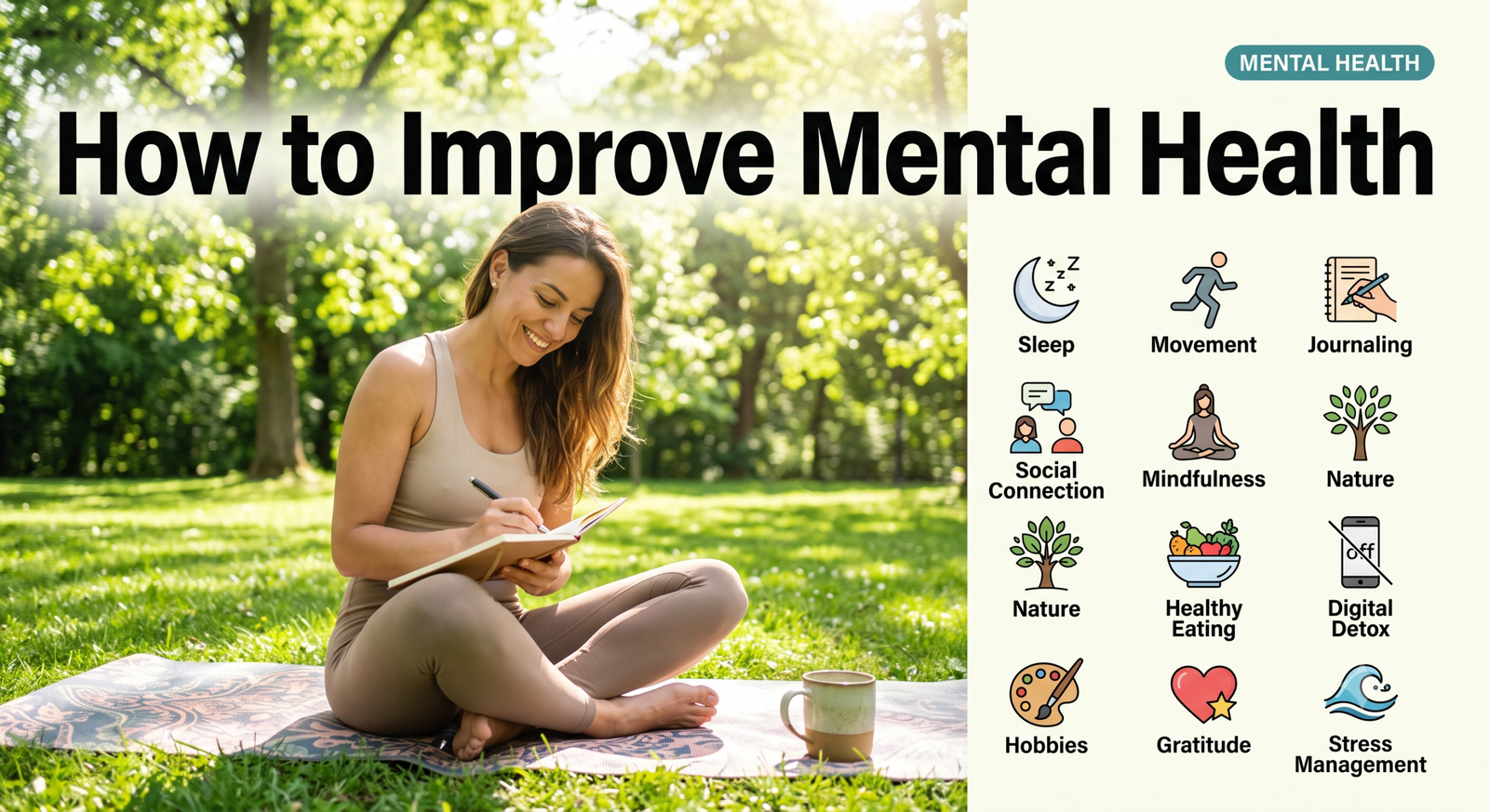
If you have been feeling off, drained, or simply not like yourself, learning how to improve mental health does not have to start with a dramatic change. Most of the most powerful shifts come from small, consistent habits that quietly reshape how you feel, think, and cope over time.
Mental health is not a fixed state. It fluctuates with your sleep, your relationships, your stress load, and even what you eat. That is actually good news because it means you have real influence over it every single day.
In this guide, you will find 11 proven, practical habits for how to improve mental health naturally. These are not vague suggestions. They are specific, research-supported actions you can start today, no therapist required, though we will also cover when reaching out for help is the smartest move.
Table of Contents
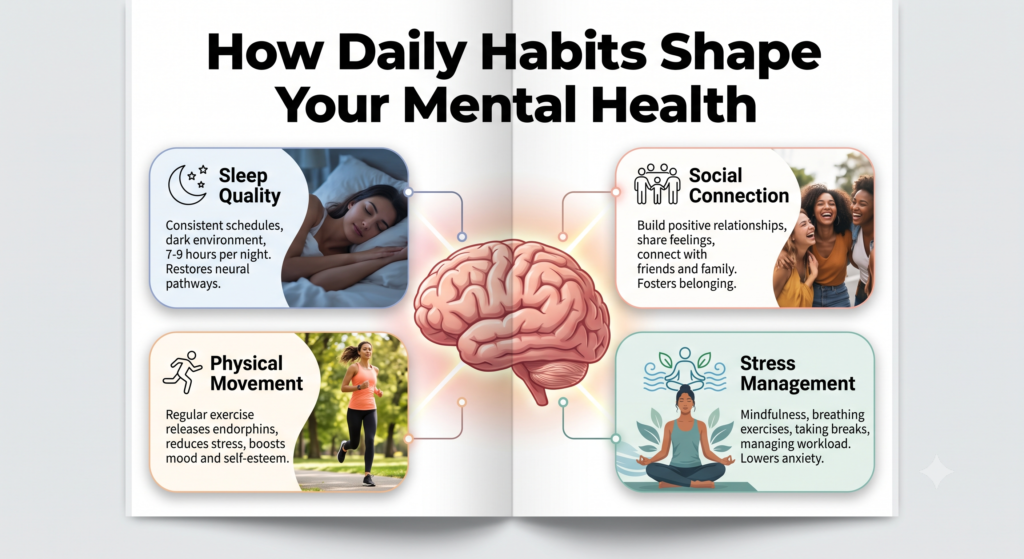
Why Daily Habits Matter More Than You Think
Most people wait until they feel truly bad before they think about their mental health. But mental wellbeing works like physical fitness. You do not wait until you are sick to start eating well or sleeping properly. The same logic applies here.
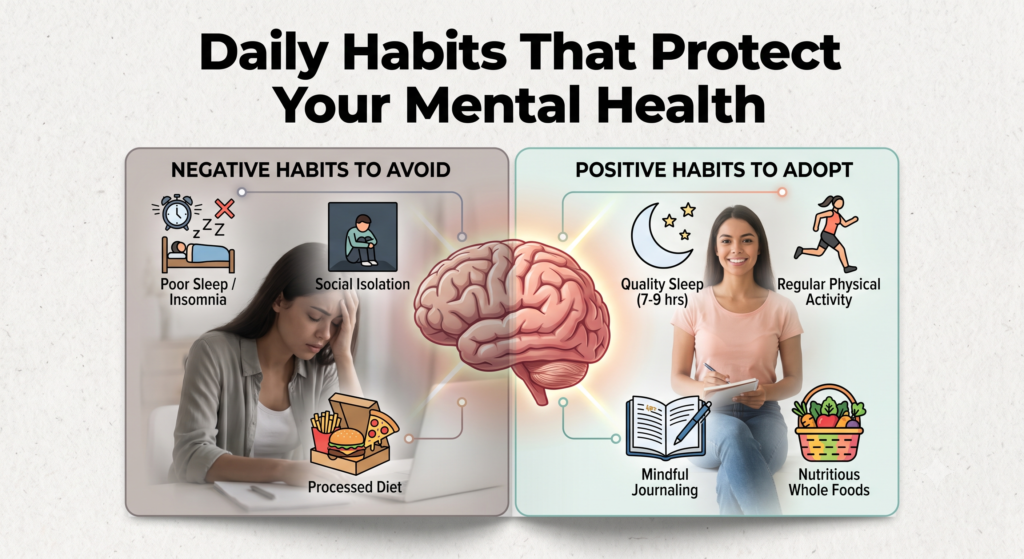
Your brain responds directly to how you live. Chronic stress, poor sleep, isolation, and a poor diet all push your mood downward over time, often so gradually that you barely notice until you are deep in it. The reverse is equally true. Consistent healthy habits create a neurological environment where anxiety softens, mood stabilizes, and resilience grows.
According to the National Institute of Mental Health, small, positive daily choices add up and can significantly improve how you feel. That is the foundation of everything in this guide.
How to Improve Mental Health: The 11 Best Habits
Here are 11 habits that consistently show up in mental health research as genuinely effective. Pick a few that feel natural and build from there.
1. Protect Your Sleep Above Everything Else
Sleep is where your brain processes emotions, consolidates memories, and clears out stress hormones. When you shortchange it, everything else gets harder, your mood drops, your patience shrinks, and your anxiety climbs.
Aim for seven to nine hours with a consistent bedtime and wake time. Even on weekends. A stable sleep schedule is one of the most powerful answers to how to improve mental health without any pills or programs. For deeper sleep and what it does for your whole body, see our guide on deep sleep benefits.
2. Move Your Body Every Single Day
Exercise is one of the most studied natural mental health tools available. It releases endorphins, lowers cortisol, and builds new neural pathways linked to resilience. You do not need intense workouts to get the benefit.
A 30-minute brisk walk has been shown in multiple studies to reduce symptoms of anxiety and mild depression. The consistency matters far more than the intensity, so find something you actually enjoy doing. Our article on the benefits of walking daily gives a full picture of what movement does for the mind.
3. Spend Time Outdoors in Natural Light
Natural light resets your circadian rhythm, lifts your mood, and supports vitamin D production, which is directly linked to mental health. Even 15 to 20 minutes outside in the morning can make a measurable difference.
Spending time in green spaces has also been linked to reduced cortisol and lower rates of anxiety. If you live in a city, a park works just as well as countryside. The key is getting outside, especially when you least feel like it.
4. Journal Your Thoughts Daily
Writing is one of the simplest and most overlooked mental health tools. A daily journaling practice of even ten minutes helps you process emotions before they pile up into overwhelm. It also helps you spot patterns in your mood and identify what triggers your worst days.
You do not need to write perfectly or follow a format. Honest, messy, unfiltered writing is the point. Many people find that a worry dump before bed, writing down everything on their mind, helps them sleep far better too.
5. Connect With People Who Actually Make You Feel Good
Social connection is a biological need, not a luxury. Loneliness and isolation are as harmful to health as smoking, according to research, and they are among the strongest predictors of poor mental health.
This does not mean socializing constantly. It means investing in a few close relationships where you feel genuinely seen and supported. A real conversation, not just a text exchange, is what makes the difference. If building those connections feels hard right now, our article on mental health awareness and emotional wellness covers this in depth.
6. Reduce the Stress You Can Actually Control
You cannot remove all stress from your life, but identifying and reducing the sources that are within your control makes a real dent. Common culprits include too many commitments, toxic relationships, constant phone use, and working without breaks.
The goal is not zero stress. It is building enough daily recovery that stress does not accumulate unchecked. Our guide on low cortisol versus high cortisol explains what chronic stress does to your body and brain in plain, practical terms.
7. Practice a Brief Daily Mindfulness or Breathing Exercise
Mindfulness is not about emptying your mind. It is about observing your thoughts without being pulled into them. Even five to ten minutes a day of slow breathing or a simple body scan can lower anxiety and improve emotional regulation over time.
The research is solid. A major review published in JAMA Internal Medicine found that mindfulness meditation programs produced moderate improvements in anxiety, depression, and pain. Start small, be consistent, and the effects build steadily.
8. Eat to Support Your Brain
What you eat directly influences your mood, your energy, and your brain chemistry. Diets high in ultra-processed foods, sugar, and refined carbs are linked to higher rates of depression and anxiety. Whole foods do the opposite.
Omega-3 fatty acids from fish and flaxseeds support brain function and reduce inflammation linked to mood disorders. Magnesium from nuts, seeds, and leafy greens supports nerve function and sleep. Our article on magnesium benefits and deficiency gives a clear, practical breakdown.
9. Limit Alcohol and Avoid Self-Medicating
Alcohol is a depressant. While it can feel like it eases anxiety in the short term, it disrupts sleep, lowers serotonin, and creates a cycle that worsens mental health over time. Many people use it to cope with stress without realizing it is making the underlying problem worse.
If you find yourself reaching for alcohol or any substance to manage your mood regularly, that pattern is worth paying attention to. Talking to a doctor or counselor at that stage can prevent a much harder road later.
10. Set Small, Achievable Goals Each Day
When your mental health is struggling, large goals can feel paralyzing. Shrinking them down works. Set one or two small, specific things to do today, complete them, and let that sense of accomplishment feed the next day.
This habit builds momentum without pressure. Over weeks, a series of small wins rebuilds the confidence and self-worth that poor mental health tends to erode quietly over time.
11. Cut Your Screen Time, Especially at Night
Constant scrolling, especially through social media and news, keeps your nervous system in a reactive, alert state. It raises anxiety, disrupts sleep, and floods your brain with comparison and negativity that are hard to shake.
Setting firm boundaries around screens, particularly in the hour before bed, is one of the fastest ways to notice an improvement in both mood and sleep quality. Even replacing one hour of scrolling with reading, stretching, or journaling can shift how you feel within a week.
How to Improve Mental Health With Sleep and Rest
Sleep deserves its own deeper look because it is where everything else either holds together or falls apart. Poor sleep does not just make you tired. It changes how your brain regulates emotions, how much cortisol your body produces, and how clearly you think.
Prioritizing sleep means treating it like an appointment you cannot cancel. Keep the room cool, dark, and quiet. Avoid caffeine after 2 pm. Give yourself a wind-down routine of at least 30 minutes before bed. If racing thoughts are a problem at night, our article on how to stop overthinking at night gives practical, immediate tools. You can also use our free sleep calculator to find the exact sleep and wake times that align with your natural rhythms.
Mental Health and Physical Movement
Movement and mental health are so tightly connected that exercise is now used as a first-line recommendation for mild to moderate depression in several international clinical guidelines. The mechanism is clear: exercise reduces inflammation, lowers stress hormones, and stimulates the growth of new brain cells in the hippocampus, the region most affected by stress and depression.
You do not need a gym or a structured workout to get this benefit. Walking, stretching, cycling, dancing in your kitchen, any sustained movement works. The key is regularity. Three to five sessions per week, even short ones, produce real and measurable improvements in mood over four to eight weeks. See our best home workouts for beginners for easy ways to start.
Nutrition, Gut Health, and Your Mood
The gut-brain connection is one of the most exciting areas of current mental health research. Your gut produces roughly 90 percent of your body’s serotonin, the neurotransmitter most associated with mood and emotional stability. What you feed your gut directly affects how much serotonin your body makes.
A diet rich in fiber, fermented foods, and whole plants supports a diverse gut microbiome, which in turn supports steadier mood, lower anxiety, and better stress resilience. Ultra-processed foods do the opposite. Our guide on fiber for gut health and blood sugar explains how to feed your gut and your mood at the same time.
Social Connection and Mental Wellbeing
Humans are wired for connection. Research from Harvard’s long-running Study of Adult Development found that the quality of a person’s relationships was the single strongest predictor of happiness and mental wellbeing across their lifetime. Not money, not achievement, and not even physical health.
Building and protecting close relationships is an active task, not something that just happens. It means showing up for people, being honest, asking for support when you need it, and spending real time together rather than just staying digitally connected.
If social anxiety or past hurt makes this feel difficult, starting small helps. One honest conversation with one trusted person is more valuable for your mental health than dozens of surface-level interactions. Professional support can also help you work through barriers to connection that feel hard to move alone.
When to Seek Professional Help
Knowing how to improve mental health with daily habits is genuinely useful, and also genuinely limited. There are situations where professional care is not a last resort but the most intelligent first step.
See a doctor or therapist if you feel persistently low or anxious for more than two weeks, if your functioning at work or in relationships is noticeably impaired, or if you are having thoughts of harming yourself. You should also seek help if self-help strategies are not moving the needle, since that is usually a sign something deeper needs attention.
According to Harvard Health, early treatment produces significantly better outcomes than waiting until a crisis point. Reaching out is not giving up on yourself. It is the opposite. If you are wondering whether your symptoms go beyond everyday struggle, our article on signs of a mental breakdown can help you recognize when to act.
Track Your Mood and Progress
One of the most useful things you can do alongside these habits is track how you feel. A simple daily mood note of one or two sentences, or even a number out of ten, gives you data over time.
After a few weeks, patterns emerge. You will see which habits genuinely shift your mood, which days are consistently harder, and whether your overall baseline is moving upward. This evidence keeps you motivated and helps a doctor or therapist understand your experience more clearly if you do seek support.
Your physical health and your mental health are deeply connected. Use our free BMI calculator and calorie calculator to keep your nutrition on track, since physical wellbeing is one of the most direct levers you have on mental health.
Frequently Asked Questions
How can I improve my mental health quickly?
Start with sleep and movement. These two habits have the fastest, most measurable effect on mood. A consistent bedtime, a 30-minute walk, and limiting screen time before bed can produce noticeable improvements within one to two weeks.
What foods help improve mental health?
Foods rich in omega-3 fatty acids, magnesium, and fiber support brain health and mood. Fatty fish, nuts, leafy greens, berries, and fermented foods like yogurt and kefir are among the most research-supported options. Limiting sugar and ultra-processed foods is equally important.
Can exercise really improve mental health?
Yes, significantly. Exercise is one of the most evidence-supported ways to reduce anxiety and depression. Even 30 minutes of moderate activity three to five times a week produces measurable improvements in mood, often within a few weeks of consistent practice.
How long does it take to improve mental health?
It depends on where you are starting and what you are dealing with. Many people notice mood improvements within one to two weeks of better sleep and daily movement. Deeper changes in anxiety, resilience, and emotional regulation usually take two to three months of consistent healthy habits.
How do I know if I need professional help for my mental health?
If your low mood or anxiety has lasted more than two weeks, is affecting your work or relationships, or is not responding to self-help strategies, it is worth speaking to a doctor or therapist. Early help produces better outcomes than waiting until things feel unmanageable.
Final Thoughts
Learning how to improve mental health is not about doing everything at once or achieving some perfect calm. It is about choosing a few honest, sustainable habits and repeating them long enough to feel the difference.
Start with sleep. Add movement. Eat a little better. Write a little more. Reach out to one person. These are small steps with large returns, and they build on each other in ways that quietly transform how you feel over weeks and months.
If you need more support along the way, reach out to a professional. And explore more of our mental health guides on Vitality Nexus for practical, research-backed help at every step.
Medical Disclaimer: This article is for general information only and is not a substitute for professional mental health care. If you are struggling with your mental health, please consult a qualified doctor or licensed therapist. If you are in crisis, please contact a crisis helpline in your country immediately.