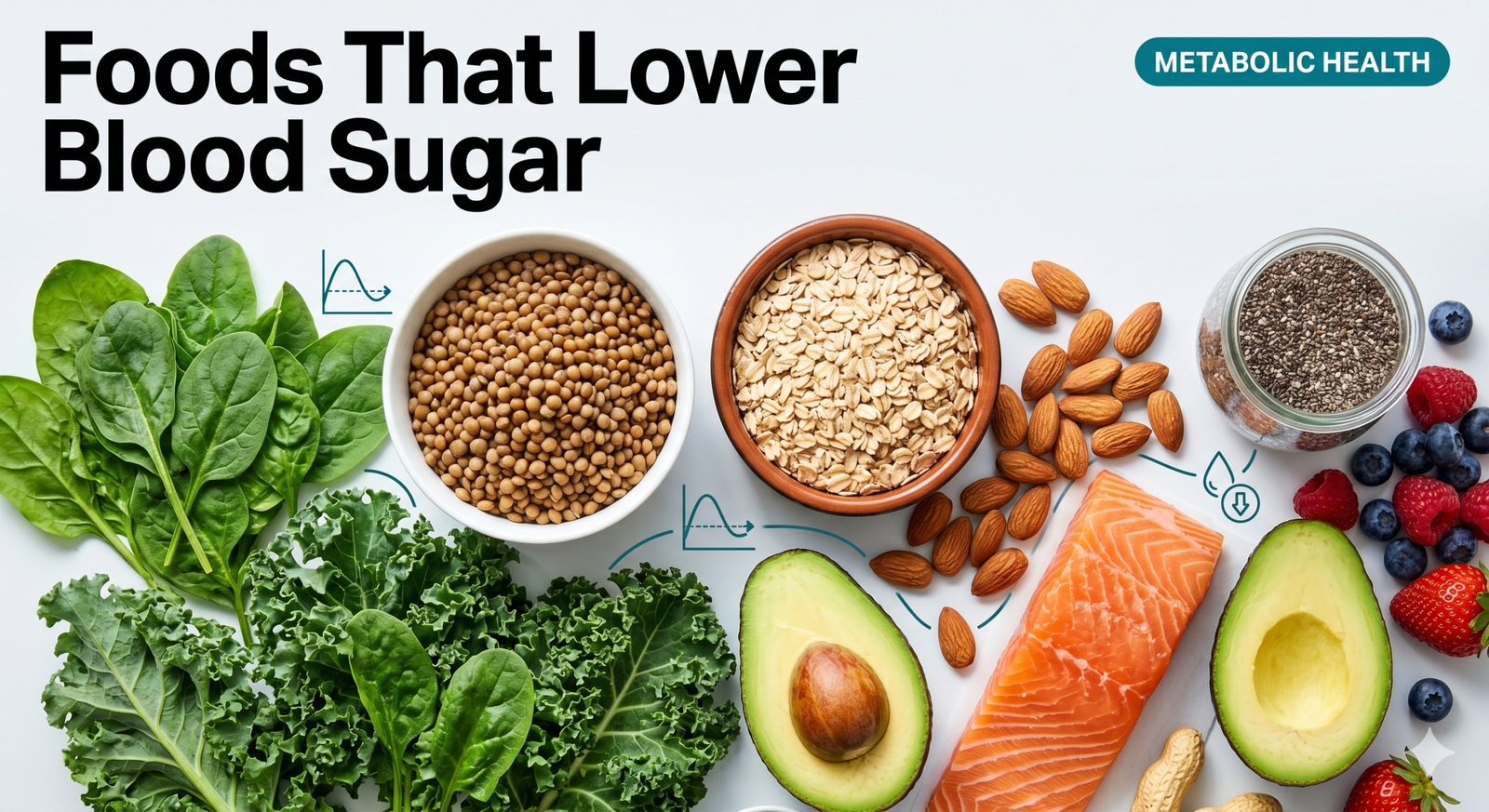
If your energy crashes after meals or you worry about your numbers, the right foods that lower blood sugar can make a real difference. What you put on your plate has a direct effect on how steady or shaky your blood sugar stays through the day.
Balanced blood sugar is not just a concern for people with diabetes. Steady levels mean stable energy, fewer cravings, better focus, and lower long-term health risks for everyone. The best part is that simple, everyday foods can help you get there.
In this guide, you will learn the 12 best foods that lower blood sugar, how they work, which foods to limit, and the daily habits that keep your levels balanced. These are practical choices, not strict diets, designed to support your health without making meals boring.
Table of Contents
Why Blood Sugar Balance Matters So Much
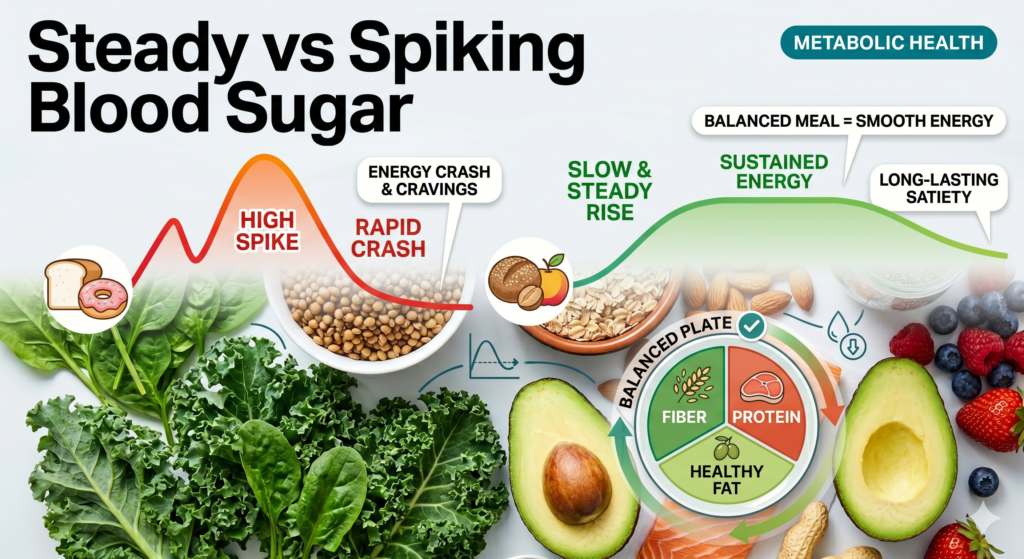
Blood sugar is the fuel your cells run on, but balance is everything. When levels swing too high and then crash, you feel it as fatigue, brain fog, irritability, and strong cravings for more sugar.
Over time, repeated spikes put stress on your body. They push your pancreas to release more and more insulin, which can slowly lead to insulin resistance, the early stage behind type 2 diabetes. Keeping blood sugar steady protects you from this long road.
Steady blood sugar also supports your heart, weight, and mood. Many people who balance their levels notice they snack less, sleep better, and feel calmer. To understand where this path can lead if ignored, our article on prediabetes vs type 2 diabetes explains the warning stages clearly.
The encouraging truth is that food is one of your most powerful tools. The right foods that lower blood sugar slow digestion, blunt spikes, and keep your energy on an even keel from morning to night.
What makes this approach so practical is that it does not require giving up the foods you love. It is about balance, timing, and smart swaps rather than strict rules. Even people with steady levels benefit, because avoiding constant spikes protects energy, mood, and metabolic health for the long run.
How Foods That Lower Blood Sugar Actually Work
The foods that lower blood sugar share a few common features. Once you understand them, you can build balanced meals without memorizing endless lists.
The first feature is fiber. Soluble fiber, found in oats, beans, and seeds, forms a gel in your gut that slows how fast sugar enters your blood. This flattens the spike after eating. Our guide on fiber for gut health and blood sugar shows how powerful this simple nutrient can be.
The second feature is protein and healthy fat. Both slow digestion and keep you full, which prevents the rapid rise that refined carbs cause. The third is a low glycemic impact, meaning the food releases its energy slowly rather than all at once.
When a meal combines fiber, protein, and fat, your blood sugar rises gently and falls gently. That is the entire goal. The foods below all bring at least one of these qualities, and many bring all three.
12 Best Foods That Lower Blood Sugar
Here are the 12 best foods that lower blood sugar, with simple ways to enjoy each one.
1. Leafy Greens
Spinach, kale, and other greens are very low in carbs and rich in fiber and magnesium. They barely raise blood sugar and pair well with almost any meal.
2. Beans and Lentils
Beans and lentils combine slow carbs, fiber, and protein. They digest gradually, which keeps blood sugar steady for hours and keeps you full.
3. Whole Oats
Whole or steel-cut oats are packed with soluble fiber that slows sugar release. Choose plain oats over sugary instant packets for the best effect.
4. Nuts
Almonds, walnuts, and pistachios offer healthy fat, protein, and fiber with very few fast carbs. A small handful makes a blood-sugar-friendly snack.
5. Fatty Fish
Salmon, mackerel, and sardines provide omega-3 fats and protein without raising blood sugar. Our guide on omega-3 benefits and food sources explains why these fats matter for metabolic health.
6. Chia and Flax Seeds
These tiny seeds are loaded with soluble fiber that thickens in the gut and slows digestion. Stir them into yogurt, oats, or smoothies for an easy boost.
7. Greek Yogurt
Plain Greek yogurt offers protein and probiotics with little sugar. It supports steady energy and a healthy gut, both of which influence blood sugar.
8. Berries
Strawberries, blueberries, and raspberries are lower in sugar than most fruit and high in fiber and antioxidants. They satisfy a sweet craving without a big spike.
9. Cinnamon
Cinnamon may help improve insulin sensitivity and steady blood sugar. Sprinkle it on oats, yogurt, or fruit for flavor with a possible metabolic benefit.
10. Garlic
Garlic adds flavor with almost no carbs and has been linked to better blood sugar control. It makes nearly any savory dish healthier.
11. Avocado
Avocado is rich in healthy fat and fiber and very low in carbs. Adding it to meals slows digestion and helps keep your levels stable.
12. Non-Starchy Vegetables
Broccoli, peppers, cucumbers, and cauliflower fill your plate with fiber and nutrients while barely touching blood sugar. They are the foundation of a steady-energy meal.
Foods That Spike Blood Sugar to Limit
Choosing better foods works best when you also cut back on the ones that cause sharp spikes. You do not have to ban them, just enjoy them less often and in smaller amounts.
Sugary drinks are the biggest offenders. Soda, sweetened juice, and energy drinks flood your blood with sugar in seconds. White bread, white rice, and refined pastries act almost the same way, since they digest very fast.
Sweets, candy, and many breakfast cereals combine sugar with refined flour for a double spike. Even some “healthy” foods like flavored yogurts and granola bars hide a lot of added sugar. If cravings for these foods are a struggle, our guide on how to reduce sugar cravings can help you cut back without feeling deprived.
Simple Daily Habits That Steady Blood Sugar
Food choices matter most, but a few daily habits make your blood-sugar-friendly meals work even better.
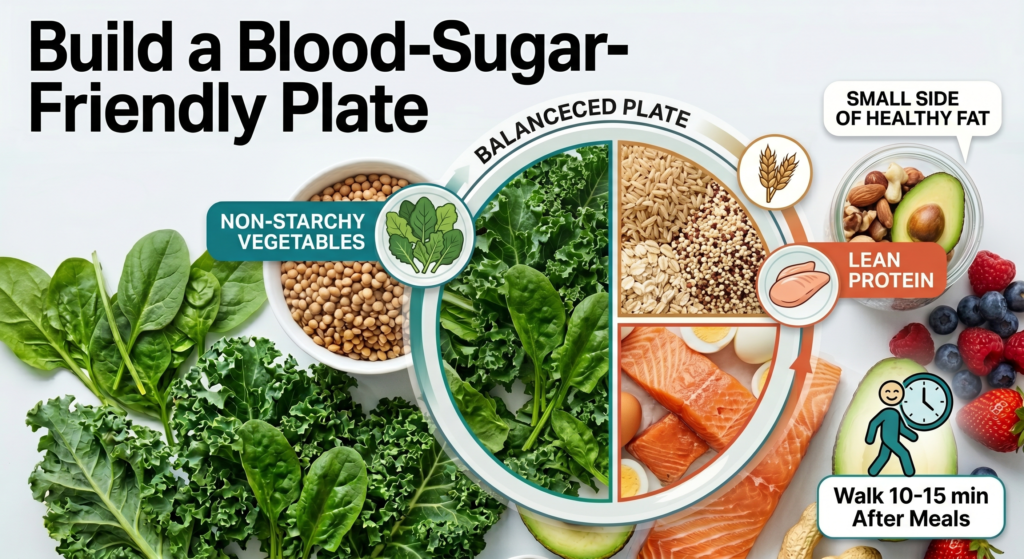
Move after you eat. A short ten to fifteen minute walk after meals helps your muscles pull sugar from your blood, lowering the spike. Our comparison of a morning vs night walk for weight loss helps you fit it in.
Build each plate in a smart order, with vegetables and protein first and starchy carbs last. Sleep well too, since poor sleep raises blood sugar the next day, as explained in our article on sleep and type 2 diabetes. Finally, stay active overall, because muscle helps your body manage sugar, a link covered in our guide on muscle mass and metabolic health.
Two more simple habits help a lot. Stay hydrated, since even mild dehydration can concentrate blood sugar and make levels harder to manage. And keep stress in check, because stress hormones like cortisol push blood sugar up, even when you eat well. A few minutes of deep breathing, a short walk, or any calming routine supports both your mind and your metabolic health.
According to the Centers for Disease Control and Prevention, pairing balanced eating with regular movement is one of the most effective ways to keep blood sugar in a healthy range.
Track Your Health and Numbers
Knowing your daily needs makes healthy eating far easier. When you eat enough balanced food at the right times, your blood sugar stays steadier and cravings fade.
Use our free calorie calculator to find your daily target, and the BMI calculator to track your overall health trend. Adding more foods that lower blood sugar to balanced meals supports both your energy and your long-term wellness.
The Harvard T.H. Chan School of Public Health recommends focusing on whole, high-fiber carbohydrates rather than refined ones, which fits perfectly with the foods in this guide. Small, steady changes add up to real results over time.
Frequently Asked Questions
What foods lower blood sugar the fastest?
Non-starchy vegetables, leafy greens, beans, and foods high in soluble fiber like oats and chia seeds help steady blood sugar quickly. Pairing them with protein and healthy fat slows sugar release even more.
What should I eat to keep blood sugar stable all day?
Build meals around fiber, protein, and healthy fat, such as eggs with vegetables, lentils with greens, or yogurt with berries and seeds. This combination prevents the spikes and crashes that cause cravings.
Can foods alone control blood sugar?
Healthy foods are powerful, but they work best alongside movement, good sleep, and, when needed, medical care. People with diabetes should never change medication without a doctor’s guidance.
Are fruits bad for blood sugar?
Most whole fruits are fine in moderation, especially lower-sugar options like berries. Whole fruit comes with fiber that slows sugar absorption, unlike fruit juice, which spikes blood sugar fast.
Does cinnamon really lower blood sugar?
Some research suggests cinnamon may modestly improve insulin sensitivity. It is not a cure, but adding it to meals is a simple, flavorful way to support steady blood sugar.
How quickly will these foods help?
Many people notice steadier energy and fewer crashes within days of eating more balanced meals. Bigger changes in long-term markers take weeks to months of consistent habits.
Are these foods good for people with diabetes?
Yes, these foods that lower blood sugar suit most people managing diabetes, but always follow your doctor’s or dietitian’s personal advice, since needs and medications differ from person to person.
Final Thoughts
The best foods that lower blood sugar are simple, affordable, and easy to add to everyday meals. Leafy greens, beans, oats, nuts, and berries help you trade energy crashes for steady, lasting fuel.
Start with one or two changes this week. Add vegetables and protein to each plate, swap sugary drinks for water, and take a short walk after meals. These small steps steady your blood sugar and protect your health for years to come.
Use the free tools on Vitality Nexus to balance your nutrition, and explore our diabetes and metabolic health guides for more practical, science-backed ways to keep your blood sugar in a healthy range.
Medical Disclaimer: This article is for general information only and is not medical advice. It is not a substitute for treatment. If you have diabetes or blood sugar concerns, please follow the guidance of a qualified doctor or dietitian and never stop or change medication on your own.