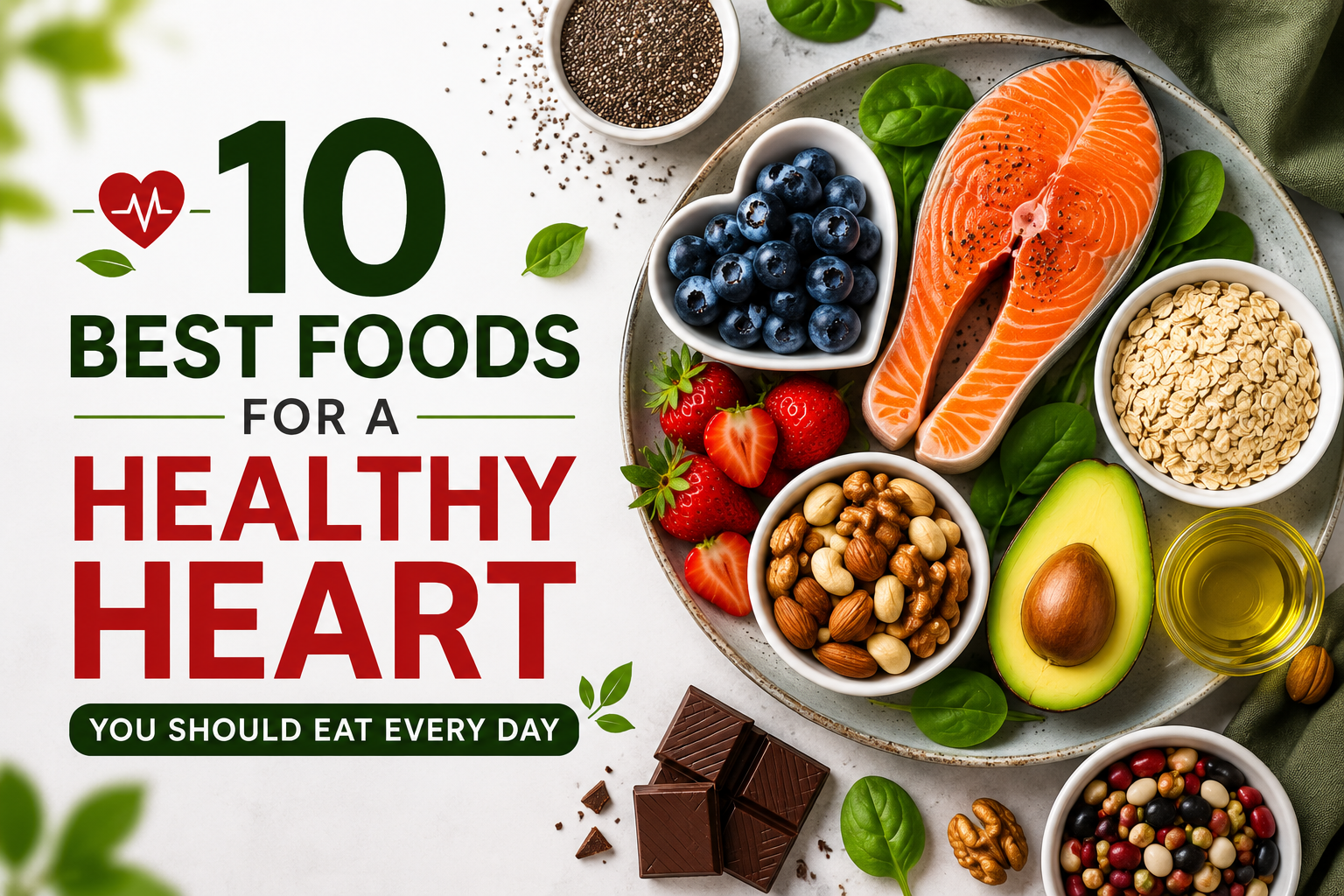
If you’re searching for foods for a healthy heart, the short answer is that no single food does the job on its own — but a pattern built around whole foods, fiber, unsaturated fats, fruits and vegetables, whole grains, legumes, and fish is one of the most well-supported ways to support cardiovascular health over time. Certain foods for a healthy heart show up again and again in the research because of the specific nutrients and plant compounds they provide.
This guide focuses on what to eat — the ten foods worth having on your plate regularly, and the nutrients that make them useful for heart health. If you’re looking for meal ideas that put these ingredients to work, our healthy heart recipes guide covers that side of things in detail.
Quick Answer
Here’s a quick answer: some of the best foods for a healthy heart are fatty fish, oats, berries, leafy greens, nuts, avocado, beans and legumes, whole grains, extra-virgin olive oil, and dark chocolate eaten in moderation. Together, they supply omega-3 fatty acids, soluble fiber, potassium, and unsaturated fats — nutrients consistently linked to healthier cholesterol levels, blood pressure, and overall cardiovascular function.
10 Best Foods for a Healthy Heart
1. Fatty Fish
Fatty fish such as salmon, mackerel, sardines, and tuna are among the richest food sources of omega-3 fatty acids (EPA and DHA). These fats are associated with lower triglyceride levels and may help support healthy blood vessel function.
How to eat it: A couple of servings a week, baked, grilled, or roasted. What to look for: Fresh/frozen fillets without breading, or water-packed canned varieties. Caveat: Pregnant/breastfeeding people should follow mercury-lower fish guidance; anyone on blood thinners should ask a doctor before fish oil supplements specifically.
2. Oats
Oats provide beta-glucan, a soluble fiber that forms a gel-like substance in digestion. Trials show at least 3g of oat beta-glucan daily can modestly lower LDL cholesterol without lowering HDL.
How to eat it: Oatmeal with berries and nuts. What to look for: Plain oats over sugary instant packets.
3. Berries
Blueberries, strawberries, raspberries, and blackberries are rich in fiber and polyphenols, linked to improvements in blood pressure and cholesterol profile in research.
How to eat it: Fresh or frozen, in oatmeal, yogurt, or smoothies. What to look for: Frozen unsweetened berries are a solid year-round option.
4. Leafy Greens
Spinach, kale, and collard greens are notable sources of potassium, dietary nitrates, and vitamin K — relevant to blood pressure and blood vessel function.
How to eat it: Swap into salads, soups, stir-fries. Caveat: People on warfarin may need consistent vitamin K intake — discuss with a doctor.
5. Nuts
Almonds, walnuts, and pistachios provide unsaturated fats, fiber, and plant compounds tied to improved LDL cholesterol and cardiovascular risk markers.
How to eat it: A small daily handful. What to look for: Unsalted or lightly salted. Caveat: Calorie-dense — portion matters.
6. Avocado
High in monounsaturated fat and potassium, linked to healthier LDL/HDL and blood pressure support.
How to eat it: In place of butter or mayo, or sliced into salads and grain bowls.
7. Beans and Legumes
Strong sources of soluble fiber and potassium; legume-rich diets are linked to improved blood pressure and cholesterol.
How to eat it: Add rinsed canned beans to soups and salads, or use lentils in place of some meat. What to look for: Low-sodium canned varieties.
8. Whole Grains
Quinoa, brown rice, barley, and farro retain fiber-rich bran and germ, linked to lower LDL cholesterol and healthier blood pressure versus refined grains.
How to eat it: Make at least half your grain choices whole grains. What to look for: “Whole grain” or a named whole grain as the first ingredient.
9. Extra-Virgin Olive Oil
Central to the Mediterranean eating pattern; rich in monounsaturated fat and polyphenols, associated with favorable LDL and inflammation effects when replacing saturated fat.
How to eat it: In place of butter, or drizzled over vegetables and whole-grain bread. What to look for: “Extra-virgin,” dark glass or tin, used within a few months of opening.
10. Dark Chocolate
Cocoa flavanols are studied for supporting blood vessel function and modest blood pressure benefits, though effect sizes vary by study and dose.
How to eat it: A square or two of 70%+ cacao chocolate a few times a week. What to look for: Cocoa/chocolate as the first ingredient, 70%+ cacao. Caveat: Calorie-dense and sometimes high in added sugar — an “in moderation” food.
Nutrients to Look for in Heart-Healthy Foods
Once you know which foods for a healthy heart to prioritize, it helps to understand the specific nutrients behind their benefits.
Soluble Fiber — Forms a gel in digestion, helps lower LDL cholesterol by reducing cholesterol absorption. Oats, beans, and fruit are top sources; 5–10g/day is linked to meaningful LDL reductions.
Potassium — Helps balance sodium and supports blood vessel tone, relevant to blood pressure. Found in leafy greens, beans, avocado. Those with kidney disease or on certain BP medications should manage intake carefully with a provider.
Omega-3 Fatty Acids — EPA and DHA from fatty fish are linked to lower triglycerides and healthier blood vessel function.
Unsaturated Fats — Monounsaturated (olive oil, avocado, nuts) and polyunsaturated (fish, some plant oils) fats support healthier cholesterol when they replace saturated fat rather than just adding calories.
Dietary Fiber — Total fiber from whole grains, beans, fruits, and vegetables is linked to lower cardiovascular risk in large studies.
How to Add These Foods to Your Diet Every Day
Working these foods for a healthy heart into your routine doesn’t require a full diet overhaul:
- Breakfast: Oats + berries + nuts
- Lunch: Leafy greens + beans + olive oil
- Snack: Fruit + unsalted nuts
- Dinner: Fatty fish + whole grain + vegetables
- Dessert (optional): A small square of dark chocolate
What About Portion Size?
Nuts, olive oil, and dark chocolate are nutrient-dense but also calorie-dense — a quarter-cup of nuts, a tablespoon or two of oil, and a square or two of chocolate are reasonable everyday amounts. Choose minimally processed versions where possible, watch sodium in canned foods, and treat portions as a starting point rather than a strict rule.
Foods to Limit for Better Heart Health
Choosing more foods for a healthy heart is only half the equation. Worth limiting: highly processed/ultra-processed foods, foods high in saturated fat, foods high in sodium, sugar-sweetened beverages, processed meats, and foods with trans fats. No single food causes heart disease alone — the overall pattern matters most. Food is also just one piece of the picture; daily habits like activity, sleep, and stress management matter too, covered in our guide to heart-healthy habits.
Learn More From Trusted Health Sources
Frequently Asked Questions
What are the best foods for a healthy heart? Fatty fish, oats, berries, leafy greens, nuts, avocado, beans, whole grains, extra-virgin olive oil, and dark chocolate (in moderation) are among the foods most consistently linked to heart health in research, largely due to their fiber, omega-3, and unsaturated fat content.
What should I eat every day for heart health? A mix of whole grains, fruits and vegetables, legumes, nuts, and unsaturated fats like olive oil forms a strong daily foundation, with fatty fish a couple of times a week and highly processed foods, added sugar, and excess sodium kept to a minimum.
What is the best food for your heart? There isn’t one single “best” food — cardiovascular health depends on your overall eating pattern. That said, fatty fish and oats are two of the most frequently cited standouts because of their strong evidence base for omega-3s and cholesterol-lowering fiber.
Are oats good for heart health? Yes. Oats contain beta-glucan, a soluble fiber shown in multiple clinical trials to modestly lower LDL cholesterol when consumed regularly in amounts of at least 3 grams a day.
Are berries good for your heart? Berries provide fiber and antioxidant polyphenols that have been associated with improvements in blood pressure and cholesterol markers in research, making them a useful daily addition rather than an occasional treat.
Are nuts good for heart health? Yes, in reasonable portions. Nuts provide unsaturated fats and fiber linked to healthier cholesterol levels, though their calorie density means a small daily handful is a more practical target than unlimited amounts.
Is olive oil good for your heart? Extra-virgin olive oil, particularly when used in place of butter or other saturated fats, is associated with favorable effects on cholesterol and inflammation and is a core fat source in the well-studied Mediterranean eating pattern.
What fish is best for heart health? Fatty fish like salmon, mackerel, sardines, and tuna are the best sources of the omega-3 fatty acids EPA and DHA, which are associated with lower triglycerides and healthier blood vessel function.
Are beans good for heart health? Yes. Beans and legumes are rich in soluble fiber and potassium, and diets higher in legumes have been linked to improvements in blood pressure and cholesterol in research.
Is dark chocolate good for your heart? In moderation, dark chocolate with a high cacao percentage (70% or more) provides cocoa flavanols associated with modest blood pressure and blood vessel benefits in clinical studies — but it’s calorie-dense, so a small amount a few times a week is a sensible approach rather than a daily habit.