Belly fat is not just a cosmetic concern. It is a metabolic and health problem that requires a different approach than weight loss in other areas of the body.
Visceral fat, which is the abdominal fat that accumulates around organs, is metabolically active tissue that produces inflammatory compounds and is closely linked to insulin resistance, metabolic syndrome, cardiovascular disease, and type 2 diabetes. It is stubborn to lose and is often the last fat to disappear even when overall weight is decreasing.
The reason belly fat is so difficult to lose is that it is not just about calorie balance or exercise. It is about hormonal regulation, specifically insulin and cortisol, and about the specific foods you eat that either promote or reduce abdominal fat accumulation.
The good news is that certain foods that burn belly fat work through specific mechanisms that target visceral fat accumulation directly rather than just contributing to general weight loss. Understanding which foods these are and how to use them strategically produces far better results than simply eating less or exercising more without attention to the specific foods involved.
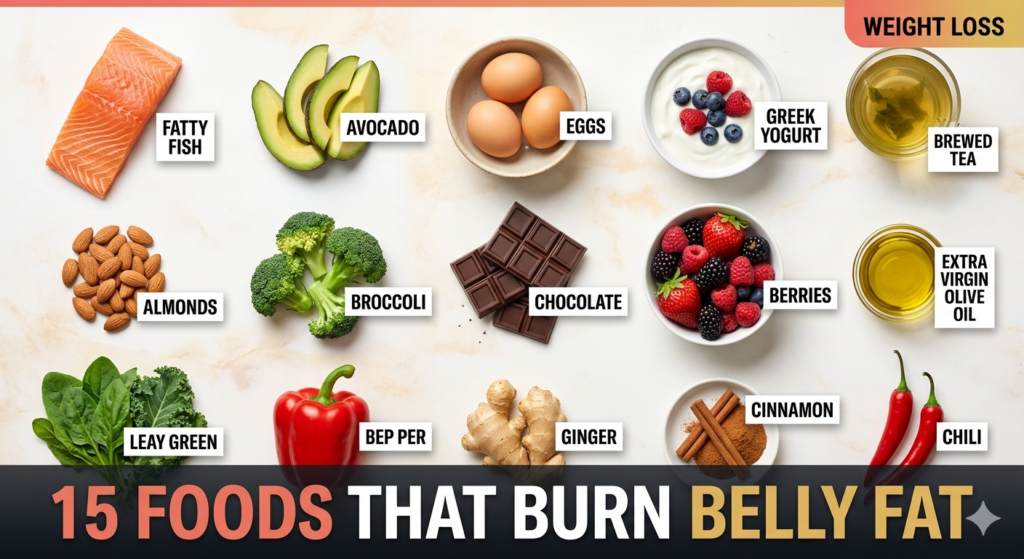
This guide covers 15 evidence-based foods that have been shown in research to specifically support belly fat reduction, explains the mechanisms through which they work, and shows you how to incorporate them strategically into a diet that produces measurable abdominal fat loss.
Table of Contents
Why Belly Fat Requires a Different Approach
Visceral abdominal fat responds differently to dietary changes than fat in other areas. It is particularly sensitive to insulin levels, cortisol levels, and the inflammatory state of the body. This means that the foods that most directly reduce belly fat are those that address these specific mechanisms rather than foods that simply reduce overall calories.
Insulin resistance is one of the strongest predictors of visceral fat accumulation. When the cells of the body respond poorly to insulin signals, the pancreas compensates by producing more insulin. High insulin levels directly promote the storage of dietary fat, particularly around the abdomen. Foods that improve insulin sensitivity or that do not trigger large insulin spikes therefore preferentially reduce belly fat.
Cortisol, the primary stress hormone, also plays a specific role in abdominal fat accumulation. Chronically elevated cortisol promotes visceral fat storage as part of the evolutionary survival response to perceived scarcity. Foods and habits that reduce cortisol therefore support belly fat loss.
Inflammation is elevated in people with significant visceral fat, and foods with anti-inflammatory properties support the reduction of both inflammation and the visceral fat that produces it. This creates a positive feedback loop where reducing inflammatory belly fat through anti-inflammatory foods further reduces the inflammation that drives more fat accumulation.
According to research published by the American Heart Association, visceral abdominal fat is associated with significantly increased cardiovascular risk independent of overall body weight, making targeted belly fat reduction a meaningful health intervention beyond simple aesthetics.
Understanding these mechanisms shows why certain foods are disproportionately effective for belly fat loss while others, even if they are healthy overall, do not preferentially target visceral fat.
1. Fatty Fish Including Salmon and Mackerel
Fatty fish including salmon, mackerel, sardines, and herring are among the most potent foods that burn belly fat through multiple complementary mechanisms.
The omega-3 fatty acids EPA and DHA in fatty fish directly reduce the visceral fat that tends to accumulate around the abdomen. Research has found that men with higher omega-3 intake have significantly less visceral abdominal fat than those with lower intake, independent of overall body weight. The mechanism involves the omega-3s reducing the inflammatory state that drives visceral fat accumulation.
Beyond the direct anti-inflammatory effect, omega-3s improve insulin sensitivity, which reduces the high insulin levels that promote abdominal fat storage. They also have a modest appetite-suppressing effect and increase satiety, which supports the modest caloric deficit that sustainable fat loss requires.
Additionally, the high protein content of fish supports muscle preservation during fat loss, maintains metabolic rate, and promotes the satiety that makes maintaining a diet sustainable.
The practical target is fatty fish at least two to three times per week. Salmon and mackerel are the most accessible options in most regions. Sardines and herring are highly cost-effective alternatives. Each serving provides approximately two to three grams of EPA and DHA, the omega-3s specifically shown in research to reduce visceral fat.
For comprehensive guidance on omega-3 foods and supplementation, read our article on omega-3 fatty acids benefits and food sources.
2. Whole Eggs
Whole eggs are one of the most completely overlooked and most effective foods that burn belly fat, particularly for men.
Eggs provide the complete amino acid profile needed for protein synthesis, the cholesterol that serves as the precursor for testosterone production, and specific micronutrients including choline that support the metabolic processes involved in fat burning.
Research has found that people who eat eggs at breakfast instead of carbohydrate-based breakfasts show greater abdominal fat loss over time despite identical overall calorie intake. The mechanism involves the higher protein and fat content of eggs producing greater satiety, which reduces total daily calorie intake. Additionally, the specific amino acids in eggs may have direct effects on the signaling pathways that regulate visceral fat storage.
The yolk is where the most beneficial nutrients reside. The misconception that egg yolks should be avoided due to cholesterol has been substantially revised in current nutrition science. For most people, whole eggs, including the yolk, are both safe and specifically beneficial for the hormonal and metabolic health that supports belly fat loss.
The practical target is three to four whole eggs per day as part of a diet focused on belly fat reduction. Including them at breakfast specifically has the most consistent research support for appetite suppression and reduced total daily intake.
3. Greek Yogurt
Greek yogurt is one of the most protein-dense dairy foods available and has specific benefits for belly fat reduction beyond its general nutritional value.
The high protein content of Greek yogurt supports muscle preservation during fat loss and provides the satiety that reduces overall calorie intake without conscious restriction. The specific whey proteins in yogurt have been shown in research to support the preferential loss of visceral abdominal fat compared to other fat depots when combined with resistance training.
Additionally, the probiotics in plain yogurt with live cultures support the gut microbiome, which influences the hormonal regulation of appetite and the metabolic efficiency of fat storage and burning.
The practical implementation is important. Flavored yogurts contain added sugars that trigger insulin spikes and undermine the benefits. Plain Greek yogurt is the appropriate choice, with sweetness and additional nutrition provided through addition of berries, honey, or nuts rather than through the yogurt itself.
The target is approximately one to two servings of plain Greek yogurt per day, either as a standalone snack or as part of a meal. This provides sufficient protein and probiotics to support the mechanisms that reduce visceral fat.
4. Green Tea
Green tea has been extensively researched for its effects on body weight and fat loss, with particular attention to its effects on visceral abdominal fat.
The catechins in green tea, particularly epigallocatechin gallate (EGCG), have been shown to increase fat oxidation, particularly when combined with caffeine. The mechanism appears to involve increased sympathetic nervous system activation and improved mitochondrial efficiency for fat burning. Multiple meta-analyses of controlled research have found that regular green tea consumption is associated with modest but consistent fat loss, with the effect being most pronounced for visceral abdominal fat.
The effect is modest but real. People consuming three to four cups of green tea per day or the equivalent in green tea extract supplementation show measurably greater abdominal fat loss than those not consuming green tea when other dietary and exercise factors are controlled.
The practical implementation is to consume three to four cups of green tea daily, or to use green tea extract supplementation. The caffeine in green tea contributes to the fat-burning effect, though decaffeinated green tea retains the catechins and shows similar though slightly reduced effects.
For more on how different beverages affect weight loss and metabolism, read our article on how to lose weight by drinking green tea.
5. Avocado
Avocado is a unique food that simultaneously provides healthy fat, supports satiety, and has specific anti-inflammatory properties that reduce visceral fat accumulation.
The monounsaturated fat in avocado, primarily oleic acid, supports hormonal health and reduces the insulin response to meals. The fiber in avocado supports blood sugar stability and the gut microbiome that influences metabolic regulation. And the specific phytochemicals in avocado have anti-inflammatory and antioxidant properties that reduce the inflammatory state driving visceral fat accumulation.
The high satiety factor of avocado means that including it in meals reduces overall calorie intake without conscious restriction, making it one of the most practical foods for sustainable weight loss and belly fat reduction.
The practical target is one-half to one whole avocado per day as part of meals where it adds to satiety and nutrient density without requiring additional calories beyond the avocado itself.
6. Almonds and Tree Nuts
Tree nuts including almonds, walnuts, and Brazil nuts are among the most researched foods for weight management and have specific benefits for visceral belly fat reduction.
Research has found that people consuming regular amounts of tree nuts show greater weight loss and fat loss, particularly from the abdominal region, than those not consuming nuts despite the nuts being energy-dense foods. The mechanism involves the high satiety factor of nuts, their beneficial fat composition, and their positive effects on metabolic regulation.
The protein and healthy fats in nuts support the metabolic health that favors fat burning over fat storage. The specific ratio of saturated to unsaturated fat in nuts supports the hormonal environment that opposes visceral fat accumulation.
The practical implementation is approximately one ounce (approximately 23 almonds or a small handful) of raw or roasted unsalted nuts daily as a snack or as part of a meal. This provides sufficient volume to support satiety without excessive calories.
Avoid roasted and salted nuts where the salt and added oils increase calorie content and may promote water retention that obscures progress.
7. Broccoli and Cruciferous Vegetables
Cruciferous vegetables including broccoli, cauliflower, and Brussels sprouts have specific anti-inflammatory properties and support the metabolic processes that reduce visceral fat.
The compound indole-3-carbinol in cruciferous vegetables supports the metabolism and clearance of estrogen, which when elevated relative to other hormones promotes fat storage particularly around the abdomen. By improving estrogen metabolism, cruciferous vegetables support a more favorable hormonal environment for fat loss.
The fiber content of these vegetables supports blood sugar stability and the gut microbiome. The low calorie density combined with high fiber and water content means these vegetables can be eaten in large amounts with minimal caloric consequence, supporting satiety and the modest deficit required for fat loss.
The practical target is two to three servings of cruciferous vegetables per day, either raw, steamed, or roasted. This volume provides adequate indole-3-carbinol and fiber to support the mechanisms that reduce visceral fat.
8. Dark Chocolate
Dark chocolate has emerged as one of the most evidence-backed foods that burn belly fat, though with important caveats about quantity and quality.
The polyphenols in dark chocolate, particularly from cacao with 70 percent cacao content or higher, reduce systemic inflammation and improve insulin sensitivity. Research has found that people consuming small amounts of high-cacao dark chocolate show greater weight loss and specifically greater visceral fat loss than those not consuming it, with the effect being independent of overall caloric intake differences.
The mechanism appears to involve the polyphenols improving endothelial function and supporting vascular health that improves metabolic efficiency. Additionally, dark chocolate provides a sense of satisfaction and pleasure with minimal calories, supporting dietary adherence.
The critical detail is quantity. The beneficial effect is seen with approximately one to one and a half ounces of high-cacao dark chocolate daily, not with larger quantities. More than this amount becomes excessive in calories and negates the benefits.
The practical implementation is one small piece or approximately one ounce of 70 to 85 percent cacao dark chocolate daily, ideally after a meal or in the afternoon to satisfy cravings for sweets without creating additional hunger.
9. Berries
Berries including blueberries, raspberries, and strawberries are among the most nutrient-dense and lowest-calorie fruits available and have specific properties that support belly fat reduction.
The polyphenols in berries reduce inflammation, improve insulin sensitivity, and support vascular health. The low glycemic index of berries means they do not trigger significant insulin spikes even though they taste sweet. The high fiber content supports satiety and the gut microbiome.
Research has found that people consuming regular amounts of berries show greater reduction in visceral abdominal fat than those consuming other fruits, with the effect being independent of overall weight loss. The specific antioxidants in berries appear to preferentially reduce the inflammatory state that drives visceral fat accumulation.
The practical target is approximately one to two cups of fresh or frozen berries daily. Frozen berries are equally beneficial nutritionally and often more affordable than fresh. Avoid berry products that have added sugar including commercial berry yogurts or granolas where the added sugar undermines the benefits.
10. Extra Virgin Olive Oil
Extra virgin olive oil is one of the most researched foods for metabolic health and has specific benefits for visceral fat reduction when used appropriately.
The monounsaturated fats and polyphenols in olive oil reduce inflammation, improve insulin sensitivity, and support the hormonal environment that opposes visceral fat accumulation. Research has found that diets rich in olive oil, such as the Mediterranean diet, are associated with significantly less visceral abdominal fat than diets low in olive oil despite not necessarily being lower in overall calories.
The mechanism appears to involve the polyphenols in olive oil directly reducing inflammatory markers, improving vascular function, and supporting metabolic efficiency. Additionally, olive oil contributes to the satiety that supports modest caloric deficit without hunger.
The practical implementation is using extra virgin olive oil as the primary cooking fat and as the base for dressings and marinades. Approximately two to three tablespoons per day provides sufficient volume to support the mechanisms that reduce visceral fat without excessive calories.
Quality matters significantly. True extra virgin olive oil retains the polyphenols and has superior anti-inflammatory properties compared to refined olive oils. Cold-pressed, first-extraction oils are the highest quality.
11. Leafy Greens
Leafy greens including spinach, kale, and Swiss chard are among the lowest-calorie foods available and have specific properties that support belly fat reduction beyond their low energy density.
The magnesium in leafy greens supports the metabolic processes involved in fat oxidation and energy production. The nitrates in leafy greens improve vascular function and support metabolic efficiency. And the fiber in leafy greens supports satiety and the gut microbiome that influences metabolic regulation.
Additionally, the specific compounds in leafy greens reduce systemic inflammation, creating the metabolic environment that favors fat loss and particularly belly fat reduction.
The practical target is including leafy greens at multiple meals throughout the day, either as salads, in smoothies, cooked as side dishes, or incorporated into other meals. The volume can be substantial without caloric consequence, supporting the satiety needed for sustainable fat loss.
12. Red Peppers
Red peppers have unique properties that make them specifically supportive of belly fat reduction through multiple mechanisms.
The compound capsaicin in red peppers increases thermogenesis, the burning of calories to produce heat, and increases the metabolic rate slightly. Research has found that people consuming capsaicin-containing peppers show modest increases in fat oxidation and metabolic rate.
Additionally, red peppers are rich in vitamin C and other antioxidants that reduce systemic inflammation. They are low in calories and high in fiber, supporting satiety. And they contain a compound called capsinoid that activates the sympathetic nervous system in a way that favors fat burning.
The practical implementation is including red peppers in meals regularly, either raw as snacks or vegetables, or incorporated into cooked dishes. The amount needed for the metabolic effect is modest, making this an easy addition to incorporate.
13. Ginger
Ginger has been extensively researched for its effects on metabolism and inflammation and has specific benefits for visceral belly fat reduction.
The gingerol and shogaol compounds in ginger increase thermogenesis, support fat oxidation, and reduce systemic inflammation. Research has found that ginger consumption is associated with modest but consistent weight loss and specifically with reduction in visceral abdominal fat.
The mechanism appears to involve ginger activating brown adipose tissue, which is metabolically active fat that burns calories for heat production, and supporting the metabolic processes of fat oxidation.
The practical implementation is including fresh ginger in meals, teas, or smoothies daily. Approximately one to two grams of fresh ginger per day provides sufficient volume to support the metabolic effects.
14. Cinnamon
Cinnamon has emerged as one of the most evidence-backed spices for blood sugar control and has specific benefits for belly fat reduction particularly in people with insulin resistance.
The compounds in cinnamon improve insulin sensitivity and reduce blood glucose spikes after meals. Research has found that people with prediabetes or insulin resistance who consume cinnamon daily show greater weight loss and specifically greater visceral fat loss compared to those not consuming it.
The mechanism appears to involve improved insulin sensitivity reducing the high insulin levels that promote abdominal fat storage. Additionally, cinnamon provides a sense of sweetness and satisfaction with no calories, supporting dietary adherence.
The practical implementation is adding cinnamon to foods daily, either sprinkled on oatmeal, added to beverages, used in cooking, or taken as a supplement. Approximately one to two teaspoons per day provides sufficient volume to support the insulin-sensitizing effects.
15. Chili Peppers
Chili peppers contain the compound capsaicin that produces heat and increases metabolic rate and fat oxidation in ways that support belly fat reduction.
Research has found that capsaicin consumption increases thermogenesis, the amount of calories burned for heat production, by a modest but consistent amount. Additionally, capsaicin reduces hunger and increases satiety, supporting the modest caloric deficit that fat loss requires.
The spiciness of chili peppers also appears to increase dopamine and serotonin, supporting mood and motivation that can help maintain dietary consistency.
The practical implementation is incorporating chili peppers into meals regularly through fresh peppers, dried peppers, hot sauce, or as a spice. The amount needed is modest, with research showing effects with consumption frequencies of several times per week.
How to Build a Belly Fat Reducing Meal Pattern
Rather than following a rigid diet, building a meal pattern that systematically incorporates the foods that burn belly fat produces more sustainable results.
Structure each meal to include a protein source from the options described, healthy fats from olive oil, avocado, nuts, or fish, and abundant vegetables particularly leafy greens and cruciferous vegetables. This combination provides satiety, supports metabolic health, and minimizes insulin spikes that promote belly fat storage.
Breakfast should include whole eggs and berries or Greek yogurt with berries. This combination provides protein, healthy fats, and polyphenols from berries that start the day with the hormonal and metabolic profile that favors belly fat loss.
Lunch and dinner should be built around fatty fish or other protein, supplemented with olive oil-based vegetables or salads, and including another element of the belly fat burning foods. A salmon dinner with roasted broccoli and olive oil dressing. A chicken salad with spinach, peppers, olive oil dressing, and almonds. A steak with Brussels sprouts and an avocado side.
Snacks should include nuts, berries, or dark chocolate rather than processed snack foods. These snacks provide satiety and the polyphenols and healthy fats that support the metabolic state that reduces visceral fat.
Beverages should be green tea, water, or herbal tea rather than sugary drinks or even diet sodas. Green tea specifically provides the catechins that support fat oxidation.
This meal pattern provides the nutrients and metabolic profile that specifically target visceral belly fat while being sustainable and enjoyable to maintain.
For more detailed guidance on meal planning for weight loss, read our article on how many calories should I eat.
Use Our Free Tools to Track Your Progress
Tracking your food consumption and body composition changes helps you understand whether your dietary approach is working specifically for belly fat reduction. These free tools help you make informed decisions.
Calculate Your Daily Calorie Needs Belly fat reduction requires a modest caloric deficit, but that deficit needs to be calibrated for your personal metabolism rather than following generic guidelines. Use our Calorie Calculator to establish your personalized daily target.
Find Your TDEE Use our TDEE Calculator to calculate exactly how many calories your body burns each day accounting for your activity level.
Calculate Your BMR Use our BMR Calculator to understand your resting metabolic rate, which tells you your baseline calorie needs before any activity.
Track Your Body Composition Scale weight is a poor indicator of belly fat specifically because visceral fat loss can occur without changes in scale weight if muscle is being preserved. Use our Body Fat Calculator to track fat percentage specifically.
Monitor Waist Circumference Waist circumference is one of the most specific indicators of visceral abdominal fat. Taking this measurement weekly or bi-weekly gives you visible feedback on whether your dietary approach is specifically reducing belly fat.
Check Your BMI Use our BMI Calculator to monitor overall health metrics alongside your waist-specific measurements.
Find Your Ideal Weight Use our Ideal Weight Calculator to set a realistic goal that accounts for your specific body composition and health objectives.
Foods to Avoid When Targeting Belly Fat
Certain foods actively promote visceral belly fat accumulation and should be minimized or eliminated when targeting this area specifically.
Refined sugars and processed carbohydrates trigger large insulin spikes that directly promote abdominal fat storage. White bread, pastries, sugary cereals, and soft drinks are among the most problematic. These foods produce rapid insulin elevation that signals the body to store energy as fat, particularly around the abdomen.
Alcohol, particularly beer, is associated with visceral fat accumulation through both its caloric contribution and its effects on liver metabolism of fat. When targeting belly fat specifically, alcohol should be minimized or eliminated.
Processed foods high in trans fats, seed oils, and artificial ingredients promote systemic inflammation that drives visceral fat accumulation. These should be replaced with the whole foods described in this guide.
Excess fructose from high-fructose corn syrup and refined fruit juices promotes visceral fat accumulation through a different metabolic pathway than glucose. These should be minimized even though they are carbohydrates, because the specific metabolic effects of fructose preferentially promote belly fat storage.
For comprehensive guidance on foods to avoid for weight loss, read our article on healthy snacks for weight loss which discusses both foods to include and foods to avoid.
FAQ
1. Can you lose belly fat without losing weight overall?
Yes, and this is common when someone is preserving or building muscle while losing fat. Visceral belly fat can be lost substantially while scale weight remains relatively stable if muscle is being maintained through resistance training and adequate protein. This is why measuring waist circumference and body composition is more meaningful than scale weight when targeting belly fat specifically.
2. How long does it take to see results in belly fat reduction?
Visceral belly fat begins to respond to dietary changes relatively quickly, often within two to four weeks of implementing the dietary approach consistently. However, visible changes in abdominal appearance typically take longer, usually four to twelve weeks of consistent adherence depending on the starting point and the degree of dietary change.
3. Do these foods literally burn belly fat or do they just support weight loss generally?
These foods have specific mechanisms that preferentially reduce visceral abdominal fat through their effects on insulin sensitivity, inflammation, and metabolic regulation. While they contribute to overall weight loss through caloric content and satiety effects, they have demonstrated preferential effects on visceral belly fat specifically through research examining fat distribution changes with these foods.
4. Can you eat unlimited amounts of these foods and lose belly fat?
No. While these foods are more satiating and less calorically dense than many alternatives, they still contribute calories and excess consumption undermines weight loss. The benefit comes from using these foods to replace less healthy alternatives and to create satiety that naturally reduces total caloric intake, not from eating unlimited amounts of anything.
5. Are supplements based on these foods effective?
Green tea extract supplements show similar effects to consuming green tea itself. Chili pepper capsaicin supplements show modest fat-burning effects. However, whole foods are generally more effective than isolated compounds because whole foods provide multiple beneficial compounds and nutrients that work synergistically. Supplements should complement rather than replace dietary changes.
6. Does exercise matter for belly fat reduction with these foods?
Yes. While diet is the primary driver of fat loss and belly fat reduction through the mechanisms described, adding resistance training to a dietary approach optimizes the results by preserving muscle mass and improving the hormonal environment. The combination of the dietary approach described plus resistance training produces better belly fat loss results than either alone.
7. How much belly fat can realistically be lost?
Visceral belly fat is typically easier to lose than subcutaneous fat in other areas. People implementing the dietary approach consistently can expect meaningful reduction in belly fat and waist circumference within two to three months. The amount depends on the starting point and the degree of adherence, but reductions of one to two inches in waist circumference over three to six months of consistent implementation are realistic.
Conclusion
Foods that burn belly fat are not about special or exotic ingredients. They are whole foods that you likely have access to and that work through well-understood mechanisms to reduce visceral abdominal fat specifically.
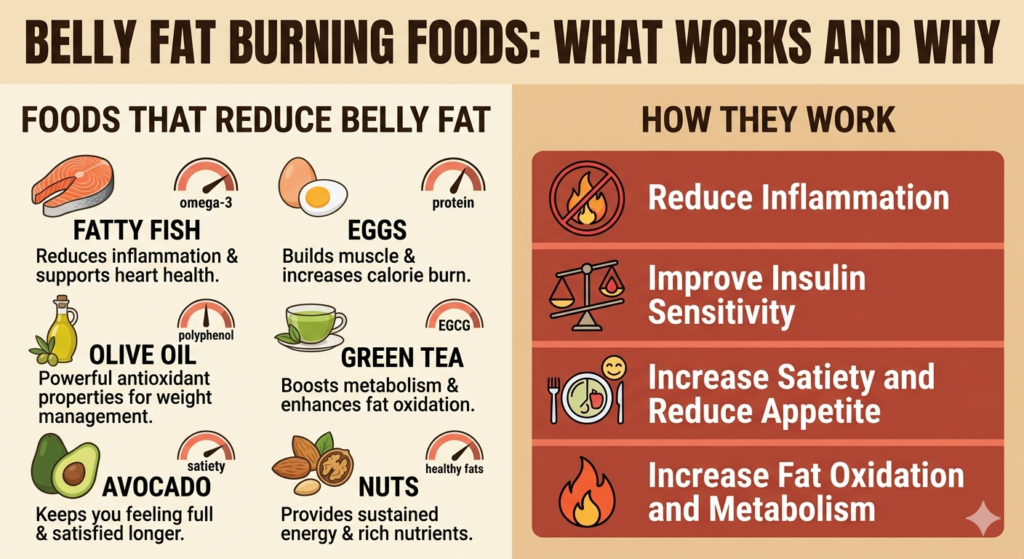
The 15 foods covered in this guide address the specific mechanisms that drive belly fat accumulation: they reduce inflammation, improve insulin sensitivity, increase fat oxidation, and support satiety. Building meals around these foods creates a dietary pattern that preferentially reduces belly fat while being enjoyable and sustainable to maintain.
The foods that reduce belly fat most effectively are not about deprivation or strict restriction. They are about strategic food choices that make the modest deficit required for fat loss easier to sustain because they provide genuine satiety and pleasure alongside their metabolic benefits.
Start by incorporating the easiest of these foods into your current eating pattern. Add fatty fish twice a week. Include leafy greens at lunch and dinner. Switch to green tea for your afternoon beverage. Add olive oil to your salads. Include berries and nuts as snacks. These changes alone produce noticeable reductions in belly fat over weeks and months.
Use our Calorie Calculator and Body Fat Calculator to establish your baseline and track your progress as you implement these dietary changes. Explore our full weight loss resources and nutrition and supplements section for comprehensive guidance on building a sustainable approach to belly fat reduction.
The foods that burn belly fat are not magic. But they are genuinely effective when used consistently as the foundation of a sustainable dietary approach. Give them a chance and watch as your waist circumference decreases month over month.