
If you have ever finished a full meal and still felt pulled toward something sweet, you already know why how to reduce sugar cravings is one of the most searched health questions online. Those cravings feel powerful, almost automatic, and willpower alone rarely wins the fight.
The good news is that sugar cravings are not a sign of weakness or a lack of discipline. They are usually a signal that something in your diet, sleep, or stress levels is out of balance. Once you fix the real cause, the cravings shrink on their own and stop running your day.
In this guide, you will learn how to reduce sugar cravings using simple food swaps, smart daily habits, and a few science-backed tricks. None of these requires extreme diets or giving up sweetness forever. They simply retrain your body and brain so sugar stops calling your name every afternoon.
Table of Contents
Why You Get Sugar Cravings in the First Place
Before you can beat cravings, it helps to know what triggers them. Most sugar cravings come from a handful of common causes, and almost all of them are fixable once you understand the pattern.
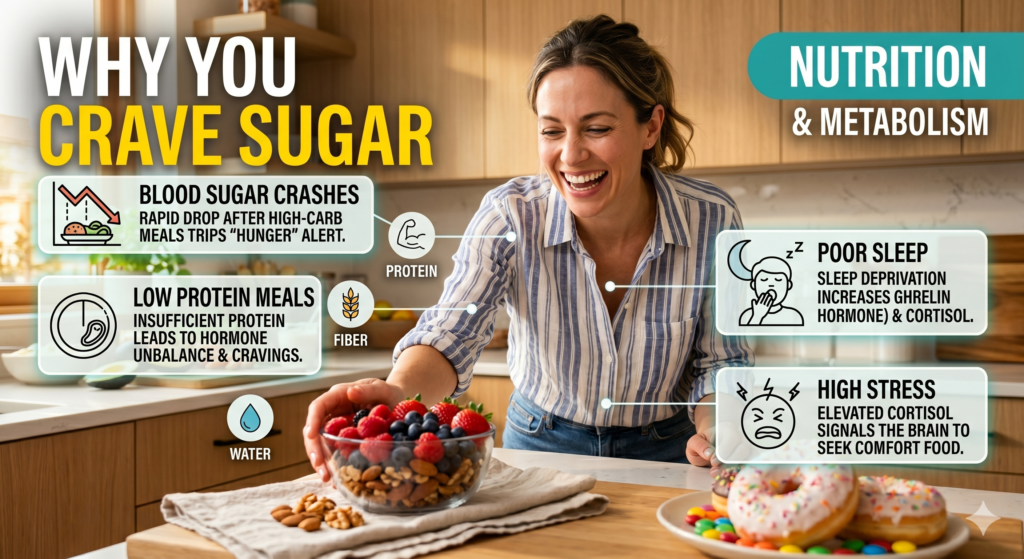
The biggest trigger is a blood sugar roller coaster. When you eat refined carbs or sweets, your blood sugar spikes quickly, then crashes just as fast. That crash leaves you tired, foggy, and hungry, so your body demands more sugar to bring energy back up in a hurry. The cycle repeats all day.
Low-protein, low-fiber meals make this far worse. They digest quickly and leave you unsatisfied within an hour or two. A breakfast of white toast and jam, for example, sets you up for a mid-morning crash and a strong craving by 11 a.m.
Poor sleep is another hidden cause that most people overlook. Just one bad night raises the hunger hormone ghrelin, lowers the fullness hormone leptin, and weakens the part of your brain that resists temptation. Stress adds even more fuel, because high cortisol pushes you toward fast, comforting calories, and sugar is the quickest comfort there is.
In short, cravings are your body asking for balance. Give it steady energy, real nutrients, and proper rest, and the constant pull toward sugar slowly fades into the background.
How to Reduce Sugar Cravings With the Right Foods
The fastest way to learn how to reduce sugar cravings is to change what sits on your plate. The right foods keep you full and stabilize blood sugar, which removes the crash that drives most cravings in the first place.
Eat More Protein
Protein is the most filling nutrient and the strongest craving fighter you have. Adding eggs, Greek yogurt, chicken, fish, or lentils to each meal keeps hunger low for hours. Start with a protein-rich breakfast and you will notice far fewer afternoon sugar urges almost immediately. A good target is 20 to 30 grams of protein per meal.
Add Healthy Fats
Fats slow digestion and keep your energy steady between meals. A small handful of nuts, some avocado, olive oil, or a spoon of natural nut butter turns a plain snack into something that truly satisfies. For more smart options, see our list of healthy snacks for weight loss that keep cravings away.
Get Enough Fiber
Fiber slows the release of sugar into your blood, which prevents the spikes and crashes that cause cravings. Vegetables, beans, oats, chia seeds, and whole fruit all help. Our guide on fiber for gut health and blood sugar shows how to add more of it without any effort or fancy ingredients.
Choose Whole Foods Over Processed Ones
Processed foods are engineered to make you want more. They combine sugar, salt, and fat in ways that override your natural fullness signals. Swapping packaged snacks for whole foods like fruit, plain yogurt, or roasted chickpeas naturally lowers how much sugar you crave over time.
How to Reduce Sugar Cravings Naturally Every Day
Food is only half the picture. Your daily habits decide how often cravings show up in the first place. These natural changes work on how to reduce sugar cravings from the inside out, without any special products.
Sleep comes first, and it matters more than most people think. Aim for seven to nine hours, because a tired brain craves quick energy from sugar and has far less self-control. Protecting your sleep is one of the most powerful craving fixes available, and it costs nothing.
Next, manage your stress. Short walks, deep breathing, prayer, journaling, or any calming routine lowers cortisol, and lower cortisol means fewer emotional sugar cravings. Stress and sweet cravings truly go hand in hand, so handling one helps the other.
Stay hydrated as well. Thirst is often mistaken for hunger or a sugar craving, so a simple glass of water can quietly settle the urge. Many people reach for a snack when their body actually wanted water.
Finally, keep moving through the day. A short daily walk steadies blood sugar and improves how your body handles carbs. Our comparison of a morning vs night walk for weight loss helps you pick the best time to fit it into your routine.
9 Quick Tips to Beat Cravings Fast
When a craving hits right now, these proven tricks help you ride it out without giving in.
- Drink a large glass of water and wait ten minutes before deciding.
- Eat a protein snack like yogurt, boiled eggs, or a small handful of nuts.
- Reach for whole fruit when you want something sweet and natural.
- Brush your teeth, since a clean, minty mouth resets your taste buds.
- Go for a short walk to distract your mind and lower the urge.
- Add cinnamon to your food, which helps blunt sugar spikes.
- Keep tempting sweets out of the house so they are not within easy reach.
- Eat magnesium-rich foods, as low magnesium can worsen cravings. Learn more in our guide on magnesium benefits and food sources.
- Go to bed earlier tonight, since rest is your strongest craving defense.
According to the Harvard T.H. Chan School of Public Health, cutting back on added sugar gradually is more sustainable than quitting all at once, so be patient with the process.
Common Mistakes That Make Cravings Worse
Even with good intentions, a few common habits quietly keep your cravings alive. Avoiding these makes everything else work better.
The first mistake is skipping meals to save calories. When you go too long without eating, your blood sugar drops and your body chases fast energy through sugar later, often at night. Regular balanced meals prevent this completely.
The second mistake is relying on artificial sweeteners to feel satisfied. For some people, intensely sweet diet drinks keep the taste for sugar alive and may even increase cravings. Cutting back on overly sweet flavors, even artificial ones, helps your palate reset.
The third mistake is keeping sweets nearby for emergencies. If a treat is one arm’s reach away, willpower will eventually lose. Out of sight really does mean out of mind. The fourth mistake is being too strict. Banning all sugar forever often backfires into binges, so allow yourself a small planned treat now and then.
How Blood Sugar Drives Your Cravings
Understanding blood sugar makes everything else click into place. Every time you eat refined sugar, your body releases insulin to clear it from your blood. Big spikes lead to big drops, and those drops trigger the very next craving, sometimes within the hour.
This cycle is also an early warning sign for bigger metabolic problems. People with constantly unstable blood sugar are more likely to develop insulin resistance over time. Our article on prediabetes vs type 2 diabetes explains why keeping blood sugar steady matters far beyond just cravings.
Eating balanced meals with protein, fat, and fiber flattens these spikes. The flatter your blood sugar curve stays, the quieter your cravings become. The Cleveland Clinic confirms that balanced meals are one of the most effective ways to keep cravings under control without feeling deprived.
What Happens When You Cut Back on Sugar
When you reduce sugar steadily, your body rewards you faster than you might expect. The first few days can feel tough, with stronger cravings and a little low energy as your body adjusts. This passes quickly.
By the end of the first week, most people notice their cravings start to weaken and their energy becomes more stable. The afternoon slump fades, and you stop needing a sweet pick-me-up to get through the day.
Over a few weeks, your taste buds adapt. Foods that once tasted normal start to taste overly sweet, and naturally sweet things like fruit become more satisfying. Many people also report better sleep, clearer skin, steadier moods, and easier weight management. For a complete plan that ties diet and habits together, read our healthy fat loss strategies guide.
Track What You Eat to Stay in Control
Sometimes cravings come from simply not eating enough during the day. If you skip meals or undereat, your body chases fast energy through sugar later on, usually in the evening.
Knowing your numbers removes the guesswork. Use our free calorie calculator to find how much you should eat, then check your TDEE calculator to see how many calories you burn each day. To track body changes over time, the BMI calculator gives a quick, useful snapshot.
When you eat enough balanced food at the right times, learning how to reduce sugar cravings becomes far easier and far more natural. You stop fighting your body and start working with it instead.

Frequently Asked Questions
How do I reduce sugar cravings quickly?
Drink water, eat a protein snack, and step away for a short walk. These three actions calm a craving within minutes by addressing thirst, hunger, and the mental habit of reaching for sugar at the same time.
What foods help stop sugar cravings?
Protein-rich foods like eggs and yogurt, healthy fats like nuts and avocado, and fiber from vegetables and fruit all reduce sugar cravings by keeping you full and steadying your blood sugar between meals.
Why do I crave sugar even after eating?
This usually means your meal was low in protein, fat, or fiber, so your blood sugar spiked and crashed. Adding those three nutrients to your meals keeps you satisfied and prevents the urge for more sugar.
Does drinking water reduce sugar cravings?
Yes. Thirst is often mistaken for a craving. A glass of water before reaching for sweets can settle the urge, which makes it one of the simplest ways to reduce sugar cravings naturally.
How long does it take to stop sugar cravings?
Most people notice fewer cravings within one to two weeks of eating balanced meals and sleeping well. The longer you keep your blood sugar steady, the weaker the cravings become over time.
Can poor sleep cause sugar cravings?
Absolutely. One night of poor sleep raises hunger hormones and lowers your self-control, which makes sugar far more tempting the next day. Better sleep is one of the most powerful craving fighters there is.
Are sugar cravings a sign of diabetes?
Not always, but constant strong cravings alongside fatigue and thirst can be linked to blood sugar problems. If cravings come with other symptoms, it is worth checking with a doctor to rule out any underlying issue.
Final Thoughts
Learning how to reduce sugar cravings is less about willpower and more about balance. When you feed your body steady protein, fat, and fiber, sleep well, and manage stress, the constant pull toward sugar simply fades away on its own.
Start with one or two changes this week. Add protein to breakfast, keep water nearby, and clear the obvious sweets from your kitchen. Small, consistent steps retrain your body and your taste buds far faster than any crash diet ever could.
Use the free tools on Vitality Nexus to find your ideal daily intake, and explore our weight loss section for more practical, science-backed guidance on building a healthier relationship with food.
Medical Disclaimer: This article is for general information only and is not medical advice. If you have persistent cravings, blood sugar concerns, or a health condition, please speak with a qualified doctor or registered dietitian.