If you have ever felt that tight, restless knot in your chest that just will not go away, you already know how exhausting anxiety can be. It is not just nervousness before a big presentation. For millions of people, anxiety is a constant background noise that follows them through work, relationships, meals, and sleep.
The good news is that there are natural ways to reduce anxiety that are grounded in real science, accessible to almost everyone, and do not require a prescription. Whether you are dealing with daily stress that has gotten out of hand or more persistent anxiety that colors everything you do, the strategies in this guide can genuinely help.
Table of Contents
What Is Anxiety and Why Does It Happen?
Anxiety is your brain’s threat-detection system doing its job. When it works properly, it keeps you alert, focused, and responsive to real danger. The problem is that this system does not always know the difference between a lion in the bushes and a difficult email from your boss.
When anxiety becomes chronic, the nervous system stays in a state of low-level alarm almost all the time. Cortisol and adrenaline stay elevated. Sleep suffers. Digestion suffers. Thinking clearly becomes harder. And the things that used to feel manageable start to feel overwhelming.
The conventional medical approach typically involves therapy, medication, or bot, and for many people, that combination is genuinely the right path. But there is also a meaningful body of research showing that lifestyle factors have a profound influence on anxiety levels. The natural ways to reduce anxiety covered in this article work through real biological mechanisms, not positive thinking or wishful wellness trends.
According to the Anxiety and Depression Association of America, anxiety disorders are the most common mental illness in the United States, affecting 40 million adults. Yet less than 40 percent of those affected receive treatment. Lifestyle-based strategies can bridge a significant part of that gap.
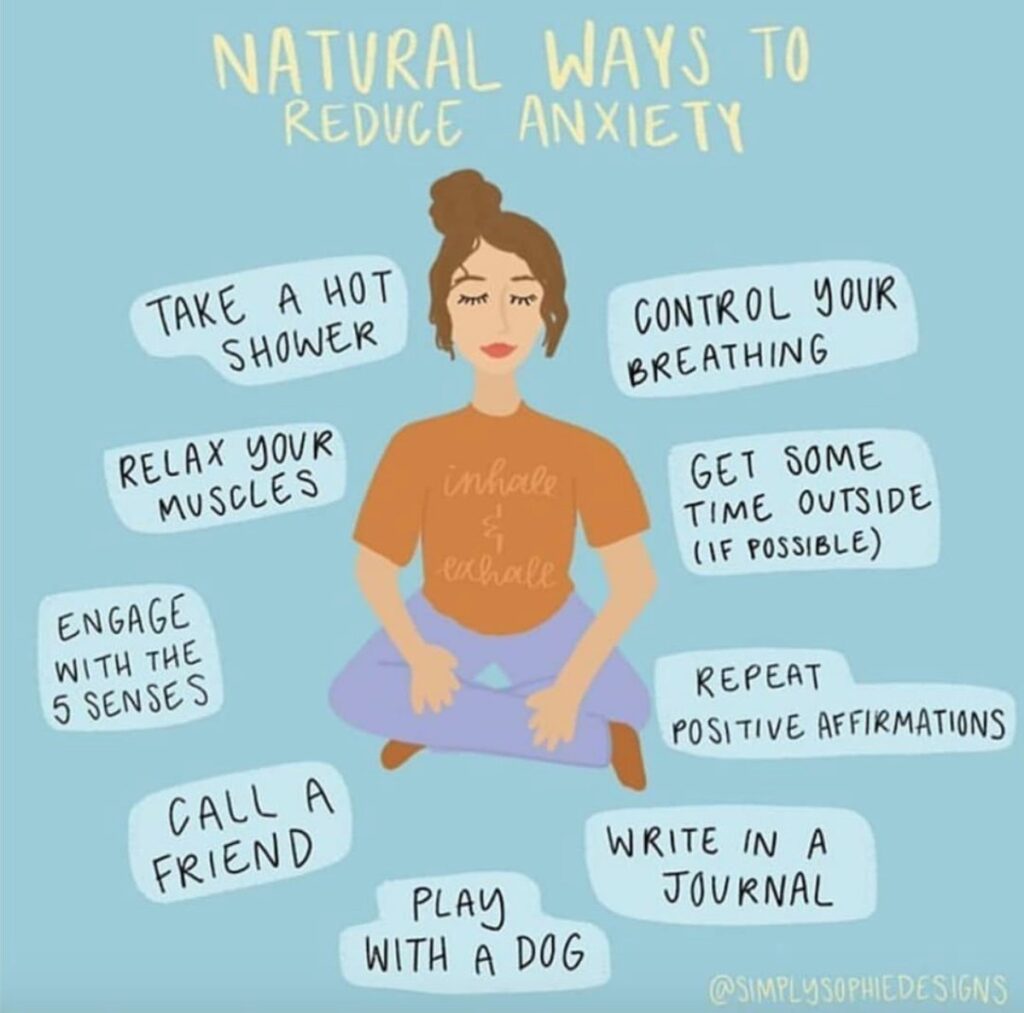
1. Breathe Your Way Out of Anxiety
This one sounds almost too simple. But the science behind it is genuinely impressive.
When anxiety spikes, your breathing becomes shallow and fast. This sends a signal to the brain that something is wrong, which further activates the stress response. It becomes a loop. Shallow breathing feeds anxiety, which feeds shallow breathing.
Deliberate, slow, controlled breathing breaks this loop. It activates the parasympathetic nervous system, the part of your nervous system responsible for rest and calm, and sends a direct signal to the brain that the threat has passed.
The technique that has the most research support is called box breathing or 4-7-8 breathing. For box breathing: inhale for four counts, hold for four counts, exhale for four counts, hold for four counts. Repeat four to six times.
For the 4-7-8 technique: inhale for four counts, hold for seven, and exhale slowly for eight. The extended exhale is what matters most, it activates the vagus nerve and triggers a measurable drop in heart rate and cortisol.
Practicing this for just five minutes a day, even on days when you do not feel particularly anxious, builds a genuine physiological response that becomes easier to access under stress over time.
2. Move Your Body Every Single Day
Exercise is probably the most well-researched natural anxiety treatment that exists. It is not a metaphor. It is biochemistry.
Physical movement reduces the primary stress hormones cortisol and adrenaline. It triggers the release of endorphins, which genuinely improve mood. It increases the production of BDNF (brain-derived neurotrophic factor), a compound that supports brain cell health and resilience. And it improves sleep quality, which is one of the most powerful anxiety modulators available.
One large meta-analysis published in the British Journal of Sports Medicine found that exercise was significantly more effective than control conditions for reducing anxiety symptoms, with effects comparable in some cases to medication for mild to moderate anxiety.
You do not need to run a marathon. Walking briskly for thirty minutes most days of the week is enough to produce real, measurable effects on anxiety. The key is consistency and the fact that you are doing it at all.
For practical guidance on how to build a simple daily movement habit, read our article on morning vs night walks — which is better for your health. It is a small change that has a disproportionately large impact on how your nervous system operates day to day.
3. Fix Your Sleep First
Anxiety and poor sleep have a circular relationship that most people underestimate. Anxiety makes it harder to sleep. And sleep deprivation makes anxiety significantly worse the next day.
When you are consistently underslept, your amygdala the part of the brain that processes threat and fear, becomes hyperreactive. Small stressors feel catastrophic. Your ability to regulate emotional responses diminishes. And your prefrontal cortex, which is responsible for rational thinking and calming the threat response, becomes less effective.
Getting seven to nine hours of quality sleep per night is not a luxury. For people dealing with anxiety, it is one of the most powerful natural interventions available.
A few evidence-based sleep hygiene practices that genuinely help include keeping a consistent wake time every day, including weekends, avoiding screens for at least an hour before bed, keeping your bedroom cool and dark, and avoiding caffeine after early afternoon.
Use our Sleep Calculator to find the exact sleep and wake times that align with your natural circadian rhythm. Getting your sleep timing right can make a noticeable difference in your baseline anxiety levels within days.
For more on the connections between sleep, mental health, and anxiety, read our guide on insomnia — symptoms, causes, and treatment.
4. Cut Back on Caffeine
Nobody wants to hear this one. But if you are dealing with anxiety and you are drinking multiple cups of coffee every day, the two things are almost certainly connected.
Caffeine works by blocking adenosine receptors in the brain, the receptors that make you feel sleepy. This is why it keeps you awake and alert. But it also increases cortisol and adrenaline, elevates heart rate, and activates the sympathetic nervous system, the same system that drives the anxiety response.
For people who are sensitive to caffeine or who are already in a state of chronic stress, caffeine essentially pours fuel on a fire that is already burning too hot.
This does not necessarily mean quitting coffee entirely. For many people, reducing intake or switching to lower-caffeine options like green tea, which also contains L-theanine (a naturally calming amino acid) is enough to make a meaningful difference.
Try cutting your caffeine intake by half for two weeks and notice what happens to your baseline anxiety levels. The results often surprise people.
5. Try Magnesium: The Calm Mineral
Magnesium is one of the most important minerals for nervous system function, and it is also one of the most common nutritional deficiencies in the modern diet.
The connection between magnesium and anxiety is direct and biochemically well understood. Magnesium regulates the NMDA receptors in the brain, which are involved in excitatory nervous system activity. When magnesium is low, these receptors become overactive, contributing to hypervigilance, restlessness, and the physical symptoms of anxiety, like muscle tension and a racing heart.
Multiple studies have shown that magnesium supplementation reduces anxiety symptoms in people with deficiency, and given that an estimated 50 to 75 percent of adults in Western countries do not meet their daily magnesium requirements, deficiency is far more common than most people realize.
Not all forms of magnesium are equally effective. Magnesium glycinate and magnesium threonate are considered the best forms for anxiety and brain health because of their superior bioavailability and ability to cross the blood-brain barrier.
Read our detailed guide on 7 types of magnesium and their specific benefits to understand which form is right for your situation. And for context on the full range of magnesium’s role in mental and physical health, our article on magnesium benefits, deficiency symptoms, and food sources is worth reading in full.
6. Spend Time Outside in Nature
There is a growing body of research, sometimes grouped under the term “ecotherapy,” showing that time spent in natural environments has measurable effects on anxiety and stress physiology.
A landmark study from Stanford University found that people who walked in a natural setting for 90 minutes showed significantly lower activity in the subgenual prefrontal cortex, the part of the brain associated with rumination and repetitive negative thinking, compared to those who walked in an urban environment.
Cortisol levels drop in natural settings. Heart rate slows. Attention restores. And the nervous system gets a break from the near-constant low-grade stimulation of modern urban life.
You do not need to go camping or spend hours hiking. Twenty to thirty minutes in a park, a garden, or any green space with trees is enough to produce measurable psychological effects. Doing it regularly making it a daily habit rather than an occasional retreat compounds those effects significantly over time.
7. Limit Alcohol More Than You Think You Should
Alcohol is one of the most commonly used self-medication strategies for anxiety. And it makes a kind of short-term sense, alcohol has a sedative effect that temporarily reduces the physical symptoms of anxious arousal.
The problem is what happens afterward.
Alcohol disrupts sleep architecture, suppressing the REM sleep that the brain needs for emotional processing and memory consolidation. It depletes GABA, the brain’s primary inhibitory neurotransmitter, which is directly involved in calming anxiety. And it causes a rebound effect as it is metabolized, during which anxiety often spikes significantly above its pre-drinking level.
Regular alcohol use essentially trains the nervous system to need alcohol to feel calm, while simultaneously making baseline anxiety worse. This is why many people who reduce or eliminate alcohol report a significant improvement in their anxiety levels after the initial adjustment period.
If alcohol is a regular fixture in your evenings, it is worth honestly assessing whether it is helping or quietly making things harder.
8. Practice Mindfulness Without Overthinking It
Mindfulness has become such a buzzword that a lot of people have already dismissed it. Which is unfortunate, because the research behind it is genuinely strong.
Mindfulness-based interventions, particularly Mindfulness-Based Stress Reduction (MBSR), have been studied extensively and shown to produce significant, lasting reductions in anxiety. A meta-analysis published in JAMA Internal Medicine found that mindfulness meditation programs significantly improved anxiety, depression, and pain.
The mechanism is well understood. Mindfulness practice strengthens the prefrontal cortex’s ability to regulate the amygdala — essentially building a stronger “braking system” for the anxiety response. Over time, this means that anxious thoughts and sensations arise less intensely and pass more quickly.
The good news is that you do not need to sit cross-legged for an hour or attend a retreat. Starting with five minutes of focused attention on your breath each morning is enough to begin building this capacity. Apps like Insight Timer, Headspace, or Calm make it accessible for complete beginners.
The key is consistency over intensity. Five minutes every day beats forty-five minutes once a week for anxiety reduction purposes.
9. Write It Down
Journaling might seem like a soft, vague recommendation. But the evidence behind expressive writing as an anxiety tool is surprisingly robust.
Writing about anxious thoughts and feelings forces the brain to engage its language processing systems, which are housed in the prefrontal cortex, the rational, regulating part of the brain. This process effectively “labels” the emotional experience, which research has shown reduces the intensity of that experience in the brain’s threat centers.
A simple practice: spend ten minutes each morning writing freely about whatever is on your mind. No editing, no structure, no audience. This is sometimes called a “brain dump,” and it is particularly effective for anxiety driven by repetitive, intrusive worrying.
A different approach that works well for some people is a structured evening journal: write three things that happened today, one thing you are worried about, and one step you could take to address it. This moves the brain from passive worry, where anxiety is most powerful, to an active problem-solving mode, which reduces the emotional charge of difficult thoughts.
10. Eat to Support Your Brain Chemistry
The gut-brain connection is one of the most rapidly developing areas in neuroscience, and what it is revealing is that the food you eat has a far more direct impact on anxiety than most people realize.
Approximately 90 percent of the body’s serotonin, a neurotransmitter deeply involved in mood regulation, is produced in the gut. The health of your gut microbiome directly influences how much serotonin and other mood-regulating compounds your body produces. A diet high in processed foods, refined sugars, and low in fiber creates a gut environment that is genuinely hostile to the bacteria responsible for this production.
A diet that supports mental health and reduces anxiety tends to include plenty of oily fish rich in omega-3 fatty acids, fermented foods like yogurt and kefir, a wide variety of vegetables, legumes, nuts and seeds, and whole grains. Read our article on omega-3 fatty acids — benefits and food sources to understand how these specific fats influence brain chemistry and anxiety.
Blood sugar stability also matters enormously. Erratic blood sugar from skipping meals, eating too much sugar, or relying on caffeine for energy produces hormonal fluctuations that the nervous system interprets as a stress signal. Eating regular, balanced meals is not just good for your waistline. It is an anxiety management strategy.
11. Connect with People Who Ground You
Humans are wired for social connection at a neurobiological level. Meaningful interaction with people we trust triggers the release of oxytocin, reduces cortisol, and activates the social engagement branch of the vagus nerve all of which have direct calming effects on the anxious nervous system.
Loneliness, conversely, activates threat-detection systems in the brain and is consistently associated with elevated anxiety and depression in research.
This does not mean you need to be extroverted or force yourself into social situations that feel overwhelming. Quality matters far more than quantity. One genuine, warm conversation with a person you trust does more for anxiety than an evening of superficial social interactions.
If you find that anxiety is causing you to withdraw from relationships, which is extremely common, then withdrawal is worth gently challenging. Even small steps toward connection, a brief phone call, a walk with a friend, a coffee with a family member, can produce a meaningful shift in anxious arousal.
Our article on mental health awareness and emotional wellness explores the broader landscape of what supports emotional health, with practical guidance on building the social and psychological foundations that reduce anxiety long-term.
12. Try Herbal Support — Carefully
Several herbal compounds have meaningful research support for anxiety reduction. They are not magic, and they are not replacements for therapy or medication when those are needed. But for many people with mild to moderate anxiety, they offer real support as part of a broader lifestyle approach.
Ashwagandha is probably the most studied adaptogen for anxiety. Multiple randomized controlled trials have shown that it significantly reduces cortisol and self-reported anxiety scores. A 2019 study published in Medicine found that 240 mg of ashwagandha extract daily reduced anxiety and cortisol significantly compared to a placebo over 60 days.
L-theanine, found naturally in green tea, promotes calm without sedation by increasing alpha brain wave activity. It is often taken alongside caffeine to take the edge off the stimulant effect, which is precisely why matcha tends to produce a calmer, more focused energy than coffee.
Passionflower has shown results comparable to low-dose benzodiazepines in some studies for generalized anxiety, with far fewer side effects. It works primarily by increasing GABA activity in the brain.
Lavender oil in oral supplement form (specifically a product called Silexan, studied extensively in Germany) has shown significant anxiety-reducing effects in multiple clinical trials. Topical or aromatherapy lavender has weaker evidence but is widely used and generally harmless.
One important note: always speak with your doctor before adding herbal supplements if you are taking any medications. Some herbal compounds — particularly St. John’s Wort — have significant interactions with common medications, including antidepressants and blood thinners.
For a broader look at how supplements intersect with mental and physical health, explore our nutrition and supplements category.
Use Our Tools to Support Your Mental Wellness
Anxiety is often made worse by physical health factors that go unaddressed — poor sleep, nutritional gaps, weight-related health issues, and chronic fatigue all feed the nervous system’s threat response. These free tools on Vitality Nexus help you get a clearer picture of your physical health baseline.
👉 Find Your Ideal Sleep Schedule Poor sleep and anxiety are deeply connected. Use our Sleep Calculator to find the exact sleep timing that aligns with your natural body clock and gives your nervous system the overnight recovery it needs.
👉 Calculate Your BMI Physical health and mental health are genuinely inseparable. Use our BMI Calculator to understand where your current weight sits and whether it is a factor worth addressing as part of your overall wellness plan.
👉 Check Your BMR Your Basal Metabolic Rate can help you build a nutrition plan that keeps energy and blood sugar stable — both of which directly influence anxiety levels throughout the day. Use our BMR Calculator to get your personal baseline.
👉 Calculate Your Daily Calorie Needs Undereating and erratic eating are both physical stressors that worsen anxiety. Use our Calorie Calculator to find the intake level that keeps your body and nervous system properly fueled.
When Natural Approaches Are Not Enough
Everything in this article is genuinely evidence-based and worth implementing. But it would be irresponsible not to say this clearly: for moderate to severe anxiety, professional support is not optional — it is necessary.
Cognitive Behavioral Therapy (CBT) is the gold standard psychological treatment for anxiety disorders, with an enormous evidence base behind it. Medication — particularly SSRIs — is appropriate for many people and works best when combined with lifestyle change and therapy. A good therapist will not tell you to choose between natural strategies and professional support. They work together.
If your anxiety is significantly interfering with your work, your relationships, your sleep, or your ability to enjoy daily life, please talk to a doctor or mental health professional. What you are experiencing is real, it is recognized, and effective help is available.
For related reading on mental health and emotional wellness, explore our articles on depression — symptoms, causes, and treatment and our comprehensive mental health awareness and emotional wellness guide.
According to the World Health Organization, anxiety disorders affect roughly 1 in 13 people globally — making them the most widespread mental health condition in the world. You are not alone, and you are not without options.
FAQ
1. What are the most effective natural ways to reduce anxiety?
The most evidence-backed natural approaches are regular aerobic exercise, quality sleep, diaphragmatic breathing techniques, reducing caffeine and alcohol, magnesium supplementation if deficient, mindfulness practice, and a gut-supportive diet rich in omega-3 fatty acids and fermented foods. Combining several of these consistently produces far better results than any single strategy alone.
2. How quickly do natural anxiety remedies work?
It depends on the approach. Breathing techniques and cold water exposure can reduce acute anxiety within minutes. Exercise typically produces mood benefits within the same session. Sleep improvement, dietary changes, and magnesium supplementation tend to show noticeable effects within one to three weeks of consistent practice. Mindfulness usually takes four to eight weeks of regular practice to produce meaningful structural changes in anxiety response.
3. Can magnesium really help with anxiety?
Yes, particularly for people who are deficient — which is a surprisingly large proportion of the population. Magnesium plays a direct role in regulating the nervous system’s excitatory responses. Multiple clinical studies have shown that supplementing with magnesium glycinate or magnesium threonate reduces anxiety symptoms in people with low magnesium levels. It is not a sedative and it is not a cure, but it is a meaningful support tool.
4. Is exercise really as effective as medication for anxiety?
For mild to moderate anxiety, research suggests that consistent aerobic exercise can be roughly comparable in effectiveness to medication. A large meta-analysis in 2023 found that exercise significantly reduced anxiety symptoms across multiple disorders. For severe anxiety, medication and therapy remain the primary treatments — but exercise should absolutely be part of the plan regardless of severity.
5. Does diet affect anxiety levels?
Very directly. The gut-brain axis means that what you eat influences neurotransmitter production, particularly serotonin, in ways that directly affect mood and anxiety. High sugar diets, erratic eating patterns, and gut microbiome disruption from processed foods all worsen anxiety. An anti-inflammatory diet rich in omega-3s, fiber, and fermented foods consistently shows benefits for mood and anxiety in research.
6. Are herbal supplements for anxiety safe?
Most well-studied herbal options — ashwagandha, L-theanine, passionflower, and lavender — have good safety profiles when used at recommended doses. The main caution is drug interactions: some herbal supplements interact with medications, particularly blood thinners, antidepressants, and sedatives. Always check with your doctor before combining herbal supplements with any existing medication.
7. When should I see a doctor about anxiety instead of trying natural remedies?
If your anxiety is significantly affecting your daily functioning, your work, your relationships, or your ability to sleep, please seek professional support rather than relying solely on natural approaches. Similarly, if you are experiencing panic attacks, persistent physical symptoms, or thoughts of self-harm, professional care is the appropriate first step — not a lifestyle overhaul. Natural strategies work best as part of a comprehensive plan that includes professional support when needed.
Conclusion
Anxiety is not something you simply have to live with. There are real, research-backed, natural ways to reduce anxiety that are available to you right now — no prescription required, no special equipment, no expensive program.
Start with the ones that feel most accessible. Fix your sleep. Walk more. Breathe deliberately. Cut back on caffeine and notice what happens. Add magnesium. Spend time outside. Connect with people who make you feel safe.
None of these require perfection. They require consistency. Small, repeated actions compound into a nervous system that is genuinely more resilient, more regulated, and less dominated by the chronic alarm that anxiety creates.
Use the free tools at Vitality Nexus to support your physical health baseline alongside these mental health strategies. Explore our full mental health section for more guidance, and remember that getting professional support is not a failure of willpower — it is one of the smartest things you can do for your long-term wellbeing.
You do not have to keep fighting your own nervous system alone.