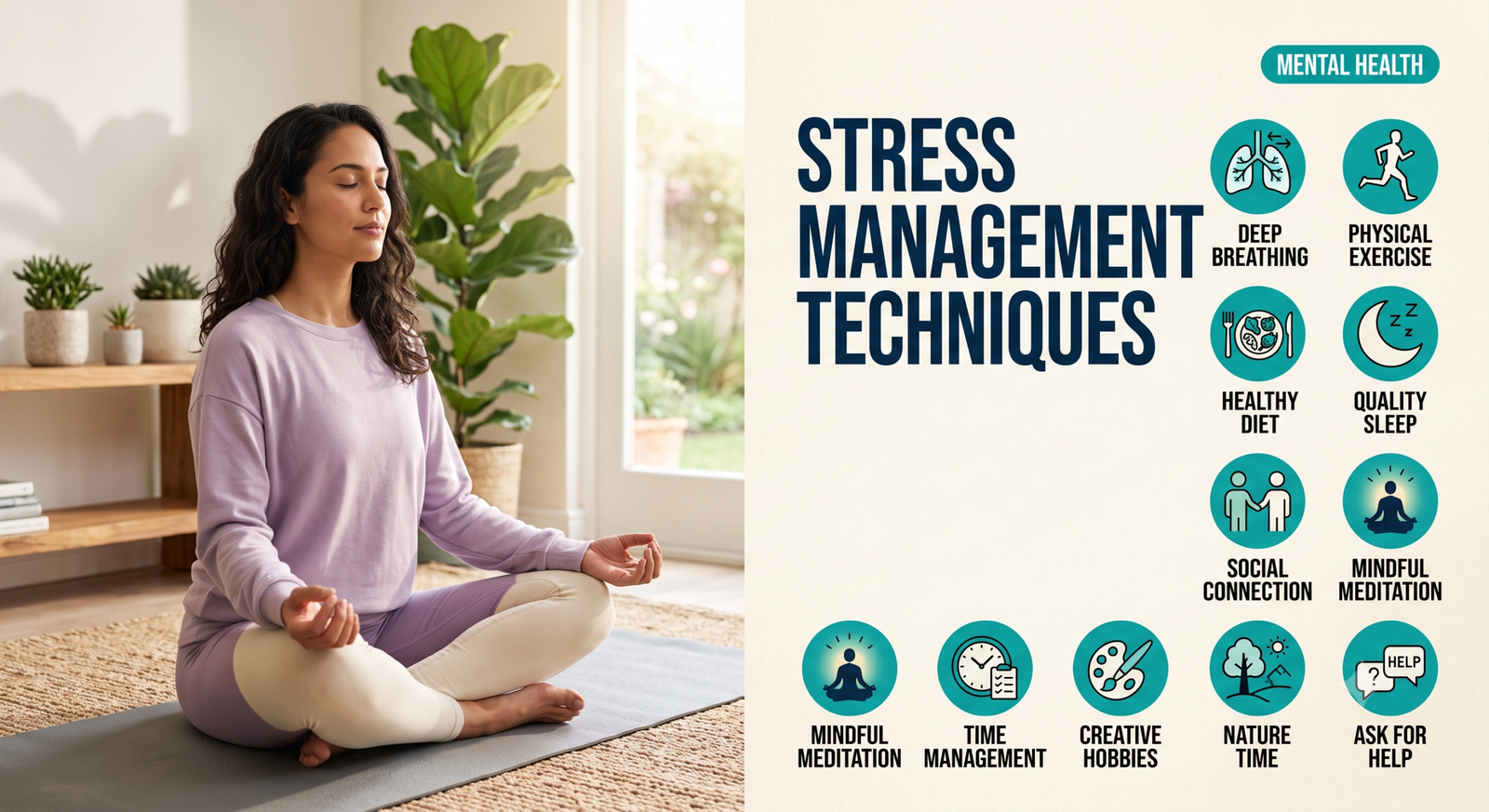
If stress has become a constant background noise in your life rather than an occasional visitor, the right stress management techniques can change that. Not by eliminating stress entirely, which is neither realistic nor desirable, but by giving you real tools to process it, recover from it, and stop it from accumulating into something that harms your health.
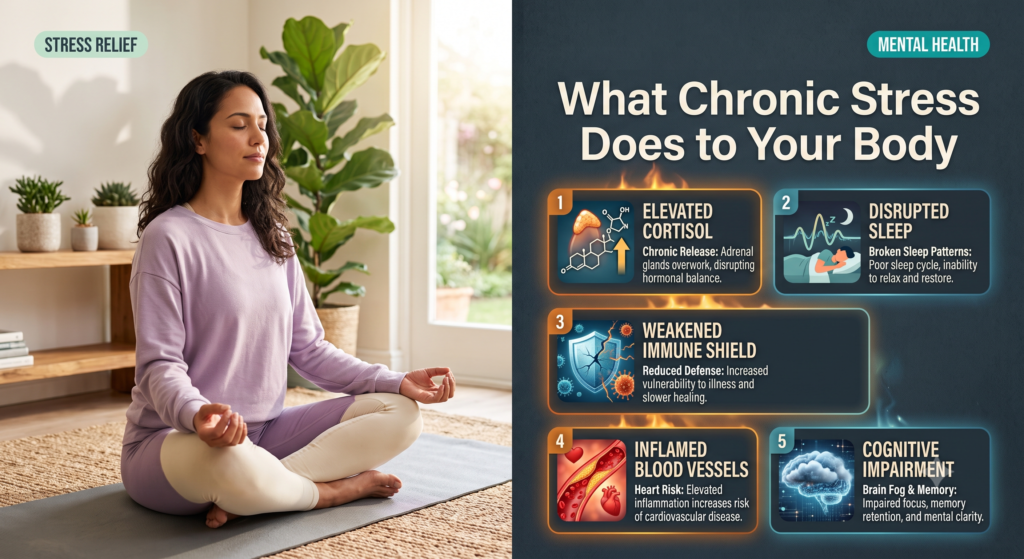
Chronic stress is not just uncomfortable. It raises cortisol, disrupts sleep, weakens the immune system, drives inflammation, impairs digestion, and significantly increases the risk of heart disease, depression, and metabolic problems. The physical cost of unmanaged stress is well documented and serious.
In this guide, you will learn 10 proven stress management techniques that work, why each one is effective at the physiological level, and how to fit them into a real, busy life. These are not vague suggestions. They are specific, evidence-based strategies with clear mechanisms.
Table of Contents
Why Stress Management Techniques Matter for Your Health
Stress in small doses is useful. It sharpens focus, motivates action, and helps you perform under pressure. The problem is not stress itself. It is stress without adequate recovery, which is what most modern lifestyles produce.
When stress is chronic and unrelenting, the hormones designed for short-term emergencies stay elevated for weeks and months. Cortisol, which is helpful in brief bursts, becomes genuinely damaging at sustained high levels. It suppresses the immune system, promotes fat storage particularly around the abdomen, disrupts progesterone and thyroid function in women, impairs memory and learning, and raises blood pressure.
According to the American Psychological Association, chronic stress is linked to the six leading causes of death and contributes to a wide range of physical and mental health problems. Having effective stress management techniques in your daily life is therefore not a luxury. It is a health necessity with measurable, documented impact on how long and how well you live.
How Stress Affects Your Body and Mind
To use stress management techniques effectively, it helps to understand what is actually happening when you feel stressed.
When your brain perceives a threat, real or imagined, it activates the hypothalamic-pituitary-adrenal axis and releases cortisol and adrenaline. These hormones redirect blood to the muscles, raise heart rate, sharpen immediate focus, and suppress non-essential functions like digestion, immune response, and reproductive hormones.
This fight-or-flight response is designed to be brief. The problem is that modern stressors, work deadlines, financial pressure, relationship conflict, constant notifications, are rarely resolved quickly. The system stays activated for prolonged periods, producing the cluster of physical and psychological effects that define chronic stress.
The good news is that the nervous system is responsive. The same system that activates the stress response also has a built-in off switch, the parasympathetic nervous system, often called the rest-and-digest system. Every stress management technique below works by activating this off switch in some way, giving your body permission to recover. Our article on high cortisol versus low cortisol explains these hormonal mechanisms in practical detail.
10 Proven Stress Management Techniques
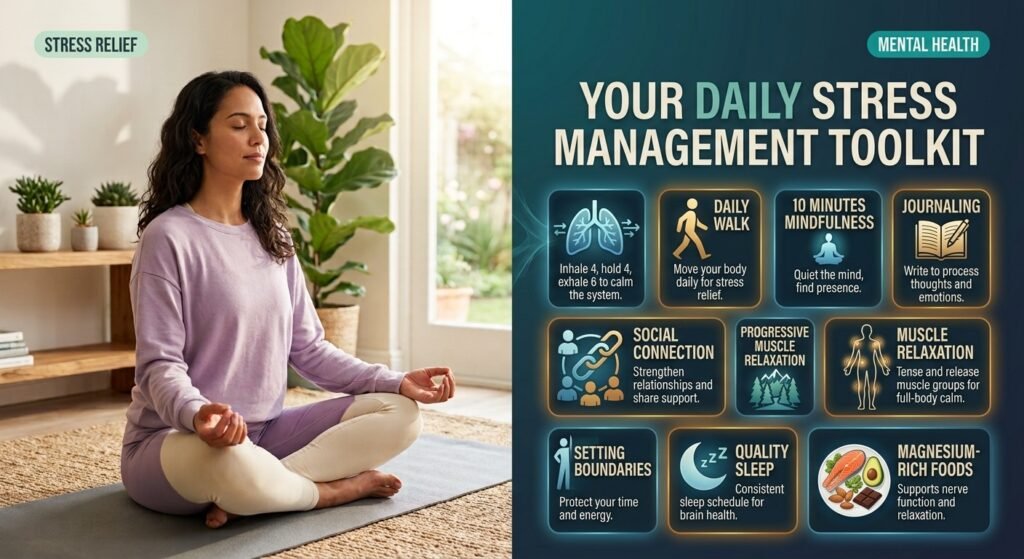
These ten techniques are among the most consistently effective in both research and real-world practice. They range from immediate relief methods to longer-term resilience builders, giving you tools for every situation.
1. Slow Breathing and Box Breathing
Controlled breathing is one of the fastest-acting stress management techniques available because it directly stimulates the vagus nerve, which activates the parasympathetic nervous system. The effect is measurable within minutes.
Box breathing, used by military and emergency responders under extreme pressure, involves inhaling for four counts, holding for four, exhaling for four, and holding for four. Repeating this four to six times produces a rapid shift in heart rate variability and stress hormone levels.
A simpler version is the 4-7-8 technique: inhale for four, hold for seven, exhale for eight. The extended exhale is key, since longer exhales specifically activate the parasympathetic response.
2. Regular Physical Exercise
Exercise is the most studied and most consistently effective of all stress management techniques. It reduces cortisol and adrenaline directly, triggers the release of endorphins and brain-derived neurotrophic factor, and builds resilience in the stress response system so future stressors feel less overwhelming.
You do not need intense exercise to get the benefit. A 30-minute brisk walk produces significant cortisol reduction and mood improvement. Research shows that people who exercise regularly have lower baseline cortisol levels and recover more quickly from acute stress than sedentary individuals. Our article on the benefits of walking daily shows how consistently simple movement changes your stress biology over time.
3. Mindfulness Meditation
Mindfulness is the practice of intentionally paying attention to the present moment without judgment. It sounds simple and it is, which is why it is one of the most widely recommended stress management techniques across clinical psychology, neuroscience, and medicine. The Mayo Clinic recommends mindfulness as a first-line approach for everyday stress management due to its strong evidence base and low risk.
A landmark study published in JAMA Internal Medicine found that an eight-week mindfulness program produced significant reductions in anxiety, depression, and stress, with effects comparable to antidepressant medication in people with mild to moderate symptoms. Even ten minutes of daily mindfulness practice produces measurable changes in the brain regions associated with stress response within several weeks.
Apps, guided audio recordings, and simple breath-focused attention all count as mindfulness practice. The method matters less than the consistency.
4. Journaling and Writing
Writing about stressful experiences is one of the most reliably effective and most underused stress management techniques. Psychologist James Pennebaker’s research over four decades consistently shows that expressive writing, describing stressful events and the emotions attached to them, reduces psychological stress, improves immune function, and produces lasting improvements in wellbeing.
A worry dump before bed, writing down every anxious thought without editing or judging it, is particularly effective for sleep. It empties the mental cache so the brain does not keep cycling through unresolved concerns at night. Our article on how to stop overthinking at night covers this and other techniques for managing the evening stress that disrupts sleep.
5. Time in Nature
Spending time outdoors, particularly in green spaces, produces reliable and measurable reductions in cortisol, heart rate, and blood pressure. Japanese research on shinrin-yoku, or forest bathing, found that even short periods among trees produced significant improvements in stress hormones, immune markers, and mood.
The effect is not purely psychological. Nature exposure affects the nervous system directly through visual stimulation, air quality, sounds, and the removal of artificial stimulation that keeps the urban stress response elevated. Even a fifteen-minute walk in a park on a lunch break produces measurable physiological changes.
6. Social Connection and Talking It Through
Oxytocin, released during positive social interaction, is a natural cortisol antagonist. It directly reduces the stress response and produces calming effects that are as physiologically real as any medication. This is why talking to someone you trust about a problem genuinely reduces stress, not just psychologically but biologically.
Regular meaningful social connection, not surface-level social media interaction but real conversation with people who know and care about you, is one of the most protective factors against chronic stress and its health consequences. Our mental health awareness and emotional wellness guide covers the social dimension of mental health in depth.
7. Progressive Muscle Relaxation
Progressive muscle relaxation involves systematically tensing and releasing each major muscle group from the feet upward. It works by drawing attention deliberately to physical tension, releasing it, and training the body to recognize and let go of the chronic muscle tension that stress accumulates.
A full session takes about fifteen to twenty minutes and produces deep physical relaxation that persists afterward. Shorter versions targeting the most tension-holding areas, jaw, neck, shoulders, and hands, can be done in five minutes at a desk.
8. Setting Boundaries and Reducing Overcommitment
For many people, the most effective stress management technique is not a coping practice but an upstream intervention: identifying and reducing the sources of chronic stress that are within their control.
Saying no to commitments that exceed your capacity, delegating where possible, establishing clear work hours and switching off notifications afterward, and protecting time for recovery are behavioral changes that address the cause rather than the symptoms. Our article on burnout causes, symptoms, and solutions covers the warning signs of stress that has escalated to burnout and what the recovery process involves.
9. Quality Sleep as a Stress Management Tool
Sleep and stress have a bidirectional relationship. Stress disrupts sleep, and poor sleep dramatically worsens the stress response the following day. A single night of poor sleep raises cortisol, increases emotional reactivity, lowers frustration tolerance, and makes every stressor feel larger than it is.
Treating sleep as a daily stress management technique, by protecting sleep hours, maintaining a consistent bedtime, and creating conditions for quality rest, breaks this cycle. Use our free sleep calculator to find the ideal sleep and wake times that align with your natural rhythms. Our guide on deep sleep benefits explains what your body recovers from during quality rest and why it is irreplaceable.
10. Nutrition and Avoiding Stimulant Overuse
What you eat and drink directly affects how your nervous system handles stress. High sugar diets create blood sugar volatility that mimics and amplifies the stress response. Caffeine stimulates cortisol release and keeps the nervous system in a higher-alert state, which is useful in moderation but counterproductive when stress is already high.
Magnesium is directly involved in regulating the stress response and is commonly depleted by chronic stress. Increasing magnesium through whole foods is one of the simplest nutritional stress management techniques available. Our guide on magnesium rich foods covers the best dietary sources to prioritize.
Omega-3 fatty acids reduce the neuroinflammation that worsens anxiety and stress responses. B vitamins support the nervous system and energy metabolism. A diet built around whole, nutrient-dense foods gives your stress response system the raw materials to function and recover efficiently.
Stress Management Techniques for Work and Busy Days
Work is the most commonly cited source of chronic stress, and busy days are when most people abandon their stress management practices in favor of pushing through. A few micro-techniques work within a demanding schedule without requiring a dedicated block of time.
The two-minute breathing reset between tasks: two minutes of slow breathing before switching contexts clears cortisol and resets attention. The five-minute walk after a difficult meeting: even brief movement rapidly reduces stress hormones. Single-tasking rather than multitasking: research shows multitasking raises cortisol and reduces quality. And the micro-break from screens: looking away from your monitor for twenty seconds every twenty minutes reduces the visual stress load that accumulates silently.
Stress Management Techniques for Anxiety and Overwhelm
When stress escalates into anxiety or overwhelm, the most effective stress management techniques are grounding and containment rather than insight or problem-solving. In an acute stress state, the prefrontal cortex is partially offline and rational thinking is less accessible.
The 5-4-3-2-1 grounding technique, naming five things you can see, four you can touch, three you can hear, two you can smell, and one you can taste, interrupts the anxiety spiral by bringing attention into the present moment through sensory awareness.
Cold water on the face or wrists activates the diving reflex, which slows heart rate quickly and is one of the fastest physiological interventions for acute panic. Breaking overwhelming tasks into the smallest possible next action removes the paralysis that comes from seeing the whole problem at once.
If anxiety is a persistent struggle rather than occasional acute stress, our article on anxiety symptoms helps you recognize when professional support is the right next step.
Build Stress Resilience Over Time
Stress management techniques are most effective when they are practiced consistently rather than only in crisis moments. Building resilience means developing a nervous system that recovers from stress more quickly and requires less intervention to return to baseline.
This is built through the cumulative effect of regular exercise, consistent sleep, social connection, time outdoors, and mindfulness practice over months and years. People with high stress resilience are not people who experience no stress. They are people whose recovery systems are well trained.
Our article on how to improve mental health ties these resilience-building habits together into a complete daily framework.
Track Your Stress and Wellbeing
Tracking your stress objectively over time helps you identify patterns, recognize what is working, and notice when you need more support.
Keep a brief daily note of your stress level out of ten alongside which techniques you used and how they helped. Over weeks, patterns emerge that show which stressors are recurring, which techniques produce the most relief, and whether your baseline is trending up or down.
Physical health markers are equally relevant since stress affects the body as much as the mind. Use our free BMI calculator and calorie calculator to keep your nutrition supporting your stress resilience rather than undermining it.
Frequently Asked Questions
What are the most effective stress management techniques?
The most consistently effective techniques include controlled breathing for immediate relief, regular exercise for long-term cortisol reduction, mindfulness for emotional regulation, quality sleep for daily recovery, social connection for oxytocin release, and reducing overcommitment to address stress at its source.
How quickly do stress management techniques work?
Breathing techniques and grounding exercises work within minutes. Exercise produces noticeable mood improvements within twenty to thirty minutes and lasting cortisol reduction with regular practice. Mindfulness produces measurable brain changes within eight weeks of consistent daily practice.
Can stress management techniques replace therapy?
For everyday stress and mild anxiety, self-help techniques are often very effective. For clinical anxiety disorders, depression, trauma, or stress that significantly impairs daily functioning, professional therapy provides tools and support that self-help alone cannot replicate. The two work best in combination.
What is the best stress management technique for work?
The two-minute breathing reset between tasks, regular movement breaks, single-tasking rather than multitasking, and setting clear boundaries around working hours are among the most practical and effective techniques for managing work-related stress within a busy day.
How does exercise reduce stress?
Exercise reduces cortisol and adrenaline directly, releases endorphins and mood-regulating neurotransmitters, improves sleep quality, and builds resilience in the stress response system over time. Even moderate daily movement produces significant stress-reducing effects.
Can diet affect stress levels?
Yes. High sugar and high caffeine diets amplify the stress response. Magnesium-rich foods calm the nervous system. Omega-3 fatty acids reduce neuroinflammation linked to anxiety. A whole-food diet with adequate key nutrients provides the biological foundation for effective stress management.
When should I see a doctor about stress?
Seek professional help if stress has lasted more than two weeks and is significantly affecting your sleep, work, relationships, or physical health. Also seek help if you are using alcohol or substances to cope, or if stress has triggered thoughts of self-harm.
Final Thoughts
The right stress management techniques do not remove stress from your life. They build your capacity to handle it, recover from it, and prevent it from accumulating into something that harms your health and happiness.
Start with one technique this week. Try box breathing for two minutes when you feel overwhelmed. Take a ten-minute walk after work. Write down your worries before bed. These small, consistent practices build the nervous system resilience that makes everything else in your life easier to handle.
Explore more of our mental health and wellness guides on Vitality Nexus for practical, science-backed strategies that support a calmer, more resilient mind every single day.
Medical Disclaimer: This article is for general information only and is not a substitute for professional mental health care. If stress is significantly affecting your daily life or you are experiencing symptoms of anxiety or depression, please consult a qualified doctor or licensed mental health professional.