Anxiety is one of the most common mental health challenges in the world, yet many people live with anxiety symptoms for months or years without recognizing what they are experiencing. Some dismiss it as stress. Others assume it is just their personality. Very few connect the physical sensations, the tight chest, the constant worry, the difficulty sleeping, to the same underlying cause.
Recognizing anxiety symptoms early is one of the most important things you can do for your mental and physical health. Anxiety left unaddressed tends to grow, affecting sleep, relationships, work, and physical wellbeing in ways that compound over time.
In this guide, you will learn the 10 most important anxiety symptoms in adults, what makes anxiety different from normal stress, what causes it, and when it is time to get professional support. Understanding what is happening in your body and mind is the first step toward doing something about it.
Table of Contents
What Is Anxiety and How Is It Different From Stress?
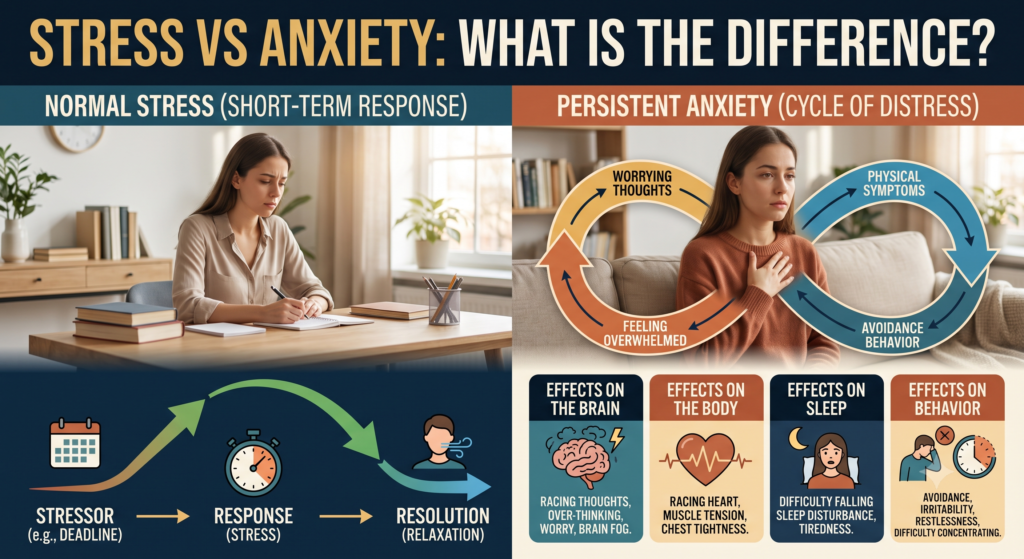
Stress and anxiety feel similar from the inside, but they are meaningfully different in cause, duration, and effect. Understanding the distinction helps you recognize which one you are dealing with.
Stress is a response to an external pressure. A deadline, an argument, a financial problem. When the situation resolves, the stress typically lifts. Anxiety is different. It persists even when there is no clear external threat, or it is disproportionate to the situation. Your body stays in a state of alert even when nothing is actually wrong, which is what makes it so exhausting.
Anxiety involves the brain’s threat detection system, the amygdala, becoming overly sensitive and triggering a stress response too easily and too often. This produces a cluster of physical, emotional, and behavioral anxiety symptoms that interfere with daily life when they are persistent rather than occasional.
According to the National Institute of Mental Health, anxiety disorders are the most common mental health condition globally, affecting hundreds of millions of people. They are also among the most treatable, which is why recognizing anxiety symptoms early matters so much.
10 Key Anxiety Symptoms to Recognize
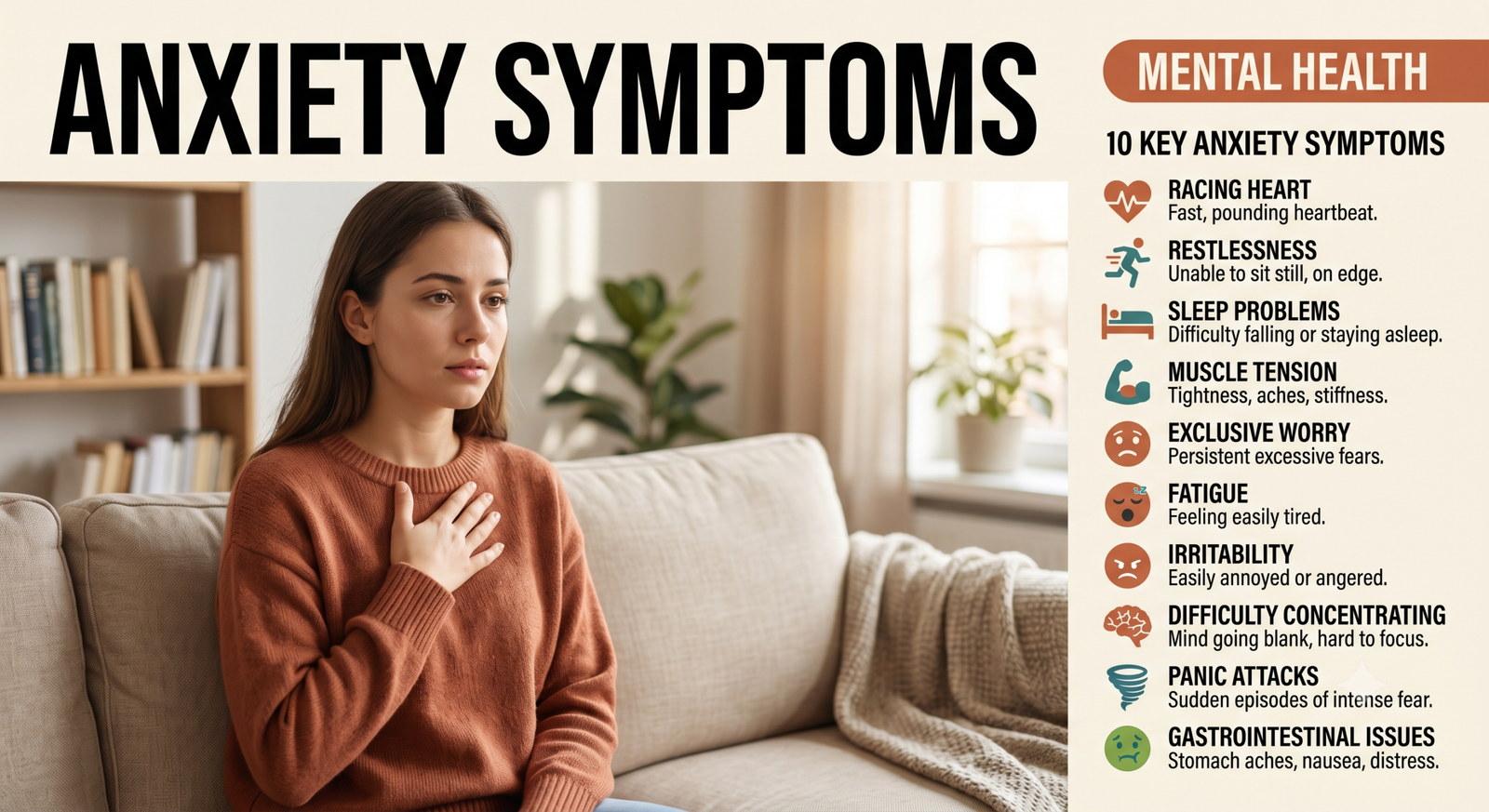
These are the ten most consistent anxiety symptoms reported by adults. Experiencing a few of these occasionally is normal. Experiencing several of them persistently, or in a way that interferes with daily functioning, is a stronger signal worth taking seriously.
1. Excessive or Uncontrollable Worry
This is the defining feature of generalized anxiety. The worry is disproportionate to the situation, difficult to switch off, and jumps from one concern to the next. It can feel like your mind never fully rests. Unlike productive problem-solving, this worry does not lead anywhere useful.
2. Restlessness and Feeling on Edge
Many people with anxiety describe a constant inner tension, a feeling of being wound up or unable to relax even in situations that should feel comfortable. This restlessness is a direct effect of a nervous system running at too high a baseline.
3. Fatigue and Low Energy
Anxiety is exhausting. Keeping the body in a constant low-level state of alert burns through energy reserves, and the poor sleep that often accompanies anxiety compounds this fatigue. Many people with anxiety are genuinely tired most of the time, often without understanding why. Our article on how to increase energy levels covers supporting habits that help.
4. Difficulty Concentrating
Anxiety hijacks attention. When your brain is monitoring for threats, it has fewer resources available for focus, memory, and cognitive performance. Many people with anxiety describe brain fog, an inability to hold a train of thought, or finding that their mind goes blank when they need it most.
5. Irritability
Anxiety and irritability are closely connected. When your nervous system is chronically on edge, your tolerance for frustration, noise, inconvenience, and unexpected demands drops significantly. People with anxiety often feel bad about reacting sharply to things that would not normally bother them.
6. Muscle Tension
One of the most consistently reported physical anxiety symptoms is chronic muscle tension, particularly in the jaw, neck, shoulders, and upper back. Many people hold tension in these areas unconsciously, and it often produces headaches, jaw pain, and neck stiffness that seem to have no obvious cause.
7. Sleep Problems
Difficulty falling asleep, waking at 3 am with racing thoughts, or sleep that feels unrestful despite adequate hours are all common anxiety symptoms. The overlap between anxiety and sleep problems runs in both directions, since poor sleep also worsens anxiety, creating a cycle that can be hard to break alone. Our guides on how to stop overthinking at night and insomnia symptoms, causes, and treatment address both sides of this cycle.
8. Racing Heart and Chest Tightness
The physical anxiety symptoms often surprise people because they can feel identical to medical problems. A racing or pounding heartbeat, tightness in the chest, or the sensation of difficulty breathing are all part of the body’s fight-or-flight response being activated inappropriately. These symptoms are real and uncomfortable but not dangerous when they are caused by anxiety rather than a heart condition.
9. Digestive Problems
The gut and brain are deeply connected through the vagus nerve, which is why anxiety frequently causes nausea, stomach pain, diarrhea, or constipation. Many people with chronic digestive complaints are eventually told their physical symptoms have a strong anxiety component, which is not imaginary but genuinely physiological.
10. Avoidance Behavior
This is one of the most impactful anxiety symptoms because it quietly shrinks your life over time. Anxiety makes certain situations feel threatening, so you begin avoiding them. Social events, phone calls, driving, crowds, or any number of triggers. Each avoidance makes the anxiety around that situation stronger, which drives further avoidance in a self-reinforcing loop.
Physical Anxiety Symptoms Most People Miss
Many people seek medical help for physical anxiety symptoms before they connect them to mental health. Headaches, dizziness, sweating, shortness of breath, and tingling in the hands or feet are all genuine physical expressions of anxiety that are easily mistaken for other conditions.
Cortisol, the primary stress hormone, is elevated during anxiety and affects nearly every system in the body. It raises heart rate, tightens muscles, alters digestion, suppresses immune function, and disrupts sleep. Our article on high cortisol versus low cortisol explains this physiological cascade in detail.
The good news is that when these physical symptoms are driven by anxiety, addressing the anxiety often resolves them. Many people are surprised by how much their physical health improves once their anxiety is properly managed.
Anxiety Symptoms in Women vs Men
Anxiety presents differently across genders, which is one reason it is sometimes missed or misunderstood. Women are diagnosed with anxiety disorders at roughly twice the rate of men, partly due to hormonal factors that influence the nervous system’s reactivity.
Women with anxiety more commonly report emotional symptoms like excessive worry, crying, and social withdrawal, as well as physical symptoms including fatigue, headaches, and digestive complaints. Hormonal shifts through the menstrual cycle, perimenopause, and menopause can all amplify anxiety symptoms. Our articles on stress affects women’s reproductive health and perimenopause versus menopause explore these connections in depth.
Men with anxiety more commonly present with irritability, anger, physical restlessness, and risk-taking behavior, and are less likely to seek help or identify what they are experiencing as anxiety. These differences matter for recognition and for the kind of support that is most helpful.
What Causes Anxiety Symptoms?
Anxiety symptoms develop from a combination of factors, and understanding the causes helps direct the most effective response.
Genetics plays a role. Anxiety disorders run in families, though having a genetic predisposition does not mean anxiety is inevitable or untreatable. Brain chemistry is involved, particularly the balance of neurotransmitters like serotonin, GABA, and norepinephrine that regulate fear and arousal responses.
Life experiences are powerful contributors. Prolonged stress, trauma, major life changes, chronic illness, and relationship difficulties can all trigger or worsen anxiety symptoms. Physical health factors including poor sleep, nutritional deficiencies, thyroid dysfunction, and high caffeine intake can also amplify anxiety directly.
The relationship between anxiety and burnout is particularly important to recognize. Prolonged work or life stress can push the nervous system into a chronic state of activation that looks and feels very much like anxiety. Our guide on burnout causes, symptoms, and solutions helps distinguish between the two.
Natural Ways to Manage Anxiety Symptoms
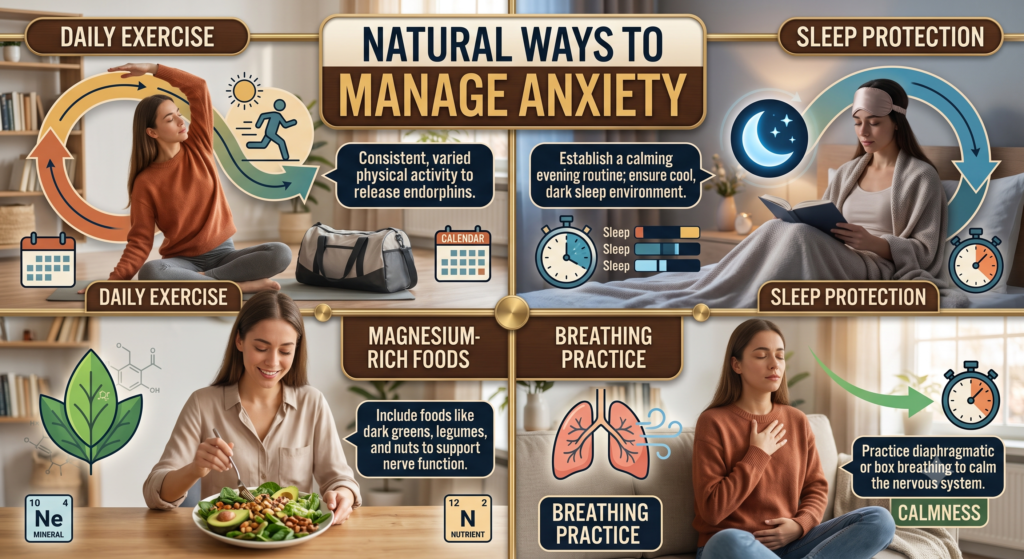
Several lifestyle habits meaningfully reduce anxiety symptoms over time. These are not substitutes for professional care when it is needed, but they are genuinely powerful tools for most people.
Regular aerobic exercise is one of the most evidence-supported natural anxiety treatments available. It reduces cortisol, raises endorphins, and builds resilience in the nervous system over time. Even a daily walk produces measurable mood and anxiety improvements. Our article on natural ways to reduce anxiety covers the full range of evidence-based options.
Protecting sleep is equally important. Anxiety worsens sleep, and poor sleep worsens anxiety. Breaking this cycle through consistent sleep habits, a calming bedtime routine, and managing evening screen time is one of the most effective things you can do. Our free sleep calculator helps you find the ideal timing for your natural rhythms.
Dietary support matters too. Magnesium has natural calming effects on the nervous system and is commonly depleted in people under chronic stress. Reducing caffeine, which directly stimulates the sympathetic nervous system, can noticeably reduce anxiety symptoms within days. Our guide on magnesium benefits and deficiency explains the connection.
According to Harvard Health, lifestyle factors including exercise, sleep, and dietary choices have well-documented effects on anxiety and can significantly reduce symptoms when practiced consistently.
When to Seek Professional Help
Lifestyle changes are valuable, but they have limits. Some anxiety symptoms require professional support, and there is no shame in seeking it. Cognitive behavioral therapy is one of the most effective treatments for anxiety disorders, and medication can be an appropriate option for some people when symptoms are severe.
You should speak to a doctor or therapist if your anxiety symptoms have lasted more than two weeks, if they are significantly interfering with your work, relationships, or daily functioning, or if you find yourself avoiding important situations to manage the fear. You should also seek help if you have had panic attacks, are using alcohol or substances to cope, or if anxiety has triggered thoughts of self-harm.
If you are unsure whether what you are experiencing rises to the level of a clinical anxiety disorder, our article on signs of a mental breakdown can help you recognize when professional care is the right next step.
Track Your Mental Health
Tracking your anxiety symptoms over time gives you and any professional you work with valuable information about patterns, triggers, and progress.
Keep a brief daily note of your anxiety level out of ten, what triggered it if you can identify it, and which strategies helped. Over a few weeks, patterns often emerge that point clearly to specific causes you can address.
For your overall health, use our free BMI calculator and calorie calculator to make sure your physical health is supporting your mental health, since nutrition, weight, and energy all connect to anxiety in real and measurable ways.
Frequently Asked Questions
What are the most common anxiety symptoms?
The most common include excessive worry, restlessness, fatigue, difficulty concentrating, muscle tension, sleep problems, a racing heart, and digestive discomfort. Recognizing several of these together, especially when they persist over weeks, is the strongest signal to take action.
How do I know if I have anxiety or just stress?
Stress is usually tied to a specific external situation and eases when that situation resolves. Anxiety persists even without a clear trigger, feels difficult to control, and often involves physical symptoms like chest tightness or racing heart. If your worry feels disproportionate or constant, anxiety is more likely.
Can anxiety cause physical symptoms?
Yes. Anxiety produces very real physical effects including a racing heart, muscle tension, digestive problems, headaches, dizziness, and shortness of breath. These are genuine physiological responses to stress hormones rather than imagined sensations.
Does anxiety go away on its own?
Mild anxiety often improves with lifestyle changes like better sleep, exercise, and stress management. Clinical anxiety disorders generally require professional support to resolve fully. Ignoring persistent anxiety symptoms typically allows them to worsen rather than resolving naturally.
What foods or supplements help with anxiety symptoms?
Magnesium has calming effects on the nervous system and is commonly depleted under chronic stress. Reducing caffeine often produces quick improvements. Omega-3 fats support brain chemistry, and a diet rich in whole foods and fiber supports the gut-brain connection that influences anxiety.
How quickly can anxiety symptoms improve?
Many people notice some improvement in physical anxiety symptoms within one to two weeks of lifestyle changes like better sleep and reduced caffeine. Deeper improvements in chronic anxiety, including better emotional regulation and fewer intrusive thoughts, typically take six to twelve weeks of consistent effort or treatment.
When should I see a doctor about anxiety?
See a doctor if symptoms have lasted more than two weeks, are interfering with daily functioning, involve panic attacks, or if you are using alcohol or substances to cope. Early professional support produces significantly better outcomes than waiting until the anxiety becomes overwhelming.
Final Thoughts
Anxiety symptoms are real, common, and above all, treatable. Whether your experience is a persistent background hum of worry, physical tension you cannot shake, or sleep that never feels restful, these are signals worth listening to rather than pushing through.
Start by recognizing what you are experiencing for what it is. Then begin with one or two natural supports, better sleep, daily movement, less caffeine, and see how much shifts within a few weeks. And if the symptoms persist or feel too heavy to manage alone, reach out to a professional without waiting.
Explore more of our mental health and wellness guides on Vitality Nexus to keep building the habits and awareness that support a calmer, more resilient mind every day.
Medical Disclaimer: This article is for general information only and is not medical advice or a substitute for professional mental health care. If you are experiencing anxiety symptoms that affect your daily life, please consult a qualified doctor or licensed mental health professional. If you are in crisis, please contact a crisis helpline in your country immediately.