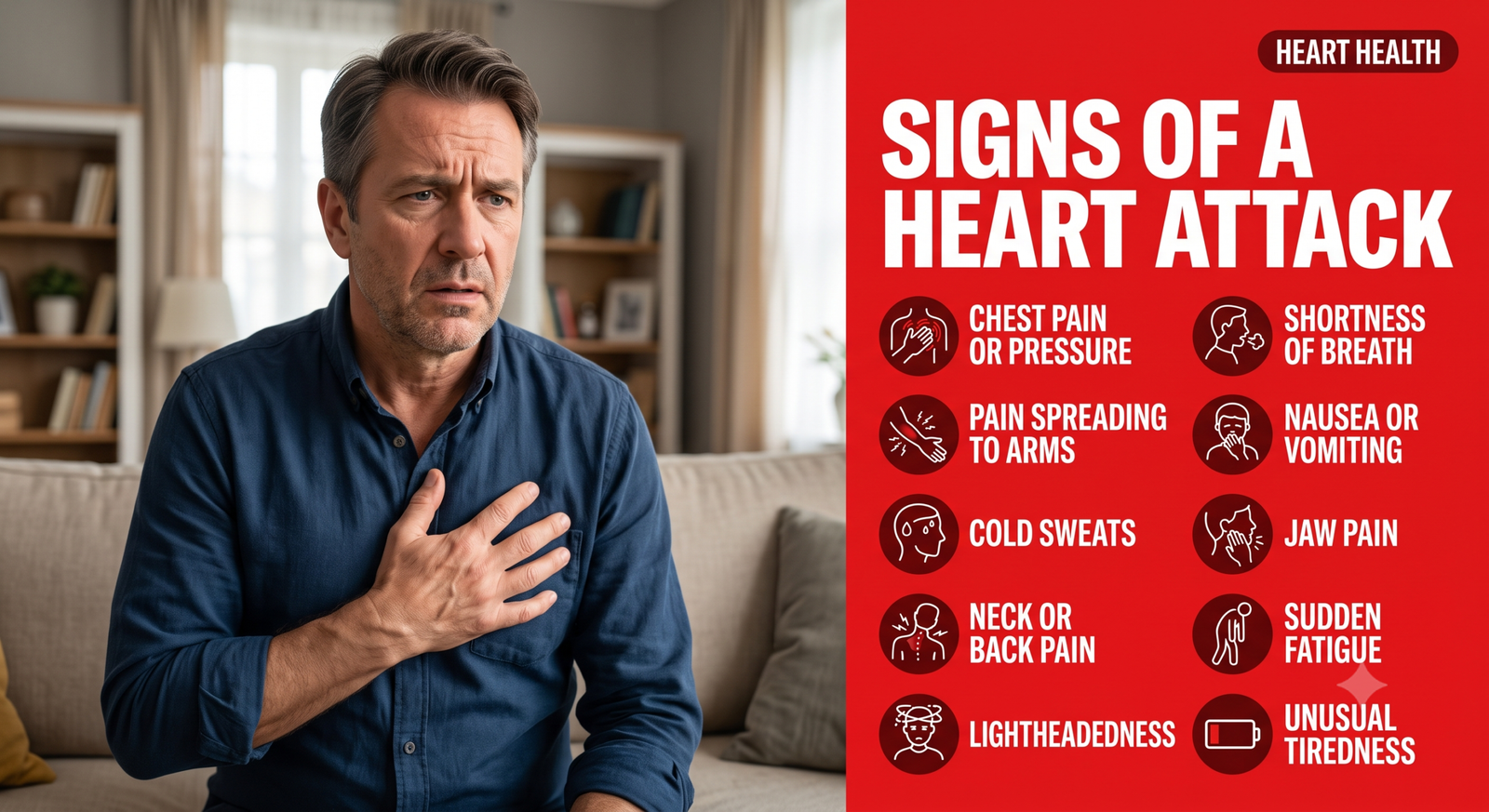
Knowing the signs of a heart attack could save your life or the life of someone you love. Heart attacks kill more people globally than almost any other condition, yet many of the deaths that occur happen because the warning signs were not recognized quickly enough.
The most dangerous misconception is that a heart attack always looks like the dramatic Hollywood version, a man clutching his chest and collapsing. In reality, heart attack symptoms are often subtler, slower in onset, and in women especially, they can present very differently from the classic picture most people expect.
In this guide, you will learn the 10 most important signs of a heart attack, how symptoms differ between men and women, what to do the moment you suspect one, and the habits that lower your risk of ever facing one. This information is too important to wait until you need it.
Table of Contents
Why Recognizing Signs of a Heart Attack Matters
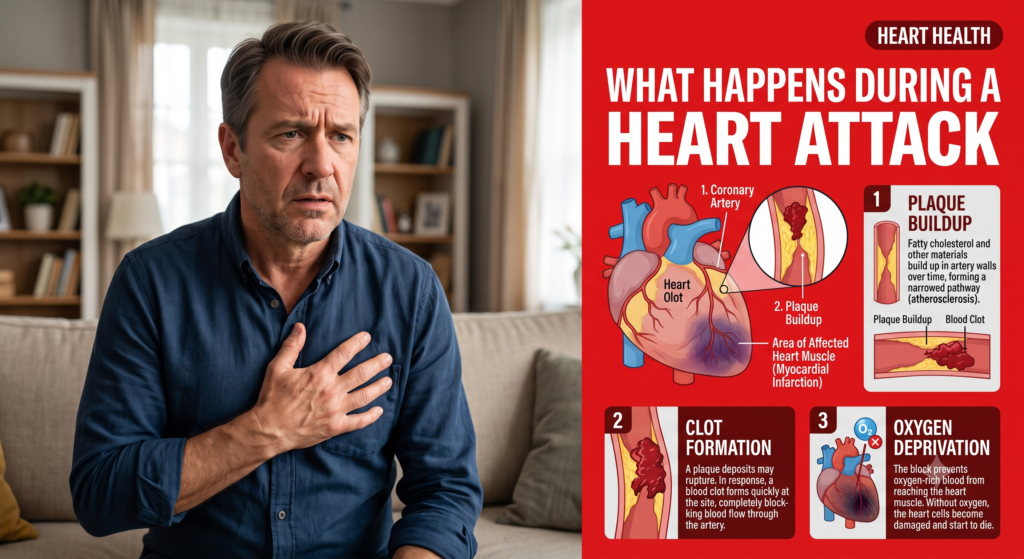
A heart attack happens when blood flow to part of the heart muscle is blocked, usually by a clot forming in a coronary artery already narrowed by plaque. When that muscle is deprived of oxygen, it begins to die. Time is the most critical factor. The faster blood flow is restored, the more heart muscle is saved.
Research consistently shows that people who recognize the signs of a heart attack early and call for emergency help within the first hour have dramatically better outcomes than those who wait. The Mayo Clinic confirms that the sooner treatment begins, the more heart muscle can be saved and the better the long-term prognosis. Yet surveys find that most people are uncertain about the symptoms, dismiss them as something else, or wait far too long before acting.
This is especially true for women, who often experience less dramatic symptoms that are more easily attributed to stress, indigestion, or anxiety. And it is true for people experiencing a second heart attack, since the symptoms can feel different from the first.
According to the American Heart Association, acting fast at the first sign of a heart attack is the single most important step in surviving one. The information in this guide is designed to help you do exactly that.
10 Key Signs of a Heart Attack
These are the ten most recognized signs of a heart attack. They do not all need to be present, and some heart attacks present with only one or two symptoms. The key is to take any combination seriously rather than waiting to see if it passes.
1. Chest Pain, Pressure, or Tightness
The most classic sign of a heart attack is discomfort in the chest. It is often described as a heavy pressure, a squeezing sensation, a tight band around the chest, or a feeling of something sitting on your chest. It is usually in the center or left side and lasts more than a few minutes or comes and goes in waves.
Not everyone experiences this as sharp pain. Many people describe it as an ache, a fullness, or an uncomfortable pressure rather than anything they would call pain. If you feel this kind of sustained chest discomfort, do not ignore it.
2. Pain Radiating to the Arm, Jaw, Neck, or Back
The heart shares nerve pathways with several other areas of the body, which is why heart attack pain frequently radiates outward. The left arm is the most classically affected, but pain can also travel to the right arm, the jaw, the neck, the upper back, or the upper abdomen.
Many people dismiss jaw or back pain as a dental problem or a muscle strain and delay seeking care. If these sensations appear alongside other symptoms on this list, they deserve immediate attention.
3. Shortness of Breath
Feeling breathless, whether with or without chest discomfort, is one of the most important signs of a heart attack. When the heart is not pumping efficiently, fluid can back up into the lungs, making breathing feel labored, shallow, or inadequate even at rest or during very light activity.
Shortness of breath that comes on suddenly and cannot be explained by exertion or a known respiratory condition should always be taken seriously.
4. Cold Sweat
Breaking into a cold, clammy sweat without physical exertion or obvious reason is a recognized heart attack warning. The body activates its stress response when the heart is under threat, which can produce sudden sweating regardless of the temperature of the room.
5. Nausea and Vomiting
Nausea, stomach upset, or vomiting during what might otherwise seem like a digestive problem is a frequently missed sign of a heart attack, particularly in women. The vagus nerve connects the heart and the digestive system, so cardiac distress can produce convincing gastrointestinal symptoms.
Many women and men experiencing heart attacks have initially attributed their symptoms to indigestion, food poisoning, or anxiety before the true cause became clear.
6. Dizziness or Lightheadedness
A sudden feeling of dizziness, faintness, or the room spinning, especially when accompanied by chest discomfort or shortness of breath, can indicate that the heart is not pumping enough blood to the brain. This symptom warrants emergency care, not sitting down to wait and see.
7. Unusual Fatigue
Severe, unexplained fatigue that comes on suddenly, particularly in women, is one of the most underrecognized signs of a heart attack. Some women report feeling overwhelmingly tired for days or even weeks before a cardiac event, as the heart works harder to compensate for reduced blood flow through increasingly narrowed arteries.
This is not ordinary tiredness. It is a profound exhaustion that feels different from normal exertion-related fatigue.
8. Heart Palpitations
A racing heart, an irregular heartbeat, or a fluttering sensation in the chest can be a sign that the heart muscle is under stress. While palpitations have many causes, when they occur alongside other symptoms on this list, they elevate the urgency significantly.
9. Feeling of Impending Doom
Many heart attack survivors describe a profound sense that something is very wrong, a feeling of dread or doom that is difficult to explain but impossible to ignore. This is a genuine and recognized symptom, likely related to the body’s recognition that a life-threatening event is occurring.
If you or someone near you expresses this feeling alongside any other symptoms, treat it as a medical emergency.
10. Upper Abdominal Pain or Indigestion-Like Discomfort
Pain or discomfort in the upper abdomen, or a feeling similar to severe heartburn that does not respond to antacids, can be a sign of a heart attack rather than a digestive problem. This is particularly common in women and in people with diabetes who may not experience the typical chest pain.
Signs of a Heart Attack in Women vs Men
The difference in how heart attacks present between men and women is one of the most clinically important and most widely misunderstood aspects of cardiac health.
Men more commonly experience the classic presentation: sustained central chest pain or pressure, often radiating to the left arm, accompanied by shortness of breath and sweating. This is the pattern most people recognize.
Women are significantly more likely to experience atypical symptoms including jaw, neck, and back pain, nausea and vomiting, unusual fatigue, dizziness, and shortness of breath, sometimes without any notable chest pain at all. These symptoms are more often attributed to anxiety, stress, or digestive problems, which delays diagnosis and worsens outcomes.
Studies show that women wait longer than men to seek help during a heart attack, are less likely to be treated as quickly once they arrive at hospital, and have higher rates of mortality from their first heart attack. Recognizing that the classic presentation is not universal is critical for every woman and for everyone around them.
For more on women-specific cardiac risks and warning signs, our article on heart attack symptoms in women and men explores this gap in depth.
Silent Heart Attacks and Why They Are Dangerous
A significant proportion of heart attacks cause no obvious symptoms at all and are discovered only later through an ECG showing evidence of past cardiac damage. These are called silent heart attacks or silent myocardial infarctions.
Silent heart attacks are more common in people with diabetes, who may have reduced pain sensitivity due to neuropathy, and in older adults. They are also more common in women. Despite producing no obvious symptoms, silent heart attacks cause the same kind of heart muscle damage as symptomatic ones and significantly raise the risk of a future, more severe cardiac event.
This is one of the strongest arguments for regular cardiovascular health check-ups, particularly if you have risk factors like high blood pressure, high cholesterol, diabetes, or a family history of heart disease. Our article on essential heart health warnings covers the broader range of cardiac red flags worth knowing.
What to Do If You Suspect a Heart Attack
If you or someone near you experiences symptoms that could be signs of a heart attack, act immediately. Do not drive yourself to hospital. Do not wait to see if the symptoms pass. Call emergency services right away.
While waiting for help, sit or lie in a comfortable position that eases breathing. If the person is not allergic to aspirin and is conscious, a standard aspirin chewed immediately can help prevent further clotting. Loosen any tight clothing. If the person becomes unconscious and stops breathing, begin CPR if you are trained.
The single most important thing you can take from this article is this: when in doubt, call for help. The cost of a false alarm is a check-up. The cost of waiting when it is a real heart attack can be irreversible heart damage or death.
Signs of a Heart Attack vs Panic Attack
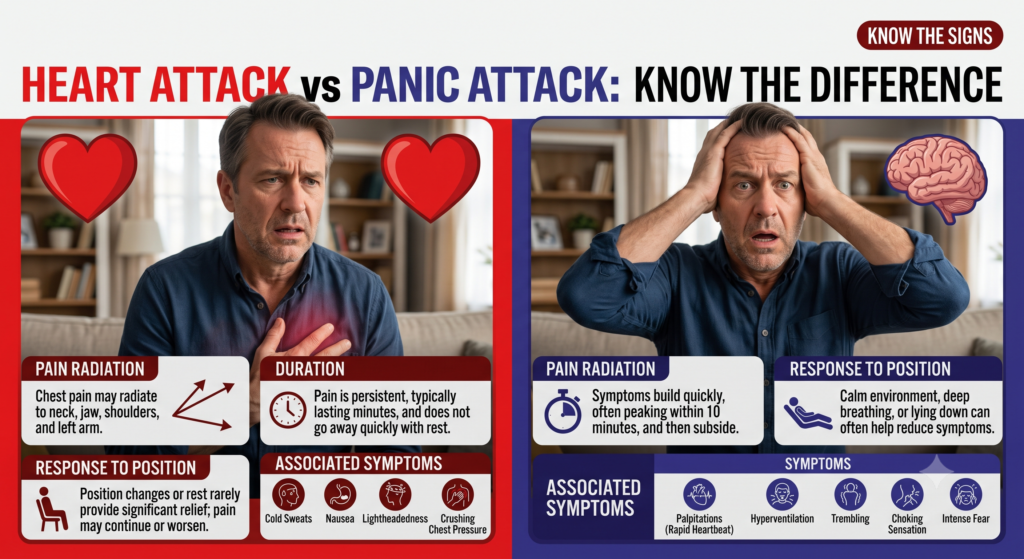
One of the most common points of confusion is distinguishing a heart attack from a panic attack, since both can produce chest tightness, shortness of breath, racing heart, and a sense of dread. Understanding the differences can help, though when in doubt, always treat the situation as a potential heart attack.
Panic attacks typically peak within ten minutes and resolve within 20 to 30 minutes. They are often triggered by stress or anxiety and may have happened before. Heart attack symptoms tend to persist or worsen over time rather than peaking and fading. Chest pain that radiates to the arm or jaw is far more associated with a heart attack than a panic attack.
If you have never had a panic attack before and experience these symptoms, do not assume it is anxiety. Seek emergency care and let medical professionals rule out a cardiac cause. Our guide on anxiety symptoms explains what panic and anxiety feel like from the inside, which can help with recognition in future.
Heart Attack Risk Factors You Can Change
While genetics and age are fixed, most heart attack risk factors are modifiable through lifestyle. Knowing and actively managing them reduces your risk over time.
High blood pressure silently damages artery walls. High LDL cholesterol builds the plaque that blocks coronary arteries. Type 2 diabetes multiplies cardiovascular risk through several mechanisms. Smoking causes direct arterial damage. Physical inactivity, obesity, chronic stress, and poor diet all contribute through inflammation and hormonal disruption.
The lifestyle habits that address these risk factors are consistent across all the research: regular movement, a diet rich in vegetables and whole foods with limited processed food, not smoking, managing stress, and sleeping well. Our guides on heart healthy habits and cholesterol reducing foods give practical frameworks for addressing the two most common modifiable risk factors. Use our free BMI calculator and calorie calculator to keep your weight and nutrition in a healthy range.
Frequently Asked Questions
What are the first signs of a heart attack?
The first signs most commonly include chest pressure or tightness, pain radiating to the arm or jaw, shortness of breath, cold sweats, and nausea. In women, unusual fatigue, back pain, and digestive discomfort are common early signs that are often missed.
Can a heart attack happen without chest pain?
Yes. A significant proportion of heart attacks, particularly in women, people with diabetes, and older adults, occur without notable chest pain. Shortness of breath, fatigue, nausea, jaw pain, and back pain can all be the primary or only symptoms.
How long can signs of a heart attack last before it happens?
Some heart attacks begin suddenly with no warning. Others are preceded by days or weeks of subtle symptoms like unusual fatigue, mild chest discomfort on exertion, or shortness of breath. These early warning signs should prompt immediate medical evaluation rather than waiting.
What should I do if I think I am having a heart attack?
Call emergency services immediately. Do not drive yourself. Sit or lie in a comfortable position. If not allergic, chew a standard aspirin if available. Loosen tight clothing. Stay as calm as possible and wait for help to arrive.
Are signs of a heart attack different in women?
Yes, significantly. Women are more likely to experience jaw, neck, and back pain, nausea, vomiting, unusual fatigue, and dizziness rather than the classic chest pain presentation. These symptoms are more often misattributed to anxiety or indigestion, which delays diagnosis.
How do I know if it is a heart attack or indigestion?
Indigestion typically responds to antacids and is linked to recent eating. Heart attack discomfort is more persistent, does not respond to antacids, and is often accompanied by other symptoms like shortness of breath, arm pain, or sweating. When in doubt, treat it as a potential heart attack and seek emergency help.
Can young people have heart attacks?
Yes. While heart attacks are far more common in older adults, they do occur in younger people, particularly those with undiagnosed conditions, family history, obesity, or who use tobacco or other substances. Any age group can experience a heart attack, and the symptoms are the same.
Final Thoughts
The signs of a heart attack are not always obvious, and that is exactly why knowing them matters so much. Chest pain is only part of the picture. Jaw pain, unusual fatigue, nausea, back pain, and a sudden sense of dread are all signals that deserve the same urgent response.
If you recognize these signs in yourself or someone nearby, do not hesitate. Call for emergency help immediately. Minutes matter, and acting early saves lives and preserves heart function that cannot be recovered once it is lost.
Use the healthy habits and guides on Vitality Nexus to lower your long-term risk, and share this article with the people you care about. Knowing the signs of a heart attack is knowledge that belongs in every home.
Medical Disclaimer: This article is for general information and educational purposes only. It is not a substitute for emergency medical care. If you experience symptoms that may be signs of a heart attack, call emergency services immediately without delay.