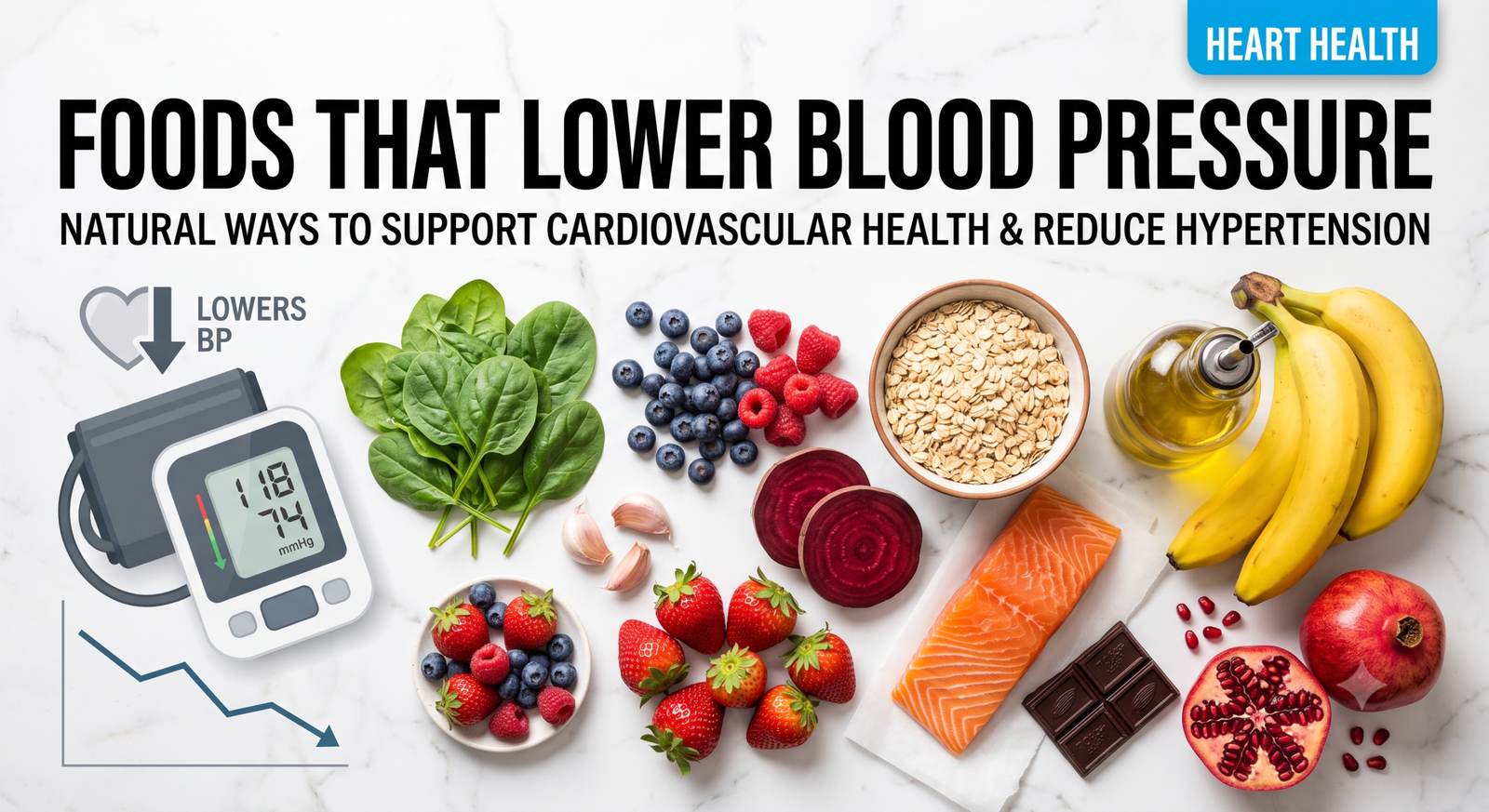
If your blood pressure numbers have been creeping upward, the right foods that lower blood pressure can make a meaningful difference before medication becomes necessary. What you eat directly shapes how your blood vessels behave, how much fluid your kidneys retain, and how hard your heart has to work with every beat.
High blood pressure, or hypertension, affects roughly one in three adults globally and is called the silent killer for good reason. It rarely causes obvious symptoms until it has already damaged the heart, arteries, kidneys, or brain. Yet it is also one of the most diet-responsive conditions in medicine.
In this guide, you will learn the 12 best foods that lower blood pressure, how each one works, the nutrients most important for blood pressure control, what to cut back on, and the daily habits that amplify every dietary change you make.
Table of Contents
Why Blood Pressure and Diet Are So Closely Connected
Blood pressure is the force your blood exerts against artery walls with each heartbeat. When that force is consistently too high, it strains the arteries, forces the heart to work harder, and damages organs silently over years.
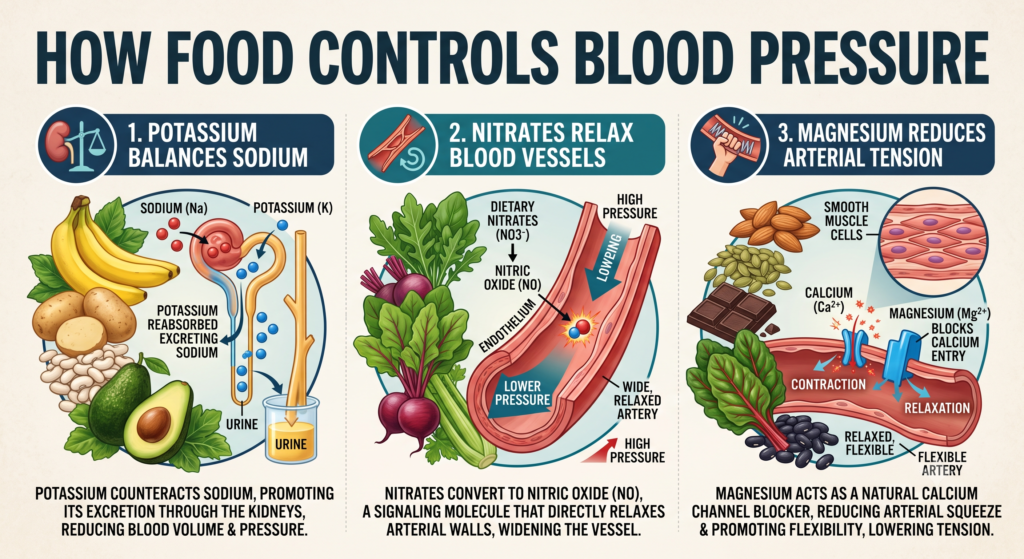
Several dietary factors directly raise or lower this pressure. Sodium causes the kidneys to retain water, increasing blood volume and pressure. Potassium counteracts sodium by helping the kidneys excrete it. Nitrates in certain vegetables relax the muscular walls of blood vessels, widening them and reducing resistance. Magnesium supports vascular muscle relaxation. Antioxidants protect artery walls from the oxidative damage that makes them stiffer and less responsive.
This means that food is not just a supporting factor in blood pressure management. It is a primary lever. Research consistently shows that dietary changes alone can reduce systolic blood pressure by 10 to 15 millimeters of mercury in people with hypertension, which is comparable to the effect of a single blood pressure medication.
How Foods That Lower Blood Pressure Actually Work
The foods that lower blood pressure share a few key characteristics. They are typically rich in potassium, magnesium, calcium, fiber, or nitrates, and they tend to be low in sodium and saturated fat.
Potassium is the most important mineral for blood pressure control after sodium. It works directly in the kidneys to increase sodium excretion and in blood vessel walls to reduce tension. Most people eating a processed-food diet consume far too little potassium and far too much sodium, a ratio that chronically elevates blood pressure.
Dietary nitrates, found in leafy greens and beets, are converted by the body to nitric oxide, a molecule that signals blood vessel walls to relax and widen. This vasodilation directly reduces blood pressure. Omega-3 fatty acids reduce inflammation in artery walls and improve their elasticity.
According to the American Heart Association, adopting a diet rich in fruits, vegetables, whole grains, and low-fat dairy while limiting sodium, saturated fat, and added sugar produces significant and lasting reductions in blood pressure.
12 Best Foods That Lower Blood Pressure
Here are the 12 most effective and well-researched foods that lower blood pressure, with the mechanism behind each one explained plainly.
1. Leafy Greens
Spinach, kale, Swiss chard, and arugula are among the most potent foods that lower blood pressure because they combine high potassium with high nitrate content. The nitrates convert to nitric oxide, which relaxes blood vessel walls within hours of eating.
A single serving of spinach provides more than 800 milligrams of potassium, which is nearly a quarter of the daily target for blood pressure control. Eating leafy greens daily is one of the most consistently supported dietary recommendations in cardiovascular medicine.
2. Berries
Blueberries, strawberries, and raspberries are rich in flavonoids called anthocyanins that improve the function of the endothelium, the inner lining of blood vessels. Research following over 30,000 people found that those with the highest berry intake had significantly lower rates of hypertension.
The effect appears to be dose-dependent, meaning more regular consumption produces greater benefit. Adding berries to breakfast daily is one of the most enjoyable ways to protect blood pressure.
3. Beets and Beetroot Juice
Beets are one of the highest dietary sources of nitrates available. Studies consistently show that drinking around 250 milliliters of beetroot juice reduces systolic blood pressure by 4 to 10 points within hours, with effects lasting up to 24 hours.
Roasted beets, beet salads, and beetroot juice all provide the benefit. The effect is strongest when beets are eaten raw or as juice rather than canned, since high-heat canning destroys some of the nitrate content.
4. Oats
Oats are rich in a soluble fiber called beta-glucan that reduces cholesterol and improves arterial function. Research shows that regular oat consumption reduces both systolic and diastolic blood pressure, with stronger effects in people who already have elevated numbers.
Starting the day with plain oats rather than refined cereal is a simple swap that delivers consistent cardiovascular benefit over weeks and months.
5. Fatty Fish
Salmon, mackerel, and sardines provide omega-3 fatty acids that reduce systemic inflammation, improve endothelial function, and modestly lower blood pressure. A meta-analysis of 70 trials found that omega-3 supplementation reduced blood pressure by about 2 to 3 points, with larger effects in people with hypertension.
Eating fatty fish two to three times per week delivers both the blood pressure and broader cardiovascular benefits. Our article on omega-3 fatty acids and food sources covers all the dietary sources in detail.
6. Bananas
Bananas are one of the most accessible high-potassium foods, providing around 422 milligrams per medium fruit. Their convenience, affordability, and mild flavor make them one of the most practical daily additions for blood pressure support.
The potassium in bananas directly counteracts the blood-pressure-raising effect of sodium, helping the kidneys excrete more sodium and reducing fluid retention.
7. Garlic
Garlic produces allicin when crushed or chopped, a compound with well-documented blood-pressure-lowering effects. Clinical trials show that garlic supplementation reduces systolic blood pressure by 5 to 8 points in people with hypertension, with effects appearing within four to six weeks of regular consumption.
Using fresh garlic liberally in cooking is the most natural way to access this benefit. Letting crushed garlic sit for five to ten minutes before cooking preserves more of the allicin.
8. Dark Chocolate
Good quality dark chocolate with at least 70 percent cocoa contains flavanols that improve endothelial function and reduce blood pressure modestly. Research supports that small daily amounts, around 30 to 40 grams, produce consistent benefits without excess calories.
The effect is specific to dark chocolate. Milk chocolate contains too little cocoa and too much sugar to produce the same result. One or two small squares daily is a sustainable and enjoyable approach. Our guide on cholesterol reducing foods covers more foods that protect cardiovascular health through related mechanisms.
9. Olive Oil
Extra-virgin olive oil contains oleic acid and polyphenols that reduce arterial inflammation and improve endothelial function. The Mediterranean diet, which uses olive oil as its primary fat, consistently produces lower blood pressure outcomes compared to typical Western diets in clinical trials.
Replacing butter, vegetable oil, and processed fats with extra-virgin olive oil as your primary cooking fat is a straightforward change with meaningful cardiovascular impact.
10. Pomegranate
Pomegranate and pomegranate juice are among the most studied foods for blood pressure reduction. Research shows that drinking around 240 milliliters daily for as little as two weeks produces significant reductions in blood pressure, with effects attributed to punicalagins, powerful antioxidants that protect artery walls and improve nitric oxide availability.
Fresh pomegranate seeds are equally beneficial and add fiber alongside the antioxidants.
11. Low-Fat Dairy
Calcium and potassium from low-fat yogurt and milk contribute to blood pressure reduction through multiple pathways. The DASH diet trials, which produced some of the largest dietary blood pressure reductions ever recorded, included significant amounts of low-fat dairy.
Plain Greek yogurt is particularly valuable since it provides calcium, potassium, and protein in one food. Our guide on magnesium rich foods covers how magnesium from dairy and other sources adds a further blood pressure benefit.
12. Seeds (Flaxseeds and Pumpkin Seeds)
Flaxseeds provide omega-3 fatty acids, potassium, and magnesium alongside blood-pressure-supportive fiber. Research on flaxseed consumption shows reductions in both systolic and diastolic blood pressure with regular daily intake.
Pumpkin seeds provide magnesium and potassium in a highly concentrated form. Sprinkling ground flaxseeds over oats or yogurt and eating a small handful of pumpkin seeds daily are simple habits that compound into meaningful cardiovascular support.
Foods and Habits That Raise Blood Pressure
Knowing what to reduce is as important as knowing what to add. Several dietary choices reliably raise blood pressure and undermine the benefit of every other improvement.
Sodium is the most significant. Most people eat one and a half to two times the recommended daily sodium limit, primarily through processed and packaged foods rather than table salt. Restaurant meals, canned soups, processed meats, and bread are among the largest sodium contributors in the typical diet.
Added sugar raises blood pressure through multiple mechanisms including increased insulin, inflammation, and sodium retention. Alcohol in excess directly raises blood pressure and counteracts the benefit of a healthy diet. Trans fats and saturated fats from processed and fried foods promote arterial inflammation that stiffens vessel walls.
If sugar cravings are driving you toward these foods, our guide on how to reduce sugar cravings gives practical strategies for breaking the pattern.
The DASH Diet and Blood Pressure
The DASH diet, which stands for Dietary Approaches to Stop Hypertension, is the most studied and most consistently effective dietary intervention for blood pressure reduction ever researched. It was developed specifically to address hypertension through food and has been shown to reduce systolic blood pressure by 8 to 14 points in controlled trials.
The DASH diet emphasizes exactly the foods on the list above: fruits, vegetables, whole grains, low-fat dairy, lean protein, and limited sodium. It is not a fad diet or a short-term plan. It is a long-term eating pattern supported by decades of clinical evidence and recommended by every major cardiovascular health organization.
Adopting even a partial DASH approach, by adding more of the foods above while cutting back on sodium and processed foods, produces meaningful results without requiring a complete dietary overhaul.
Daily Habits That Support Healthy Blood Pressure
Food is the strongest dietary lever for blood pressure, but a few daily habits significantly amplify the effect of every dietary change you make.
Regular physical activity reduces blood pressure by improving heart efficiency and arterial elasticity. A daily 30-minute walk is enough to produce meaningful and lasting reductions in blood pressure, particularly in people with pre-hypertension or stage one hypertension. Our article on heart healthy habits ties diet and movement together into a complete cardiovascular care approach.
Managing chronic stress reduces the cortisol-driven vasoconstriction that raises blood pressure over time. Quality sleep is equally important since blood pressure dips naturally during sleep and consistently poor sleep prevents this recovery dip, raising average daily pressure.
Maintaining a healthy weight reduces the cardiac workload that excess body fat creates. Even modest weight loss of five to ten percent produces significant blood pressure improvements in people who are overweight.
According to Harvard Health, combining dietary changes with regular activity, stress management, adequate sleep, and limited alcohol produces additive benefits that exceed what any single intervention achieves alone.
Track Your Heart Health and Progress
Monitoring your blood pressure at home gives you immediate feedback on whether your dietary changes are producing results. Most pharmacies and many homes now have affordable digital blood pressure monitors. Measuring at the same time each morning, before eating or taking medication, gives the most consistent and informative readings.
For your broader metabolic health picture, use our free BMI calculator to track your weight trend since weight and blood pressure are directly connected. The calorie calculator helps you plan meals within a range that supports a healthy weight alongside your blood pressure goals.
Frequently Asked Questions
What foods lower blood pressure the fastest?
Beetroot juice and leafy greens high in nitrates produce the fastest measurable effects, sometimes within two to three hours of consumption. Garlic and omega-3-rich fish produce meaningful reductions within four to six weeks of regular intake. Berries, oats, and potassium-rich foods produce gradual but sustained improvements with daily consumption.
How much can diet lower blood pressure?
Research shows that dietary changes following DASH principles can reduce systolic blood pressure by 8 to 14 points and diastolic pressure by 4 to 9 points in people with hypertension. Combined with reduced sodium, regular activity, and weight management, total reductions can be comparable to a single blood pressure medication.
Is banana good for blood pressure?
Yes. Bananas are a practical, high-potassium food that helps the kidneys excrete sodium and reduces blood vessel tension. One medium banana daily as part of a broader diet rich in fruits, vegetables, and whole grains contributes meaningfully to blood pressure control.
Does garlic really lower blood pressure?
Yes. Clinical trials consistently show that regular garlic consumption, particularly garlic supplements or raw garlic, reduces systolic blood pressure by 5 to 8 points in people with hypertension within four to six weeks. The effect is attributable to allicin, the sulfur compound released when garlic is crushed.
What should I avoid to lower my blood pressure?
The most important things to reduce are sodium from processed and packaged foods, added sugar, excess alcohol, and trans fats from fried and highly processed foods. Reducing caffeine in sensitive individuals also helps. These dietary factors raise blood pressure through inflammation, sodium retention, and arterial stiffening.
How long does it take for diet to lower blood pressure?
Nitrate-rich foods like beets and leafy greens can produce effects within hours. Most dietary changes show meaningful blood pressure reductions within two to four weeks of consistent eating. Sustained improvements require consistent long-term dietary habits rather than short-term interventions.
Can food alone control high blood pressure?
For mild to moderate hypertension, dietary changes combined with lifestyle improvements can produce sufficient reductions to avoid medication in some people. Severe hypertension typically requires medication alongside dietary changes. Always follow your doctor’s guidance and never stop medication without medical supervision.
Final Thoughts
The foods that lower blood pressure are genuinely powerful, practical, and available in any market. Leafy greens, berries, beets, oats, fatty fish, garlic, and dark chocolate all work through documented mechanisms that improve how your blood vessels function and how efficiently your kidneys manage sodium.
Start with one or two additions this week. Add spinach to your eggs, eat a banana with breakfast, switch refined cereal for oats, and use garlic freely in your cooking. These small consistent changes compound into meaningful improvements in your numbers over weeks and months.
Use the free tools on Vitality Nexus to monitor your weight and calorie balance, and explore more of our heart health guides to build a complete lifestyle that protects your heart for the long run.
Medical Disclaimer: This article is for general information only and is not medical advice. If you have high blood pressure or are taking blood pressure medication, please consult a qualified doctor before making significant dietary changes and never stop medication without medical supervision.