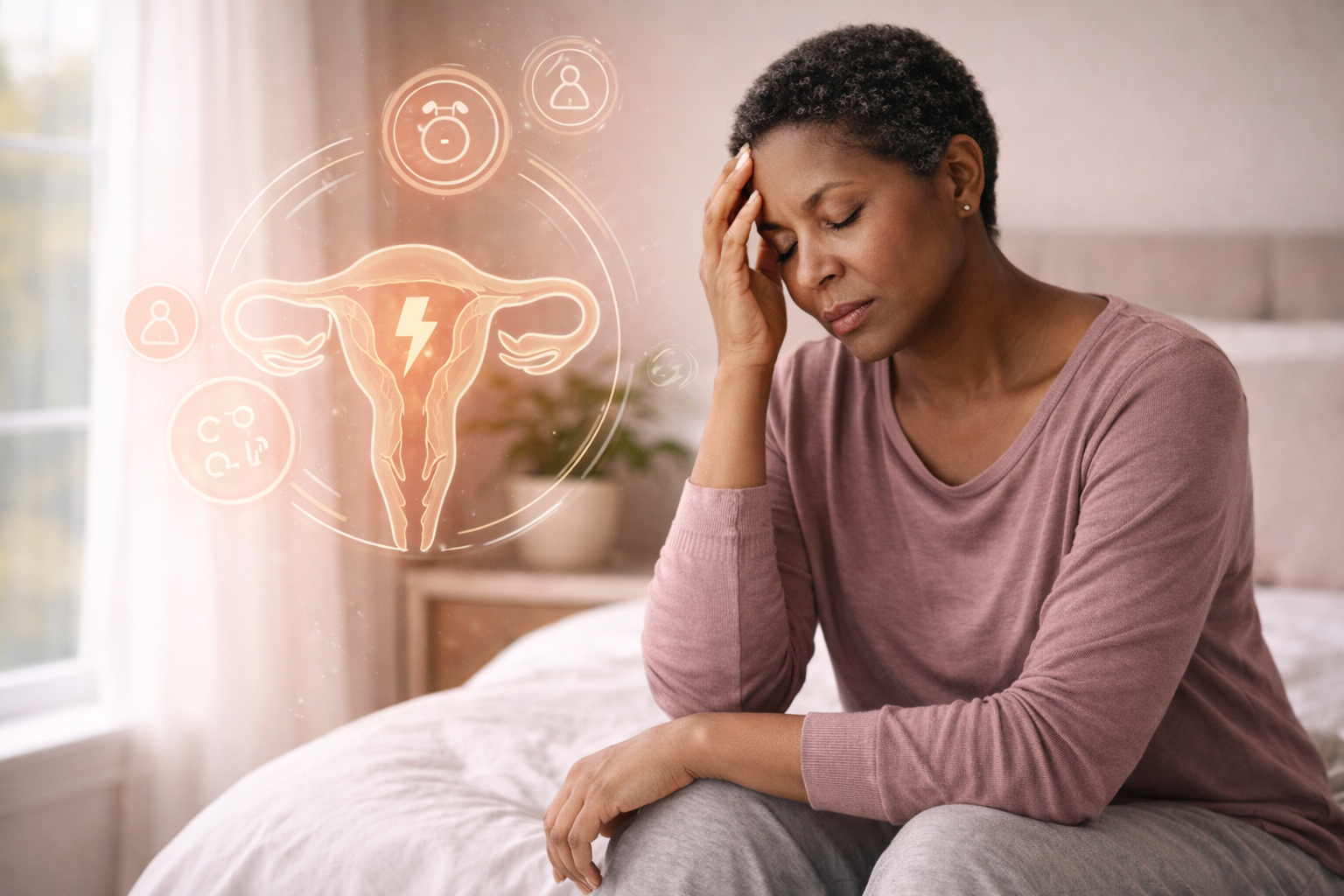
Stress affects women’s reproductive health in more ways than many people realize. Stress is often treated like a mental or emotional issue only, but its effects can reach much further. In women, ongoing stress can influence hormones, menstrual cycles, sleep, sexual health, and even fertility concerns. That does not mean every irregular period or fertility challenge is caused by stress alone. It does mean stress is one important factor that deserves attention.
When stress becomes frequent or long-lasting, the body shifts into survival mode. Stress hormones such as cortisol and adrenaline rise, and that can affect other hormone systems that help regulate ovulation, menstruation, mood, and energy. Over time, this can create changes that feel confusing. A woman may notice her periods are late, PMS feels worse, sleep is broken, intimacy feels harder, or her body simply feels out of balance.
The good news is that understanding this connection can help women respond earlier. Stress does not always create permanent reproductive problems, but it can make existing issues feel worse and can sometimes disrupt normal patterns enough to affect daily life.
Table of Contents
Why Stress Has Such a Strong Effect on the Female Body
The body does not separate emotional stress from physical stress as neatly as people think. Work pressure, poor sleep, undereating, illness, overexercise, relationship strain, and constant worry can all send the body the message that something is wrong.
In response, the brain and adrenal glands release stress hormones. These can interfere with the hormone signals involved in the menstrual cycle. When the body senses strain, it may not prioritize reproduction in the same way. That can lead to cycle changes, missed ovulation, or changes in bleeding patterns.
This is one reason women under stress sometimes say, “My body just feels different.” They are often right. Hormones, energy, mood, and reproductive rhythms are closely connected.
Stress and Irregular Periods
One of the most common ways stress affects women’s reproductive health is through menstrual changes. Some women get late periods. Others skip a cycle. Some bleed more heavily, while others notice lighter or shorter periods than usual.
This happens because the menstrual cycle depends on steady communication between the brain, ovaries, and uterus. Stress can interrupt that rhythm. Even a short period of intense emotional strain can affect when ovulation happens. If ovulation shifts, the timing of the period may shift too.
That said, stress is not the only cause of irregular periods. Thyroid problems, PCOS, pregnancy, perimenopause, sudden weight changes, and some medical conditions can also play a role. That is why repeated irregularity should not be brushed off.
Stress, Ovulation, and Fertility
Another reason this topic matters is that stress may affect ovulation and fertility-related health. Ovulation is the release of an egg during the menstrual cycle. If ovulation becomes irregular or does not happen consistently, it can make conception more difficult.
This does not mean stress always causes infertility. Fertility is influenced by many factors, including age, overall health, male-factor fertility, ovulation disorders, uterine conditions, and more. But chronic stress can become one of the pieces that adds pressure to an already sensitive system.
This issue can become cyclical. A woman feels stressed, then notices cycle changes or trouble getting pregnant, which creates more stress, which may make the situation feel worse. That loop can be emotionally exhausting.
For women trying to conceive, this is why stress support matters. It is not about blaming women for being stressed. It is about supporting the body, improving resilience, and not ignoring a factor that can influence hormonal balance.
PMS, PMDD, and Stress
Stress does not just affect whether a period comes on time. It can also affect how that time of the month feels.
Many women notice that PMS symptoms feel stronger during stressful periods of life. Mood swings, irritability, fatigue, bloating, cravings, sleep problems, and headaches can all feel more intense when the nervous system is already overwhelmed.
For women with PMDD, the emotional effects can feel even more severe. Stress may not be the root cause, but it can amplify how hard symptoms hit. When stress levels are high, the body often has less capacity to regulate sleep, mood, and inflammation. That can make the hormonal ups and downs of the menstrual cycle feel much more disruptive.
Low Libido and Sexual Health
Stress can also affect women’s reproductive health by lowering sexual desire and making intimacy feel less natural. This part is often under-discussed, but it is common.
When the brain is busy dealing with pressure, anxiety, or fatigue, desire often drops. Stress can also make it harder to relax, harder to feel present, and harder to enjoy intimacy. Poor sleep, mood changes, and hormone shifts can add to the problem.
For some women, this creates emotional strain in relationships. They may feel guilty, disconnected, or worried that something is wrong with them. In reality, chronic stress can have a real effect on libido and sexual well-being.
Sleep, Hormones, and Reproductive Balance
Sleep and reproductive health are deeply connected. Stress often harms sleep first. A woman may struggle to fall asleep, wake through the night, or feel tired even after enough hours in bed.
Poor sleep can then worsen hormone balance, mood, cravings, and menstrual symptoms. It can also increase how stressed the body feels overall. In this way, stress and poor sleep often feed each other.
If a woman is dealing with irregular periods, stronger PMS, fertility concerns, or low energy, sleep should always be part of the conversation. Sometimes the path to better reproductive health starts with improving recovery, not just focusing on hormones directly.
Can Stress Cause Long-Term Reproductive Problems?
Stress can clearly disrupt reproductive health, but it is important to stay balanced here. Stress is not the explanation for every symptom, and it should never be used to dismiss real medical concerns.
If stress-related hormone disruption goes on for a long time, it may contribute to persistent cycle irregularity or worsen underlying issues. But if symptoms are ongoing, severe, or unusual, medical evaluation matters.
Women should speak with a healthcare professional if they have:
- repeated missed periods
- very heavy bleeding
- bleeding between periods
- severe pelvic pain
- symptoms of PMDD
- infertility concerns
- sudden major cycle changes
- low mood or anxiety that is hard to manage
Stress management is important, but so is proper diagnosis.
Practical Ways to Protect Reproductive Health During Stress
The goal is not to remove every stressful thing from life. That is not realistic. The goal is to help the body feel safer and more supported.
Start with the basics:
- eat regular balanced meals
- avoid extreme dieting
- prioritize sleep
- keep exercise moderate and consistent
- reduce overtraining
- cut back on excess caffeine if it worsens anxiety
- create daily time for calm, prayer, journaling, walking, or breathing exercises
- ask for help instead of carrying everything alone
For some women, therapy or counseling can also make a real difference. Mental health support is health support. When emotional pressure improves, the body often responds too.
Tracking your cycle can help as well. It becomes easier to notice whether symptoms are random or part of a pattern. That information can be useful for both self-awareness and medical appointments.
When Stress Is Hiding Behind “Normal Female Problems”
Many women are taught to tolerate exhaustion, painful cycles, mood shifts, and low libido as if they are just part of being female. But “common” does not always mean “normal.”
If stress is constantly affecting your appetite, sleep, mood, cycle, or sexual health, that is worth paying attention to. Your body may be asking for support long before a full health crisis appears.
This matters especially for women balancing work, family pressure, caregiving, marriage, study, body-image concerns, and hormonal transitions at the same time. The reproductive system does not exist separately from real life. It responds to the environment a woman is living in every day.
Final Thoughts
Understanding how stress affects women’s reproductive health can help women take symptoms more seriously without panicking. Stress can influence cycle regularity, ovulation, PMS, libido, sleep, and fertility-related wellness. It may not be the only factor, but it is often an important one.
The body is always sending signals. A missed period, worsening PMS, low desire, broken sleep, or unusual cycle changes may be signs that the system is under more pressure than it can comfortably handle.
The answer is not shame. The answer is support.