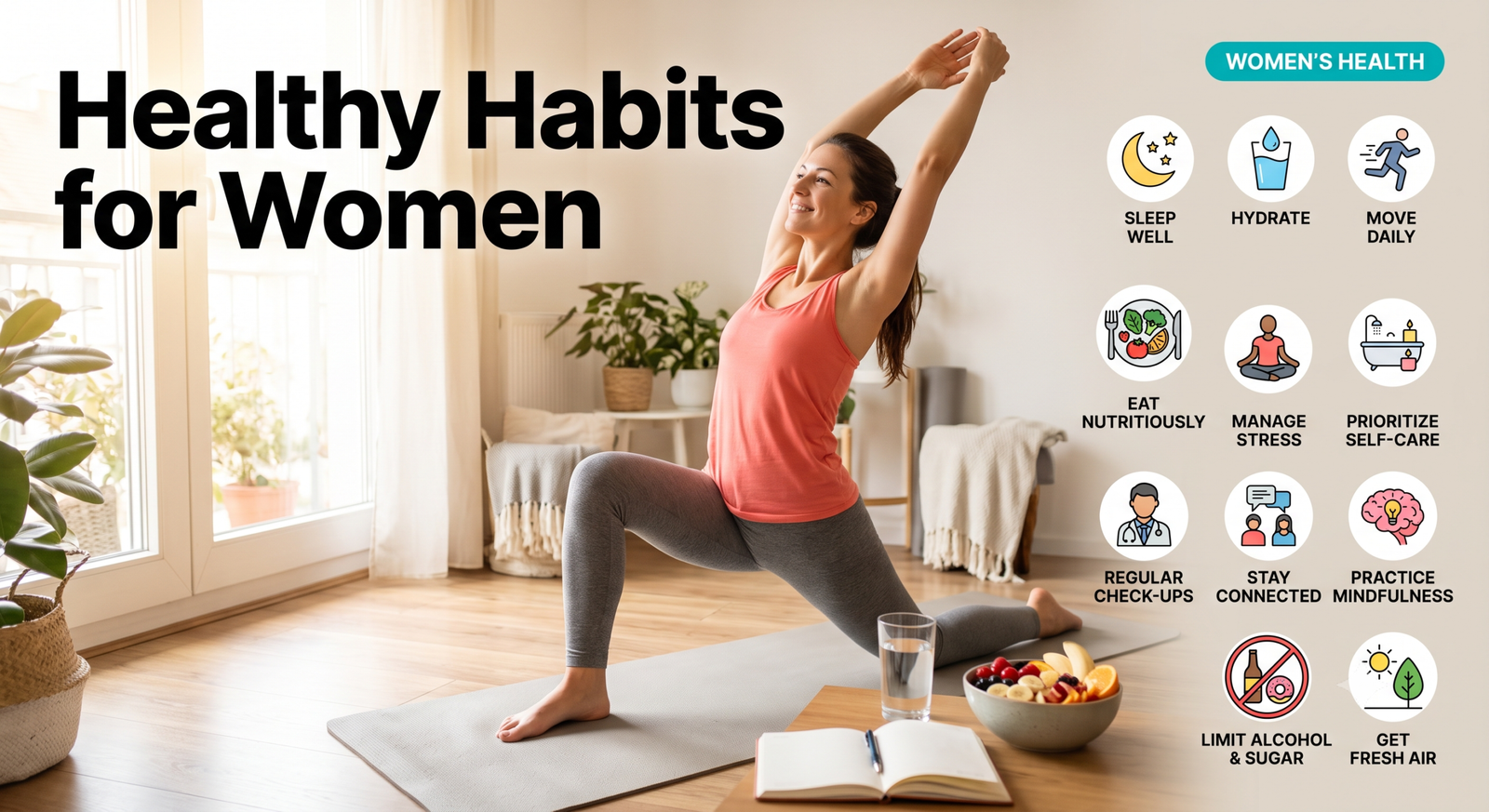
If you have ever wished you had more energy, a steadier mood, and a body that actually felt good to live in, the answer is not one big dramatic change. The best healthy habits for women are small, consistent, and built around the specific way the female body actually works.
Women’s health is not a smaller version of men’s health. Hormonal cycles, unique nutrient needs, and the demands of daily life mean that the habits making the biggest difference for women are often different from what general health advice suggests.
In this guide, you will find 11 of the most important healthy habits for women, why each one matters for the female body specifically, and how to build them into your real life without overhauling everything at once. Start with one or two, let them become automatic, and add from there.
Table of Contents
Why Healthy Habits for Women Need to Be Specific
A lot of general health advice is built around research done primarily on men. When women follow those same protocols, they sometimes get different results, or no results at all, and blame themselves rather than recognizing that their bodies have different needs.
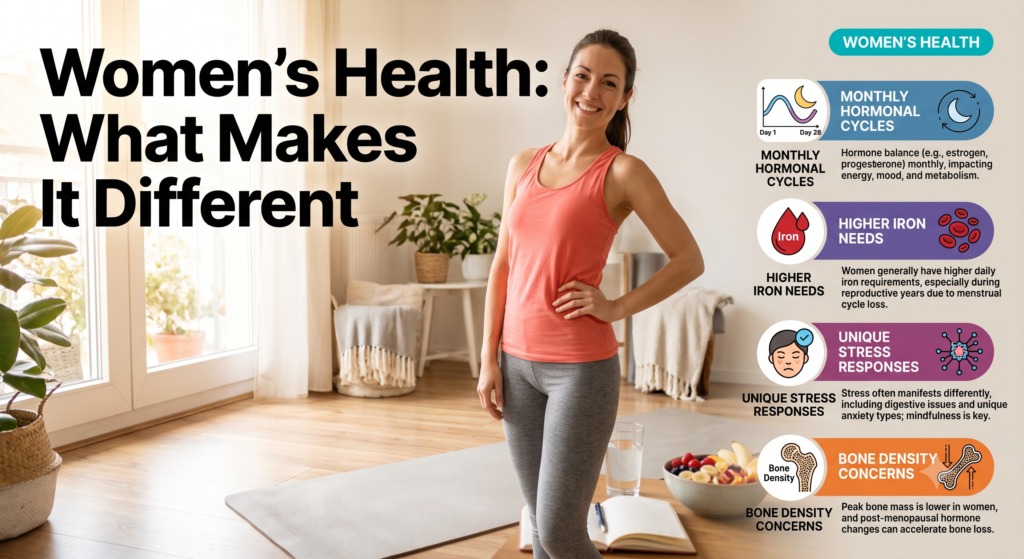
The female body operates on a hormonal cycle that creates meaningful weekly changes in energy, strength, appetite, and mood. Nutrients like iron and folate are needed in higher amounts due to menstrual losses. Stress affects women’s cortisol and thyroid differently. Bone density becomes a major health concern decades earlier for women than for men.
According to the Office on Women’s Health, women face specific health risks including higher lifetime rates of anxiety, depression, autoimmune conditions, and osteoporosis. Habits that actively address these specific patterns produce meaningfully better outcomes than generic wellness tips.
The 11 healthy habits for women below are built with this in mind.
11 Best Healthy Habits for Women
Here are the 11 most impactful healthy habits for women, each one chosen for the specific way it supports the female body and mind.
1. Protect Your Sleep Like Your Health Depends on It
Because it does. Sleep is when your body resets hormones, processes emotions, repairs tissue, and regulates the appetite signals that control your food choices the next day. Women are more susceptible to the cognitive and mood effects of poor sleep than men, and progesterone changes through the menstrual cycle can make sleep harder at specific phases.
Aim for seven to nine hours with a consistent sleep and wake time. A cool, dark room, no screens in the last hour before bed, and a short wind-down routine make a measurable difference. Use our free sleep calculator to find the exact times that align with your natural sleep cycles.
2. Eat Protein at Every Meal
Protein is the most filling, most muscle-protective nutrient, and most women do not eat enough of it. It keeps blood sugar stable, reduces cravings through the day, and supports the muscle mass that protects your metabolism as you age.
Aim for 20 to 30 grams per meal from sources like eggs, Greek yogurt, chicken, fish, beans, or lentils. Pairing protein with fiber and healthy fat at breakfast specifically has a powerful effect on hunger and energy for the entire day.
3. Move Your Body Consistently, Not Perfectly
Exercise does not need to be intense to be effective. For women, consistency matters far more than perfection. Walking, strength training, yoga, swimming, or cycling, done regularly and at a pace you can sustain, all deliver real benefits for mood, hormones, and long-term health.
Strength training deserves a special mention because it is still underused by women. Building muscle protects bone density, improves insulin sensitivity, and supports hormonal balance in ways that cardio alone cannot replicate. Our guide on the best home workouts for beginners is a practical starting point.
4. Track Your Cycle as a Vital Sign
Your menstrual cycle is a monthly report card on your overall health. Changes in cycle length, pain levels, and PMS symptoms are early signals of hormonal shifts, nutritional gaps, or stress overload. Treating these signals as information rather than inconveniences gives you powerful early awareness.
Track your cycle with an app or a simple journal for three to four months. You will start to recognize patterns in your energy, mood, sleep, and hunger that help you work with your body rather than against it. Our article on hormone balance for women goes deeper on how to support your hormonal health naturally.
5. Address the Nutrients Women Most Commonly Lack
Iron is the most common deficiency in women worldwide, driven by monthly blood loss. Low iron causes fatigue, brain fog, poor exercise capacity, and worsened thyroid function, often before levels fall low enough to show as anemia on a standard test. Our guide on iron rich foods for women shows the best dietary sources.
Vitamin D deficiency is extremely common in women and is linked to disrupted menstrual cycles, mood problems, and reduced bone density. Magnesium supports progesterone production, sleep quality, and stress resilience, and is quietly depleted by chronic stress. Omega-3 fatty acids from fatty fish or flaxseeds reduce the inflammation that worsens most hormonal conditions. The Harvard T.H. Chan School of Public Health recommends regular testing for vitamin D and supplementing if levels are low, which is especially relevant for women in low-sunlight regions.
6. Manage Stress Every Single Day
Chronic stress is one of the most pervasive threats to women’s health. High cortisol suppresses progesterone, disrupts thyroid function, worsens insulin resistance, and makes sleep harder, all of which create a cascade of downstream problems.
The habit here is not eliminating stress but building daily recovery time. Ten minutes of deep breathing, a short walk, journaling, or any calming activity you actually enjoy lowers cortisol over time. Understanding how cortisol behaves in your body is the first step, and our guide on high cortisol versus low cortisol explains the full picture in plain language.
7. Build and Protect Your Gut Health
Your gut microbiome influences estrogen metabolism, immune function, mood through serotonin production, and even how your body responds to stress. Women have a distinct gut microbiome that changes across the menstrual cycle and through life stages, making gut health a genuinely important and often overlooked pillar of female wellness.
Eat 30 or more different plant foods each week for microbiome diversity. Include fermented foods like plain yogurt, kefir, or sauerkraut regularly. Limit ultra-processed foods that harm beneficial bacteria. Our article on fiber for gut health and blood sugar shows exactly how to do this without complicated meal plans.
8. Stay Hydrated All Day
Women are more susceptible to the cognitive and energy effects of even mild dehydration than men, partly due to differences in body composition. Thirst is often mistaken for hunger or a mood dip, so staying consistently hydrated through the day prevents unnecessary snacking and energy crashes.
The standard target is around two liters per day, increasing with activity, heat, and in the luteal phase of the cycle when fluid needs are slightly higher. Drinking a large glass of water first thing in the morning before anything else is a simple anchor habit that builds a baseline before the day gets busy.
9. Invest in Meaningful Social Connection
Women’s health research consistently shows that strong social connections reduce cortisol, support immune function, and significantly lower the risk of depression and anxiety. A landmark Harvard study found that the quality of relationships was the strongest single predictor of wellbeing across a woman’s lifetime.
This does not mean constant socializing. It means a few close relationships with genuine depth, where you feel known and supported. Protecting that time is not a luxury. For women especially, it is a biological necessity. Our mental health awareness guide covers the emotional side of this in more detail.
10. Do Regular Body Check-Ins
Most women interact with their bodies through evaluation and criticism rather than curious attention. A brief weekly check-in, noticing energy, mood, sleep, digestion, and cycle patterns, builds the body awareness that catches early signs of imbalance long before they become bigger problems.
This is also how you measure whether your healthy habits for women are actually working. Small, genuine improvements in energy or mood over weeks are the real signal of progress, often more telling than any number on a scale.
11. Be Consistent Rather Than Perfect
Perfectionism is one of the most common obstacles to women’s health. The all-or-nothing thinking that treats one missed workout or one bad food day as a failure that justifies starting over often keeps women cycling through brief improvements and regressions rather than building steady progress.
Habits that happen 80 percent of the time consistently for months produce far better outcomes than habits done perfectly for three weeks. Choose routines that are sustainable at your lowest-energy, most-stressed baseline, not ones that require optimal conditions.
Healthy Habits for Women at Every Life Stage
The healthy habits for women that matter most shift across different life stages, so it helps to know what to prioritize at each one.
In your twenties, the most important habits are establishing consistent sleep, building a nutritious eating pattern, and beginning strength training early, since these compound enormously over decades. Learning to track your cycle and building your awareness of your hormonal patterns is also invaluable at this stage.
In your thirties, progesterone often declines before estrogen, producing worsening PMS, sleep changes, and cycle irregularity that many women attribute to stress. Increasing protein intake, adding strength training, and becoming more deliberate about stress management and sleep protection all become more important. Our article on perimenopause versus menopause explains the hormonal changes that begin in this decade.
In your forties and beyond, bone density protection through resistance training, adequate calcium and vitamin D, and cardiovascular health habits all deserve more focused attention. The habits you build and maintain through earlier decades pay their biggest dividends here.
How to Make These Habits Actually Stick
Knowing what to do and making it happen are different challenges entirely. A few practical strategies make healthy habits for women far more likely to last.
Start with one habit, not eleven. Pick the one that feels most achievable right now and focus on making it automatic before adding another. Attach your new habit to something you already do every day, such as drinking water right after you brush your teeth or stretching while your coffee brews. These cues remove the need to remember or motivate yourself.
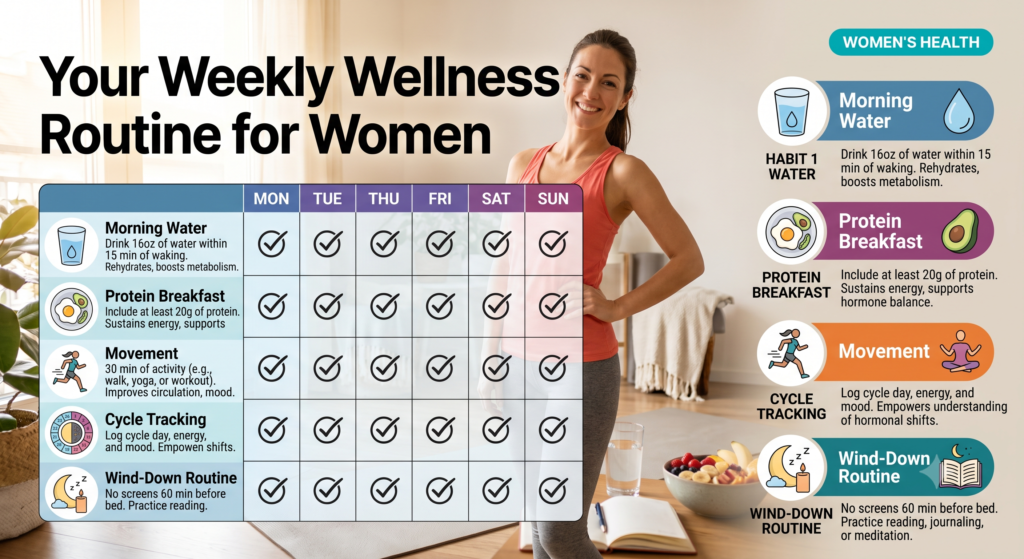
Track your habits simply, even just a checkmark on a calendar, because seeing the streak builds momentum. And when you miss a day, return to the habit the next morning without drama or self-criticism. The single most important rule of habit change is never missing twice in a row. Our guide on healthy lifestyle habits for energy and focus explores the science of lasting habit formation in more depth.
Track Your Health and Progress
Building healthy habits for women works best when you can see real evidence that they are making a difference. Tracking does not need to be elaborate.
Monitor your energy, mood, and sleep quality weekly with a short journal note. Track your cycle for hormonal patterns. For physical health, use our free BMI calculator to monitor your weight trend, our calorie calculator to ensure you are eating enough to fuel your habits, and our body fat calculator to track body composition changes over time.
These numbers give you an objective baseline against which your habits can be measured, and seeing steady improvement over weeks and months is one of the strongest motivators to keep going.
Frequently Asked Questions
What are the most important healthy habits for women?
The habits with the broadest impact on women’s health are consistent sleep, adequate protein, regular movement including strength training, stress management, cycle tracking, and addressing common nutritional gaps like iron, vitamin D, and magnesium.
How long does it take for healthy habits to make a difference?
Sleep and hydration improvements can lift energy and mood within a week. Dietary changes produce hormonal improvements within four to eight weeks. Strength training shows measurable fitness gains within two to three weeks, with visible body composition changes after six to eight weeks of consistency.
What healthy habits specifically support women’s hormonal health?
Protecting sleep, managing chronic stress, strength training for insulin sensitivity, cycle awareness, gut microbiome support, and addressing magnesium, iron, and vitamin D deficiencies all directly support female hormonal function.
Are healthy habits for women different from those for men?
Yes. Women need habits calibrated to the hormonal cycle, higher iron needs due to menstruation, different gut microbiome responses, and the hormonal transitions of perimenopause and menopause that have no direct male equivalent.
Is it too late to start healthy habits after 40?
Never. Women who begin strength training in their 50s still build significant muscle and bone density. Dietary improvements in the 40s show real hormonal and metabolic changes. The benefits of healthy habits do not diminish with age.
What is the single most important healthy habit for women?
Sleep. Not because the others are less important, but because poor sleep actively undermines every other healthy habit, increasing appetite, reducing exercise motivation, raising cortisol, and impairing mood and focus all at once.
How do I stay consistent with healthy habits as a busy woman?
Choose habits that are achievable at your lowest-energy, most-stressed baseline. Attach them to existing routines. Track with a simple checkmark. And when you miss a day, return to the habit immediately without self-criticism. Consistency over weeks and months matters far more than perfection over days.
Final Thoughts
Building healthy habits for women is not about becoming a different person or achieving perfection. It is about making small, specific, consistent choices that let your body and mind function the way they are designed to.
Start with sleep. Add protein to your meals. Move your body regularly. Track your cycle. Drink more water. These are unglamorous habits with remarkable long-term returns, and they build on each other in ways that quietly transform how you feel over months and years.
Use the free tools on Vitality Nexus to understand your personal numbers, and explore more of our women’s health guides to keep building a lifestyle that supports you at every stage.
Medical Disclaimer: This article is for general information only and is not medical advice. If you have a health condition, hormonal concerns, or symptoms that worry you, please consult a qualified doctor or women’s health specialist.