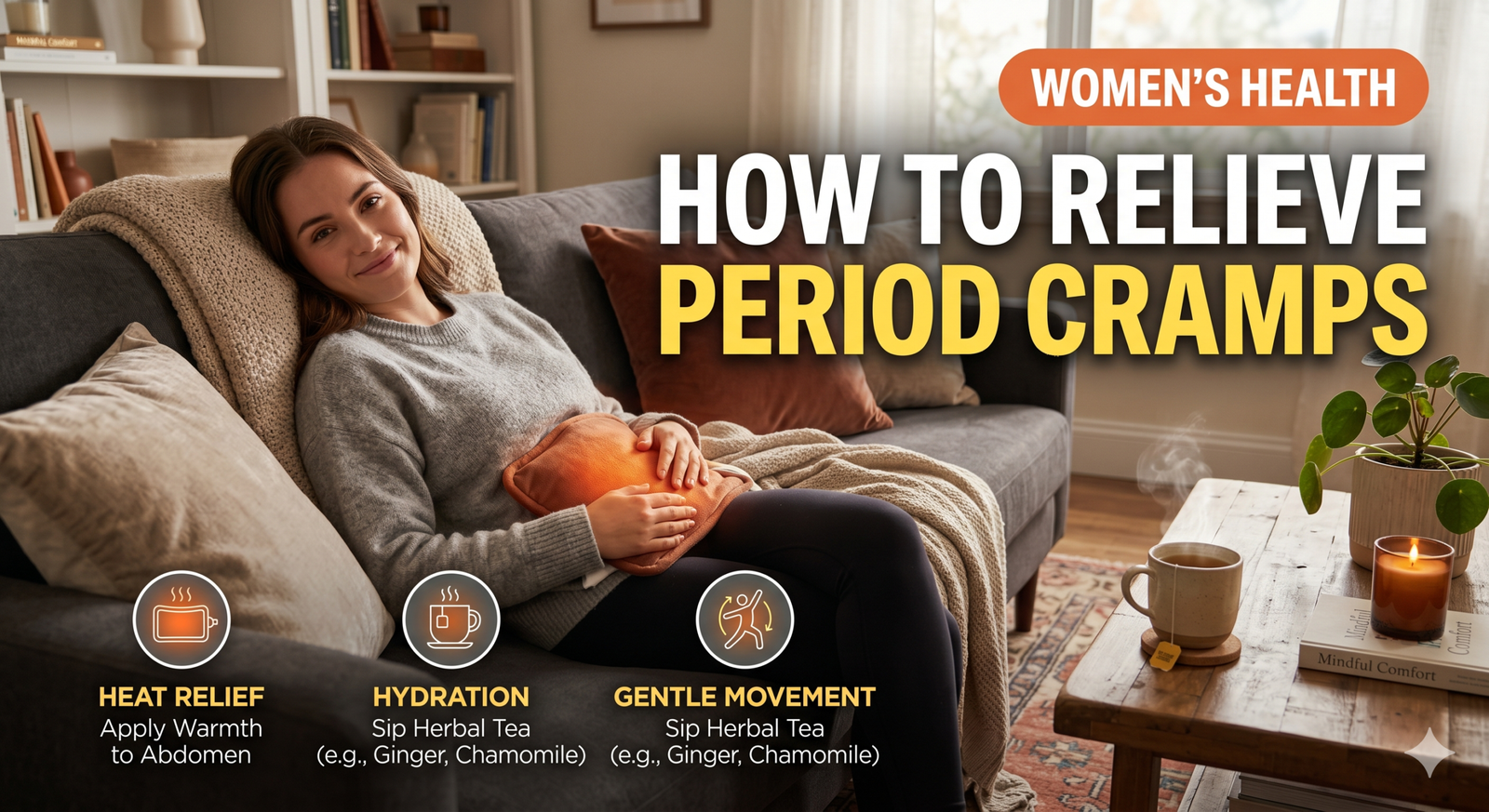
If your monthly cycle leaves you curled up in pain, learning how to relieve period cramps can give you back your days. Cramps are one of the most common period complaints, yet so many women simply suffer through them when gentle, natural relief is well within reach.
Period cramps happen when your uterus contracts to shed its lining, and for some women those contractions are strong enough to cause real discomfort. The pain can range from a dull ache to sharp waves that disrupt work, sleep, and mood. The good news is that you have plenty of safe, effective ways to ease it.
In this guide, you will learn how to relieve period cramps using heat, movement, smart food choices, and calming habits. These remedies are simple, affordable, and easy to do at home. We will also cover when cramps signal something that deserves a doctor’s attention.
Table of Contents
Why Period Cramps Happen
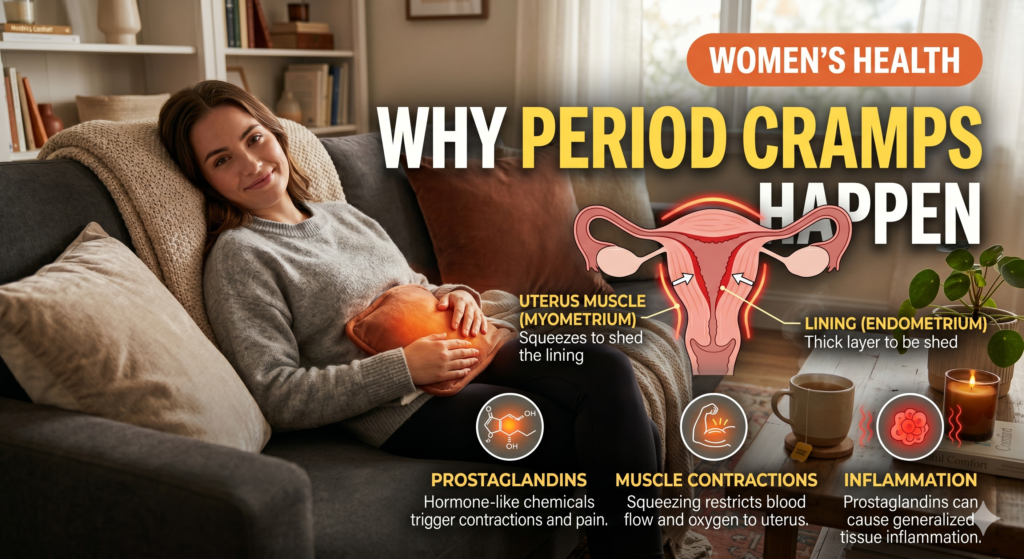
Understanding the cause of cramps makes the remedies make sense. Period pain, known medically as dysmenorrhea, is mostly driven by natural chemicals in your body.
During your period, your uterus contracts to help shed its lining. These contractions are triggered by hormone-like substances called prostaglandins. Higher levels of prostaglandins are linked to stronger contractions and more intense pain, which is why some women feel far more discomfort than others.
These contractions can briefly reduce blood flow to the uterus, adding to the aching sensation. Inflammation plays a role too, which is why anti-inflammatory foods and remedies often help. Stress and certain lifestyle factors can make cramps worse, and our article on how stress affects women’s reproductive health explains that connection well.
For most women, cramps are uncomfortable but normal. Knowing how to relieve period cramps with simple tools means you do not have to let them control your month.
How to Relieve Period Cramps Naturally at Home
The most reassuring part of learning how to relieve period cramps naturally at home is that many of the best remedies are things you already have. They work by relaxing the muscles, lowering inflammation, and improving blood flow.
Heat is the classic example. A heating pad or warm water bottle on your lower abdomen relaxes the uterine muscle and eases pain, often as effectively as mild pain relievers. A warm bath does the same while helping you relax all over.
Gentle movement also helps, even when resting feels easier. Light activity boosts blood flow and releases natural feel-good chemicals that dull pain. Staying hydrated reduces bloating that can make cramps feel worse. These small steps, used together, bring real relief for most women.
9 Natural Ways to Relieve Period Cramps
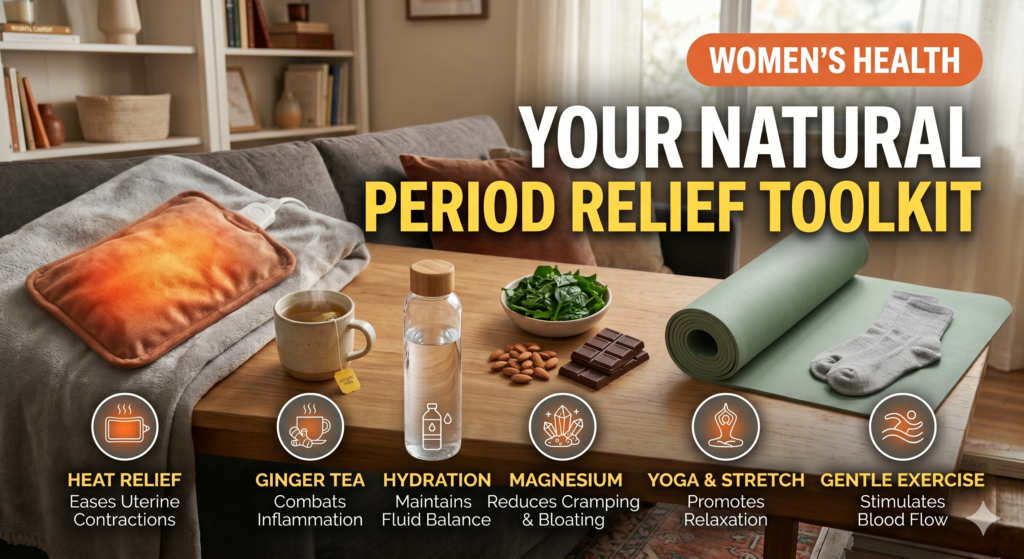
Here are nine proven, natural ways to ease your cramps. Mix and match to find what works best for your body.
- Apply heat. A heating pad or warm water bottle on your lower belly relaxes the muscle and quickly soothes pain.
- Take a warm bath. Warm water relaxes your whole body and eases tension that adds to cramping.
- Move gently. A short walk, light stretching, or gentle yoga improves blood flow and releases natural painkillers.
- Get enough magnesium. This mineral helps relax muscles, and low levels may worsen cramps. Our guide on magnesium benefits and food sources explains more.
- Add omega-3 fats. Found in fatty fish and flaxseeds, omega-3s reduce inflammation that drives period pain. See our article on omega-3 benefits and food sources.
- Sip herbal tea. Ginger and chamomile teas have natural anti-inflammatory and calming effects that ease cramps.
- Stay hydrated. Drinking enough water reduces bloating and helps your muscles work more comfortably.
- Massage your lower abdomen. Gentle circular massage, especially with a warm oil, can relax tense muscles.
- Rest and sleep well. Good rest lowers stress hormones and helps your body cope with pain more easily.
If cramps are severe, over-the-counter pain relievers can help, but always follow the package directions or your doctor’s advice.
Foods That Help and Foods to Avoid
What you eat around your period can make a real difference in how you feel. The right foods calm inflammation, while others quietly make cramps worse.
Anti-inflammatory foods are your friends. Leafy greens, berries, fatty fish, nuts, seeds, and ginger all help ease pain. Iron-rich foods matter too, since periods cause iron loss that can leave you tired and run down. Our guide on iron rich foods for women shows the best sources to keep your energy up.
On the other side, some foods tend to worsen cramps and bloating. Salty processed foods cause water retention, while too much caffeine can tighten blood vessels and increase tension. Sugary snacks and alcohol can also intensify inflammation and mood swings. Cutting back on these in the days before your period often makes cramps easier to handle.
How to Relieve Period Cramps With Lifestyle Habits
Beyond quick fixes, your everyday habits shape how painful your periods are over time. Learning how to relieve period cramps with steady lifestyle changes brings longer-lasting comfort.
Regular exercise throughout the month is one of the best long-term tools. Women who stay active often report milder cramps, since movement improves circulation and balances hormones. Our article on healthy habits for women ties these routines together.
Managing stress is just as important, because high stress can intensify period pain. Daily calming practices like deep breathing, walks, or gentle stretching help. Balanced hormones also play a role in smoother cycles, and our guide on hormone balance for women explains how diet, sleep, and stress all connect. Prioritizing seven to nine hours of sleep rounds out a cramp-friendly lifestyle.
Common Mistakes That Make Period Cramps Worse
A few everyday habits quietly turn manageable cramps into a worse experience. Avoiding them is just as helpful as the remedies above.
The first mistake is staying completely still. While rest matters, lying motionless for hours can stiffen muscles and slow blood flow, which often makes cramps feel worse. Gentle movement usually helps more than total inactivity. The second mistake is loading up on salty, sugary, and processed snacks, which increase bloating and inflammation right when your body needs the opposite.
Too much caffeine is another common trap, since it can tighten blood vessels and add to tension. Skipping water makes bloating worse, so staying hydrated matters more during your period, not less. Finally, many women push through severe pain without rest or support, ignoring what their body is telling them. Listening to your body, easing your schedule, and using simple remedies early make a real difference in how to relieve period cramps before they peak.
When to See a Doctor About Period Cramps
Most period cramps are normal, but sometimes they signal a condition that needs medical care. Knowing the difference protects your health.
See a doctor if your cramps are severe enough to regularly disrupt your life, if they suddenly become much worse than usual, or if they last longer than your period. Pain that does not respond to the usual remedies also deserves attention. According to the Office on Women’s Health, very painful periods can sometimes be linked to conditions like endometriosis or fibroids, which are treatable with the right care.
Other warning signs include very heavy bleeding, pain outside your period, or cramps along with fever. The Mayo Clinic advises seeing a healthcare provider when period pain interferes with daily activities. Trust your body, and never feel you have to simply endure pain that feels wrong.
Track Your Cycle and Wellness
Knowing your own pattern helps you prepare for and ease cramps before they peak. When you track your cycle, you can plan rest, food, and movement around the days you need them most.
Note when your period starts, how strong your cramps are, and what remedies help. Over a few months, clear patterns appear that let you act early, such as adding magnesium-rich foods or heat before the pain begins. Supporting your overall health helps too, and our free calorie calculator and BMI calculator can help you keep nutrition and weight balanced, both of which influence hormonal comfort. For more on women’s wellbeing, explore our full women’s health section.
Frequently Asked Questions
How can I relieve period cramps fast?
Apply heat to your lower abdomen, sip warm ginger tea, and try gentle movement like walking or stretching. These ease the muscle contractions that cause cramps and often bring relief within minutes.
What is the best home remedy for period cramps?
Heat is one of the most effective home remedies. A heating pad or warm bath relaxes the uterine muscle and can work as well as mild pain relievers, with no side effects.
Do certain foods help with period cramps?
Yes. Anti-inflammatory foods like leafy greens, berries, fatty fish, nuts, and ginger help ease cramps, while iron-rich foods restore energy lost through bleeding. Limiting salt, caffeine, and sugar also helps.
Does exercise help period cramps?
It does. Gentle movement boosts blood flow and releases natural painkillers called endorphins. Regular exercise throughout the month is also linked to milder cramps over time.
Can magnesium reduce period cramps?
Magnesium helps relax muscles and may ease cramps, especially if your levels are low. Magnesium-rich foods like dark leafy greens, nuts, seeds, and dark chocolate are easy ways to add more.
Why are my period cramps so bad some months?
Cramp intensity can vary with stress, sleep, diet, and hormone shifts. Higher stress and inflammation often make cramps worse, which is why calming habits and good nutrition help.
When should I worry about period cramps?
See a doctor if cramps are severe, suddenly worsen, last longer than your period, or do not respond to usual remedies. These can signal conditions like endometriosis or fibroids that need treatment.
Final Thoughts
Learning how to relieve period cramps puts the comfort of your cycle back in your hands. With simple tools like heat, gentle movement, magnesium, and calming habits, most women can ease their pain without dreading that time of the month.
Start with the basics. Keep a heating pad handy, sip ginger tea, stay hydrated, and move gently when you can. Pay attention to your body’s patterns, and reach out to a doctor if your cramps ever feel severe or unusual.
Explore more of our women’s health guides on Vitality Nexus to keep building habits that support comfortable, healthy cycles and your wellbeing all month long.
Medical Disclaimer: This article is for general information only and is not medical advice. If your period pain is severe, sudden, or unusual, please consult a qualified doctor or gynecologist for proper diagnosis and care.