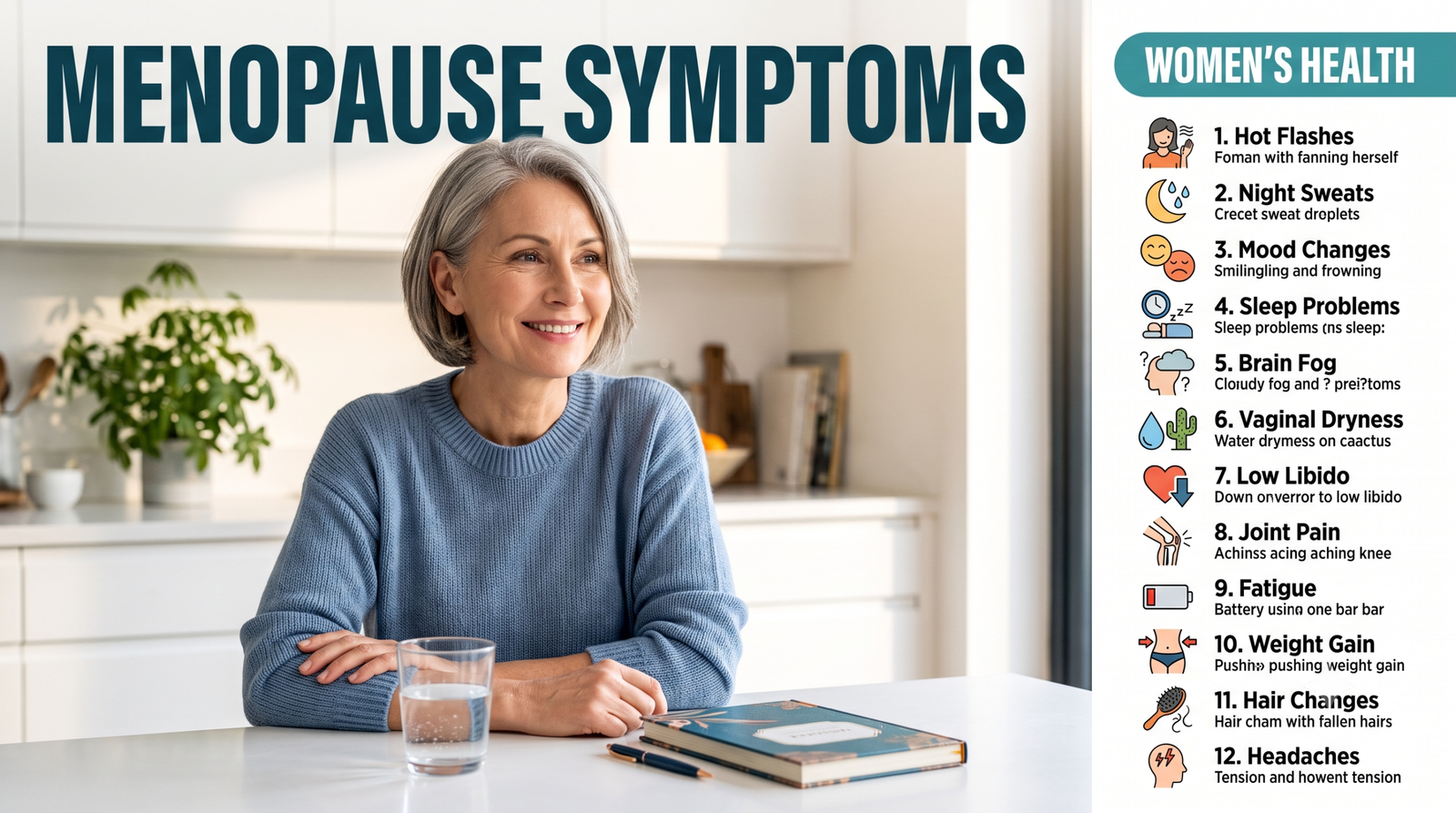
Menopause is one of the most significant transitions in a woman’s life, yet many women enter it without a clear picture of what to expect. Recognizing menopause symptoms early, understanding what is driving them, and knowing which options are available for relief makes this transition far more manageable than the silence that has historically surrounded it.
Menopause is defined as the point when a woman has not had a period for twelve consecutive months. The average age in most countries is around 51, though the transition can begin in the mid-40s and sometimes earlier. The years leading up to this point, known as perimenopause, are when most menopause symptoms first appear and are often the most disruptive.
In this guide, you will learn the 12 most important menopause symptoms, what drives each one, how symptoms differ between perimenopause and menopause, the health risks that rise during this transition, and the most effective natural and medical approaches to management. This is information every woman deserves to have well before she needs it.
Table of Contents
What Causes Menopause Symptoms?
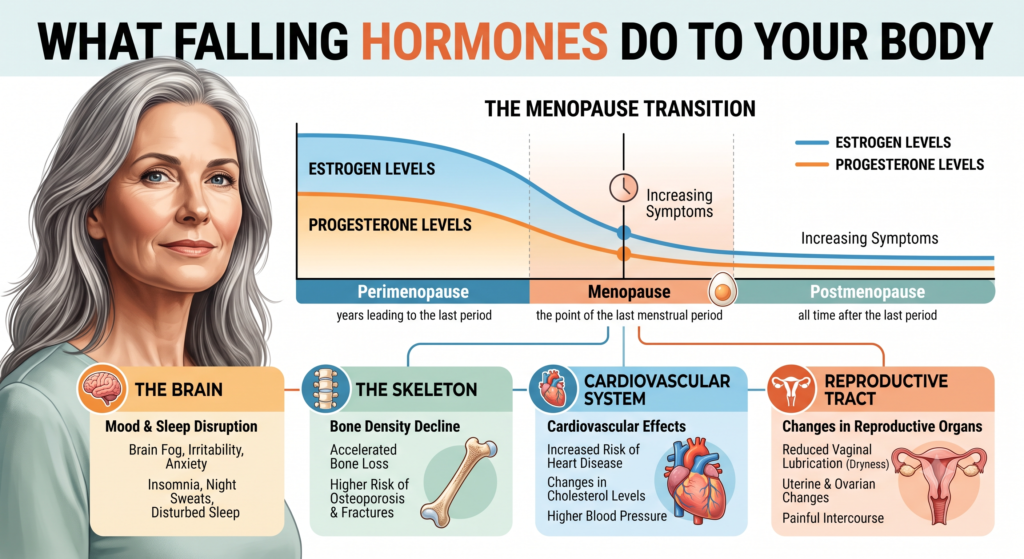
Menopause symptoms are driven primarily by the decline and eventual cessation of estrogen and progesterone production by the ovaries. These hormones do not simply regulate the reproductive cycle. They influence the brain, bones, cardiovascular system, skin, bladder, metabolism, and emotional regulation, which is why the symptom list associated with their decline is so wide-ranging.
Estrogen in particular acts on receptors throughout the body. In the brain, it supports serotonin and dopamine production, sleep regulation, and temperature control. In bones, it maintains density by suppressing bone breakdown. In blood vessels, it keeps arteries flexible and supports healthy cholesterol levels. In the urinary tract, it maintains the tissue integrity that prevents urgency and recurrent infections.
When estrogen declines, all of these systems are affected simultaneously, which explains why menopause symptoms can feel so diffuse and why managing this transition well requires a whole-body rather than single-symptom approach.
According to the Office on Women’s Health, most women experience menopause symptoms for an average of seven years, with some experiencing them for more than a decade. Understanding the causes helps women approach treatment and management with realistic expectations and appropriate strategies.
12 Key Menopause Symptoms to Recognize
These are the twelve most common and most clinically significant menopause symptoms. Not every woman experiences all of them, and severity varies considerably. Recognizing the ones that apply to you is the starting point for effective management.
1. Hot Flashes
Hot flashes are the most iconic menopause symptom, affecting up to 75 percent of women during the transition. They are sudden episodes of intense warmth, usually in the face, neck, and chest, lasting between 30 seconds and several minutes. They are often accompanied by flushing and sweating, followed by a chill.
Hot flashes are caused by estrogen-related changes in the hypothalamus, the brain region that regulates body temperature. The hypothalamus becomes more sensitive to small temperature changes and triggers a cooling response, the hot flash, that is disproportionate to the actual thermal situation.
2. Night Sweats
Night sweats are hot flashes that occur during sleep. They can be severe enough to soak nightwear and bedding, disrupting sleep repeatedly and leaving women exhausted the following day. Night sweats are one of the menopause symptoms most consistently linked to the sleep problems and fatigue that make this transition so challenging for many women.
Keeping the bedroom cool, using moisture-wicking bedding, and some of the natural remedies below can meaningfully reduce their frequency and intensity.
3. Irregular Periods
In perimenopause, the cycles leading up to menopause, periods become irregular before stopping entirely. They may become shorter or longer, lighter or heavier, more or less frequent. Skipped periods alongside other symptoms in women over 40 are often the first sign that perimenopause has begun.
Periods during perimenopause can sometimes be unpredictably heavy, which increases iron loss. Our guide on iron rich foods for women is particularly relevant during this phase.
4. Sleep Disturbances
Sleep problems are among the most disruptive menopause symptoms and affect more than 60 percent of women in the transition. Night sweats are one contributor, but declining progesterone, which has natural sedative properties, and changing estrogen levels also directly alter sleep architecture.
Women in menopause experience more frequent waking, less deep sleep, and poorer overall sleep quality even on nights without significant sweating. Poor sleep then worsens virtually every other menopause symptom including mood, cognition, and hot flash frequency. Our guide on deep sleep benefits explains what quality sleep does for hormonal recovery and overall health.
5. Mood Changes and Irritability
Fluctuating and declining estrogen directly affects the brain’s serotonin and dopamine systems. Women during perimenopause and menopause often experience irritability, low mood, heightened anxiety, or emotional reactivity that feels disproportionate to circumstances and unlike their normal emotional baseline.
This is not imaginary or psychological weakness. It is a neurochemical consequence of hormonal change. Understanding this helps women and the people around them respond with appropriate support rather than confusion. Our article on how to improve mental health covers evidence-based lifestyle strategies that support mood stability through this transition.
6. Brain Fog and Memory Difficulties
Difficulty concentrating, word-finding problems, short-term memory lapses, and mental slowness are commonly reported menopause symptoms that surprise many women who associate memory changes only with much later aging.
Estrogen supports cognitive function and has neuroprotective effects. Its decline temporarily impairs some aspects of memory and processing speed, particularly during perimenopause when hormone fluctuations are most volatile. For most women these cognitive symptoms improve after the transition stabilizes.
7. Vaginal Dryness and Discomfort
Declining estrogen causes the vaginal tissues to thin, lose elasticity, and produce less natural lubrication, a condition known as genitourinary syndrome of menopause. This can cause vaginal dryness, discomfort during intercourse, itching, and increased vulnerability to infection.
This symptom is highly treatable but is underreported because many women feel embarrassed discussing it. Unlike hot flashes which often diminish over time, vaginal dryness tends to worsen without treatment, making early intervention more effective than waiting.
8. Urinary Changes
The same estrogen decline that affects vaginal tissue also affects the urethra and bladder lining. Many women experience increased urinary urgency, frequency, or recurrent urinary tract infections during and after menopause. Some experience stress incontinence, leaking small amounts of urine when coughing, sneezing, or exercising.
Pelvic floor exercises begun early in perimenopause significantly reduce the severity of these symptoms over time.
9. Changes in Libido
Many women notice a reduction in sexual desire during the menopause transition, driven by declining testosterone as well as estrogen, vaginal discomfort, sleep deprivation, and mood changes. For some women this is significant and affects relationships and quality of life.
This is a recognized and treatable aspect of menopause that deserves open discussion with a healthcare provider rather than silent acceptance. Addressing the physical causes, including vaginal dryness and hormonal shifts, often produces meaningful improvement.
10. Weight Gain and Changing Body Composition
The menopause transition brings significant metabolic changes. Estrogen decline alters how fat is distributed, shifting it from the hips and thighs toward the abdomen. Declining muscle mass, reduced physical activity, and slower metabolism all contribute to weight gain that many women find frustratingly resistant to the approaches that worked previously.
This metabolic shift also increases insulin resistance, raising the risk of type 2 diabetes and cardiovascular disease. Our article on insulin resistance symptoms explains the warning signs that the metabolic changes of menopause are becoming clinically significant.
11. Joint Pain and Stiffness
Estrogen has anti-inflammatory effects on joints. As levels decline, many women experience new or worsening joint pain and morning stiffness, particularly in the hands, knees, and hips. This symptom is often surprising because it is less discussed than hot flashes or mood changes.
Regular movement and maintaining a healthy weight reduce the load on joints. Anti-inflammatory nutrition including omega-3 fatty acids and magnesium helps too.
12. Changes in Skin and Hair
Estrogen supports collagen production and skin hydration. Its decline leads to drier, thinner, less elastic skin and increased hair thinning or loss. Many women notice these changes beginning in perimenopause and progressing through the post-menopausal years.
Good nutrition, adequate hydration, sun protection, and appropriate skincare help manage these changes. Vitamin D and omega-3 fatty acids have the strongest evidence for supporting skin and hair health during this transition.
Perimenopause vs Menopause: How Symptoms Differ
Many women are surprised to discover that their most disruptive menopause symptoms actually occur during perimenopause, the transition period that can last between four and ten years before menopause is reached.
During perimenopause, hormones fluctuate erratically rather than declining steadily, which is why symptoms can feel so unpredictable. A woman can experience intense hot flashes and mood swings one month and feel relatively normal the next. Periods become irregular. Sleep disruption often begins here.
After menopause, when hormone levels have settled at their new lower baseline, many symptoms including hot flashes and mood instability often reduce in intensity, though some like vaginal dryness and bone density loss continue and require ongoing attention.
Our article on perimenopause versus menopause covers the specific differences between these two phases in detail and helps women identify which stage they are in.
Health Risks That Rise During Menopause
Beyond the day-to-day symptoms, the hormonal changes of menopause increase the risk of several serious health conditions that require proactive attention.
Bone density loss accelerates significantly in the first five years after menopause as estrogen-mediated bone protection disappears. Osteoporosis risk rises substantially, and fracture rates in post-menopausal women are among the highest of any demographic. Weight-bearing exercise, adequate calcium and vitamin D, and in some cases medication form the prevention strategy.
Cardiovascular risk rises after menopause because estrogen’s protective effects on cholesterol, arterial flexibility, and inflammation are lost. Women who had lower heart disease risk than men of the same age before menopause often see their risk converge and eventually exceed male peers in later decades. The foods and habits in our guide on heart healthy habits become increasingly important during this phase.
Natural Ways to Manage Menopause Symptoms
Several lifestyle approaches produce meaningful improvements in menopause symptoms without medication, and they work best when combined.
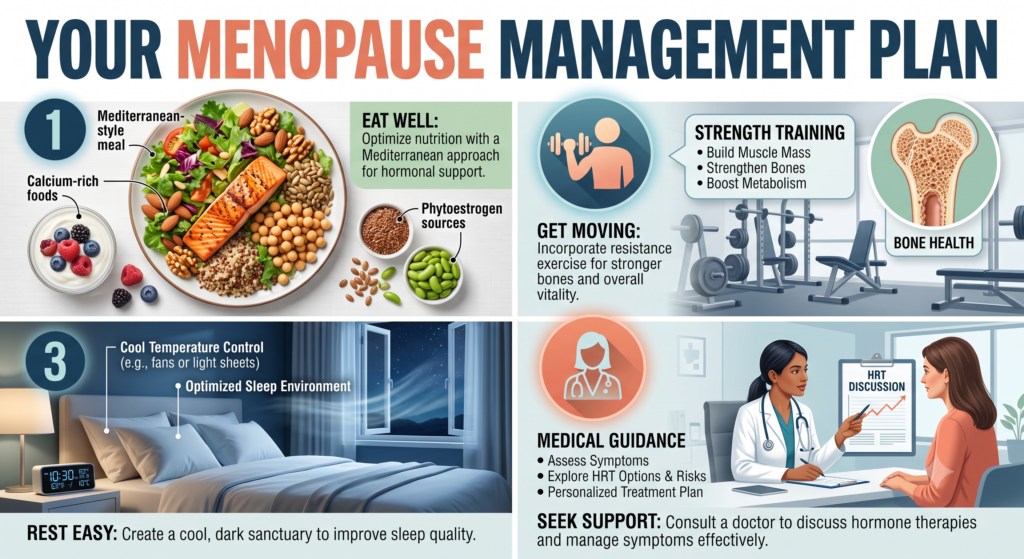
Diet plays a significant role. A Mediterranean-style diet rich in phytoestrogens from soy, flaxseeds, and legumes, combined with adequate calcium, vitamin D, omega-3 fatty acids, and magnesium, addresses multiple symptoms simultaneously. Reducing caffeine, alcohol, and spicy foods reduces hot flash frequency in many women.
Regular exercise is among the most broadly effective interventions available. It reduces hot flash frequency, improves mood and sleep, maintains bone density, manages weight, and reduces cardiovascular risk. Strength training is particularly important for bone health and metabolic rate maintenance.
Stress management reduces cortisol, which worsens the hormonal volatility of perimenopause. Sleep hygiene, including a cool bedroom, consistent sleep timing, and a calming pre-bed routine, directly addresses the sleep disturbances that amplify every other symptom.
Use our free sleep calculator to find your ideal sleep timing, and our calorie calculator and BMI calculator to support the weight management that becomes more important during this transition.
Medical Options for Menopause Symptom Relief
For women whose symptoms are significantly affecting quality of life, several medical options are available and are worth discussing openly with a doctor.
Hormone replacement therapy, or HRT, remains the most effective treatment for hot flashes, night sweats, vaginal dryness, and mood changes. Modern HRT formulations have improved significantly from earlier versions, and for most healthy women under 60 who are within ten years of menopause, the benefits outweigh the risks. Individual risk assessment with a doctor is essential.
Non-hormonal medications including certain antidepressants and anticonvulsants have shown effectiveness for hot flashes in women who cannot or prefer not to use HRT. Local estrogen for vaginal symptoms is low-risk and highly effective.
According to Harvard Health, the evidence base for treating menopause symptoms has grown substantially, and women deserve informed, individualized conversations with their healthcare providers rather than being told their symptoms are simply something to endure.
When to See a Doctor About Menopause Symptoms
Many women manage mild menopause symptoms independently, but certain situations warrant a medical conversation rather than waiting it out.
See a doctor if hot flashes or night sweats are severe enough to significantly disrupt sleep or daily functioning. See a doctor if mood changes include persistent depression or anxiety rather than occasional irritability. See a doctor if vaginal dryness is causing significant discomfort or affecting your relationship and quality of life.
Also seek evaluation if you experience unusual bleeding, very heavy periods, or periods that return after more than twelve months of absence, since these can have causes beyond normal menopause. Early menopause before age 45, which is known as premature ovarian insufficiency, requires prompt medical attention for both symptom management and long-term health protection.
Track Your Health Through the Transition
The menopause transition is a long process, and tracking your symptoms and health markers over time gives you the clearest picture of how you are doing and what is working.
Keep a symptom diary noting hot flash frequency, sleep quality, mood, and energy each week. This data is invaluable in doctor conversations and helps you identify which lifestyle changes are producing real improvements. For physical health, use our body fat calculator to monitor the body composition changes of menopause and the TDEE calculator to understand how your energy needs change during this transition.
Frequently Asked Questions
What are the most common menopause symptoms?
The most common include hot flashes, night sweats, irregular periods, sleep disturbances, mood changes and irritability, brain fog, vaginal dryness, urinary changes, reduced libido, weight gain, joint pain, and skin and hair changes. Most women experience several of these during the transition.
At what age do menopause symptoms start?
Menopause symptoms typically begin during perimenopause, which can start in the mid-40s and last four to ten years before menopause is reached. The average age of menopause itself is around 51, so symptoms often begin in the mid to late 40s.
How long do menopause symptoms last?
Research suggests that most women experience menopause symptoms for an average of seven years, though this varies considerably. Hot flashes and night sweats often peak during perimenopause and reduce after menopause. Some symptoms like vaginal dryness and bone loss continue and worsen without treatment.
Can menopause symptoms be managed naturally?
Yes, for many women lifestyle changes produce meaningful relief. A Mediterranean-style diet, regular exercise particularly strength training, stress management, quality sleep, and targeted nutrition all reduce symptom severity. Phytoestrogens from soy and flaxseeds may modestly ease hot flashes in some women.
What is the difference between perimenopause and menopause symptoms?
Perimenopause symptoms are driven by erratic hormone fluctuations and include irregular periods, increasingly unpredictable hot flashes, and mood volatility. Menopause symptoms after the final period involve more stable but permanently lower estrogen, with ongoing hot flashes, vaginal dryness, bone density loss, and cardiovascular changes becoming the primary concerns.
Is hormone replacement therapy safe for menopause symptoms?
For most healthy women under 60 who are within ten years of menopause, modern HRT is considered to have a favorable benefit-to-risk ratio for managing significant symptoms. Individual risk assessment based on personal and family medical history is essential. A doctor-led conversation is the only appropriate way to make this decision.
When should I see a doctor about menopause symptoms?
See a doctor if symptoms are significantly affecting your sleep, mood, relationships, or daily functioning. Also seek medical evaluation for very heavy bleeding, unusual bleeding patterns, menopause before age 45, or if you want to discuss HRT or other treatment options.
Final Thoughts
Menopause symptoms are real, wide-ranging, and for many women significantly challenging. Hot flashes, sleep disruption, mood changes, and cognitive symptoms are not trivial inconveniences. They are the physiological consequences of a profound hormonal transition that deserves proper acknowledgment, support, and treatment.
The good news is that effective tools exist, from lifestyle changes that reduce symptom severity to medical options that can transform the experience. The most important step is recognizing what is happening, understanding that it is manageable, and seeking the support, information, and care you deserve.
Explore more of our women’s health guides on Vitality Nexus to keep building the knowledge and habits that support your health and wellbeing through every stage of life.
Medical Disclaimer: This article is for general information only and is not medical advice. If you are experiencing menopause symptoms that affect your quality of life, please consult a qualified doctor or women’s health specialist for personalized evaluation and treatment options.