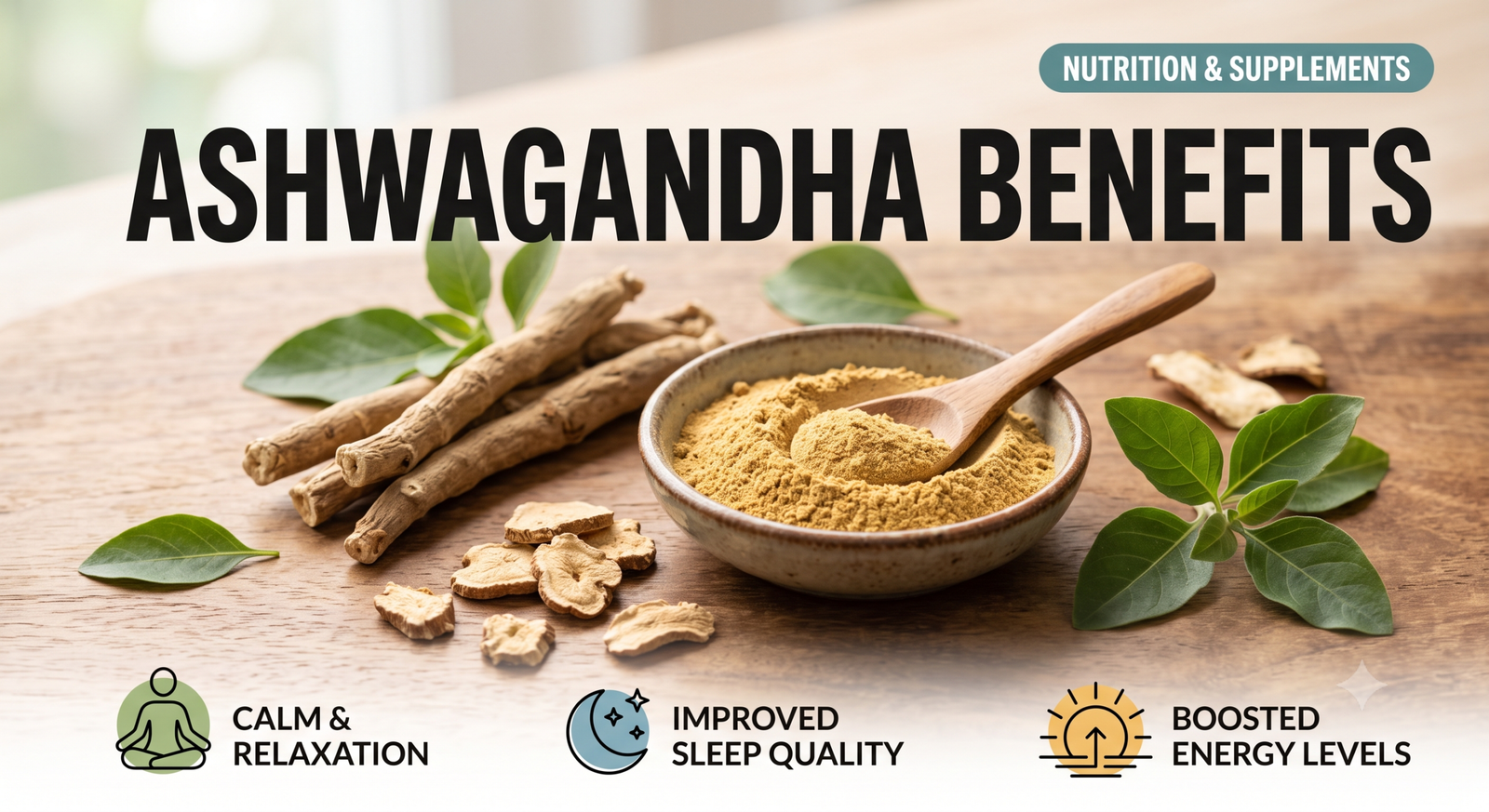
If stress, poor sleep, and low energy are wearing you down, the proven ashwagandha benefits might be exactly what your body needs. This ancient herb has become one of the most popular natural supplements in the world, and modern research is starting to explain why.
Ashwagandha is best known as an adaptogen, a natural substance that helps your body handle stress more gracefully. People use it to feel calmer, sleep deeper, and stay more focused through busy days. While it is not a magic cure, the science behind it is genuinely promising.
In this guide, you will learn nine science-backed ashwagandha benefits, how to take it for the best results, and who should be careful with it. We will keep the claims honest and the advice practical, so you can decide whether this herb belongs in your routine.
Table of Contents
What Is Ashwagandha?
Ashwagandha, known scientifically as Withania somnifera, is a small shrub native to India, Africa, and the Middle East. Its roots have been used in Ayurvedic medicine for thousands of years to restore energy and calm the mind.
The herb is classified as an adaptogen, which means it may help your body adapt to physical and mental stress. Its active compounds, called withanolides, are believed to be responsible for most of its effects. Today, ashwagandha is sold as a powder, capsule, or liquid extract, making it easy to add to a daily routine.
What makes ashwagandha stand out is its gentle, balancing nature. Rather than acting like a stimulant or a sedative, it seems to help your nervous system find a calmer baseline. According to the National Center for Complementary and Integrative Health, it is among the most studied herbs for stress, though research is still ongoing. That is the honest backdrop for the ashwagandha benefits below.
9 Science-Backed Ashwagandha Benefits
Here are nine of the most researched ashwagandha benefits. Keep in mind that studies are still growing, so think of these as promising rather than guaranteed.
1. Reduces Stress and Cortisol
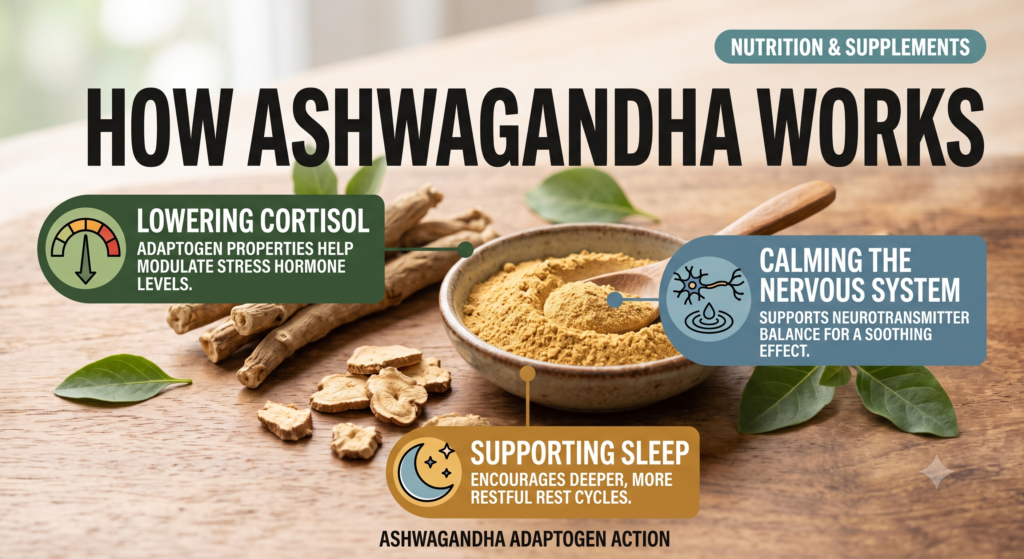
Ashwagandha is most famous for easing stress. Several studies suggest it can lower cortisol, the body’s main stress hormone, helping you feel calmer under pressure. Our guide on high cortisol versus low cortisol explains why this matters so much.
2. Eases Anxiety
Closely tied to its stress effects, ashwagandha may reduce feelings of anxiety. People often report a steadier, more grounded mood. It can be a gentle natural support, and our article on natural ways to reduce anxiety covers more calming strategies.
3. Improves Sleep Quality
One of the most loved ashwagandha benefits is better sleep. By calming the nervous system and lowering cortisol, it may help you fall asleep faster and rest more deeply. Pairing it with good sleep habits, like those in our deep sleep benefits guide, works best.
4. Boosts Energy and Fights Fatigue
Because it helps your body cope with stress, ashwagandha can leave you feeling more energized rather than drained. Many people use it to push back against burnout and daily exhaustion. Unlike caffeine, it does not spike and crash your energy. Instead, it supports a steadier sense of vitality by easing the constant stress that quietly tires you out.
5. Sharpens Focus and Memory
Early research suggests ashwagandha may support attention, memory, and mental clarity. By reducing stress that clouds thinking, it can help your mind feel sharper during demanding days.
6. Supports Exercise Performance
Athletes and gym-goers use ashwagandha to support strength, endurance, and recovery. Some studies show modest gains in muscle strength and faster recovery when combined with training.
7. May Support Testosterone in Men
Some research points to a rise in testosterone and improved vitality in men who take ashwagandha. Our guide on how to increase testosterone naturally covers more natural approaches.
8. Helps Balance Blood Sugar
A few studies suggest ashwagandha may modestly lower blood sugar levels. While more research is needed, it may be a small helpful piece of a healthy metabolic routine.
9. Calms Inflammation and Supports Immunity
Ashwagandha contains antioxidant compounds that may reduce inflammation and gently support the immune system. This adds to its reputation as a whole-body wellness herb. Since chronic inflammation is linked to many long-term health issues, an herb that helps calm it, alongside a healthy diet and lifestyle, is a welcome bonus rather than the main reason most people reach for it.
How to Get the Most Ashwagandha Benefits
To enjoy the full ashwagandha benefits, how and when you take it matters. The good news is that it is simple to use once you know the basics.
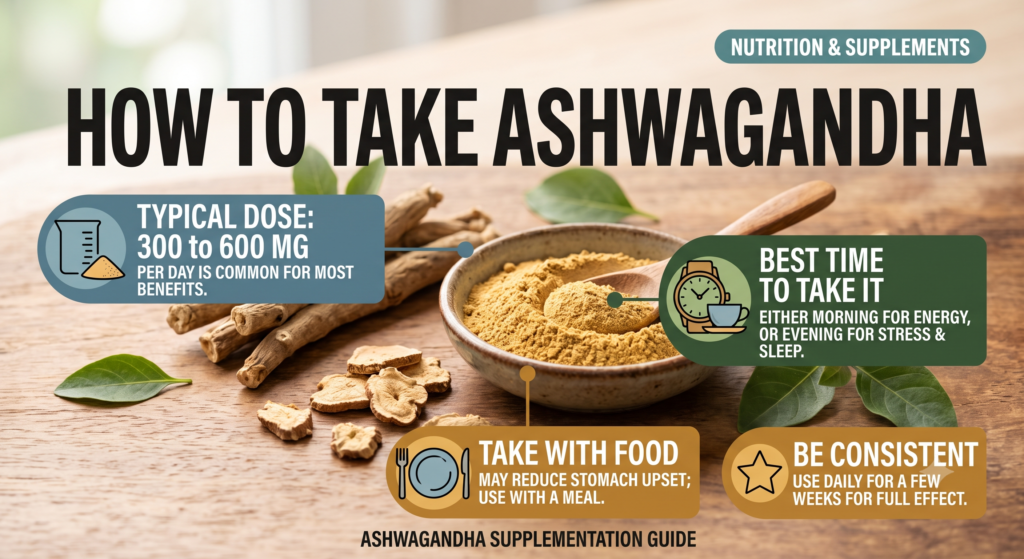
Most studies use a daily dose of around 300 to 600 milligrams of a standardized root extract, often split into one or two servings. It is wise to start at the lower end and see how your body responds. Consistency is key, since the calming and stress-lowering effects build up over a few weeks rather than working instantly.
Timing depends on your goal. Many people take it in the evening to support sleep and relaxation, while others use it in the morning for daytime calm and energy. Taking it with food can reduce the chance of stomach upset. Always choose a quality, third-party-tested brand, and our guide on supplements and vitamins explains how to pick trustworthy products.
Ashwagandha Side Effects and Who Should Avoid It
While ashwagandha is generally well tolerated, it is not right for everyone. Knowing the cautions keeps you safe.
For most people, side effects are mild and may include drowsiness, stomach upset, or loose stools, especially at higher doses. Because it can make you sleepy, be careful when combining it with sedatives. According to NewYork-Presbyterian Health Matters, ashwagandha is best used thoughtfully and with guidance, since the herb affects several body systems.
Certain people should avoid ashwagandha unless a doctor approves. This includes those who are pregnant or breastfeeding, people with autoimmune conditions, those with thyroid disorders, and anyone taking medication for diabetes, blood pressure, or thyroid issues. People with liver concerns should also be cautious. When in doubt, talk to your doctor before starting, especially if you take any regular medicines.
Different Forms of Ashwagandha and Which to Choose
Ashwagandha comes in several forms, and picking the right one helps you enjoy the ashwagandha benefits more easily. Each option suits a different routine and preference.
Capsules and tablets are the most popular choice because they are convenient and give a precise, consistent dose. They are ideal if you simply want an easy daily habit. Powder is the traditional form and can be stirred into warm milk, smoothies, or tea, which suits people who enjoy a calming ritual, though the taste is earthy and bitter for some.
Liquid extracts and tinctures absorb quickly and let you adjust the dose drop by drop, but they can be pricier. Gummies are gentle and tasty, yet often contain added sugar and a smaller dose, so check the label. Whatever form you choose, look for a standardized root extract, ideally one labeled with its withanolide content, and a third-party quality seal. A trusted brand matters more than the exact form, since quality determines how well it works.
Track Your Stress and Sleep
Ashwagandha works best as part of a calm, healthy routine. Tracking your stress and sleep helps you see whether it is truly making a difference for you.
Notice how you feel each week. Are you falling asleep faster, waking more rested, or handling stress more easily? Keeping a simple journal makes these changes clear. To support your sleep further, use our free sleep calculator to find the best times to fall asleep and wake up in line with your natural cycles.
Lifestyle still matters most. Pairing ashwagandha with good sleep, movement, and stress management multiplies the ashwagandha benefits. If burnout is part of your struggle, our guide on burnout causes, symptoms, and solutions offers practical support to go along with the herb.
Frequently Asked Questions
What are the main ashwagandha benefits?
The main benefits include lower stress and cortisol, reduced anxiety, better sleep, more energy, and sharper focus. Some research also points to support for exercise performance, testosterone in men, and blood sugar balance.
How long does ashwagandha take to work?
Most people notice calming and sleep benefits within two to four weeks of consistent daily use. The effects build gradually rather than working instantly, so patience and consistency matter.
Is it better to take ashwagandha in the morning or at night?
It depends on your goal. Take it at night to support sleep and relaxation, or in the morning for daytime calm and steady energy. Taking it with food reduces the chance of stomach upset.
Can ashwagandha help with sleep?
Yes, many people use ashwagandha for sleep. By lowering cortisol and calming the nervous system, it may help you fall asleep faster and sleep more deeply, especially alongside good sleep habits.
Are there any ashwagandha side effects?
Side effects are usually mild and can include drowsiness, stomach upset, or loose stools at higher doses. Pregnant or breastfeeding women, and people with thyroid or autoimmune conditions, should avoid it unless a doctor approves.
Who should not take ashwagandha?
Avoid ashwagandha if you are pregnant or breastfeeding, have an autoimmune or thyroid condition, or take medication for diabetes, blood pressure, or thyroid problems, unless your doctor says it is safe.
Is ashwagandha safe to take every day?
For most healthy adults, daily use of a standard dose for a few weeks to months appears safe. Still, it is best to take occasional breaks and check with a doctor for long-term use.
Final Thoughts
The proven ashwagandha benefits make it one of the most appealing natural supplements for stress, sleep, and energy. While it is not a miracle cure, the growing research and centuries of traditional use give it a real place in many wellness routines.
If you want to try it, start with a low dose of a quality product, stay consistent, and pay attention to how your body responds. Pair it with good sleep, movement, and stress management for the best results, and check with your doctor first if you have any health conditions or take medication.
Explore more of our nutrition and supplement guides on Vitality Nexus to keep making smart, informed choices for your health and wellbeing. The best results always come from combining good supplements with steady, healthy daily habits.
Medical Disclaimer: This article is for general information only and is not medical advice. Supplements can interact with medications and health conditions, so please consult a qualified doctor before adding ashwagandha to your routine, especially if you are pregnant, breastfeeding, or taking any medicine.