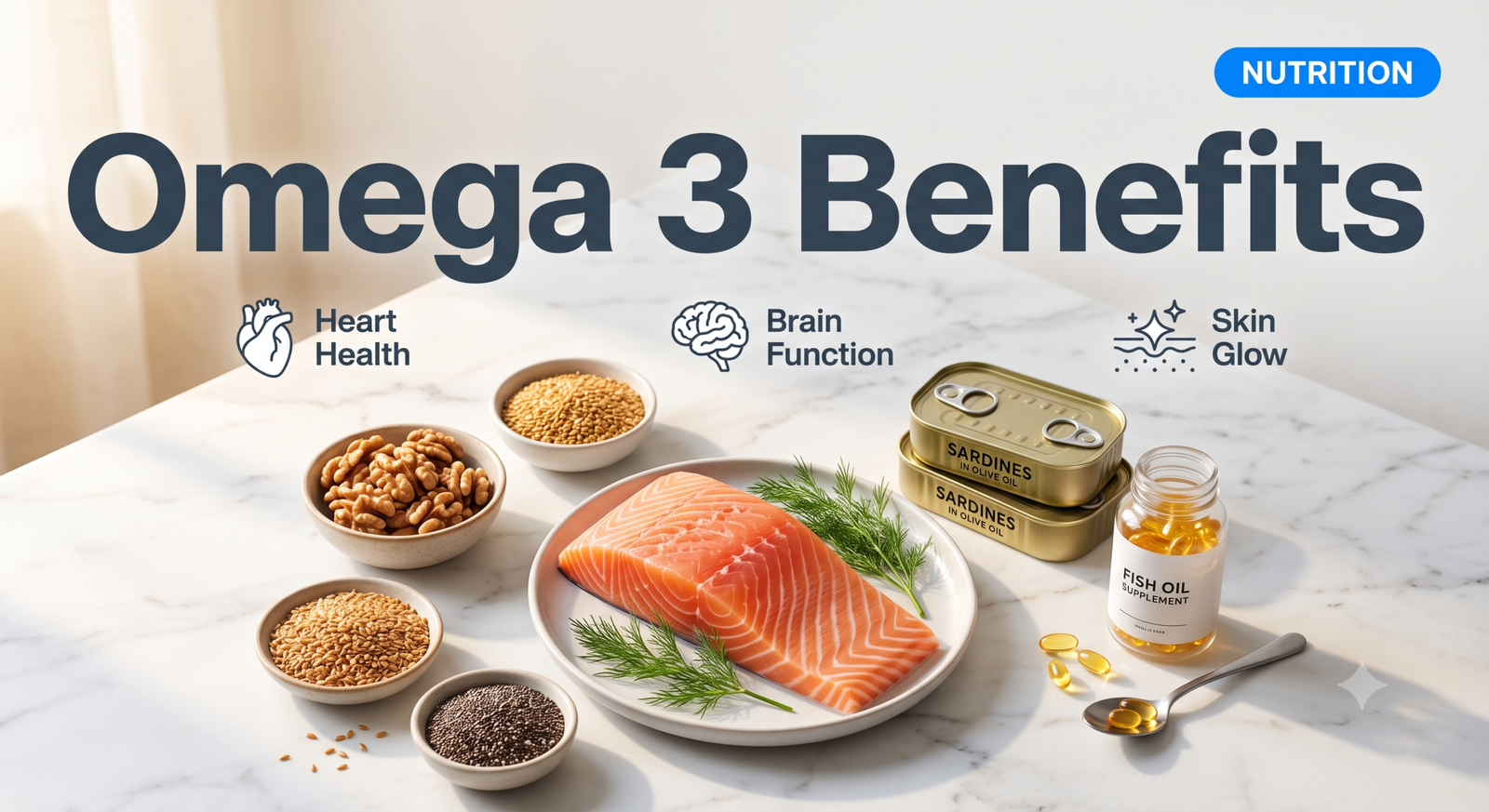
If there is one nutrient that consistently appears at the top of nutrition research for its health benefits, it is omega-3 fatty acids. The omega 3 benefits documented across decades of studies span the heart, brain, joints, eyes, skin, hormones, and immune system, making it one of the most broadly protective nutrients you can prioritize in your diet.
Yet most people eating a modern diet are chronically low in omega-3s while consuming far too many omega-6 fatty acids from processed vegetable oils. This imbalance drives the chronic inflammation that underlies most of the major diseases affecting people today.
In this guide, you will learn the 10 most important omega 3 benefits, the difference between the three main types of omega-3, the best food sources, how much you need daily, and whether supplements are necessary. This is practical, honest, science-based guidance, not wellness hype.
Table of Contents
What Are Omega 3 Fatty Acids and Why Do They Matter?
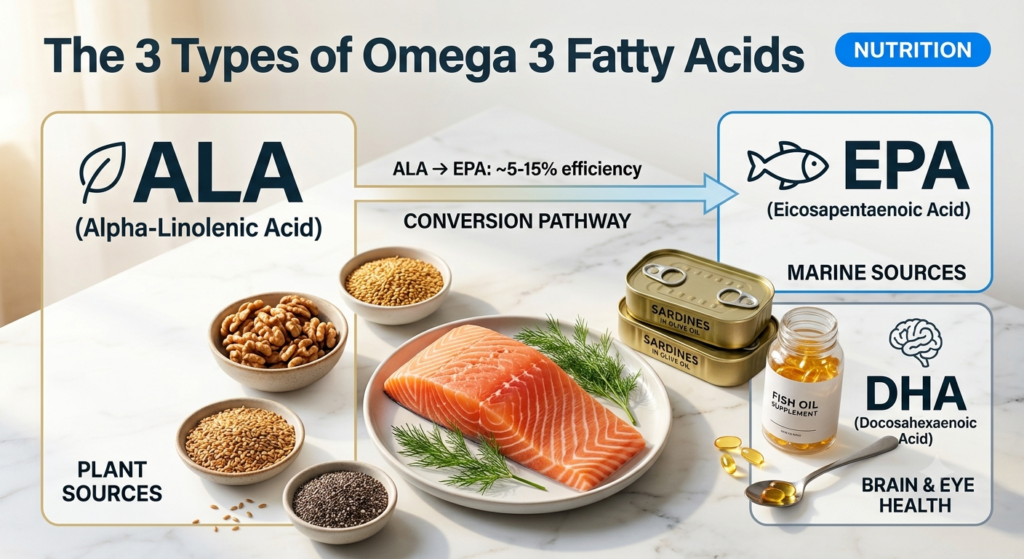
Omega-3 fatty acids are a family of essential polyunsaturated fats that your body cannot make in sufficient amounts on its own. You must obtain them through food or supplements. There are three main types that matter for human health.
ALA, or alpha-linolenic acid, is found in plant foods including flaxseeds, chia seeds, walnuts, and hemp seeds. ALA is technically essential since the body cannot produce it, but it must be converted to the more biologically active forms EPA and DHA for most of its benefits, and this conversion is inefficient in humans, typically only one to five percent.
EPA, or eicosapentaenoic acid, is found primarily in fatty fish and seafood. It is the omega-3 most associated with reducing inflammation, supporting cardiovascular health, and regulating mood.
DHA, or docosahexaenoic acid, is also found primarily in fatty fish and seafood. It is the dominant structural fat in the brain and retina, making it essential for cognitive function, vision, and neurological development.
According to the National Institutes of Health, EPA and DHA are the most biologically relevant omega-3s for human health, and fatty fish and marine sources are the most reliable way to obtain them in sufficient amounts.
10 Proven Omega 3 Benefits You Should Know
Here are the ten most consistently documented omega 3 benefits across decades of clinical research.
1. Protects Your Heart
The cardiovascular omega 3 benefits are the most extensively studied. EPA and DHA reduce triglycerides, one of the strongest dietary effects available for this risk marker, with regular intake reducing levels by 15 to 30 percent. They also reduce inflammation in artery walls, lower blood pressure modestly, reduce platelet aggregation that contributes to clotting, and improve the overall elasticity of blood vessels.
Large meta-analyses consistently show that people with higher omega-3 intake or blood levels have lower rates of heart attack, cardiovascular death, and major cardiac events. For people with existing heart disease, high-dose EPA supplementation has been approved as a medical treatment. Our article on heart healthy habits covers how omega-3 intake fits into a complete cardiovascular protection strategy.
2. Reduces Chronic Inflammation
Inflammation is the common thread connecting most chronic diseases, and reducing it is one of the most important omega 3 benefits. EPA and DHA are precursors to anti-inflammatory compounds called resolvins and protectins that actively resolve inflammatory processes rather than simply blocking them.
This is why omega-3 intake is associated with reduced markers of systemic inflammation including CRP and IL-6, which are elevated in conditions ranging from arthritis to cardiovascular disease to metabolic syndrome.
3. Supports Brain Health and Cognitive Function
DHA is the dominant structural fat in the brain, comprising roughly 40 percent of the polyunsaturated fats in brain tissue. Adequate DHA is essential for neuronal membrane integrity, signal transmission between brain cells, and the neuroplasticity that underlies learning and memory.
Research links higher omega-3 intake to better cognitive performance across all ages, slower cognitive decline in older adults, and reduced risk of dementia. For brain health, DHA is as foundational as any nutrient identified in nutritional neuroscience.
4. Reduces Depression and Anxiety
Among the omega 3 benefits for mental health, the evidence for depression is particularly strong. Multiple meta-analyses have found that omega-3 supplementation, particularly EPA-dominant formulas, reduces depression symptoms with effects that are modest but consistent and additive to antidepressant medication.
EPA specifically appears to act on the serotonin and dopamine systems and reduces neuroinflammation that contributes to depressive states. For anyone managing mood or mental health, omega-3 intake is a foundational dietary consideration. Our article on how to improve mental health covers how nutrition connects to emotional wellbeing.
5. Supports Healthy Eyes and Vision
DHA is also concentrated in the retina, where it is essential for the photoreceptor function that converts light into visual signals. Age-related macular degeneration, the leading cause of vision loss in older adults, is significantly less common in people with higher omega-3 intake.
The AREDS2 study, one of the most important eye health trials, found that omega-3 supplementation reduced progression of age-related macular degeneration. Regular consumption of fatty fish is one of the most consistent dietary protective factors for long-term eye health.
6. Reduces Joint Pain and Stiffness
One of the most practically valuable omega 3 benefits for many people is the reduction in joint pain and stiffness. Clinical trials in people with rheumatoid arthritis consistently show that omega-3 supplementation reduces morning stiffness, tender and swollen joint counts, and reliance on pain medication.
The mechanism is anti-inflammatory: omega-3s reduce the production of inflammatory prostaglandins and cytokines that drive joint pain and tissue damage in arthritic conditions. The benefit extends to general exercise-related joint soreness and may slow cartilage degradation in osteoarthritis.
7. Supports Skin Health and Appearance
The skin benefits of omega-3 fatty acids are significant and visible. EPA and DHA maintain the integrity of skin cell membranes, regulate oil production, keep skin hydrated, and reduce the UV-related inflammation that contributes to photoaging and skin cancer risk.
Conditions including eczema, psoriasis, and acne all show improvement with omega-3 supplementation in clinical research, driven primarily by anti-inflammatory effects on skin immune responses. People who increase fatty fish intake or take omega-3 supplements often notice visible improvements in skin texture, hydration, and elasticity within two to three months.
8. Supports Healthy Pregnancy and Child Development
DHA is critical during pregnancy and early childhood for fetal brain and retinal development. Adequate maternal DHA intake is associated with better cognitive outcomes in children, reduced risk of preterm birth, and lower rates of postpartum depression.
The demand for DHA increases substantially during the third trimester and through breastfeeding. This is one of the clearest cases where dietary omega-3 intake directly shapes health outcomes not just for the mother but for the developing child.
9. Reduces Menstrual Pain in Women
One of the less commonly discussed omega 3 benefits is the reduction in menstrual pain. DHA and EPA reduce the production of inflammatory prostaglandins that cause uterine contractions and menstrual cramping.
Clinical trials comparing omega-3 supplementation to ibuprofen for dysmenorrhea found that omega-3s produced comparable pain relief with fewer side effects in some studies. For women who experience significant menstrual pain, increasing omega-3 intake is a well-supported dietary intervention. Our article on how to relieve period cramps covers this and other evidence-based approaches.
10. Supports Metabolic Health and Blood Sugar
Higher omega-3 intake is associated with improved insulin sensitivity, reduced fasting triglycerides, and a more favorable metabolic profile. DHA and EPA improve the function of fat cell receptors and reduce the adipose tissue inflammation that drives metabolic syndrome.
For people managing blood sugar or weight, omega-3 foods are a foundational dietary component that works synergistically with other metabolic strategies. Our article on foods that lower blood sugar explains how fatty fish and omega-3-rich foods fit into a blood-sugar-friendly diet.
Best Food Sources of Omega 3
The most reliable sources of EPA and DHA are fatty fish and seafood. Here are the best options ranked by omega-3 content.
Salmon is the most widely consumed omega-3-rich fish and provides 1.5 to 2.5 grams of combined EPA and DHA per 100-gram serving. Mackerel is even higher, with around 2.5 to 3 grams per serving. Sardines are one of the most concentrated and affordable sources, providing around 1.5 to 2 grams per small tin alongside vitamin D and calcium. Herring, anchovies, and trout are also excellent options.
For plant-based sources, walnuts, flaxseeds, chia seeds, and hemp seeds provide ALA, which the body can partially convert to EPA and DHA. Algae-based omega-3 supplements provide pre-formed DHA and are the best option for people who do not eat fish, since they bypass the inefficient ALA conversion pathway.
Aim for two to three servings of fatty fish per week to cover EPA and DHA needs for most healthy adults.
How Much Omega 3 Do You Need Per Day?
Most health authorities recommend at least 250 to 500 milligrams of combined EPA and DHA per day for general health in healthy adults. This is achievable through two to three servings of fatty fish per week.
For specific health conditions, doses used in research are higher. Cardiovascular protection studies often use one to four grams of EPA and DHA daily. Depression research typically uses one to two grams daily, with EPA-dominant formulas showing the strongest effects. Joint pain research uses two to three grams daily.
Use our free calorie calculator to plan balanced meals that incorporate omega-3-rich fish regularly, and the BMI calculator to track the broader health progress that an improved diet produces over time.
Omega 3 Supplements: When Do You Need Them?
For people who eat fatty fish two to three times per week, whole food sources likely cover general omega-3 needs. Supplements become valuable in specific situations.
People who eat little or no fish, vegetarians and vegans, people with cardiovascular disease or elevated triglycerides, pregnant women, people with depression or mood disorders, and those with significant joint inflammation all have stronger cases for supplementation.
When choosing a supplement, look for products specifying the EPA and DHA content rather than just total fish oil. A standard dose of one gram of combined EPA and DHA is a reasonable starting point for general health. Third-party tested products that verify purity and omega-3 content are the safest choice. Our guide on supplements and vitamins explains how to choose quality supplements across categories.
Omega 3 vs Omega 6: The Balance That Matters
Understanding the omega 3 benefits fully requires understanding the relationship with omega-6 fatty acids. Both are essential, but they compete for the same enzymes and have opposing effects on inflammation. Omega-6s, particularly arachidonic acid, tend toward pro-inflammatory activity, while omega-3s tend toward anti-inflammatory activity.
The traditional human diet had an omega-6 to omega-3 ratio of roughly 4 to 1. Modern diets dominated by processed vegetable oils, packaged foods, and grain-fed meat have pushed this ratio to 15 to 20 to 1 in favor of omega-6, which drives chronic low-grade inflammation.
Increasing omega-3 intake through fatty fish while reducing processed vegetable oils from corn, soybean, and sunflower sources is the most effective way to restore a healthier ratio. According to Harvard Health, the balance between omega-3 and omega-6 intake is as important as absolute omega-3 levels for achieving the anti-inflammatory benefits.
Track Your Nutrition and Health
Tracking your omega-3 food intake alongside broader nutrition gives you a clear picture of whether you are consistently meeting your needs. A simple weekly check of how many fatty fish servings you ate and whether you are choosing whole food sources over processed ones builds the habit without requiring daily tracking.
Use our free TDEE calculator to understand your daily energy needs and plan balanced meals, and the body fat calculator to track the body composition improvements that often follow a genuinely improved diet over months.
Frequently Asked Questions
What are the main omega 3 benefits?
The most important omega 3 benefits include heart protection through lower triglycerides and reduced inflammation, brain health and cognitive support, reduced depression and anxiety, healthy vision, joint pain relief, improved skin, pregnancy support, reduced menstrual pain, and better blood sugar and metabolic health.
Which omega 3 is best for the heart?
EPA is the omega-3 most associated with cardiovascular protection. EPA-dominant fish oil supplements have the strongest evidence for reducing cardiac events, and high-dose EPA has been approved as a medical treatment for elevated triglycerides. Fatty fish provide both EPA and DHA together.
How quickly do you feel the omega 3 benefits?
Many people notice reduced joint pain and stiffness within four to six weeks of consistent supplementation. Brain and mood effects often appear within eight to twelve weeks. Cardiovascular markers including triglycerides typically improve within four to eight weeks of regular intake.
Can you get enough omega 3 from plant foods alone?
Plant foods provide ALA, which the body converts to EPA and DHA at low efficiency, typically under five percent. Vegans and vegetarians who do not eat fish should consider algae-based omega-3 supplements that provide pre-formed DHA directly, bypassing the conversion bottleneck.
Are fish oil supplements as good as eating fish?
Quality fish oil supplements provide comparable EPA and DHA to eating fish, though whole fish also delivers protein, vitamin D, and other nutrients. For people who cannot eat fish regularly, well-chosen supplements are an effective alternative.
How much omega 3 should I take daily?
For general health, 250 to 500 milligrams of combined EPA and DHA daily is the standard recommendation, achievable through two to three fish servings per week. For specific conditions including high triglycerides, depression, or joint inflammation, one to four grams daily under medical guidance is used in research.
Do omega 3 supplements cause side effects?
At standard doses, omega-3 supplements are well tolerated. Some people experience mild digestive discomfort or a fishy aftertaste, which taking supplements with food and choosing enteric-coated products reduces. At very high doses, omega-3s have blood-thinning effects that require caution with anticoagulant medications.
Final Thoughts
The omega 3 benefits are among the most broadly supported in all of nutrition science. Heart protection, brain health, reduced inflammation, mood support, skin improvement, and joint relief are all accessible through two to three servings of fatty fish per week, a simple and delicious habit that most people find easy to maintain.
If fish is not practical for you regularly, a quality EPA and DHA supplement fills the gap efficiently. Start with one to two servings of salmon, mackerel, or sardines this week, and consider whether a supplement covers the remaining days.
Explore more of our nutrition and supplement guides on Vitality Nexus to keep building a diet that gives your body the raw materials it needs to function and feel its best every day.
Medical Disclaimer: This article is for general information only and is not medical advice. If you take blood-thinning medication or have a health condition, please consult a qualified doctor before starting omega-3 supplements at higher doses.