If you are looking for one habit that costs nothing and improves almost everything, the benefits of walking daily make it the clearest answer in health and fitness. No gym membership, no equipment, no complicated routine. Just you, a pair of shoes, and a little time each day.
Walking is one of the most researched forms of physical activity on the planet. A major 2025 study published in the American Journal of Preventive Medicine found that just 15 minutes of brisk walking a day was associated with nearly a 20 percent reduction in total mortality. That is a striking result from something most people already know how to do.
In this guide, you will learn the 10 most important benefits of walking daily, how much you need, the best time to walk, and simple ways to build the habit for good. Whether you are starting from zero or already walk occasionally, this is the push you have been looking for.
Table of Contents
Why Walking Every Day Is So Powerful
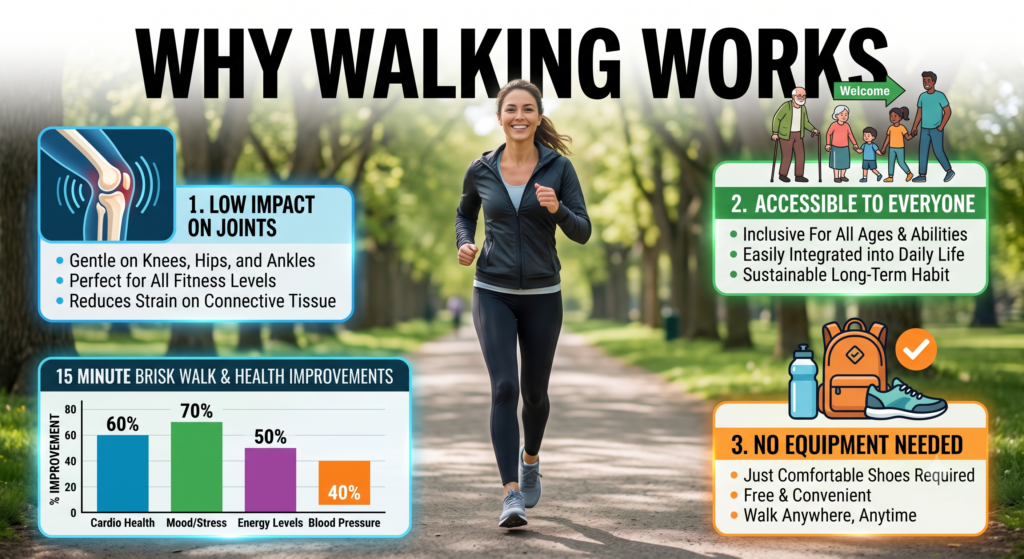
Before getting into the specific benefits, it helps to understand why such a simple activity delivers such strong results. Walking engages your cardiovascular system, your muscles, your joints, your lungs, and your brain all at once, without the injury risk that comes with harder exercise.
It is also one of the few habits that fits into real life. You can walk to work, walk after meals, walk during a phone call, or walk first thing in the morning. The low barrier to entry means people actually do it, and consistency is where all the health gains come from.
According to the Mayo Clinic, a daily brisk walk can help you maintain a healthy weight, prevent or manage heart disease, high blood pressure, type 2 diabetes, and several cancers, while also boosting your mood, memory, and sleep. That is a long list from one low-cost, low-risk habit.
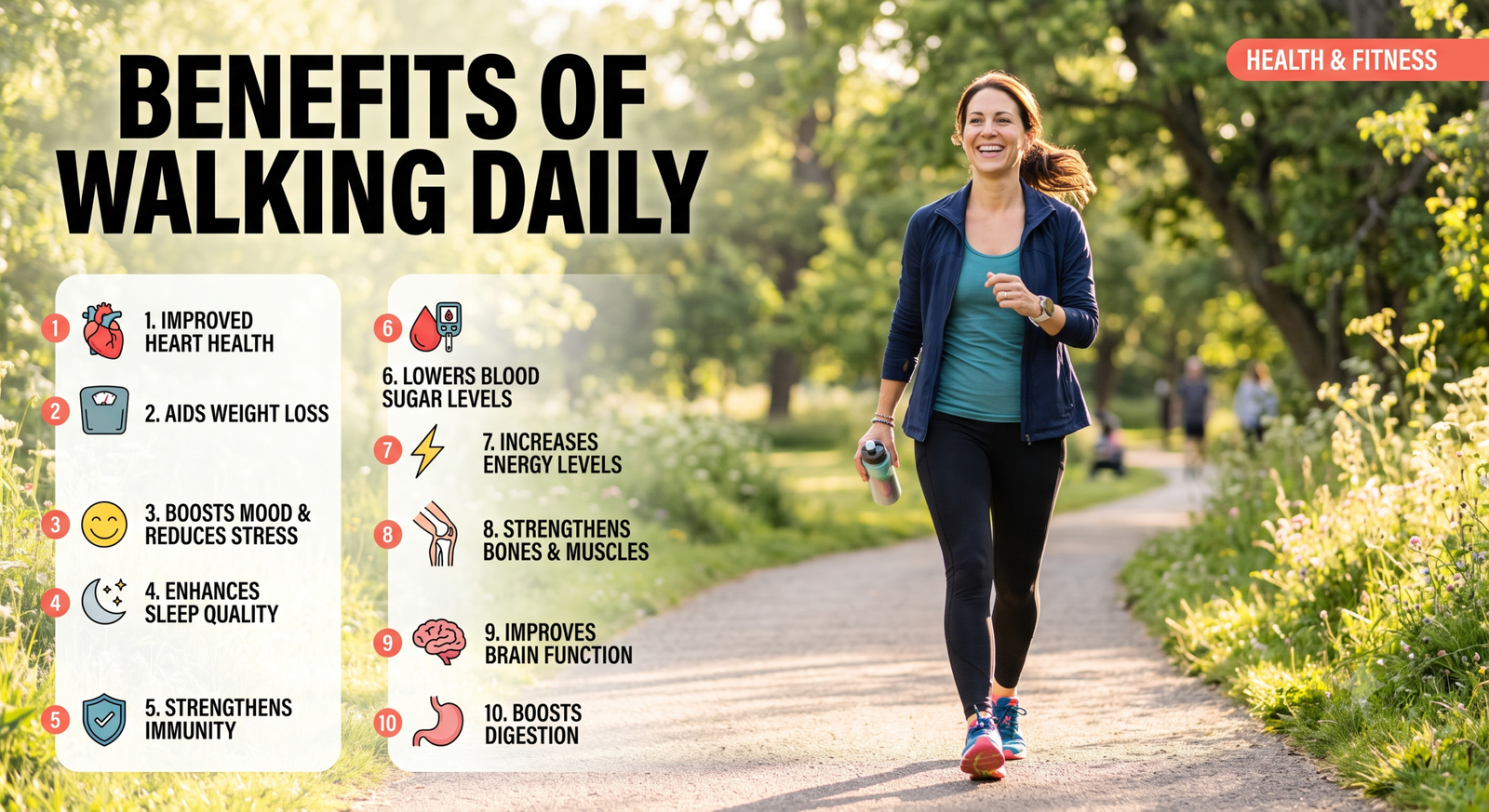
10 Proven Benefits of Walking Daily
Here are ten genuine, research-supported benefits of walking daily. Each one stands on its own, and together they make a compelling case for lacing up your shoes.
1. Strengthens Your Heart
Your heart is a muscle and walking trains it. Regular brisk walking improves circulation, lowers resting blood pressure, and reduces the strain on your arteries over time. Our guide on heart healthy habits shows how walking fits into a complete heart-care routine.
2. Helps Control Blood Sugar
A short walk after meals has been shown to lower post-meal blood sugar more effectively than many interventions. The muscles activated during walking pull glucose from the blood, flattening the spike that follows eating. This is especially valuable for people managing prediabetes or type 2 diabetes, a link we explore in our article on sleep and type 2 diabetes.
3. Supports Healthy Weight Management
Walking burns calories and, over time, helps your body maintain a leaner composition. Researchers at Harvard Health found that among people who walked briskly for about an hour a day, the effects of obesity-promoting genes were cut in half, suggesting walking can partially overcome even genetic tendencies toward weight gain.
4. Boosts Your Mood and Fights Anxiety
Walking triggers the release of endorphins and lowers cortisol, making it one of the simplest tools for a better mood. A 2024 study found that people who walked 7,000 steps a day had 31 percent lower odds of depression compared to those walking 5,000 or fewer. Our guide on natural ways to reduce anxiety pairs well with a daily walking habit.
5. Improves Sleep Quality
People who walk regularly tend to fall asleep faster and sleep more deeply. Walking lowers cortisol and body temperature in the hours after exercise, both of which support better rest. Even a 20-minute walk can bring high cortisol levels down and help you relax toward bedtime.
6. Strengthens Bones and Joints
Walking is a weight-bearing exercise, which means it stimulates bone density without the high impact of running. It also lubricates joints and strengthens the muscles around them, reducing stiffness and pain over time. This makes it especially useful as you age.
7. Sharpens Your Brain
Walking daily can lower the risk of dementia or cognitive decline in people predisposed to developing Alzheimer’s, and research links regular physical activity with better memory, attention, and processing speed. A walking break during a busy workday is often more useful than another cup of coffee.
8. Reduces the Risk of Serious Disease
Regular walking can lower the risk for several cancers, including breast, colon, endometrial, kidney, and liver cancers, according to a major American Cancer Society study. It also reduces the risk of stroke, cardiovascular events, and type 2 diabetes in people who walk consistently.
9. Curbs Cravings and Controls Appetite
Studies from the University of Exeter found that a 15-minute walk can curb cravings for chocolate and even reduce the amount of sugary snacks eaten in stressful situations. If food cravings are a challenge, see our guide on how to reduce sugar cravings for more strategies.
10. Builds Long-Term Longevity
Research found that fast walking as little as 15 minutes per day was associated with a nearly 20 percent reduction in total mortality, including from cardiovascular disease. That is a remarkable return on a small daily investment of time and effort.
How Much Should You Walk Each Day?
The most commonly cited target is 10,000 steps, but the research tells a more flexible story. People who accumulated most of their daily steps in bouts of 15 minutes or longer had significantly lower risks of heart disease and death, meaning the length of each walk matters as much as the total count.
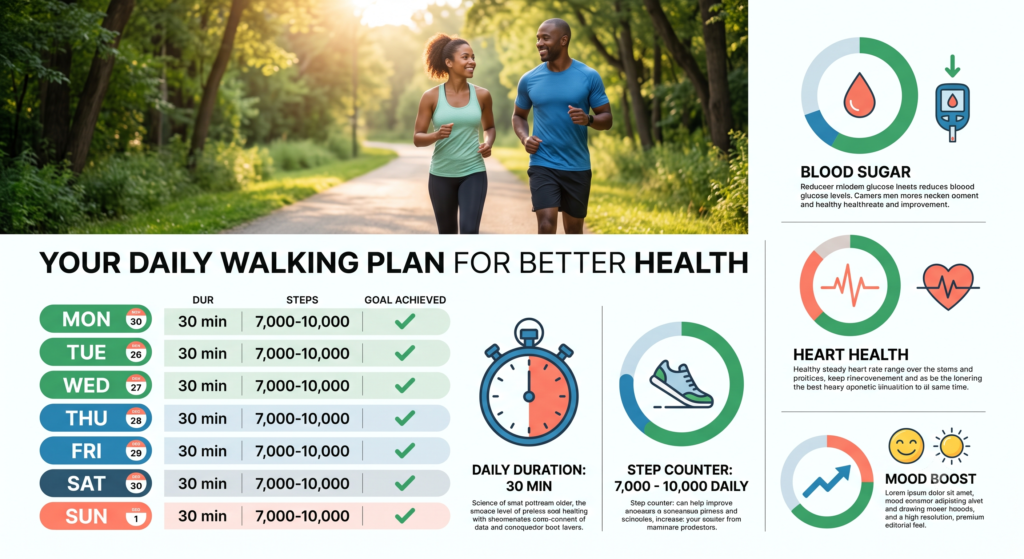
For general health, 30 minutes of brisk walking on most days of the week covers the recommended 150 minutes of moderate aerobic activity. If you cannot manage 30 minutes at once, three 10-minute walks deliver similar benefits. Something is always better than nothing, so start where you are and build gradually.
Best Time to Walk for Maximum Benefits
There is no single best time, but the time you will actually do it consistently is the best time for you. That said, morning walks set a positive tone for the day, anchor a routine, and have been linked to better mood through the afternoon.
Evening or post-meal walks are especially effective for blood sugar control. A short stroll after dinner helps your muscles absorb glucose and prevents the spike that often follows a large evening meal. Our detailed comparison of a morning versus night walk for weight loss and a morning versus evening workout help you decide what fits your life.
Benefits of Walking Daily for Weight Loss
Walking alone will not replace a calorie deficit, but it plays a genuine supporting role in weight management. It burns calories steadily, reduces the hormones that drive hunger, and builds a consistent movement habit that supports every other weight loss effort.
Pairing daily walks with a balanced diet gives the best results. Our guide on how to lose weight without exercise shows how food choices work alongside movement, and our healthy fat loss strategies article ties the full picture together. The benefits of walking daily for weight loss are real, but they accumulate over weeks and months, so patience is part of the plan.
Tips to Build a Daily Walking Habit
Knowing the benefits is one thing, and making walking a genuine daily habit is another. These practical tips make it stick.
Start small. Even ten minutes a day is enough to begin, and short walks feel achievable when life is busy. Attach your walk to an existing habit, such as walking after your morning coffee or right after dinner, so it happens automatically.
Track your steps to stay motivated. Seeing your count grow over the week gives you a clear, satisfying sense of progress. Vary your route to keep things interesting, since new scenery makes the habit feel less like a chore. Walking with a friend or listening to a podcast or music also helps.
Track Your Progress and Health
The benefits of walking daily show up in your numbers over time. Tracking them keeps you motivated and helps you see real progress beyond how you feel.
Use our free BMI calculator to monitor your weight trend and the calorie calculator to understand how walking fits your daily energy balance. The TDEE calculator shows your total daily energy burn, so you can see exactly how your walks contribute. For sleep improvements that often come with walking, use our sleep calculator to find your ideal rest window.
Frequently Asked Questions
What are the benefits of walking daily?
Daily walking strengthens your heart, steadies blood sugar, supports weight management, boosts mood, improves sleep, sharpens your brain, reduces disease risk, and builds bone density. It is one of the most complete low-effort health habits available.
Is walking 30 minutes a day enough exercise?
Yes. Thirty minutes of brisk walking on most days meets the recommended 150 minutes of moderate weekly activity. It is enough to deliver real cardiovascular, metabolic, and mental health benefits for most adults.
What happens to your body when you walk every day?
Over weeks and months, daily walking lowers blood pressure, improves cholesterol, steadies blood sugar, reduces body fat, strengthens muscles and bones, sharpens focus, and lifts mood. The changes build gradually but reliably.
Is it better to walk in the morning or evening?
Both times offer strong benefits. Morning walks set a positive routine and boost mood early. Evening walks after meals are particularly effective for blood sugar control. The best time is whichever you will actually do consistently.
How many steps a day is healthy?
Research supports clear benefits starting from 7,000 steps per day, with further gains up to about 10,000. Even 5,000 steps is significantly better than a sedentary day. Focus on walking longer sessions rather than only chasing a step count.
Can walking daily help you lose weight?
Walking supports weight loss by burning calories and reducing hunger hormones, but it works best alongside a balanced diet. Consistent daily walks over weeks and months contribute meaningfully to fat loss and help maintain a healthy weight long-term.
How long until I see the benefits of walking daily?
Many people notice better mood and energy within the first week. Sleep improvements often follow within two to three weeks. Physical changes like improved fitness, lower blood pressure, and weight changes typically become measurable after four to eight weeks of consistent walking.
Final Thoughts
The benefits of walking daily are real, well-researched, and accessible to almost anyone. Better heart health, a calmer mind, steadier blood sugar, and a longer, healthier life are all available from something you can start today with zero cost and zero equipment.
Begin with ten minutes tomorrow. Then fifteen. Then thirty. Build it into your day one small step at a time, and let the habit do what decades of research promise it will do.
Explore more of our health and fitness guides on Vitality Nexus to keep building a lifestyle that supports your best health, and use the free tools to track every step of your progress.
Medical Disclaimer: This article is for general information only and is not medical advice. If you have a health condition, injury, or have been inactive for a long time, please consult a qualified doctor before starting a new walking routine.