
Finding the best breakfast for diabetics can feel confusing at first, especially when so many popular morning foods, like sugary cereals, white toast, and flavored yogurt, can spike blood sugar before the day has even started.
But here is the real picture: the right breakfast does not just avoid harm, it actively helps. A smart morning meal steadies your blood sugar, reduces cravings, protects your energy levels, and sets you up for a calmer, more balanced day.
In this guide, you will learn the 10 best breakfast choices for people with diabetes, the key nutrients that matter most, what to avoid, and how to build a morning routine that works. Every option here is practical, affordable, and genuinely satisfying.
Table of Contents
Why Breakfast Matters So Much for Diabetics
For people managing diabetes, breakfast carries more weight than for most. The first meal of the day comes after an overnight fast, so your body is sensitive to what you put in first. High-carb, sugary foods hit the bloodstream fast, causing a sharp glucose spike that makes the rest of the day harder to manage.
On the other side, skipping breakfast entirely can cause blood sugar to drop too low for those on certain medications, then rebound with cravings that lead to poor choices by mid-morning.
The goal is a steady middle ground: enough balanced nutrition to keep glucose stable, hunger low, and energy consistent right through to lunch. According to the American Diabetes Association, a breakfast rich in protein and fiber helps reduce cravings before lunch and keeps blood glucose in a healthy range. That combination is the backbone of every choice on the list below.
What Makes the Best Breakfast for Diabetics
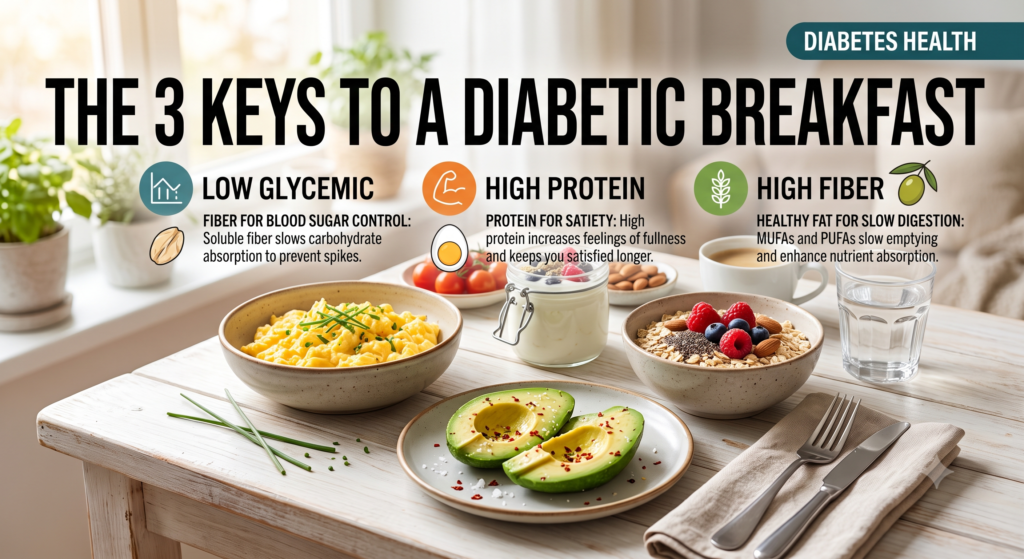
Not every healthy breakfast suits a diabetic plate. Three specific nutrients define what works.
Protein is the anchor. It digests slowly, keeps you full for hours, and has almost no effect on blood sugar. Fiber is equally important, since it slows how fast carbohydrates are absorbed and flattens the glucose curve after eating. Healthy fats round out the trio by further slowing digestion and supporting steady energy.
Carbohydrates are not the enemy, but the type and amount matter. Whole, complex carbs that come packaged with fiber, like oats, legumes, and fruit, behave very differently in the body compared to refined options. Keeping total carbs moderate and always pairing them with protein and fat is the single most practical rule you can follow.
10 Best Breakfast Foods for Diabetics
Here are the 10 best breakfast choices for diabetics, each one chosen for its effect on blood sugar, its nutrient density, and its real-world convenience.
1. Eggs
Eggs are one of the most diabetes-friendly foods available. They are almost pure protein with minimal carbohydrates, and they can be scrambled, poached, or boiled in minutes. Research suggests eggs help with satiety without raising blood glucose. Pair them with vegetables for extra fiber.
2. Greek Yogurt (Plain, Unsweetened)
Plain Greek yogurt delivers a strong protein hit with far fewer carbs than regular yogurt. It also contains probiotics that support gut health, which is linked to better blood sugar control. Add berries and a few seeds for flavor, not sugar.
3. Oats (Steel-Cut or Rolled)
Oats are a complex carbohydrate rich in a fiber called beta-glucan, which has been shown to slow glucose absorption and improve insulin sensitivity. Steel-cut oats work best because they digest more slowly than instant versions. Keep portions moderate and skip the sugar packets.
4. Avocado
Avocado brings healthy monounsaturated fats and fiber in one creamy package, both of which slow carbohydrate digestion. Spread it on low-carb toast or serve it alongside eggs for a filling, blood-sugar-friendly meal.
5. Chia Seeds
Chia seeds are rich in soluble fiber and omega-3 fats. They absorb liquid and form a gel in the gut, which slows sugar absorption. Stir them into yogurt, blend them into a smoothie, or make overnight chia pudding with unsweetened milk. Our guide on omega-3 fatty acids and food sources explains more about these healthy fats.
6. Berries
Strawberries, blueberries, and raspberries are naturally sweet but low in sugar compared to most fruit. They are packed with antioxidants and fiber, making them ideal alongside yogurt or oats. They satisfy a sweet craving without triggering a blood sugar spike.
7. Cottage Cheese
Cottage cheese is high in protein, low in carbohydrates, and very filling. Pair it with a handful of berries or a few cucumber slices for a quick, balanced breakfast. It works especially well as a savoury option for people who do not enjoy sweet mornings.
8. Nuts and Seeds
A small handful of almonds, walnuts, or pumpkin seeds adds protein, healthy fat, and fiber to any breakfast. These nutrients slow digestion and keep hunger away. Sprinkle them over oats, stir them into yogurt, or eat them alongside eggs.
9. Whole Grain Toast With Nut Butter
When you choose bread, whole grain options with at least 3 grams of fiber per slice are the only worthwhile ones for blood sugar management. Topped with almond or peanut butter, you add protein and healthy fat that turns a modest carb into a balanced, slower-digesting meal.
10. Leafy Green Vegetable Omelette
A two-egg omelette loaded with spinach, bell pepper, and mushrooms gives you protein, fiber, and vitamins with virtually no impact on blood sugar. It takes under ten minutes and is one of the most satisfying, complete diabetic breakfasts you can make.
Best Breakfast for Diabetics: What to Avoid
Knowing what to skip is just as useful as knowing what to eat. A few common breakfast items quietly derail blood sugar control before you have even left the house.
Sugary cereals are the biggest offender. Even options marketed as whole grain can contain five to ten teaspoons of sugar per serving. White bread and bagels digest rapidly and cause sharp glucose spikes. Fruit juice, including freshly squeezed, strips away the fiber and delivers a concentrated hit of sugar with nothing to slow it down.
Flavored yogurts, packaged granola, and sweetened coffee drinks all hide large amounts of added sugar. Pastries, muffins, and pancakes made from white flour are similarly problematic, since they spike blood sugar fast and leave you hungry again quickly.
The pattern is simple: avoid refined carbs eaten alone. Anything white, processed, or sweetened should either be skipped or paired with enough protein and fiber to slow the damage.
How to Build Your Ideal Diabetic Morning Meal
Building the best breakfast for diabetics does not require cooking school. A simple three-part formula works every time: start with a protein base, add a fiber source, and include a small amount of healthy fat.
For example, two scrambled eggs (protein) with sauteed spinach and mushrooms (fiber) cooked in olive oil (healthy fat) is a complete diabetic-friendly breakfast. Or try plain Greek yogurt (protein) with berries and chia seeds (fiber) and a few almonds (healthy fat). Both come together in under five minutes.
Meal prepping a few items on Sunday, like hard-boiled eggs, chia pudding, or a batch of steel-cut oats, makes the formula effortless on busy mornings. Preparing food at home also removes hidden sugars and refined ingredients that make restaurant and packaged breakfasts risky.
For more inspiration on eating well for blood sugar, our guide on foods that lower blood sugar and our article on fibermaxxing for gut health and blood sugar both give practical, detailed ideas that pair well with a strong morning routine.

How to Lower Blood Sugar Naturally Alongside Breakfast
A great breakfast works even better when a few simple daily habits support it. These do not require big lifestyle changes, just small, steady actions.
A short ten-minute walk after breakfast has been shown to lower post-meal blood sugar more effectively than many other interventions. Our comparison of a morning versus night walk shows how to fit this in regardless of your schedule.
Managing stress helps too, since cortisol raises blood sugar even when you eat perfectly. Getting seven to nine hours of sleep also matters, because poor sleep disrupts the hormones that control glucose and hunger. Our article on sleep and type 2 diabetes explains this connection in detail.
According to Harvard T.H. Chan School of Public Health, choosing high-fiber, minimally processed carbohydrates consistently is one of the most powerful long-term tools for blood sugar management. Pairing that principle with the breakfasts above gives you a strong daily foundation.
Track Your Numbers and Nutrition
Knowing your personal numbers makes choosing the best breakfast for diabetics more precise. Everyone responds slightly differently to foods, and tracking helps you learn your own patterns.
Check your blood glucose before and about two hours after breakfast to see how each meal affects you. Over time this reveals which options work best for your body. For managing your overall health alongside diabetes, our free BMI calculator and calorie calculator help you eat the right amount without guessing.
Our article on early warning signs of type 2 diabetes is also worth reading if you are managing prediabetes or want to understand your risk better. The CDC recommends working with a dietitian for a personalized meal plan, especially if your medication schedule involves insulin.
Frequently Asked Questions
What is the best breakfast for diabetics?
Eggs, plain Greek yogurt, steel-cut oats, avocado, and berries are among the best. They combine protein, fiber, and healthy fat to steady blood sugar, reduce hunger, and support lasting energy through the morning.
Can diabetics eat oatmeal for breakfast?
Yes. Steel-cut or rolled oats are a good diabetic breakfast when eaten in a moderate portion. Their soluble fiber slows glucose absorption. Avoid instant oats with added sugar and pair oatmeal with protein like nuts or yogurt.
What should a diabetic avoid eating for breakfast?
Avoid sugary cereals, white bread, fruit juice, flavored yogurts, pastries, and processed granola. These foods spike blood sugar quickly and offer little nutritional value. Anything refined and eaten without protein or fiber is worth skipping.
How many carbs should a diabetic eat at breakfast?
Most guidelines suggest 30 to 45 grams of carbohydrates for breakfast, though the right amount depends on your medication, activity level, and blood sugar trends. Work with your doctor or dietitian to find your personal target.
Is fruit a good breakfast choice for diabetics?
Whole fruit is fine in moderation. Berries, kiwi, and apples have a lower impact on blood sugar and come with fiber. Fruit juice is a different story, since it removes the fiber and causes rapid spikes.
Can a diabetic skip breakfast?
Some people do well with intermittent fasting, but skipping breakfast while on blood sugar-lowering medication can cause hypoglycemia. Always check with your doctor before skipping meals if you take diabetes medication.
Does protein at breakfast help blood sugar?
Yes. Protein slows digestion and has minimal effect on blood glucose. Starting the day with a protein-rich meal helps prevent blood sugar spikes after breakfast and reduces hunger before lunch.
Final Thoughts
The best breakfast for diabetics is one built on protein, fiber, and healthy fat. Eggs, oats, Greek yogurt, avocado, and berries are simple, affordable, and genuinely effective at keeping blood sugar steady from morning onward.
Start with one or two swaps this week. Replace a sugary cereal with plain oats and nuts. Swap flavored yogurt for plain Greek yogurt and fresh fruit. Small changes to breakfast can make a measurable difference in your daily blood sugar, energy, and mood.
Use the free tools on Vitality Nexus to track your nutrition, and explore our diabetes and metabolic health guides to keep building a lifestyle that supports steady blood sugar every single day.
Medical Disclaimer: This article is for general information only and is not medical advice. If you have diabetes or prediabetes, please work with a qualified doctor or registered dietitian before making significant changes to your diet or medication routine.