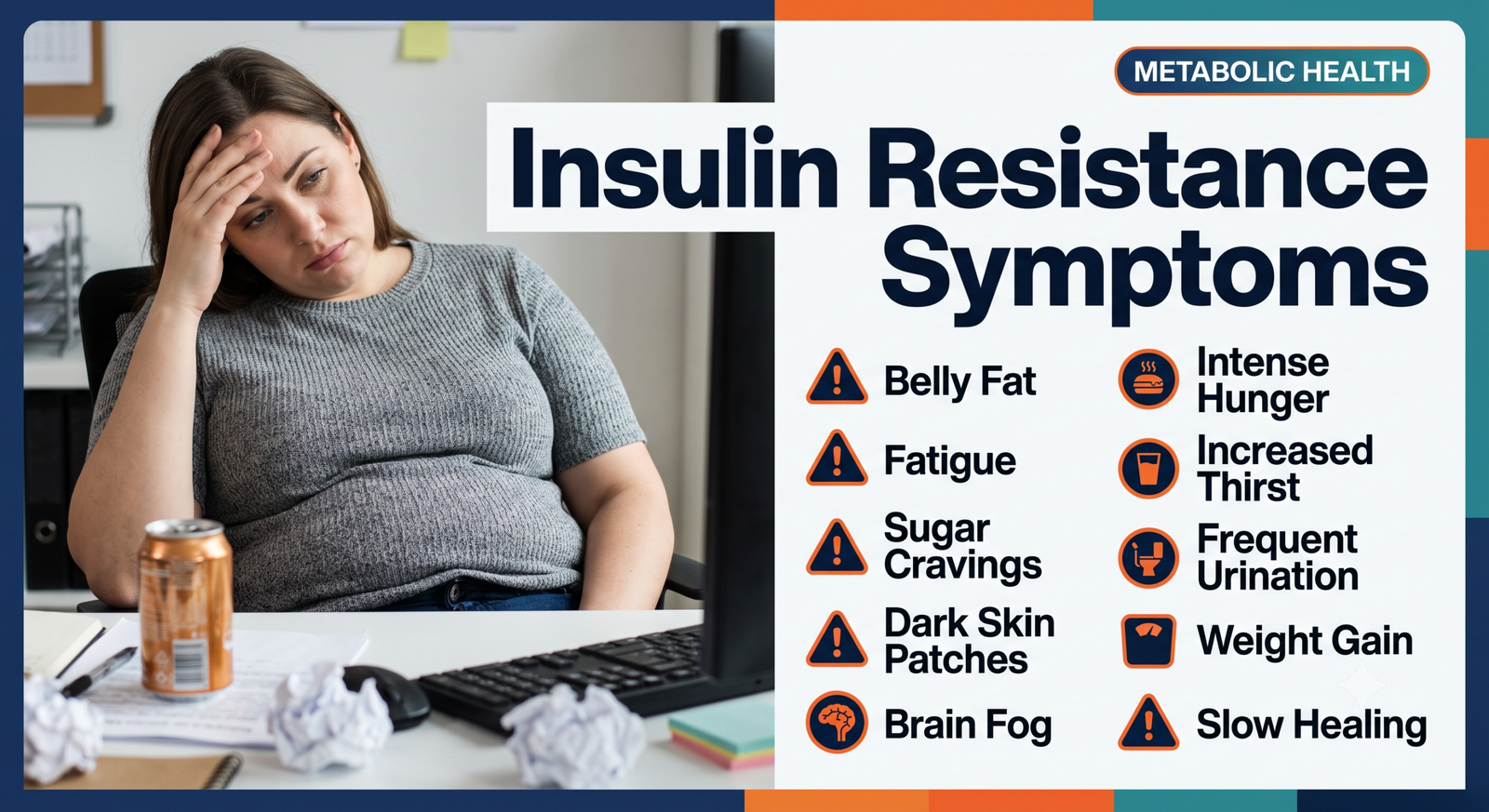
If you often feel exhausted after meals, struggle to lose belly fat despite eating reasonably well, or find yourself craving sugar and carbohydrates constantly, insulin resistance symptoms could be behind it. Insulin resistance is one of the most common metabolic problems in the modern world, and it quietly affects millions of people who have no idea it is happening.
The reason it stays hidden for so long is that insulin resistance rarely causes obvious dramatic symptoms at first. Instead, it produces a slow, creeping cluster of changes that are easily blamed on stress, aging, or a busy lifestyle. By the time it shows up on a blood test, it has often been building for years.
In this guide, you will learn the 10 most important insulin resistance symptoms, what causes them, how insulin resistance is diagnosed, and the most effective lifestyle changes that reverse it before it becomes type 2 diabetes.
Table of Contents
What Is Insulin Resistance and Why Does It Matter?
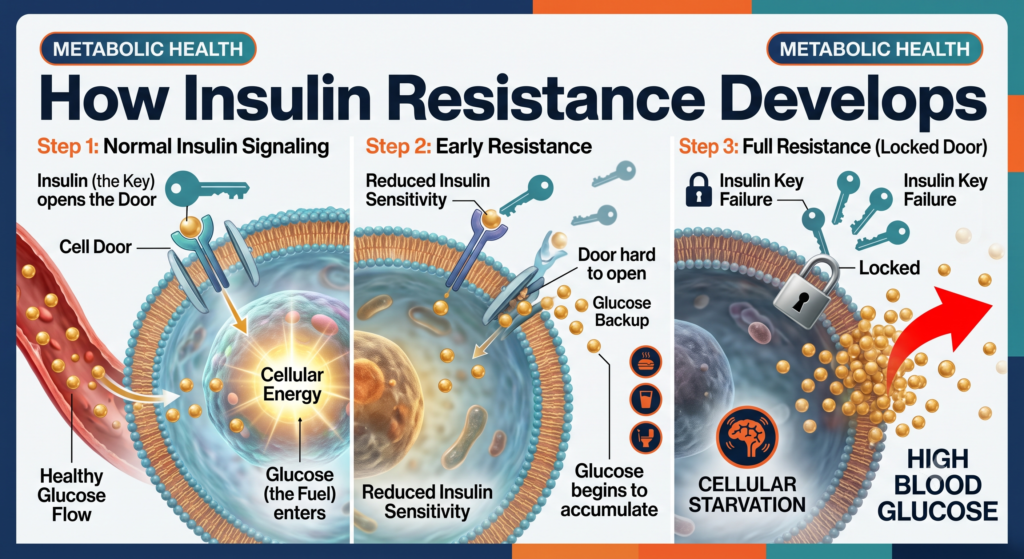
Insulin is a hormone produced by the pancreas whose main job is to move glucose from your blood into your cells, where it is used for energy. Think of insulin as a key and your cells as doors. In a healthy system, the key fits perfectly, the door opens, and glucose enters the cell smoothly.
Insulin resistance happens when those doors start sticking. The cells do not respond normally to insulin, so glucose cannot enter efficiently. The pancreas compensates by producing more and more insulin to force the doors open. For a while this works, but over time the system strains. Blood glucose starts rising, the pancreas gets overworked, and the conditions for type 2 diabetes begin to take shape.
Insulin resistance is not type 2 diabetes, but it is the most common road that leads there. It is also directly linked to PCOS, non-alcoholic fatty liver disease, cardiovascular disease, and chronic inflammation. Catching and reversing insulin resistance symptoms early changes the health trajectory for years to come. Our article on prediabetes versus type 2 diabetes explains where insulin resistance sits on that spectrum.
10 Key Insulin Resistance Symptoms to Recognize
These are the ten most consistent insulin resistance symptoms reported in adults. Recognizing several of them together is more significant than any single sign on its own.
1. Belly Fat That Will Not Shift
Abdominal fat, particularly the deep visceral fat that sits around the organs, is both a symptom and a driver of insulin resistance. High insulin promotes fat storage in the abdomen, and abdominal fat itself releases inflammatory signals that worsen insulin resistance further.
If your waist measurement keeps creeping up despite no major change in diet or activity, insulin resistance is one of the most likely explanations. A waist circumference above 94 centimeters in men and 80 centimeters in women is a recognized metabolic risk marker.
2. Constant Fatigue, Especially After Meals
Feeling tired shortly after eating, particularly after carbohydrate-heavy meals, is one of the most telling insulin resistance symptoms. When cells cannot use glucose efficiently, they cannot produce energy properly. The result is an energy crash that arrives thirty to ninety minutes after eating, often described as a heavy, foggy tiredness.
This post-meal fatigue is different from ordinary afternoon tiredness. It comes quickly after eating and often makes concentration difficult. Many people reflexively reach for more sugar or caffeine to push through it, which perpetuates the underlying problem.
3. Strong Sugar and Carbohydrate Cravings
Intense cravings for sugary foods and refined carbohydrates are a direct consequence of cells being starved of glucose even when blood sugar is elevated. The brain and muscles are not getting the energy they need, so the body sends urgent hunger signals for fast-acting carbohydrates.
This craving cycle is not weakness or lack of willpower. It is a physiological signal driven by the inefficiency of glucose delivery at the cellular level. Our guide on how to reduce sugar cravings explains both the biology and the practical strategies for breaking this cycle.
4. Brain Fog and Difficulty Concentrating
The brain requires a steady supply of glucose to function well. When insulin resistance impairs glucose delivery, cognitive symptoms follow. Brain fog, poor concentration, slow thinking, difficulty recalling words or names, and a general sense of mental dullness are all commonly reported insulin resistance symptoms.
Many people describe feeling mentally sharp in the morning and increasingly foggy as the day progresses, particularly after meals.
5. High Blood Pressure
Elevated insulin levels directly affect the kidneys and blood vessels. Insulin causes the kidneys to retain sodium, which raises blood pressure. It also stimulates the sympathetic nervous system and promotes arterial stiffness, all of which drive blood pressure upward.
High blood pressure in the absence of other obvious causes, particularly in someone who is also gaining abdominal weight, warrants investigation for insulin resistance as an underlying driver.
6. Dark Patches of Skin (Acanthosis Nigricans)
One of the most specific and visually recognizable insulin resistance symptoms is acanthosis nigricans, dark, velvety patches of thickened skin that develop in body folds and creases. These most commonly appear on the back of the neck, armpits, groin, and elbows.
These patches are caused by elevated insulin stimulating skin cell growth. They are not harmful in themselves but are a strong clinical signal that insulin resistance has been present for some time.
7. Difficulty Losing Weight
People with insulin resistance often find that standard weight loss advice produces disappointing results. High insulin levels keep the body in fat-storage mode and make accessing stored fat for energy more difficult. This means that even eating less and moving more can produce frustratingly slow results when insulin is chronically elevated.
Understanding that insulin management, not just calorie restriction, is the key to unlocking weight loss for many people changes the approach entirely. Our article on how to lose weight without exercise covers the dietary strategies most relevant to insulin management.
8. Frequent Hunger Despite Eating Regularly
Paradoxically, insulin resistance can cause frequent hunger even when you have eaten enough calories. Because cells are not efficiently using glucose, the brain keeps receiving hunger signals. You may feel genuinely hungry one to two hours after a full meal, which seems impossible unless you understand the underlying mechanism.
This pattern of eating more than you need while still feeling hungry is one of the hallmarks of insulin resistance and distinguishes it from simple appetite or poor dietary choices.
9. Elevated Triglycerides
High triglyceride levels in a blood test are a reliable metabolic marker of insulin resistance. When insulin is chronically high, the liver converts excess glucose into triglycerides and releases them into the blood. Triglycerides above 150 milligrams per deciliter, particularly when combined with low HDL cholesterol, form part of the metabolic syndrome cluster that strongly suggests underlying insulin resistance.
10. Polycystic Ovary Syndrome in Women
PCOS and insulin resistance are so closely connected that many researchers consider insulin resistance the primary driver of PCOS in the majority of women who have it. Elevated insulin stimulates the ovaries to produce excess androgens, disrupting ovulation and creating the hormonal pattern that defines PCOS.
This means that addressing insulin resistance directly, through diet and lifestyle, often produces meaningful improvements in PCOS symptoms including cycle regularity, acne, and excess hair growth. Our comprehensive guide on PCOS symptoms explains this connection in full detail.
Insulin Resistance Symptoms in Women Specifically
While insulin resistance affects both sexes, women experience some distinct presentations that are worth recognizing separately.
The link to PCOS is the most significant. Irregular periods, excess facial and body hair, persistent acne, and fertility difficulties in a woman who also has belly fat, fatigue, and sugar cravings form a recognizable cluster that points strongly to insulin resistance as the underlying driver.
Hormonal contraceptives can mask some insulin resistance symptoms by regulating periods while leaving the metabolic issue unaddressed. Women going off contraceptives after years of use sometimes encounter significant PCOS and insulin resistance symptoms for the first time.
Perimenopause and menopause also worsen insulin resistance, since estrogen has a protective effect on insulin sensitivity and its decline accelerates metabolic changes. Women in their 40s who notice new or worsening belly fat, fatigue, and blood sugar instability should consider whether insulin resistance is a contributing factor.
What Causes Insulin Resistance?
Insulin resistance develops from a combination of genetic predisposition and lifestyle factors. The lifestyle factors are the ones most within your control.
A diet high in refined carbohydrates, added sugar, and ultra-processed foods is the most potent dietary driver, since it creates repeated large insulin spikes that gradually desensitize cells to the hormone. Physical inactivity is equally important: muscle is the largest consumer of glucose in the body, and sedentary muscle becomes less responsive to insulin over time.
Chronic sleep deprivation raises cortisol and inflammatory markers that worsen insulin sensitivity. One week of poor sleep has been shown to produce measurable insulin resistance in healthy adults. Our article on sleep and type 2 diabetes explores this relationship in depth.
Chronic stress elevates cortisol, which directly opposes insulin action and promotes abdominal fat storage. Excess body fat, particularly visceral fat, releases inflammatory signals that impair insulin signaling at the cellular level.
How Insulin Resistance Is Diagnosed
Insulin resistance is not routinely tested for in standard check-ups, which is one reason it is so often missed until it has progressed to prediabetes or type 2 diabetes.
The most practical diagnostic markers are fasting blood glucose, fasting insulin, and the HOMA-IR calculation which combines both. A fasting glucose between 100 and 125 milligrams per deciliter suggests prediabetes. A fasting insulin above 10 to 12 micro-IU per milliliter often indicates resistance even when glucose is still normal.
A standard lipid panel showing high triglycerides and low HDL cholesterol supports the diagnosis, as does a hemoglobin A1c between 5.7 and 6.4 percent. You can ask your doctor specifically for these tests if you have several of the insulin resistance symptoms described above.
According to the American Diabetes Association, early identification through blood testing gives people the maximum window of time to reverse prediabetes and insulin resistance through lifestyle changes before medication becomes necessary.
Natural Ways to Reverse Insulin Resistance
The encouraging truth about insulin resistance is that it is highly responsive to lifestyle intervention. Many people reverse it entirely through consistent dietary and movement changes.
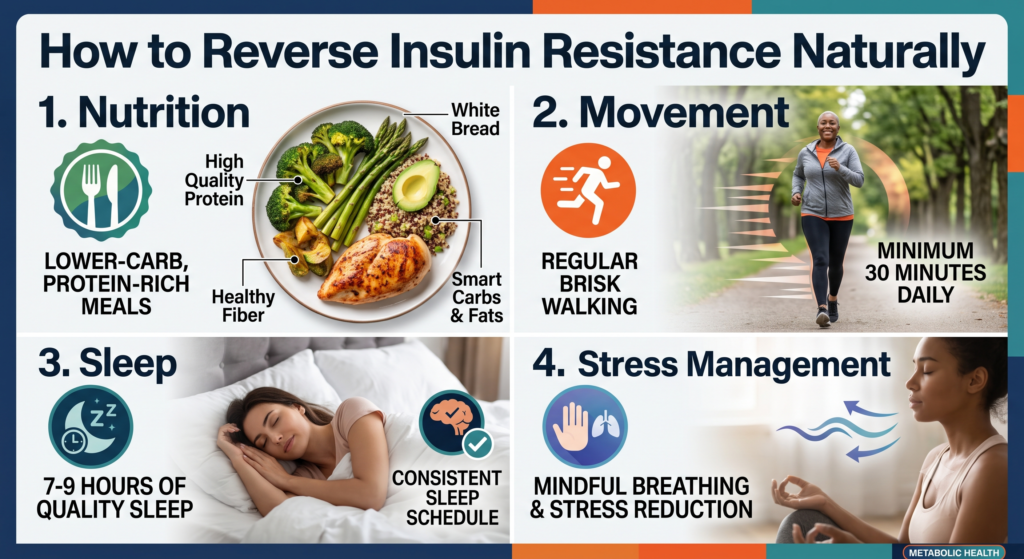
Diet is the most powerful lever. Reducing refined carbohydrates and added sugar removes the primary driver of repeated insulin spikes. Replacing them with protein, fiber, and healthy fat stabilizes blood sugar, lowers insulin, and gives cells time to recover their sensitivity. Our guides on foods that lower blood sugar and best breakfast for diabetics give practical frameworks for eating in a way that actively improves insulin sensitivity.
Regular physical activity, particularly a combination of strength training and aerobic exercise, dramatically improves insulin sensitivity by increasing the number of glucose transporters in muscle cells. Even a daily 30-minute walk after meals produces measurable reductions in post-meal blood glucose within days. Our article on the benefits of walking daily explains exactly how movement changes your metabolic environment.
Sleep quality is equally important. Protecting seven to nine hours of quality sleep restores the insulin sensitivity that poor sleep erodes. Managing chronic stress through daily calming practices reduces the cortisol that opposes insulin action.
According to Harvard Health, even modest weight loss of five to ten percent of body weight produces significant improvements in insulin sensitivity, and these improvements appear quickly, often within weeks of consistent lifestyle changes.
When to See a Doctor About Insulin Resistance
You should discuss insulin resistance with your doctor if you recognize several of the symptoms described above, particularly if you have abdominal weight gain, persistent fatigue, strong sugar cravings, dark skin patches, or a family history of type 2 diabetes.
Ask specifically for fasting glucose, fasting insulin, HbA1c, and a lipid panel. Standard check-ups often do not include fasting insulin, so requesting it directly is important. Early identification and action produce dramatically better outcomes than waiting until glucose rises enough to diagnose diabetes.
Track Your Metabolic Health
Tracking your metabolic health gives you the clearest picture of whether your lifestyle changes are working. Regular monitoring keeps you motivated and helps catch any worsening before it becomes significant.
Use our free BMI calculator to track your weight trend and the body fat calculator to monitor abdominal fat changes that directly reflect insulin sensitivity. Our calorie calculator helps you plan meals within the right energy range, and the TDEE calculator shows how much you burn each day so you can create a precise, supportive plan.
Frequently Asked Questions
What are the most common insulin resistance symptoms?
The most common include belly fat that is hard to lose, fatigue particularly after meals, intense sugar cravings, brain fog, high blood pressure, dark skin patches in body folds, difficulty losing weight, frequent hunger despite eating, high triglycerides, and in women, PCOS symptoms. Recognizing several together is the strongest indicator.
Can insulin resistance be reversed naturally?
Yes. Insulin resistance is highly responsive to lifestyle changes. Reducing refined carbohydrates and added sugar, exercising regularly particularly with strength training and walking, improving sleep quality, and managing chronic stress all produce measurable improvements in insulin sensitivity, often within a few weeks of consistent effort.
How do I test for insulin resistance?
Ask your doctor for fasting blood glucose, fasting insulin, hemoglobin A1c, and a lipid panel. Standard check-ups often do not include fasting insulin, so requesting it specifically is important. A HOMA-IR calculation using fasting glucose and insulin gives the clearest picture.
What does insulin resistance feel like day to day?
Most people describe a pattern of energy crashes after meals, persistent belly fat despite effort, constant sugar cravings, brain fog that worsens through the day, and difficulty feeling truly rested. It often feels like your body is not responding normally to food and rest.
Is insulin resistance the same as prediabetes?
Not exactly. Insulin resistance often precedes prediabetes. You can have significant insulin resistance with normal or near-normal blood glucose while fasting insulin is already elevated. Prediabetes is diagnosed when fasting glucose or HbA1c reaches specific threshold levels, which typically happens after years of worsening insulin resistance.
What foods make insulin resistance worse?
Refined carbohydrates including white bread, white rice, and pasta, added sugar in all forms, sugary drinks, ultra-processed snacks, and excessive alcohol all drive repeated insulin spikes that worsen resistance over time. Replacing these with protein, fiber, and healthy fat is the most impactful dietary change.
How long does it take to reverse insulin resistance?
Many people see measurable improvements in fasting insulin and blood sugar within two to four weeks of consistent dietary changes and daily movement. Significant reversal, where insulin sensitivity normalizes, typically takes three to six months of sustained lifestyle change. The earlier you start, the faster and more complete the improvement.
Final Thoughts
Insulin resistance symptoms are real, common, and, most importantly, reversible. Belly fat, constant fatigue, sugar cravings, brain fog, and difficulty losing weight are not simply the cost of modern life. They are signals from your body that its metabolic system needs support.
Start with your diet. Cut back on refined carbs and sugar, add protein and fiber to every meal, and walk after eating. Protect your sleep and manage your stress. These changes cost nothing and produce real, measurable results in weeks rather than months.
Use the free tools on Vitality Nexus to track your metabolic health, and explore our diabetes and metabolic health guides for more practical, science-backed strategies that address insulin resistance at its root.
Medical Disclaimer: This article is for general information only and is not medical advice. If you recognize insulin resistance symptoms in yourself, please consult a qualified doctor for proper testing and personalized guidance before making significant changes to your diet or lifestyle.