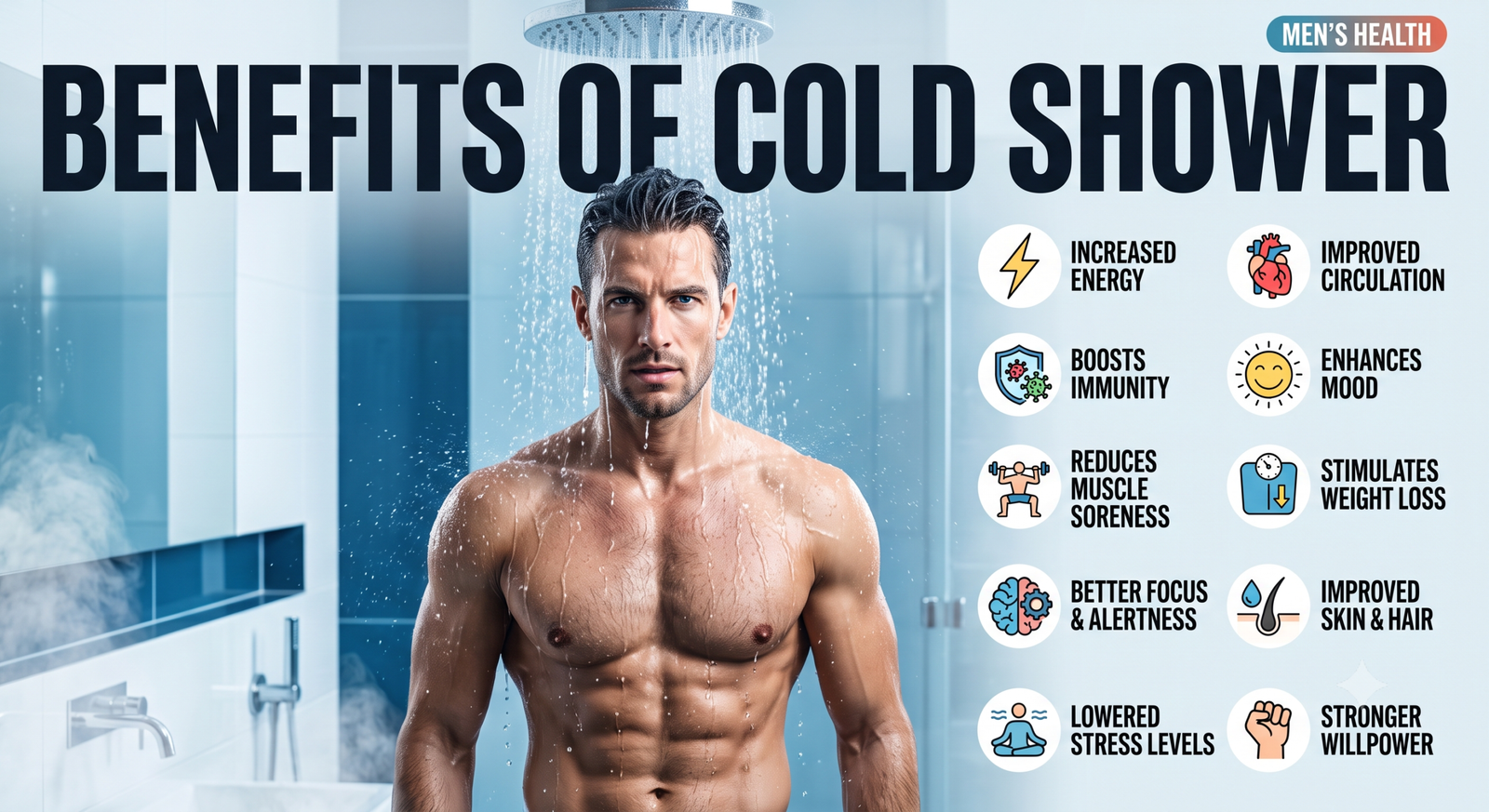
If you have ever finished a workout and stepped under a cold shower, you already know the immediate shock and then the strange alertness that follows. The benefits of cold shower go far beyond that initial jolt. Decades of research on cold water immersion, combined with the growing body of work on deliberate cold exposure, show that regular cold showers produce real, measurable improvements in energy, mood, resilience, recovery, and even hormone levels.
Cold showers are not a new wellness trend. Athletes have used cold water therapy for muscle recovery for generations. What has changed is the scientific understanding of why it works and the accessibility of the practice, since a cold shower costs nothing and takes no extra time.
In this guide, you will learn the 10 most important benefits of cold shower, the science behind each one, how to start if you are a complete beginner, how long and how cold your showers need to be, and who should approach cold exposure with caution.
Table of Contents
What Happens to Your Body in a Cold Shower
Understanding the physiological response to cold exposure helps you appreciate why the benefits of cold shower are so wide-ranging rather than just anecdotal.
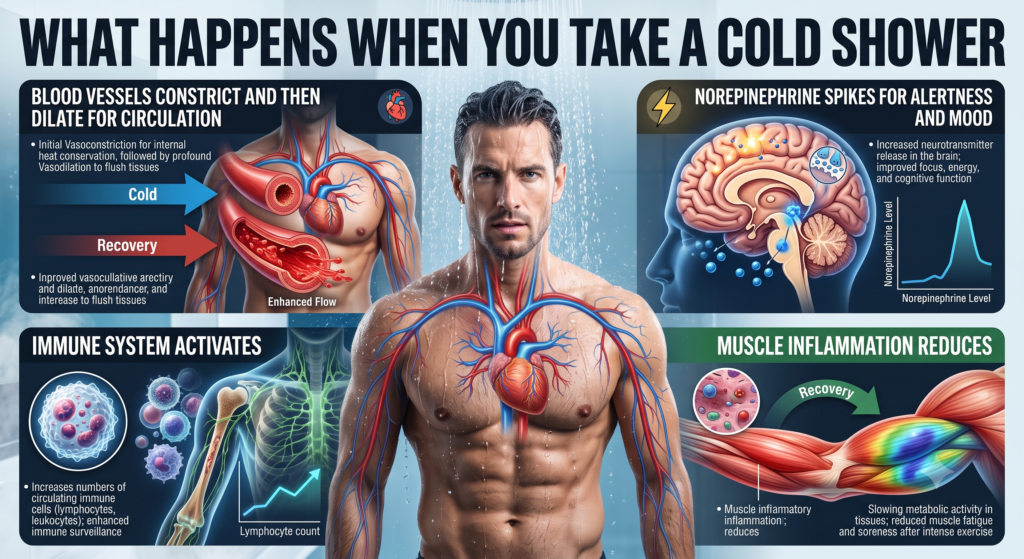
When cold water hits your skin, your body immediately activates a cascade of responses. Peripheral blood vessels constrict, redirecting blood to your core to protect vital organs. Heart rate and breathing rate increase. The sympathetic nervous system activates, releasing a surge of norepinephrine, a neurotransmitter and hormone involved in alertness, focus, and mood regulation.
Within seconds, your body is producing more heat, pumping blood more vigorously, releasing stress hormones in controlled amounts, and activating metabolic pathways that brown adipose tissue, a heat-generating form of fat, uses to produce warmth. When you exit the cold and warm up, blood rushes back to the peripheral tissues, improving circulation throughout.
Research by neuroscientist Andrew Huberman and others has established that deliberate cold exposure produces a significant norepinephrine spike, often two to three times the resting level, which accounts for many of the mood and focus benefits. According to Harvard Health, cold water immersion produces measurable physiological effects including improved circulation, reduced inflammation, and mood elevation that are consistent across multiple studies.
10 Proven Benefits of Cold Shower
Here are the 10 most evidence-supported benefits of cold shower. Some are immediate and felt within seconds. Others build through consistent daily practice over weeks.
1. Increased Alertness and Mental Energy
The surge of norepinephrine and adrenaline produced by cold exposure creates an immediate and reliable state of alertness. Many people describe the effect as being more awake than coffee achieves and with a calmer, cleaner quality to the focus it produces.
This is why starting the day with a cold shower, even a brief one, produces noticeably better morning alertness for many people compared to a warm shower. The physiological wake-up signal is stronger and more sustained.
2. Improved Mood and Reduced Depression
Norepinephrine and endorphins released during cold exposure have direct antidepressant effects. A study published in Medical Hypotheses proposed cold showers as a potential treatment for depression based on the significant norepinephrine spike, which is the same neurotransmitter targeted by many antidepressant medications.
Research participants who practiced cold shower therapy reported improvements in mood that persisted beyond the shower itself. For men who are reluctant to seek formal mental health support, a daily cold shower is a low-barrier daily mood intervention with no side effects. Our guide on how to improve mental health covers complementary habits that amplify this effect.
3. Faster Muscle Recovery
Cold water therapy has been used by athletes for muscle recovery for decades, and the research strongly supports it. Cold exposure reduces the inflammation and muscle soreness that follows intense training by constricting blood vessels, flushing out metabolic waste, and reducing inflammatory markers in the tissue.
A meta-analysis of multiple studies found that cold water immersion significantly reduced delayed onset muscle soreness and perceived fatigue compared to passive recovery. For men who train regularly, a cold shower after exercise is one of the most time-efficient recovery tools available. Our article on recovery after workout covers the full recovery picture.
4. Boosted Immune Function
Regular cold shower exposure has been linked to improvements in immune markers. A large Dutch study involving over 3,000 participants, referenced by the Mayo Clinic as evidence of cold exposure immune benefits, found that people who took cold showers were 29 percent less likely to call in sick from work compared to those who took warm showers. The cold exposure appeared to activate immune cells and increase the production of white blood cells over time.
The mechanism is thought to involve the metabolic activation during cold exposure stimulating the immune system as part of the overall physiological arousal response.
5. Increased Testosterone and Male Vitality
This is one of the most discussed benefits of cold shower for men, and there is genuine biological plausibility behind it. The testes function optimally at temperatures slightly below core body temperature, which is why they are located externally in the scrotum. Hot temperatures impair sperm production and testosterone secretion, while cooler temperatures support them.
Research on cold water immersion shows increases in testosterone and luteinizing hormone following cold exposure. For men concerned about testosterone levels, regular cold showers are a low-cost, evidence-supported supportive habit. Our guide on signs of low testosterone covers the full picture of testosterone health.
6. Improved Circulation
The contraction and expansion of blood vessels during and after cold exposure provides a vascular workout that improves circulation over time. Cold causes vasoconstriction, then as the body rewarms, vasodilation follows, driving blood through the system more vigorously.
This cycle, repeated daily, trains the vascular system to respond more efficiently and may support cardiovascular health over the long term. People with poor circulation often notice that consistent cold showers produce warmer hands and feet and more even skin tone over several weeks.
7. Better Skin and Hair
Hot water strips the skin of natural oils and opens pores in ways that can worsen oiliness and acne over time. Cold water tightens pores, reduces oiliness, and seals the hair cuticle, which reduces frizz and improves shine.
Men who switch from hot to cold showers often report less dry skin, less scalp oiliness, and healthier-looking hair within a few weeks. The effect is particularly noticeable for men who previously used very hot water.
8. Increased Mental Resilience and Stress Tolerance
Getting into a cold shower requires deliberately doing something uncomfortable. This practice of voluntarily tolerating discomfort trains the prefrontal cortex’s ability to override the emotional resistance produced by the amygdala. Over time, this translates into improved stress tolerance in everyday situations.
Research on deliberate cold exposure shows that it raises the threshold at which stressors activate the full stress response, meaning cold-adapted individuals handle daily frustrations, pressure, and discomfort more effectively than those who never practice deliberate discomfort. This is one of the most underappreciated benefits of cold shower from a mental performance perspective.
9. Supported Weight Management
Cold exposure activates brown adipose tissue, which is a metabolically active form of fat that generates heat by burning calories. Regular cold exposure over weeks has been shown to increase brown adipose tissue activity and raise resting metabolic rate modestly.
While a cold shower is not a weight loss intervention on its own, it adds a small metabolic contribution that compounds with other healthy habits. The morning alertness it produces also supports the energy and motivation for physical activity throughout the day.
10. Improved Sleep Quality
This benefit surprises most people, since cold is associated with being awake rather than with sleep. The mechanism is that cold shower-triggered vasodilation, the flooding of blood to the periphery as the body rewarms, accelerates the natural core body temperature drop that signals the brain to prepare for sleep.
Taking a cold shower in the evening, around one to two hours before bed, produces a faster temperature drop and can improve both the speed of sleep onset and the depth of the early sleep cycles. This timing makes cold showers a useful addition to a wind-down routine. Our article on deep sleep benefits covers why deep sleep quality matters so much for recovery and health.
Benefits of Cold Shower for Men Specifically
While both men and women benefit from cold showers, several of the benefits are particularly relevant to men’s health and performance goals.
Testosterone support through cooler testicular temperature is the most physiologically specific male benefit. The immune system boost supports the higher infection susceptibility many men experience from intense training and physical work. The mental resilience and stress tolerance benefit is particularly relevant for men who are socialized to avoid seeking support for psychological pressure and who benefit from practical self-regulation tools.
The recovery benefits also align closely with the training demands of most men who engage in regular strength or endurance training. Cold shower recovery is free, convenient, and produces effects comparable to more elaborate recovery protocols for most recreational athletes. Pairing cold showers with the strength and recovery habits in our guide on how to build muscle after 40 gives a comprehensive approach to male physical performance.
How Cold Does the Water Need to Be?
Research on cold water immersion typically uses temperatures between 10 and 15 degrees Celsius. Most household showers in temperate climates produce cold water in this range when turned fully cold.
You do not need ice baths or extreme temperatures to access most of the benefits of cold shower. The shock response and norepinephrine spike begin at temperatures that feel genuinely cold and uncomfortable but are not dangerous. The key is that the water feels cold enough to trigger an instinctive desire to escape, not merely cool or refreshing.
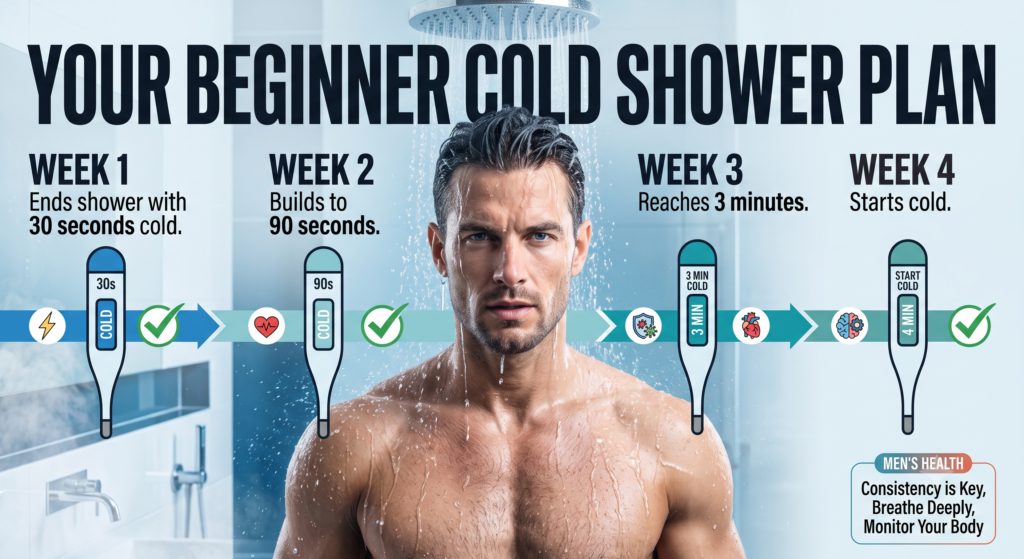
Duration matters as well. Most research protocols use two to ten minutes of cold exposure. For daily cold showers, even two to three minutes of cold water provides the majority of the alertness, mood, and circulation benefits. Starting with thirty to sixty seconds and building gradually is the most practical approach.
How to Start Cold Showers as a Beginner
The most common mistake is making the transition too abrupt. Forcing yourself into full cold water immediately produces a gasping, hyperventilating response that is unpleasant enough to make most people give up before any benefit builds.
The contrast method is more effective and more sustainable. Start your shower warm as usual, then at the end switch fully cold for thirty seconds. Over one to two weeks, gradually increase the cold period to two minutes, then three. Eventually you can start the shower cold rather than ending cold.
Controlled breathing during the initial shock is essential. The instinct is to hold your breath or gasp rapidly. Deliberately slowing your breathing through the initial cold contact activates the parasympathetic nervous system alongside the sympathetic activation, which converts the panic response into the energized calm that cold shower practitioners describe.
Cold Shower vs Hot Shower: Which Is Better?
The honest answer is that they serve different purposes and the best choice depends on your goal and timing.
Hot showers relax muscles, open airways, improve sleep when taken immediately before bed since the post-shower cooling accelerates sleep onset, and feel more restorative after a long cold day. They are better for stress relief through warmth and for skincare routines that require open pores.
Cold showers activate the nervous system, boost alertness and mood, support recovery and immune function, and are better suited to mornings and post-training scenarios. Contrast showers, alternating between hot and cold, combine benefits of both and are a popular approach among athletes.
Who Should Be Careful With Cold Showers
Cold showers are safe for most healthy adults, but certain groups should approach them carefully or seek medical advice first.
People with cardiovascular disease, heart arrhythmias, or high blood pressure should consult a doctor before starting cold shower practice, since the initial cardiovascular shock response may not be appropriate for compromised cardiac systems. People with Raynaud’s disease, which causes extreme circulatory sensitivity to cold, should be cautious.
Pregnant women should avoid very cold water exposure. People who have recently been ill, are feverish, or are very underweight should not add the thermal stress of cold showers to an already challenged system. For anyone else in reasonable health, the risk profile of cold showers is very low.
Track Your Health and Energy
The best way to assess whether cold showers are producing real benefits for you is to track your energy, mood, and performance before and after establishing the habit.
Rate your morning energy and mood out of ten each day for two weeks before starting cold showers, then compare the same scores after two weeks of consistent practice. Most people who stick with the habit notice a measurable upward shift in their morning baseline.
For broader health tracking, use our free BMI calculator and calorie calculator to ensure your nutrition is supporting your recovery and energy alongside the cold shower practice.
Frequently Asked Questions
What are the main benefits of cold shower?
The main benefits include increased alertness and energy, improved mood through norepinephrine release, faster muscle recovery, boosted immune function, testosterone support in men, better circulation, improved skin and hair, increased mental resilience, modest metabolic support, and improved sleep quality when timed correctly.
How long should a cold shower be to get benefits?
Even two to three minutes of cold water exposure produces measurable alertness, mood, and recovery benefits. Research protocols use between two and ten minutes. Starting with thirty to sixty seconds and building over two to three weeks is the most sustainable beginner approach.
Are cold showers good for testosterone?
Yes. Cold temperatures support optimal testicular function and have been associated with increases in testosterone and luteinizing hormone in research on cold water immersion. For men managing testosterone health, cold showers are a practical supportive habit.
Is it better to take a cold shower in the morning or evening?
Morning cold showers are better for energy, alertness, and mental performance since they activate the sympathetic nervous system at the start of the day. Evening cold showers taken one to two hours before bed can improve sleep quality through post-shower warming that accelerates core temperature drop.
Do cold showers help with anxiety and depression?
Research supports cold showers as a mood-elevating intervention through the norepinephrine spike they produce. Many people with mild anxiety and low mood report meaningful improvements with daily cold shower practice. Cold showers are a supportive tool, not a replacement for professional care when anxiety or depression is clinical.
Do cold showers burn fat?
Cold showers activate brown adipose tissue which burns calories to generate heat, producing a modest metabolic effect. This is a contributing factor rather than a primary weight loss tool. The main weight-relevant benefit is the energy and motivation boost that supports more consistent physical activity.
Can beginners start cold showers immediately?
Beginners should use the contrast method, starting warm and ending with thirty seconds of cold water, rather than jumping straight into a full cold shower. Controlled breathing during the cold phase is essential for making the experience manageable and sustainable.
Final Thoughts
The benefits of cold shower are real, diverse, and accessible to anyone with a working shower. Improved alertness, better mood, faster recovery, stronger immunity, and greater mental resilience are all available from a daily two to three minute practice that costs nothing and fits into the shower you already take.
Start small. End your next shower with thirty seconds of cold water while breathing steadily through it. Notice the shift. Build from there over two to three weeks until cold water feels like a tool rather than a punishment.
Explore more of our men’s health guides on Vitality Nexus for practical, evidence-based habits that support your energy, strength, and long-term wellbeing.
Medical Disclaimer: This article is for general information only and is not medical advice. If you have a heart condition, cardiovascular disease, or any health condition affected by cold exposure, please consult a qualified doctor before starting cold shower practice.