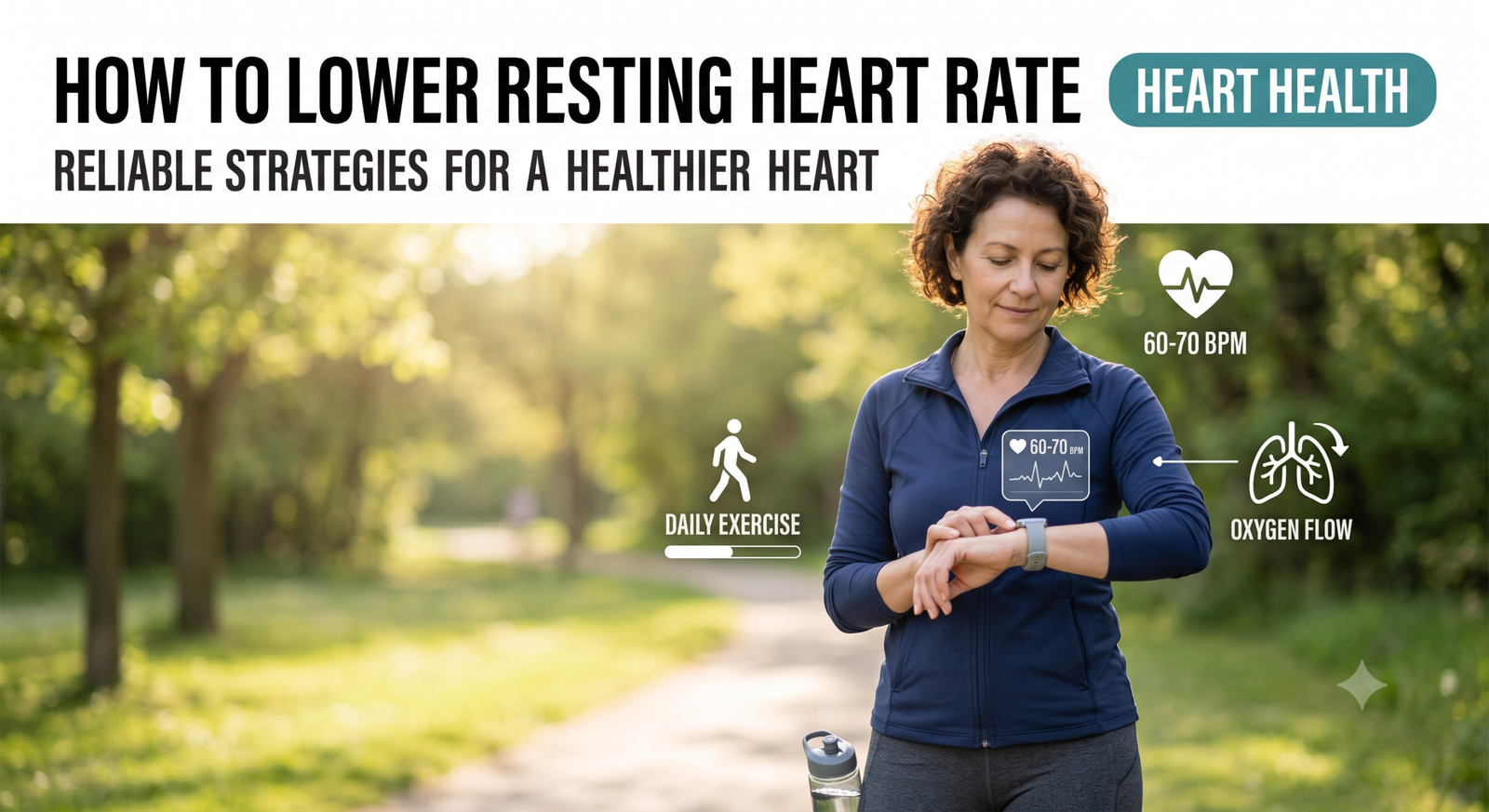
If your pulse feels fast even when you are sitting still, learning how to lower resting heart rate can be a simple, powerful step for your heart health. Your resting heart rate is one of the clearest windows into how well your heart is working, and a lower number usually means a stronger, more efficient heart.
The encouraging news is that a high resting heart rate is often something you can improve with everyday habits. You do not need fancy treatments or extreme routines. The same simple choices that support your overall health also gently train your heart to beat slower and stronger at rest.
In this guide, you will learn how to lower resting heart rate naturally with eight easy, proven tips. We will also explain what a healthy resting heart rate looks like, why a lower number matters, and when a fast pulse means it is time to see a doctor.
Table of Contents
What Is a Healthy Resting Heart Rate?
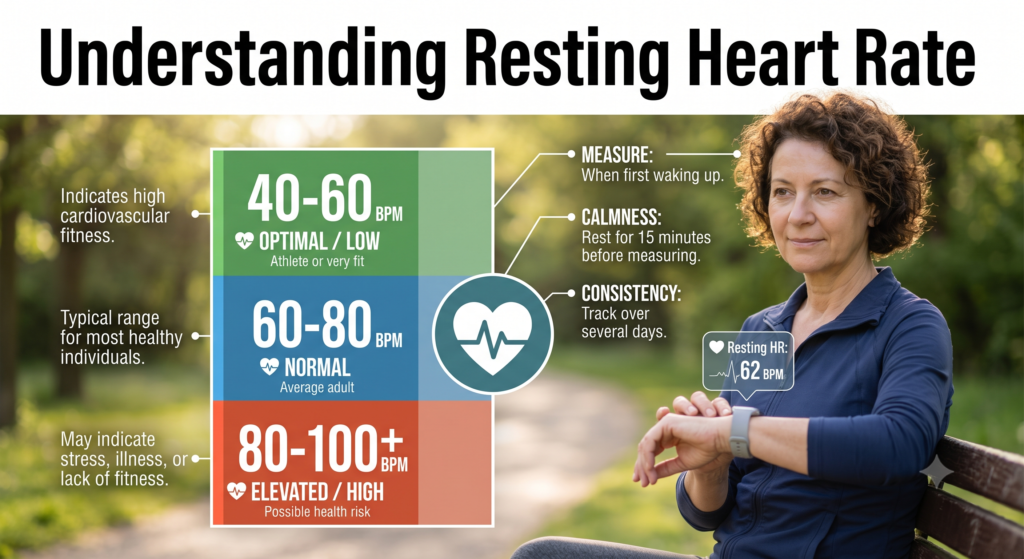
Your resting heart rate is the number of times your heart beats per minute while you are calm and at rest. It is best measured first thing in the morning, before you get out of bed, when your body is most relaxed.
For most adults, a normal resting heart rate falls between 60 and 100 beats per minute. However, a lower number within that range often signals better fitness. Many active people and athletes have resting heart rates between 40 and 60, because their well-trained hearts pump more blood with each beat and do not need to work as hard.
To check yours, place two fingers on your wrist or neck, count the beats for 30 seconds, and double it. A fitness tracker or smartwatch can also do this automatically. Knowing your number gives you a clear starting point, so you can see your progress as you learn how to lower resting heart rate over time.
Why a Lower Resting Heart Rate Matters
A lower resting heart rate is usually a sign of a healthy, efficient heart. When your heart is strong, it does not have to beat as often to move blood through your body, which reduces long-term wear and tear.
Research has linked a higher resting heart rate to a greater risk of heart problems over time. A heart that races at rest is working harder than it should, which can strain the cardiovascular system across the years. Lowering that number takes pressure off your heart and often reflects improvements in your fitness, stress levels, and overall health.
There are everyday benefits too. People with a lower, steadier resting heart rate often feel calmer, sleep better, and have more energy. This is why learning how to lower resting heart rate is about far more than one number, it reflects your whole-body health. To understand the bigger picture of cardiovascular wellness, our guide on heart health explained is a helpful companion to this article.
How to Lower Your Resting Heart Rate Naturally
The best part about learning how to lower your resting heart rate naturally is that the methods are simple and good for your whole body. They work by strengthening your heart and calming your nervous system.
The single most powerful tool is regular aerobic exercise. Activities like brisk walking, cycling, and swimming train your heart to become stronger and more efficient, which gradually lowers your resting rate. According to Harvard Health, regular exercise conditions the heart so it pumps more blood with less effort over time.
Calming your nervous system matters just as much. Chronic stress keeps your body in a constant state of alertness, which raises your heart rate. Daily relaxation, good sleep, and steady breathing all signal your body to settle. Together, fitness and calm form the foundation of a slower, healthier heartbeat.
8 Proven Ways to Lower Your Resting Heart Rate
Here are eight practical, science-backed ways to bring your resting heart rate down. Start with a few and make them part of your routine.
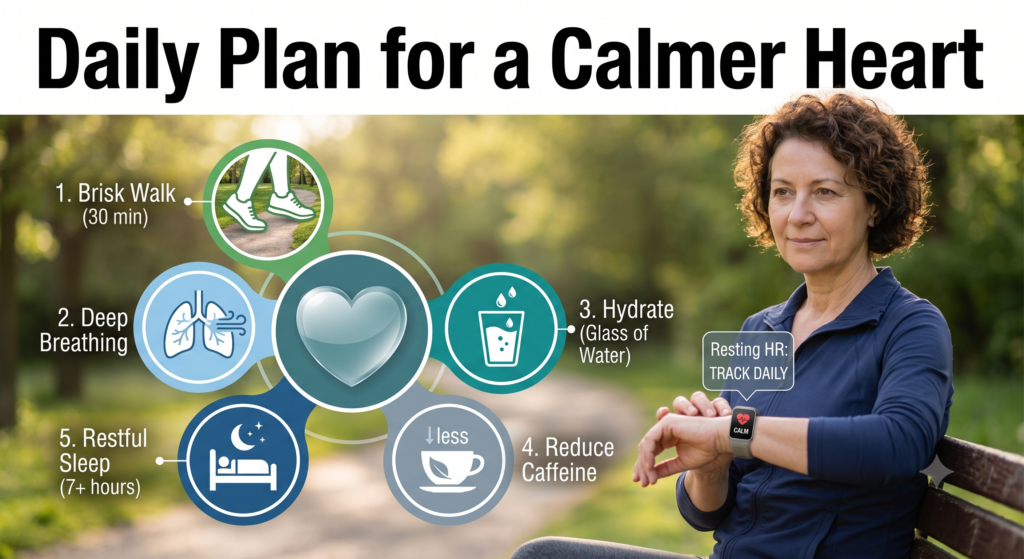
- Exercise regularly. Aim for at least 150 minutes of aerobic activity a week. A daily brisk walk is one of the simplest and most effective options.
- Practice deep breathing. Slow breathing with longer exhales activates your body’s calming response and lowers your heart rate within minutes.
- Manage your stress. Chronic stress keeps your heart racing, so build daily calm through walks, hobbies, or meditation. Our guide on high cortisol versus low cortisol explains the stress link.
- Sleep seven to nine hours. Quality sleep lets your heart rest and recover, which lowers your resting rate over time. See our article on deep sleep benefits.
- Stay hydrated. Even mild dehydration makes your heart work harder, so drink water steadily through the day.
- Limit caffeine and alcohol. Both can raise your heart rate, so keep them moderate, especially later in the day.
- Maintain a healthy weight. Carrying extra weight forces your heart to work harder, so a healthy weight eases its workload.
- Do not smoke. Smoking raises your heart rate and damages blood vessels, so quitting is one of the best things you can do for your heart.
Each of these habits gently trains your heart and calms your system, and together they make a real difference.
How to Lower Resting Heart Rate With Daily Habits
Beyond the core tips, your everyday routine shapes how fast your heart beats at rest. Building these small habits into your day makes learning how to lower resting heart rate feel effortless over time.
Move more throughout the day, not just during workouts. Taking the stairs, walking after meals, and standing up often all keep your circulation healthy. Our comparison of a morning versus night walk helps you fit movement in, and our roundup of the best cardio exercises gives more ways to strengthen your heart.
Pay attention to recovery too. A racing resting heart rate can be a sign your body is run down or out of shape, which our guide on the signs your heart is out of shape explores. Eating a balanced, heart-friendly diet rounds out your routine, supporting steady blood pressure and a calmer heartbeat. According to the American Heart Association, even small daily increases in activity meaningfully benefit your heart.
When a High Resting Heart Rate Needs a Doctor
Most of the time, a high resting heart rate improves with healthy habits. But sometimes it points to something that needs medical attention, so it is important to know the difference.
See a doctor if your resting heart rate is consistently above 100 beats per minute, if it suddenly rises and stays high, or if it comes with symptoms like dizziness, chest pain, shortness of breath, or fainting. These can signal an underlying issue that deserves prompt care. Knowing the warning signs of heart trouble helps you respond early.
Certain medications, thyroid problems, anemia, fever, and dehydration can also raise your heart rate. A doctor can check for these causes and guide you safely. Trust your body, and never ignore a fast heartbeat that comes with worrying symptoms.
Track Your Heart Rate and Health
Tracking your resting heart rate over time is one of the most motivating ways to see your progress. As your fitness improves, you will often watch the number slowly fall.
Check your resting heart rate at the same time each morning and note it down or let a smartwatch log it for you. Over weeks of consistent healthy habits, a downward trend shows your heart is getting stronger. Supporting your overall health helps too, so use our free BMI calculator to track your weight trend and our calorie calculator to plan heart-friendly meals.
Good sleep is a major factor in a healthy heart rate, so finding your ideal sleep window helps. Our free sleep calculator helps you rest in line with your natural cycles. Combine these tools with the habits above, and learning how to lower resting heart rate becomes a clear, trackable goal rather than a guessing game.
Frequently Asked Questions
What is a good resting heart rate?
For most adults, a normal resting heart rate is between 60 and 100 beats per minute. A lower number within this range, often seen in fit and active people, usually signals a stronger, healthier heart.
How can I lower my resting heart rate quickly?
Slow, deep breathing with longer exhales can calm your heart rate within minutes. Staying hydrated, reducing caffeine, and relaxing in a quiet space also help bring it down in the short term.
Does exercise lower resting heart rate?
Yes. Regular aerobic exercise is the most effective way to learn how to lower resting heart rate over time. It trains your heart to pump more blood with each beat, so it does not need to work as hard at rest.
How long does it take to lower resting heart rate?
With consistent aerobic exercise and healthy habits, many people see their resting heart rate drop within a few weeks to a couple of months. The fitter you become, the lower and steadier it tends to be.
Can stress raise your resting heart rate?
Yes. Chronic stress keeps your body alert and your heart racing. Managing stress through breathing, movement, and good sleep is an important part of lowering your resting heart rate.
Is a low resting heart rate always good?
Usually a lower resting heart rate reflects good fitness. However, a very low rate combined with dizziness or fatigue can sometimes signal a problem, so check with a doctor if you notice these symptoms.
When should I worry about a high resting heart rate?
See a doctor if your resting heart rate is consistently above 100, suddenly spikes, or comes with chest pain, dizziness, or shortness of breath. These can indicate an underlying condition that needs care.
Final Thoughts
Learning how to lower resting heart rate is really about building a stronger, calmer heart through simple daily habits. Regular movement, good sleep, steady breathing, and stress control all train your heart to beat slower and more efficiently at rest.
Start small. Take a daily walk, practice a few minutes of deep breathing, drink enough water, and protect your sleep. Track your morning heart rate, and watch it gradually improve as your habits take hold over the weeks ahead.
Explore more of our heart health guides on Vitality Nexus to keep building a lifestyle that supports a strong, healthy heart at every age.
Medical Disclaimer: This article is for general information only and is not medical advice. If your resting heart rate is consistently high or comes with symptoms like chest pain, dizziness, or shortness of breath, please consult a qualified doctor promptly.