Most people think of sleep as simply the absence of waking. A passive state of rest that the body falls into when it is tired and emerges from when it is rested. Something that happens between the important parts of the day rather than being one of the most important parts of the day itself.
That understanding is wrong. And it costs millions of people their health in ways they never connect back to what happens while they sleep.
Sleep is not a uniform state. It is a complex, orchestrated biological process that moves through distinct stages throughout the night. And the most physically and mentally restorative of all these stages, the one where the most extraordinary healing and maintenance occurs, is deep sleep.
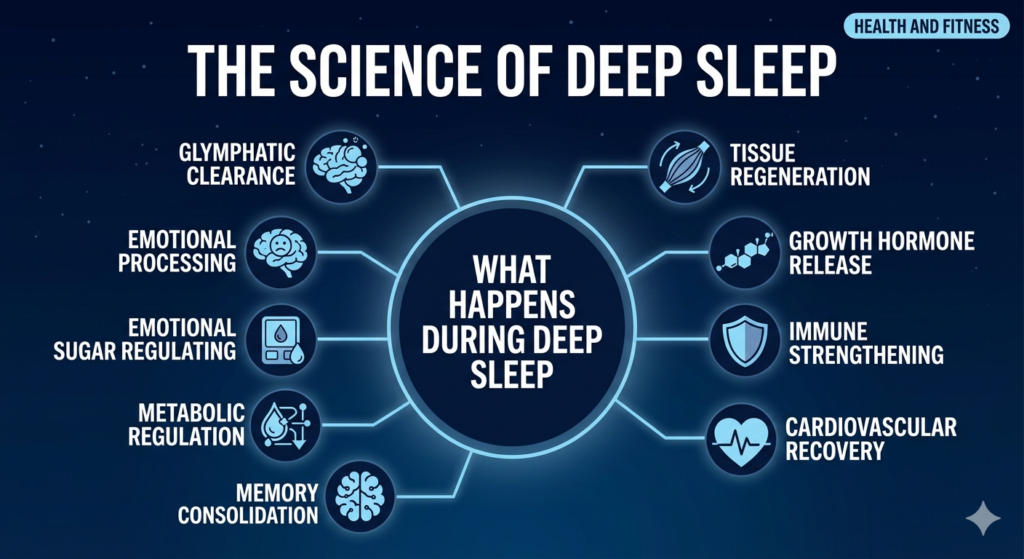
Deep sleep benefits extend across virtually every system in the human body. The brain clears its own waste products. Growth hormone floods the body and repairs tissues. Memory is consolidated and organized. The immune system is strengthened. The cardiovascular system recovers. Metabolism is regulated. Emotional experiences are processed and integrated.
Understanding what deep sleep actually does, and why consistently getting enough of it is one of the most powerful health interventions available to any person, changes the way you think about every night you go to bed.
Table of Contents
What Is Deep Sleep and How Is It Different?
To appreciate the specific benefits of deep sleep, it helps to understand what it actually is and how it differs from the other stages of sleep.
Sleep moves through a repeating cycle of distinct stages throughout the night. Each complete cycle lasts approximately 90 minutes and is repeated four to six times during a full night of sleep. Within each cycle, the brain passes through light sleep stages, deep sleep, and REM sleep in sequence.
Deep sleep is technically known as slow wave sleep or N3 sleep. The name comes from the brain activity observed during this stage: large, slow, synchronized electrical waves called delta waves that sweep across the brain in regular patterns. These delta waves are dramatically different from the fast, varied activity of waking or even light sleep.
During deep sleep, the brain is in its most restorative state. The body is in its most physically relaxed state, with muscle tone at its lowest and the body temperature slightly reduced. Breathing slows and becomes very regular. The heart rate drops to its lowest levels of the 24-hour cycle.
This is the stage from which it is hardest to wake someone. When a person is woken from deep sleep, they typically feel profoundly groggy and disoriented, a state called sleep inertia. This difficulty in waking is itself evidence of how deeply engaged the brain is in the restorative processes that occur during this stage.
Deep sleep is concentrated in the first half of the night. The longest and deepest slow wave sleep periods occur in the first three to four hours of sleep. This is one of the reasons why cutting sleep short from the beginning of the night, or going to bed very late, disproportionately reduces deep sleep compared to other sleep stages.
According to research from the National Sleep Foundation, deep sleep in healthy young adults typically constitutes approximately 13 to 23 percent of total sleep time, decreasing progressively with age. In a seven to eight hour night, this translates to approximately 60 to 100 minutes of deep sleep for younger adults.
How Much Deep Sleep Do You Actually Need?
Most people cannot consciously control exactly how much deep sleep they get on any given night. The brain regulates this through a process called sleep homeostasis, automatically increasing deep sleep duration and intensity when the body is under greater stress, illness, or physical demand, and when sleep debt has accumulated.
What you can control is the total sleep opportunity you provide and the quality of your sleep environment. When you sleep enough hours under good conditions, your brain takes the deep sleep it needs. When you cut sleep short or sleep poorly, deep sleep is among the first casualties.
General guidelines suggest that healthy adults need approximately 1.5 to 2 hours of deep sleep per night as part of a seven to nine hour total sleep period. Children and teenagers need significantly more, reflecting the role of deep sleep in growth and brain development. Older adults naturally get less deep sleep due to age-related changes in sleep architecture, though maintaining good sleep hygiene helps preserve as much as possible.
The subjective experience of having had adequate deep sleep is a recognizable feeling of genuine physical restoration in the morning. Not just the absence of tiredness, but the presence of energy, physical comfort, mental clarity, and readiness that characterizes true overnight recovery. When deep sleep is consistently insufficient, this feeling is absent even after a full night of hours in bed.
Use our Sleep Calculator to find the sleep and wake times that align with your natural circadian rhythm and maximize the deep sleep concentration in the first half of your night.
1. Your Brain Literally Cleans Itself
This is arguably the most remarkable of all deep sleep benefits, and it was only discovered relatively recently. The discovery has transformed the scientific understanding of what sleep is actually for.
During deep sleep, the brain activates a waste clearance system called the glymphatic system. This system, which is essentially the brain’s own lymphatic drainage network, becomes dramatically more active during slow wave sleep than at any other time. The channels through which cerebrospinal fluid flows expand significantly during deep sleep, allowing fluid to wash through brain tissue and flush out metabolic waste products that accumulate during waking hours of neural activity.
Among the waste products cleared by the glymphatic system during deep sleep are amyloid beta and tau proteins, the toxic proteins that accumulate in the brains of Alzheimer’s disease patients to form plaques and tangles. Research published in the journal Science found that the brain clears amyloid beta approximately twice as fast during sleep as during wakefulness, and that glymphatic clearance is highest specifically during slow wave sleep.
The implications are profound. Consistently poor deep sleep means the brain’s waste clearance is impaired night after night. Toxic protein accumulation proceeds faster than it is cleared. Over years and decades, this may contribute meaningfully to the neurodegeneration and cognitive decline associated with aging and dementia.
This is not speculative. Large epidemiological studies have found that chronic sleep disruption is associated with a significantly increased risk of Alzheimer’s disease and other forms of dementia, with the relationship being bidirectional but with poor sleep being identified as an independent risk factor rather than merely an early symptom.
Getting adequate deep sleep is genuinely one of the most brain-protective things you can do, and the mechanism is now understood clearly enough to say so with scientific confidence.
2. Growth Hormone Is Released to Repair Your Body
The largest single pulse of growth hormone released in any 24-hour period occurs during the first slow wave sleep cycle of the night, typically within the first two hours of falling asleep.
Growth hormone is often misunderstood as relevant only to children’s physical development or to athletes seeking muscle building. In fact, it plays an essential role in the body maintenance and repair of every adult throughout life. It stimulates protein synthesis, which is how damaged tissues rebuild themselves. It mobilizes stored fat to be used for energy during repair processes. It supports cell regeneration across all tissues including the skin, immune system, organs, and musculoskeletal system. And it maintains the metabolic balance between anabolic tissue building and catabolic tissue breakdown.
When deep sleep is insufficient, this growth hormone pulse is reduced or fragmented. The anabolic repair processes that should occur overnight are compromised. Tissue damage from the day’s physical and metabolic activity accumulates faster than it is repaired. The long-term consequence is accelerated physical aging, slower recovery from injury or illness, and the gradual loss of the physical resilience that characterizes good health.
For athletes and anyone who exercises regularly, this mechanism explains why sleep is not optional recovery. Training creates micro-damage in muscle tissue. Growth hormone released during deep sleep drives the repair and rebuilding that produces the strength and fitness gains that training is intended to produce. Without adequate deep sleep and the growth hormone it provides, the training stimulus produces damage without the full recovery that converts it into adaptation.
For more on how sleep connects to muscle recovery and metabolic health, read our article on muscle loss after 30 which covers how growth hormone decline with age and sleep disruption both contribute to the muscle loss challenge that adults face.
3. Memory and Learning Are Consolidated
Deep sleep is not just about physical repair. It is also where a substantial portion of the brain’s most important cognitive work occurs, specifically the consolidation of new memories and the integration of newly learned information into existing knowledge structures.
During the day, experiences and new information are encoded in a preliminary form in the hippocampus, the brain’s short-term memory center. During deep sleep, these temporary memory traces are replayed, processed, and transferred to the neocortex for long-term storage. This transfer process is not passive copying. It involves the brain identifying patterns, connecting new information to existing knowledge, and organizing experiences in ways that make them retrievable and usable.
Research has demonstrated this process with remarkable precision. Studies using electroencephalography during sleep have shown that the brain literally replays the neural patterns associated with specific experiences learned during the day, with the most important memories receiving more replay cycles and therefore stronger consolidation during deep sleep.
The practical consequences of deep sleep for learning and memory are significant. Students who sleep well after studying retain and perform better on tests of that material than those who stay up late reviewing the same material without adequate sleep. The hours of studying are not wasted, but the consolidation that deep sleep provides determines whether the information actually sticks.
Adults who consistently get adequate deep sleep show better factual memory, better procedural skill retention, better pattern recognition, and better creative problem-solving than those who are chronically sleep-deprived, independent of the total amount of time available for thinking or learning.
4. The Immune System Gets Strengthened and Calibrated
The relationship between sleep and immune function is one of the most directly experienced and most thoroughly researched aspects of deep sleep benefits. Most people have noticed that they get ill when they are sleep-deprived, and that they sleep more when they are fighting infection. This bidirectional relationship reflects a deep biological connection between sleep and immune activity.
During deep sleep, the immune system carries out several critical functions. The production of cytokines, which are signaling proteins that regulate immune responses, peaks during slow wave sleep. T-cells, which are central coordinators of adaptive immune responses, are activated and their functional capacity is enhanced during sleep. Inflammatory pathways that fight infection are regulated and calibrated by sleep-associated hormonal changes.
Research has demonstrated the magnitude of this effect with striking clarity. A study published in the journal Sleep found that people who slept less than six hours per night were more than four times more likely to develop a cold when exposed to a rhinovirus compared to those who slept seven or more hours. This is a very large effect size for a lifestyle variable.
Vaccine responses are also significantly enhanced by adequate sleep around the time of vaccination. Studies have found that people who sleep well before and after vaccination develop significantly stronger antibody responses than those who are sleep-deprived, with some research showing differences of 50 percent or more in antibody titers.
The immune calibration function of deep sleep is as important as the activation function. The immune system needs to be not just active but precisely regulated, targeting genuine threats while avoiding overreaction that produces autoimmune conditions and chronic inflammation. Sleep plays a central role in this regulatory calibration.
5. Cardiovascular Recovery and Blood Pressure Drop
The heart and vascular system experience one of their most significant periods of recovery and reduced demand during deep sleep. This recovery is so important to cardiovascular health that chronic deep sleep deprivation is now recognized as an independent risk factor for cardiovascular disease.
During deep sleep, heart rate drops to its lowest levels of the day. Blood pressure falls significantly in what is known as the nocturnal dip, typically dropping by ten to twenty percent below daytime levels. The sympathetic nervous system, which drives the cardiovascular stress response, is at its lowest activity. And the parasympathetic nervous system, which governs rest and recovery, dominates.
This period of reduced cardiovascular demand gives the heart and blood vessels genuine rest and recovery time. The reduced pressure and heart rate allow for repair of micro-damage in arterial walls, reduction of arterial inflammation, and restoration of vascular elasticity that would otherwise be compressed by continuous daytime cardiovascular demand.
People who consistently miss the nocturnal blood pressure dip, either because they sleep poorly, sleep too little, or have conditions like sleep apnea that fragment deep sleep, show significantly higher rates of cardiovascular disease, hypertension, and cardiovascular mortality compared to those with normal nocturnal dipping patterns.
The relationship between deep sleep and cardiovascular health is one of the most clinically significant deep sleep benefits and one that becomes increasingly important with age as cardiovascular disease risk accumulates.
For more on what cardiovascular health looks and feels like in practical terms, read our article on signs your heart is out of shape.
6. Metabolism and Blood Sugar Are Regulated
Glucose metabolism is directly and profoundly influenced by the quality and quantity of deep sleep, and the mechanisms are precise enough to explain much of the association between chronic poor sleep and type 2 diabetes, obesity, and metabolic syndrome.
During deep sleep, insulin sensitivity is at its highest. The muscles and liver respond optimally to insulin signals and glucose disposal proceeds efficiently. The stress hormones cortisol and adrenaline, which promote insulin resistance when chronically elevated during waking hours, are at their lowest during slow wave sleep.
When deep sleep is reduced, this metabolic recovery window is shortened. Insulin sensitivity the following day is measurably lower than when deep sleep is adequate. Blood glucose regulation is impaired throughout the following day. And the hormones that regulate appetite, leptin and ghrelin, are disrupted in ways that increase hunger for high-calorie foods.
A landmark study published in the Annals of Internal Medicine quantified this effect by selectively suppressing deep sleep in healthy young adults without reducing total sleep time. Even with the same total sleep duration, the specific loss of slow wave sleep produced a 25 percent reduction in insulin sensitivity and metabolic changes equivalent in magnitude to gaining approximately 8 to 10 kilograms of body fat.
This finding has significant practical implications. It means that total sleep duration, while important, is not the only metabolic variable that matters. The depth and quality of sleep, which determines how much slow wave sleep occurs within the total sleep period, matters independently for metabolic health.
For women specifically, these metabolic effects of deep sleep connect directly to the hormonal and insulin-related challenges of conditions including PCOS. Read our article on PCOS weight loss tips for more on how sleep quality influences the insulin resistance central to this condition.
7. Emotional Experiences Are Processed and Integrated
Deep sleep is not the only sleep stage involved in emotional processing, but it plays a specific and important role in the regulation of emotional memories and the calibration of the stress response system.
During slow wave sleep, the brain processes the emotional content of experiences from the preceding day. Research using neuroimaging has shown that the amygdala, which is the brain’s primary emotional processing center, shows specific patterns of activity during deep sleep that correspond to the processing and integration of emotionally significant memories.
One of the most important proposed functions of this processing is what some researchers describe as sleep as emotional therapy. The idea, supported by growing evidence, is that during deep sleep the emotional tone of memories is partly separated from the factual content. The information is retained but the sharp emotional edge of difficult experiences is gradually dulled, allowing memories to be stored and accessed without the full emotional charge they initially carried.
This mechanism may explain why time, and specifically sleep over time, reduces the emotional intensity of difficult experiences. And it may explain why people who consistently get poor deep sleep show greater emotional reactivity, more persistent negative mood states, and heightened responses to stressors compared to those who sleep well.
For people managing anxiety, past trauma, or chronic stress, the emotional processing function of deep sleep is a genuinely important therapeutic dimension of sleep that goes well beyond simply feeling rested. Read our article on overthinking symptoms for more on how sleep deprivation amplifies the cognitive and emotional patterns associated with anxiety and rumination.
8. Muscle Repair and Physical Recovery Occur
The muscle repair that transforms training stress into strength and fitness gains happens primarily during deep sleep through the combined actions of growth hormone, reduced cortisol, and increased protein synthesis that characterize slow wave sleep physiology.
Intense physical activity creates micro-tears in muscle fibers alongside the depletion of glycogen stores and the accumulation of inflammatory metabolic byproducts. The repair and rebuilding of these micro-tears through protein synthesis, driven by growth hormone and the anabolic hormonal environment of deep sleep, is what produces the muscle hypertrophy and strength gains that training is designed to create.
Without adequate deep sleep, this repair is incomplete. Athletes and exercisers who sleep poorly or insufficiently recover more slowly between sessions, experience more persistent muscle soreness, are at higher risk of overuse injury, and adapt to training more slowly than those who protect their sleep.
Studies comparing groups of athletes sleeping seven to nine hours versus less than seven hours show dramatic differences in injury rates, performance metrics, reaction times, and the rate of fitness improvement over equivalent training periods. The training loads are identical. The sleep is the variable that determines the outcome.
This is why experienced coaches and sports scientists consistently identify sleep as the most underutilized performance-enhancing and recovery tool available to athletes at every level. The growth hormone release of deep sleep is more powerful for muscle repair and development than any legal supplement currently available.
For practical guidance on training and recovery, read our articles on men over 40 fitness and best home workouts for beginners for approaches that respect and leverage the recovery function of deep sleep.
9. Hormonal Balance Is Restored
The hormonal environment of the body shifts dramatically during deep sleep in ways that restore the balance disrupted by the demands and stresses of waking life.
Cortisol, the primary stress hormone, reaches its lowest levels during deep sleep. This cortisol nadir is essential for allowing the anabolic, growth-promoting hormones including growth hormone, testosterone, and IGF-1 to operate without the opposing catabolic influence that cortisol exerts. The ratio of anabolic to catabolic hormones during deep sleep is the most favorable of any period in the 24-hour cycle.
Testosterone in men is substantially produced and secreted during sleep, with the majority of daily testosterone production occurring overnight. The lowest testosterone levels of the day are in the evening before sleep, and levels rise substantially through the night to peak in the morning shortly after waking. Insufficient or poor quality sleep, particularly when it reduces slow wave sleep, measurably reduces testosterone production and morning levels.
For women, the hormonal benefits of deep sleep include the progesterone-supported sleep quality discussed in the previous section alongside the regulation of estrogen metabolism and the cortisol-reproductive hormone balance that is central to female hormonal health. Women with hormonal imbalances including PCOS, PMS, and perimenopausal symptoms consistently benefit from prioritizing deep sleep as a hormonal health intervention.
For men, protecting deep sleep is directly relevant to testosterone levels and everything testosterone influences including mood, energy, body composition, cognitive function, and libido. Read our article on how to increase testosterone naturally for the complete picture of how sleep integrates with other testosterone-supporting lifestyle factors.
10. Cellular Repair and Anti-Aging Processes Are Activated
The cellular repair and maintenance that slows biological aging occurs most actively during deep sleep, and the evidence for this connection grows stronger with each year of sleep research.
During slow wave sleep, DNA repair mechanisms in cells throughout the body are more active. The accumulation of DNA damage from oxidative stress, ultraviolet exposure, and normal metabolic byproducts of cellular activity is repaired through enzymatic processes that operate most efficiently during deep sleep when cellular energy demands are lowest.
The skin, which is directly visible evidence of cellular aging, undergoes its most significant repair during deep sleep. The phrase beauty sleep is not a folk myth. Blood flow to the skin increases during slow wave sleep. Growth hormone promotes collagen synthesis. Cortisol levels fall, reducing the collagen-degrading effect that chronic stress exerts on skin quality. And cellular repair processes address UV-induced damage and oxidative stress accumulated during waking hours.
Research has found that people who consistently sleep well show measurably better skin integrity, moisture retention, and barrier function compared to poor sleepers, alongside slower visible aging as measured by standardized skin assessments over time.
The mitochondria, which are the cellular energy production organelles that are increasingly recognized as central to biological aging, are restored and maintained during sleep. Mitochondrial dysfunction is one of the primary cellular mechanisms of aging, and adequate deep sleep is one of the most powerful factors supporting mitochondrial health.
11. Mental Health and Resilience Are Supported
The relationship between deep sleep and mental health is bidirectional and profound. Mental health conditions including depression, anxiety, and bipolar disorder frequently involve sleep disruption as both a symptom and a contributing cause. Improving deep sleep quality is increasingly recognized as a meaningful component of mental health treatment rather than simply a consequence of improved wellbeing.
During deep sleep, the brain’s emotional regulatory systems are calibrated and restored. The prefrontal cortex, which governs rational thinking, impulse control, and emotional regulation, requires adequate sleep to maintain its regulatory influence over the amygdala. When deep sleep is insufficient, the prefrontal cortex’s ability to modulate emotional responses is reduced and the amygdala operates with less oversight, producing greater emotional reactivity, reduced stress tolerance, and the heightened anxiety that sleep deprivation reliably creates.
Research has shown that a single night of poor sleep produces measurable increases in emotional reactivity, anxiety, and negative mood that are detectable on both self-report measures and neuroimaging the following day. Chronic sleep disruption produces these effects persistently and at greater magnitude.
The serotonin and dopamine systems that regulate mood, motivation, and reward are both directly supported by adequate sleep. Growth hormone released during deep sleep supports the synthesis of serotonin precursors. The restorative overnight period allows the brain’s neurotransmitter systems to replenish depleted stores from the previous day’s activity.
For comprehensive guidance on mental health and the lifestyle factors that support it, read our articles on natural ways to reduce anxiety and mental health awareness and emotional wellness.
12. Pain Sensitivity Is Reduced
Deep sleep has a direct and significant effect on pain sensitivity that makes chronic pain conditions meaningfully worse when sleep is disrupted and meaningfully better when sleep is protected.
During slow wave sleep, pain-regulating systems in the brain and spinal cord are recalibrated. The descending pain inhibition pathways, which reduce pain signal transmission from the periphery to the brain, are most active and most effectively restored during deep sleep. The threshold at which stimuli are perceived as painful is raised during deep sleep and remains higher the following day after a good night’s sleep.
When deep sleep is disrupted or insufficient, this recalibration is incomplete. Pain thresholds fall. The brain becomes more sensitized to pain signals. And the experience of pain during the following day is more intense and harder to manage even with the same underlying tissue condition.
This mechanism explains an experience that is familiar to many people living with chronic pain. Pain is consistently worse after a night of poor sleep. Not because the underlying physical condition has changed, but because the neural pain processing systems are more sensitized without the restoration that deep sleep provides.
Research has found this effect across multiple chronic pain conditions including fibromyalgia, chronic back pain, arthritis, and headache disorders. Improving sleep quality is now considered a meaningful component of multimodal pain management in clinical practice.
What Reduces Deep Sleep and How to Protect It
Understanding the specific factors that reduce deep sleep allows you to make targeted and effective changes rather than following generic sleep hygiene advice without knowing why each recommendation matters.
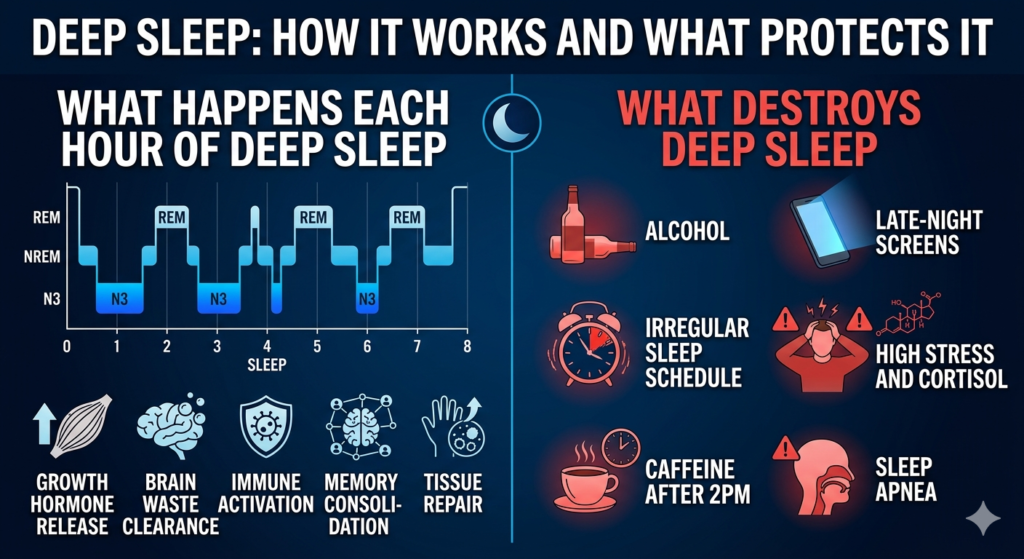
Alcohol is the most commonly misunderstood sleep disruptor in relation to deep sleep. Many people use alcohol to fall asleep more easily, which it does facilitate. However, alcohol dramatically reduces slow wave sleep in the second half of the night, replacing it with lighter, more fragmented sleep. The night after alcohol consumption may total the same number of hours but contains substantially less deep sleep, which explains why drinking often leaves people feeling less restored despite adequate time in bed.
Late-night screen exposure suppresses melatonin production through blue light stimulation of the retina, delaying the circadian signal for sleep onset and reducing the total sleep opportunity available for deep sleep accumulation. Avoiding screens for at least one hour before bed and using the evening hours for lower-stimulation activities makes a meaningful difference in both sleep onset time and deep sleep proportion.
Irregular sleep schedules disrupt the circadian rhythm that regulates the timing and architecture of sleep cycles. The brain organizes sleep architecture based on the circadian clock as well as sleep pressure. When the clock is inconsistent, the precision of sleep stage timing and depth is reduced. Consistent sleep and wake times, even on weekends, are one of the most impactful interventions for deep sleep quality.
Cortisol elevation from chronic stress suppresses slow wave sleep by maintaining a degree of neural arousal that is incompatible with the deep synchronization of delta wave sleep. Managing stress through exercise, mindfulness, adequate rest, and the other strategies discussed in this guide directly supports deeper sleep.
Caffeine consumed after early afternoon, typically after 1 to 2pm for most people, has a half-life long enough that meaningful amounts remain in the body at bedtime and reduce the adenosine-driven sleep pressure that promotes deep sleep. Moving all caffeine consumption to the morning hours makes a noticeable difference in deep sleep quality for many people.
Sleep apnea, a condition where breathing repeatedly pauses during sleep, is one of the most common and most frequently undiagnosed causes of profoundly disrupted deep sleep. Each breathing interruption produces a brief arousal from slow wave sleep, preventing the deep sleep phases from completing and accumulating properly. If you snore heavily, wake feeling unrefreshed despite adequate hours in bed, or are told by a partner that you stop breathing during sleep, getting evaluated for sleep apnea is important.
For comprehensive guidance on addressing sleep disorders and optimizing sleep quality, read our article on insomnia, symptoms, causes, and treatment.
Use Our Free Tools to Optimize Your Sleep
Getting the deep sleep benefits described in this guide requires getting the conditions right. These free tools on Vitality Nexus help you build the foundation.
Find Your Optimal Sleep Schedule The most important factor for maximizing deep sleep is consistency and timing aligned with your natural circadian rhythm. Use our Sleep Calculator to find the precise sleep and wake times that give your brain the best opportunity to complete multiple full sleep cycles with deep slow wave sleep in the first half of the night.
Calculate Your Daily Calorie Needs Nutritional adequacy supports sleep quality through its effects on serotonin production, blood sugar stability, and hormonal function. Use our Calorie Calculator to ensure you are fueling your body appropriately for the recovery your sleep needs to accomplish.
Calculate Your BMR Use our BMR Calculator to understand your resting metabolic needs and how sleep supports the metabolic processes that occur at baseline.
Check Your BMI Use our BMI Calculator to monitor overall health metrics that connect to sleep quality, as excess body weight is associated with sleep-disrupting conditions including sleep apnea that reduce deep sleep.
Track Your Body Composition Use our Body Fat Calculator to track the body composition improvements that follow from better sleep through improved growth hormone, reduced cortisol, and improved metabolic function.
Find Your Ideal Weight Use our Ideal Weight Calculator to set a realistic health goal, with the understanding that adequate deep sleep is one of the most powerful supports for sustainable weight management available.
How to Get More Deep Sleep Starting Tonight
The good news about deep sleep is that the brain is extraordinarily responsive to improvements in sleep conditions. When the factors that reduce deep sleep are addressed, slow wave sleep tends to recover relatively quickly, often within several nights of improved sleep conditions.
The most impactful single change for most people is committing to a consistent wake time and maintaining it seven days per week. This single habit anchors the circadian clock, which orchestrates the precision of sleep stage timing. Keeping your wake time constant even when you go to bed later than intended prevents the circadian drift that progressively worsens sleep architecture.
Creating a bedroom that is genuinely dark, cool, and quiet removes the environmental factors that prevent the deep synchronization of brain activity needed for slow wave sleep. Blackout curtains or a sleep mask address light exposure. A temperature between 16 and 19 degrees Celsius is the range associated with optimal slow wave sleep in research. White noise or ear plugs address acoustic disruptions that trigger brief arousals from deep sleep.
Establishing a wind-down routine for the hour before bed reduces the cortisol and neural arousal that prevent deep sleep onset. This means ending screen use, avoiding stressful conversations or content, engaging in calming activities like reading, stretching, or a warm bath or shower, and signaling to the brain that sleep is approaching rather than continuing daytime wakefulness until the moment your head hits the pillow.
Magnesium glycinate is one of the most evidence-supported nutritional supplements for improving both sleep quality and deep sleep specifically. It supports the GABA activity that promotes the neural inhibition underlying slow wave sleep, reduces cortisol, and reduces the restless legs that fragment sleep in many adults. Read our article on magnesium for sleep for comprehensive guidance on this important sleep-supporting nutrient.
For broader guidance on optimizing your overall health alongside your sleep, explore our health and fitness resources at Vitality Nexus.
FAQ
1. What are the main deep sleep benefits?
The most significant deep sleep benefits include brain glymphatic clearance of metabolic waste including amyloid beta proteins linked to Alzheimer’s disease, growth hormone release for tissue repair and physical recovery, memory consolidation and learning integration, immune system strengthening and calibration, cardiovascular recovery through the nocturnal blood pressure dip, metabolic regulation and insulin sensitivity restoration, emotional processing and stress system recalibration, muscle repair, hormonal balance restoration, cellular anti-aging processes, mental health support, and pain sensitivity reduction.
2. How do I know if I am getting enough deep sleep?
The most reliable indicator is how you feel in the morning. Adequate deep sleep produces a sense of genuine physical restoration, mental clarity, and energy readiness rather than simply the absence of extreme tiredness. If you regularly wake feeling unrefreshed despite seven to nine hours in bed, if you need significant caffeine to function, or if you feel physically heavy and cognitively slow throughout the morning, your deep sleep may be insufficient or fragmented. Sleep tracking devices can give approximate data on sleep stages, though they are not perfectly accurate for deep sleep specifically.
3. What is the difference between deep sleep and REM sleep?
Deep sleep and REM sleep are both important but serve different primary functions. Deep sleep, or slow wave sleep, is concentrated in the first half of the night and is primarily responsible for physical restoration including growth hormone release, brain waste clearance, immune support, and metabolic regulation. REM sleep is concentrated in the second half of the night and is primarily responsible for emotional processing, creative thinking, procedural memory, and the dreaming experience. Both are necessary for complete overnight recovery.
4. Does alcohol affect deep sleep?
Significantly and negatively. Alcohol may initially make falling asleep easier by reducing sleep onset time. However, it suppresses slow wave sleep in the second half of the night, replacing deep sleep with lighter, more fragmented sleep. Even moderate alcohol consumption close to bedtime measurably reduces the proportion of slow wave sleep obtained, which is why people often feel less restored after nights involving alcohol despite similar total sleep hours.
5. How does age affect deep sleep?
Deep sleep declines progressively with age. Healthy young adults spend approximately 13 to 23 percent of their sleep time in slow wave sleep. This proportion decreases with each decade, with many adults over 60 spending less than five to ten percent of sleep time in deep sleep. This age-related decline is associated with the cognitive, metabolic, and physical health changes that accompany aging. Maintaining consistent sleep schedules, good sleep hygiene, regular exercise, and avoiding the major deep sleep disruptors described in this article helps preserve as much deep sleep as possible throughout the aging process.
6. Can you make up lost deep sleep?
The brain does show some capacity for slow wave sleep rebound after sleep deprivation, with a higher proportion of deep sleep occurring in the recovery night. However, complete recovery of all the physiological processes that occur during deep sleep is not fully achieved through a single recovery night, particularly for chronic sleep debt. This is why consistent adequate sleep throughout the week is more beneficial than restricting sleep on weekdays and attempting to recover on weekends.
7. What supplements support deep sleep?
Magnesium glycinate has the strongest evidence for improving sleep quality including slow wave sleep through its effects on GABA signaling and cortisol reduction. L-theanine, found naturally in green tea, promotes the alpha brain wave activity associated with calm, relaxed wakefulness and has shown benefits for sleep quality without sedation. Melatonin supports circadian rhythm alignment and sleep onset timing but does not directly increase slow wave sleep proportion. Ashwagandha reduces cortisol and has shown improvements in sleep quality in randomized controlled trials. These supplements work best as additions to good sleep hygiene practices rather than replacements for them.
Conclusion
Deep sleep benefits are not limited to feeling refreshed in the morning. They reach into every corner of your physical and mental health in ways that compound over years and decades of consistent adequate sleep.
The brain cleaning itself of toxic waste. The body rebuilding and repairing tissues under the influence of growth hormone. The immune system calibrating for optimal protection. The heart and blood vessels recovering. The metabolic system recalibrating for insulin sensitivity. Memories being organized and emotions being processed. Pain systems being recalibrated. Cells being repaired and biological aging being slowed.
All of this happens every night when sleep is deep and adequate. None of it happens optimally when it is not.
Sleep is not something that happens to you passively. It is something you create the conditions for through the choices you make across every hour of the day, from when you expose yourself to morning light, to what you eat and drink, to how you manage stress, to what you do in the hour before bed.
Use our Sleep Calculator to find the sleep timing that works best for your natural circadian biology. Explore our health and fitness resources for more guidance on building the lifestyle that supports deep sleep. And read our article on healthy lifestyle habits for energy, focus, and productivity for the broader lifestyle context in which sleep quality is embedded.
Every night is an opportunity to do something genuinely powerful for your health. You just have to let yourself sleep deeply enough to receive the full benefit.