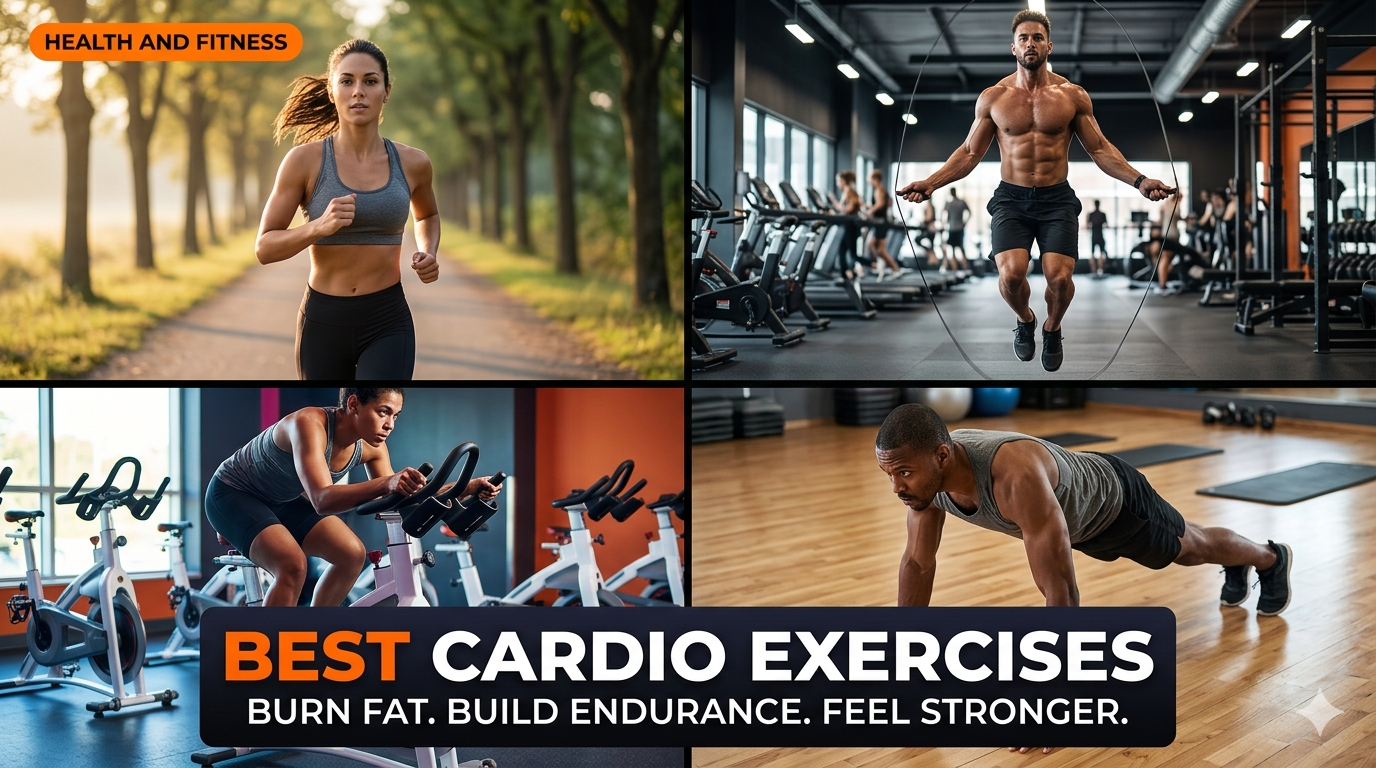
Ask ten different fitness coaches what the best cardio exercise is and you will get ten different answers. Running. Cycling. Swimming. Jump rope. HIIT. Everyone has a favourite, and everyone has a reason.
The honest truth is that there is no single best cardio exercise for every person in every situation. What is best for you depends on your current fitness level, your goals, your joint health, the equipment you have access to, and most importantly, what you will actually do consistently rather than try once and abandon.
What this guide does is give you the 12 best cardio exercises backed by real science, explain exactly what each one is good for, who it suits best, and how to get started. By the end, you will know exactly which options fit your life and how to build them into a routine that actually produces results.
Table of Contents
What Makes a Cardio Exercise Effective?
Before jumping into the list, it helps to understand what we are actually measuring when we call an exercise effective.
A cardio exercise is effective when it raises your heart rate into a range that stresses the cardiovascular system enough to adapt. That adaptation looks like a stronger heart muscle, lower resting heart rate, improved oxygen utilization, better blood pressure control, reduced body fat, and increased stamina.
The intensity zone that produces the most meaningful cardiovascular adaptation for most people is roughly 60 to 85 percent of their maximum heart rate. Below that range, the stimulus is too weak to drive significant improvement. Above it for extended periods, and most people cannot sustain the effort long enough to accumulate a meaningful training dose.
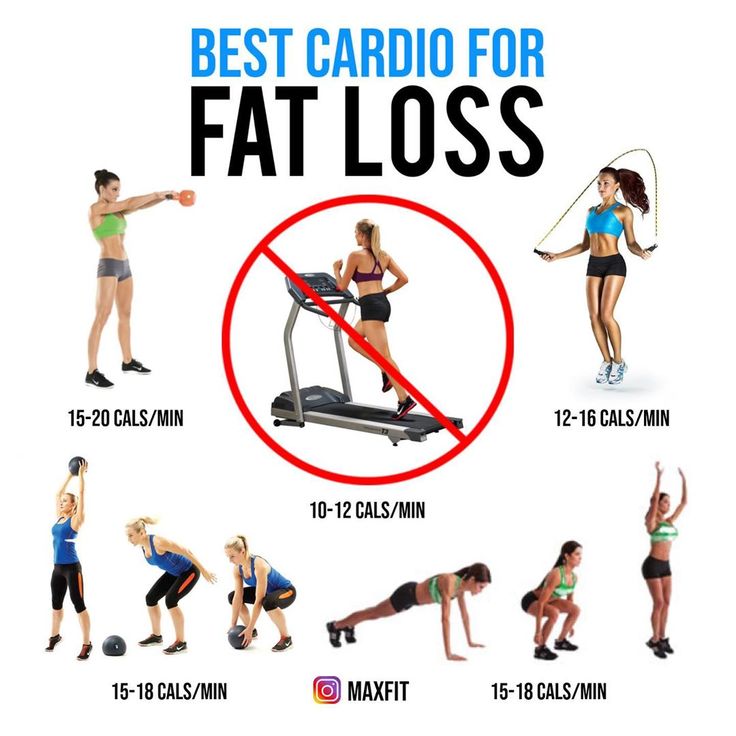
Calories burned also matter, particularly for fat loss goals. The best cardio exercises for calorie burn are generally those that engage the largest muscle groups simultaneously and can be sustained at moderate to high intensity.
But beyond physiology, the most effective cardio exercise is ultimately the one you will do consistently over weeks and months. Research from the American College of Sports Medicine consistently shows that adherence, doing the exercise regularly over time, is a stronger predictor of fitness outcomes than any specific exercise modality.
With that said, let us look at the options.
1. Running
Running is the most natural form of human cardio and remains one of the most effective at improving cardiovascular fitness and burning calories.
It requires no equipment beyond a pair of decent running shoes, can be done almost anywhere, and scales from a gentle jog to elite marathon training depending on the individual. The entry barrier is low and the ceiling is essentially unlimited.
From a calorie burn perspective, running is one of the most efficient exercises available. A 70-kilogram person running at a moderate pace burns approximately 600 to 800 calories per hour. Faster running burns proportionally more.
Research published in the Journal of the American College of Cardiology found that even five to ten minutes of slow running per day was associated with a 45 percent reduction in cardiovascular mortality risk compared to non-runners. You do not need to run fast or far to get meaningful heart health benefits from running.
Running is also one of the most well-studied exercises for mental health. It reliably reduces anxiety, improves depression symptoms, and produces a significant mood lift that can last for hours after the session.
The main downside of running is its impact on the joints. Repeated high-impact landings accumulate stress on the knees, hips, and ankles over time. For people with existing joint issues, starting with walking and building gradually toward running is far safer than jumping into regular running too quickly.
For beginners, a run-walk interval approach works well. Alternate between one minute of jogging and two minutes of walking for 20 to 30 minutes, gradually shifting the ratio toward more running as fitness improves.
2. Jump Rope
Jump rope is one of the most underrated and underused forms of cardio available. It is inexpensive, portable, requires only a small amount of floor space, and burns an extraordinary number of calories in a short time.
Jumping rope at a moderate pace burns approximately 700 to 1,000 calories per hour, making it one of the most calorie-dense cardio options on this entire list. Even 10 to 15 minutes of continuous jump rope constitutes a genuinely hard cardiovascular workout for most people.
Beyond calorie burn, jump rope improves coordination, agility, timing, and foot speed in ways that most other cardio exercises do not. It is a staple training tool for boxers, basketball players, and martial artists precisely because of these neuromuscular benefits.
It is also a full-body exercise. The calves, quads, core, shoulders, and forearms all work continuously throughout a jump rope session.
The main challenge for beginners is the learning curve. Most adults have not jumped rope since childhood and will initially trip frequently while getting the timing right. This is completely normal and improves quickly with practice. Start with sets of 30 to 60 seconds with rest periods in between rather than trying to maintain continuous jumping from the start.
One important caution: jump rope is high impact. People with knee, ankle, or hip issues should approach it carefully or choose a lower-impact alternative.
3. Cycling
Cycling, whether outdoors on a road bike or indoors on a stationary or spin bike, is one of the best cardio exercises for people who want high cardiovascular output with significantly reduced joint stress compared to running.
Because your body weight is supported by the saddle during cycling, the knees, hips, and ankles experience far less impact than they do during running or jumping. This makes cycling accessible to a much broader population, including those with joint sensitivity, older adults, and people who are significantly overweight.
Calorie burn on a bike is meaningful, ranging from 400 to 700 calories per hour at moderate effort and exceeding that significantly at high intensity. Indoor spin classes and interval cycling sessions can push calorie burn very high while providing an intense cardiovascular stimulus in a relatively short session.
Outdoor cycling adds the dimensions of fresh air, varied terrain, and practical transportation, making it easier to incorporate into daily life as active commuting rather than dedicating separate time to exercise.
Stationary cycling at home is also one of the most consistent cardio options available because it removes weather, traffic, and safety concerns entirely.
4. Swimming
Swimming is arguably the most joint-friendly cardiovascular exercise that exists. The buoyancy of water supports up to 90 percent of body weight, which means the joints experience a fraction of the load they absorb during land-based exercise. At the same time, water provides resistance in every direction, making swimming a comprehensive cardiovascular and muscular workout.
Swimming laps engages virtually every major muscle group simultaneously. The arms, shoulders, back, core, and legs all work continuously. This full-body engagement is one reason why competitive swimmers tend to develop exceptionally comprehensive physiques.
From a cardiovascular perspective, swimming is highly effective at improving heart and lung capacity, reducing blood pressure, and increasing overall aerobic fitness. Research consistently shows swimming to be among the most effective exercises for improving cardiovascular health across all age groups.
Swimming is particularly valuable for people who cannot tolerate weight-bearing exercise due to arthritis, joint injury, pregnancy, or obesity. For them, it may be the only form of vigorous cardio that is both comfortable and sustainable.
The main barrier is access to a pool. For those without easy pool access, water aerobics classes at a public pool offer similar joint-friendly benefits in a more structured and social format.
5. High Intensity Interval Training
High Intensity Interval Training, widely known as HIIT, has become one of the most popular and most researched forms of cardio exercise over the past two decades. Its popularity is well-deserved, but so is the nuance around who it is appropriate for.
HIIT involves alternating between short periods of maximum or near-maximum effort and brief recovery periods. A classic protocol might involve 20 seconds of all-out sprinting followed by 40 seconds of walking, repeated for 15 to 20 minutes.
The appeal of HIIT is its efficiency. Research published in the Journal of Obesity found that HIIT produced superior improvements in cardiovascular fitness and body composition compared to moderate-intensity continuous exercise in significantly less time. HIIT also produces a substantial afterburn effect, known as excess post-exercise oxygen consumption, which means your body continues burning elevated calories for hours after the session ends.
For fat loss, cardiovascular improvement, and time efficiency, HIIT is one of the most effective options available. A 20-minute HIIT session can produce cardiovascular and metabolic benefits equivalent to or greater than a 40 to 60 minute moderate-intensity cardio session.
The downsides are real though. HIIT is genuinely hard and requires a reasonable fitness base before it can be performed safely and effectively. For complete beginners, starting with moderate-intensity exercise and building a foundation over several weeks before introducing HIIT is the right approach. HIIT also places significant stress on joints and the nervous system, meaning it should not be performed every day. Two to three HIIT sessions per week with adequate recovery between them is the evidence-based recommendation.
6. Rowing
Rowing, whether on a rowing machine or on water, is one of the most complete cardiovascular exercises available. Unlike most cardio exercises that are primarily lower-body driven, rowing engages both the upper and lower body simultaneously, with approximately 65 percent lower body and 35 percent upper body contribution.
This full-body engagement means rowing burns a substantial number of calories, typically 500 to 800 per hour at moderate effort, while also developing upper body endurance and back strength that most other cardio exercises completely neglect.
Rowing is also low-impact. The motion is smooth and controlled without the jarring of running or jumping, making it suitable for people with knee issues who want a vigorous workout.
The main challenge with rowing is technique. Poor rowing form, particularly a rounded lower back at the catch position, can strain the lumbar spine. Learning proper technique from an instructor or good instructional video before your first intensive rowing session is genuinely worthwhile.
Rowing machines are a staple of commercial gyms and are increasingly popular for home use. Even 20 minutes of rowing at moderate effort constitutes a thorough full-body cardiovascular workout.
7. Jumping Jacks
Jumping jacks are one of those exercises that people dismiss as too basic to be effective. They are wrong.
Jumping jacks are a full-body, high-heart-rate exercise that requires zero equipment, can be performed in a tiny space, and is accessible to almost any fitness level. They raise the heart rate quickly, involve the arms and legs simultaneously, and provide a meaningful cardiovascular stimulus when performed continuously for extended periods.
As a standalone cardio workout, three sets of 60 seconds of jumping jacks with 30 seconds rest between sets provides a genuine heart rate elevation. As part of a circuit combined with other exercises, they serve as an excellent active rest movement that maintains cardiovascular intensity between strength-focused exercises.
For people who need a low-cost, no-equipment cardio option that can be done entirely at home, jumping jacks combined with other bodyweight movements form the foundation of an effective cardio routine.
For a complete guide to building effective home-based cardio and strength routines, read our article on best home workouts for beginners.
8. Burpees
Burpees are one of the most demanding exercises on this list and one of the most effective. They combine a squat, a push-up, and a jump into a single fluid movement that challenges virtually every muscle in the body while simultaneously providing an intense cardiovascular stimulus.
The calorie burn from burpees is impressive. Performed continuously, burpees can burn 10 to 14 calories per minute, making them among the highest calorie-per-minute exercises available without equipment.
Beyond calorie burn, burpees improve functional strength, explosive power, coordination, and cardiovascular endurance simultaneously. There are very few exercises that deliver this breadth of adaptation in a single movement.
They are not for complete beginners. A reasonable level of baseline fitness, including the ability to perform push-ups and jump without joint pain, is necessary before burpees are appropriate. For those who are ready, incorporating sets of 10 to 15 burpees into a cardio circuit is one of the fastest ways to elevate the intensity and effectiveness of a home workout.
9. Stair Climbing
Stair climbing is one of the most effective and most overlooked forms of cardio available to almost everyone. Whether you use a stair climber machine at the gym, climb actual stairs in your building or home, or find a public staircase or stadium for an outdoor workout, the cardiovascular and muscular benefits are substantial.
Stair climbing engages the glutes, hamstrings, quads, and calves under repeated resistance of body weight against gravity. This makes it more muscularly demanding than flat-surface walking or jogging and produces a stronger cardiovascular response per unit of time.
Research published in the British Journal of Sports Medicine found that stair climbing for just 20 minutes per day was associated with significant improvements in cardiovascular fitness and lower body strength in previously sedentary adults.
Calorie burn is also meaningful. Stair climbing burns approximately 500 to 700 calories per hour, significantly more than flat walking at the same pace.
For people who want to improve their cardiovascular fitness using a simple, no-equipment option, committing to taking the stairs exclusively rather than elevators throughout the day is a surprisingly powerful accumulative strategy.
10. Walking
Walking consistently earns its place on every best cardio exercises list not because it is the most intense option but because of its extraordinary combination of accessibility, safety, health impact, and sustainability.
For cardiovascular health specifically, the research behind walking is among the most compelling of any exercise. A landmark study following over 70,000 women found that walking at least 30 minutes per day was associated with a 35 percent reduction in cardiovascular disease risk. Another large study found that walking 8,000 to 10,000 steps per day was associated with significantly lower all-cause mortality.
Walking is the exercise almost anyone can do regardless of current fitness level, joint health, age, or access to equipment. It requires only supportive footwear and a willingness to move. And done consistently, at a brisk pace that elevates the heart rate noticeably, it produces genuine and lasting improvements in cardiovascular health.
For people who are currently sedentary, starting with daily walking before any other form of cardio is not a compromise. It is the scientifically appropriate starting point for building cardiovascular fitness safely.
For guidance on timing and optimizing your walking habits, read our article on morning vs night walks for weight loss and overall wellness.
11. Dancing
Dancing might be the most enjoyable form of cardio on this list. It raises the heart rate, burns meaningful calories, improves coordination and balance, and provides a social and emotional dimension that most other forms of exercise simply do not offer.
Depending on the style and intensity, dancing burns between 300 and 600 calories per hour. More energetic styles like Zumba, hip hop dance fitness, or salsa can push that significantly higher.
Research has also shown that dancing provides cognitive benefits beyond those of most other exercise forms, because it combines physical movement with music, rhythm, and the memorization of sequences. For older adults specifically, regular dancing is associated with reduced dementia risk and improved balance, both of which are significant public health outcomes.
The barrier to entry is essentially zero. You can dance in your living room to music you already love, join a dance fitness class for a social workout experience, or take up a specific style of partner or solo dance. Any of these options provides genuine cardiovascular benefit alongside the enjoyment that makes long-term consistency far more likely.
12. Elliptical Training
The elliptical machine provides a cardiovascular workout that mimics the motion of running without the impact. Because your feet never leave the pedals, there is no ground reaction force transmitted through the joints, making it one of the most joint-friendly cardio options available in a gym setting.
For people who want the cardiovascular and calorie-burning benefits of running without the joint stress, the elliptical is an excellent substitute. It engages both the upper and lower body when the handles are used actively and can be adjusted for resistance and incline to vary the challenge significantly.
Calorie burn on the elliptical is comparable to moderate running, typically 450 to 600 calories per hour depending on effort level. Many people find they can sustain longer sessions on the elliptical than on the treadmill because the lower perceived exertion from the reduced impact makes the effort feel more manageable.
The elliptical is particularly valuable for people returning from injury, those with chronic knee or hip pain, older adults who want vigorous cardio without joint stress, and anyone who finds running uncomfortable but wants its cardiovascular equivalent.
Best Cardio Exercises Comparison Table
| Exercise | Calories Per Hour | Impact Level | Equipment Needed | Best For |
|---|---|---|---|---|
| Running | 600 to 800 | High | Running shoes | Fitness, fat loss, mental health |
| Jump Rope | 700 to 1,000 | High | Jump rope | Calorie burn, coordination |
| Cycling | 400 to 700 | Low | Bike or stationary bike | Endurance, joint-friendly cardio |
| Swimming | 400 to 600 | Very Low | Pool access | Full body, joint issues |
| HIIT | 500 to 900 | Variable | None required | Time efficiency, fat loss |
| Rowing | 500 to 800 | Low | Rowing machine | Full body, back strength |
| Jumping Jacks | 300 to 500 | Moderate | None | Home cardio, warm-up |
| Burpees | 600 to 850 | High | None | Full body conditioning |
| Stair Climbing | 500 to 700 | Moderate | Stairs | Leg strength, cardio |
| Walking | 200 to 400 | Very Low | Supportive shoes | Beginners, daily activity |
| Dancing | 300 to 600 | Low to Moderate | None | Fun, consistency, cognitive health |
| Elliptical | 450 to 600 | Very Low | Elliptical machine | Joint-friendly running alternative |
Use Our Free Tools to Maximize Your Cardio Results
Knowing which exercises to do is only half the picture. Understanding your body’s numbers ensures your cardio routine is actually moving you toward your specific goal.
Calculate Your TDEE Your Total Daily Energy Expenditure tells you how many calories your body burns each day. This is the number your cardio is helping to exceed for fat loss, or that you need to eat above for muscle building. Use our TDEE Calculator to find your personal number.
Set Your Daily Calorie Target Use our Calorie Calculator to find the daily intake that supports your specific goal alongside your cardio routine, whether that is fat loss, maintenance, or fueling harder training.
Check Your BMI Use our BMI Calculator to track how your body composition changes as your cardio routine takes hold over weeks and months.
Calculate Your Body Fat Percentage The scale does not tell you whether you are losing fat or muscle. Use our Body Fat Calculator to track the metric that actually reflects the quality of your progress.
Find Your Ideal Weight Use our Ideal Weight Calculator to set a realistic and healthy target weight for your height, age, and body type.
Calculate Your BMR Your Basal Metabolic Rate tells you how many calories your body burns at complete rest. Use our BMR Calculator to understand your baseline energy needs before layering your cardio on top.
Optimize Your Sleep Recovery is where fitness gains are actually made. Use our Sleep Calculator to protect the overnight recovery your cardiovascular system needs to adapt and improve from your training sessions.
How to Build Your Weekly Cardio Routine
Having a list of great exercises is only useful if you know how to structure them into a plan you can actually follow.
For general cardiovascular health and fat loss, most major health organizations including the World Health Organization recommend at least 150 minutes of moderate-intensity cardio or 75 minutes of vigorous cardio per week for adults. That breaks down to roughly 30 minutes of moderate cardio on five days per week.
For beginners, a simple and effective starting structure looks like this.
Three days of moderate cardio, such as 30 minutes of brisk walking, easy cycling, or swimming, spread evenly across the week with rest days between them. This is sufficient to begin improving cardiovascular fitness and building the habit without overloading a body that is not yet conditioned.
After four to six weeks, introduce one HIIT session per week in place of one of the moderate sessions. As fitness improves further, you can add a fourth cardio day or increase the duration of existing sessions.
The most important principle is progressive overload. Gradually increasing the challenge over time, whether through longer sessions, higher intensity, shorter rest periods, or more sessions per week, is what drives continued cardiovascular improvement.
For context on how heart health connects to your overall fitness journey, read our article on signs your heart is out of shape to understand exactly what cardiovascular deconditioning looks like and how quickly it responds to consistent training.
Also explore our article on heart health explained and how to protect your heart for the complete picture of what your cardio routine is actually doing for your cardiovascular system over time.
Common Cardio Mistakes That Slow Your Progress
Even motivated people with good intentions make these errors regularly. Knowing them saves weeks of frustration.
Doing only one type of cardio forever. Your body adapts to the specific stress you place on it. Doing the same run at the same pace every day for months produces diminishing cardiovascular improvement after the initial adaptation. Varying your cardio, mixing moderate steady-state sessions with interval training and different modalities, keeps driving adaptation.
Ignoring strength training. Cardio alone without any resistance training leads to muscle loss over time, which reduces your resting metabolic rate and makes fat loss progressively harder. Combining cardio with two to three strength sessions per week produces significantly better body composition outcomes than cardio alone. Read our article on best home workouts for beginners for a practical bodyweight strength program to pair with your cardio.
Undereating relative to training volume. Cardio increases your caloric needs. Consistently eating significantly less than you burn leads to muscle loss, hormonal disruption, fatigue, and eventually metabolic adaptation that makes fat loss stall. Eating adequately while maintaining a modest caloric deficit is the right approach.
Neglecting recovery. More cardio is not always better. Overtraining without adequate rest increases injury risk, elevates cortisol chronically, disrupts sleep, and paradoxically impairs fat loss. Rest days are part of the program.
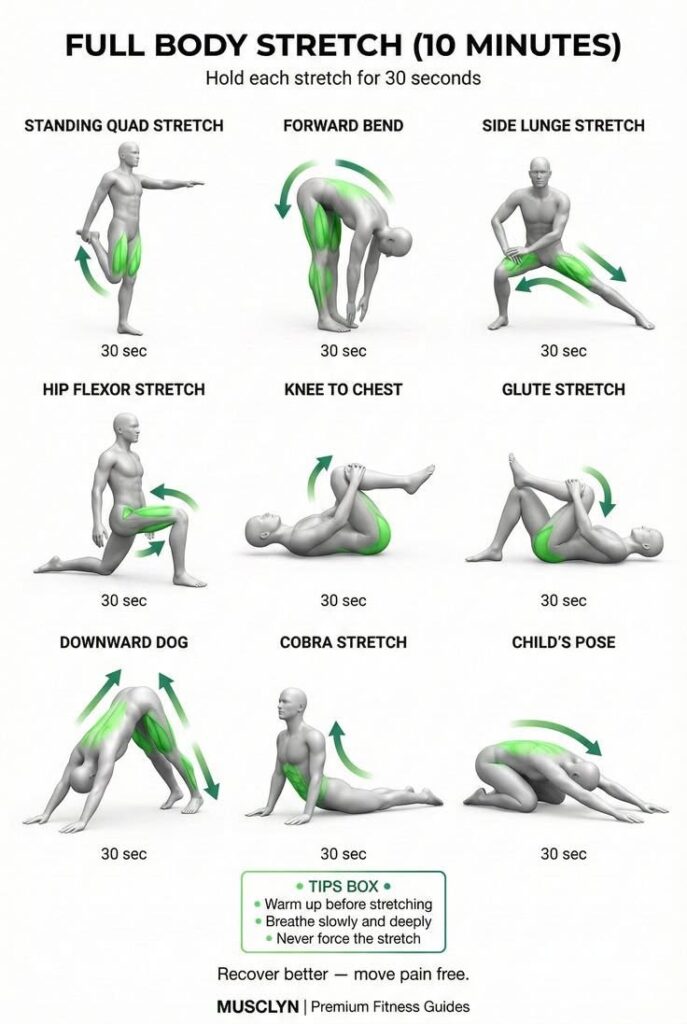
Skipping warm-up and cool-down. Five minutes of progressive warm-up before cardio reduces injury risk and improves performance. Five minutes of gentle movement and stretching afterward supports recovery. Neither is optional.
For a comprehensive approach to supporting your cardiovascular health through nutrition and supplementation alongside exercise, read our articles on omega-3 fatty acids benefits and food sources and healthy heart recipes.
FAQ
1. What are the best cardio exercises for weight loss?
The most effective cardio exercises for weight loss are those that burn the most calories per session and can be sustained consistently. HIIT, running, jump rope, and burpees offer the highest calorie burn per minute. Walking, cycling, and swimming offer lower intensity but exceptional sustainability and joint-friendliness. The best choice for weight loss is the one you will do consistently combined with appropriate nutrition. No cardio exercise produces weight loss without a caloric deficit.
2. Which cardio exercise burns the most calories?
Jump rope and HIIT consistently rank at the top for calories burned per minute, with jump rope burning up to 1,000 calories per hour at moderate intensity. Burpees, running, and rowing also rank very high. However, total calories burned in a session also depends on how long you can sustain the exercise, which is why lower-intensity options like cycling or swimming can produce comparable total calorie burns over longer sessions.
3. How often should I do cardio each week?
Most health guidelines recommend at least 150 minutes of moderate-intensity cardio or 75 minutes of vigorous cardio per week. For beginners, three sessions per week of 20 to 30 minutes each is a sustainable starting point. More advanced exercisers can train five or more days per week by varying intensity and incorporating adequate recovery.
4. Can I do cardio every day?
Yes, with important caveats about intensity and type. Low-intensity cardio like walking can be performed daily without significant recovery concern for most people. Higher-intensity cardio including HIIT, running, and burpee circuits should not be performed at high intensity every day. Two to three high-intensity sessions per week with moderate or low-intensity sessions in between gives your body adequate recovery to adapt and improve.
5. Is cardio necessary for fat loss?
Cardio is not strictly necessary for fat loss, which is fundamentally driven by caloric deficit. You can lose fat through diet alone without any exercise. However, cardio is one of the most effective tools for creating and maintaining a caloric deficit while preserving muscle mass, improving cardiovascular health, and supporting the hormonal environment that favors fat burning. Combined with resistance training and appropriate nutrition, cardio accelerates fat loss significantly.
6. What is the best cardio exercise for beginners?
Walking is the safest, most accessible, and most evidence-backed starting point for complete beginners. It requires no equipment, no fitness base, and no technique learning curve, yet it produces genuine cardiovascular improvements when done consistently at a brisk pace. After four to six weeks of regular walking, beginners can comfortably introduce cycling, swimming, or easy jogging intervals.
7. Should I do cardio before or after weights?
If your primary goal is fat loss or cardiovascular fitness, doing cardio before weights is a reasonable choice. If your primary goal is building strength and muscle, do weights first while your energy and neuromuscular capacity are fresh, and cardio after. For most recreational exercisers with mixed goals, the order matters less than completing both consistently. Some separation between the two sessions, even by a few hours, minimizes any interference effect between the two types of training.
Conclusion
The 12 best cardio exercises covered in this guide give you a complete toolkit for improving your cardiovascular health, burning fat, and building lasting fitness at any level.
You do not need all twelve. You need two or three that suit your goals, your body, and your lifestyle, done consistently over months and years with progressive challenge built in.
If you are completely new to exercise, start with walking. If you want maximum efficiency, add HIIT. If your joints need protecting, swimming or cycling give you everything running does with a fraction of the impact. If you want to actually enjoy it, dancing is a legitimate and research-supported cardiovascular workout.
Use the free tools at Vitality Nexus to understand your calorie needs, track your body composition, and keep your nutrition aligned with your training. Explore our full health and fitness resources for more evidence-based guidance. And visit our heart health section to understand exactly what consistent cardio training does for your most important muscle of all.
Pick your exercise. Start this week. The rest follows from there.