Tiredness that does not go away no matter how much you sleep. Breathlessness climbing a flight of stairs that never used to bother you. A strange craving for ice. Hair that keeps coming out in the brush long after you think it should stop.
Most women who experience these things put them down to stress, being too busy, not getting enough sleep, or simply getting older. Some mention them to a doctor and are told their results are normal. Others carry on for months or even years without knowing that a quiet, correctable deficiency is quietly undermining their energy, their cognitive function, their immunity, and their quality of life.
Iron deficiency is the most common nutritional deficiency in women worldwide. It affects women at significantly higher rates than men due to monthly blood loss through menstruation, increased demands during pregnancy, and the frequent pattern of eating less overall than men while having similar or greater iron requirements in reproductive years.
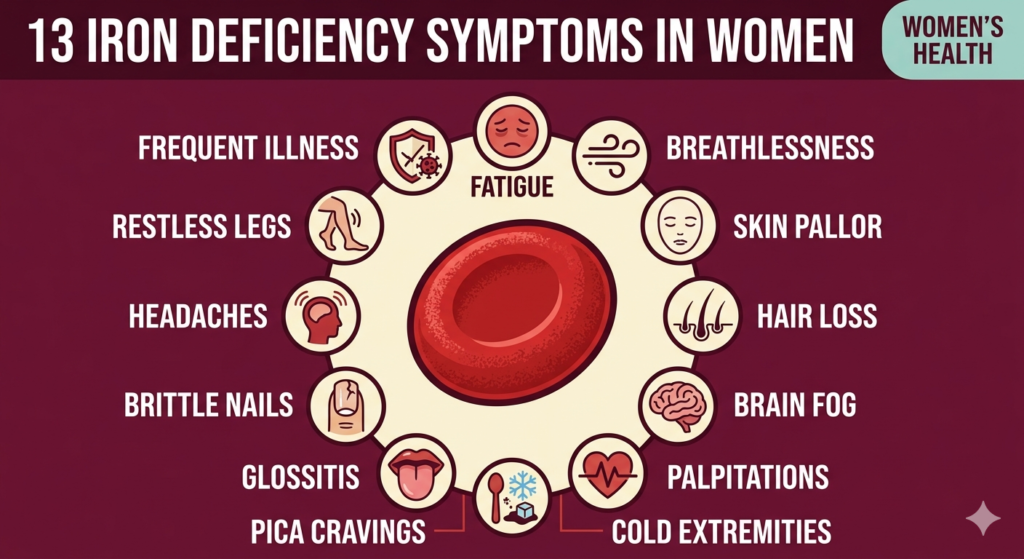
Understanding the iron deficiency symptoms in women specific to this deficiency is the first step toward getting the right test, the right diagnosis, and the right treatment. This guide covers all thirteen of the most important symptoms, explains exactly why each one happens, and tells you what to do next.
Table of Contents
Why Women Are More Vulnerable to Iron Deficiency
Iron deficiency does not affect all people equally. Women of reproductive age are disproportionately affected, and understanding why makes it easier to recognize the risk and take the right preventative and corrective action.
Menstruation is the primary reason. Every menstrual cycle involves blood loss, and blood carries iron in the form of hemoglobin within red blood cells. The average menstrual blood loss is approximately 30 to 40 milliliters per cycle, which translates to approximately 15 to 20 milligrams of iron lost. Women with heavy menstrual bleeding, a condition known as menorrhagia, can lose significantly more, sometimes depleting iron stores faster than dietary intake can replace them.
Pregnancy dramatically increases iron requirements. The growing fetus, placenta, and expanded maternal blood volume all require significant iron, increasing daily requirements from approximately 18 milligrams per day to 27 milligrams per day during pregnancy. Women who enter pregnancy with already-borderline iron stores frequently develop deficiency during the second and third trimesters.
Dietary patterns contribute as well. Women on average consume fewer total calories than men, which reduces total iron intake even when the diet quality is good. Women who follow plant-based diets face an additional challenge because plant-based iron, known as non-heme iron, is significantly less bioavailable than the heme iron from meat and fish.
According to research published by the World Health Organization, iron deficiency anemia affects approximately 30 percent of women of reproductive age globally, making it the most prevalent nutritional deficiency among women worldwide. Many more women have iron deficiency without yet reaching the threshold of anemia, experiencing symptoms well before their hemoglobin falls enough to show as abnormal on standard testing.
The Difference Between Iron Deficiency and Iron Deficiency Anemia
This distinction is one of the most important things to understand about iron deficiency symptoms in women, and it is one that leads to significant numbers of women being missed by standard medical testing.
Iron deficiency exists on a spectrum. In the early stages, the body’s iron stores, measured by ferritin, begin to deplete. The body prioritizes using iron for red blood cell production over other functions, so hemoglobin stays within normal range while other iron-dependent processes in the body begin to suffer.
At this stage, a woman can have a ferritin level of 12 micrograms per liter or below and experience significant fatigue, brain fog, hair loss, and reduced immune function despite a completely normal hemoglobin result. If her doctor only runs a standard complete blood count without measuring ferritin separately, the result will come back normal and her symptoms will go unexplained.
Iron deficiency anemia develops later, when iron depletion is severe enough that hemoglobin production itself is compromised and hemoglobin falls below the normal range. At this stage, more symptoms are present, they are typically more severe, and they are easier to detect through standard testing.
The practical implication is clear. If you have symptoms consistent with iron deficiency, asking your doctor to test ferritin specifically alongside a standard blood count gives a much more complete picture of your iron status. Many specialists now consider ferritin below 30 micrograms per liter as clinically low enough to produce symptoms and warrant treatment, even when hemoglobin remains normal.
1. Persistent Fatigue That Sleep Does Not Fix
Fatigue is the most common and most consistently reported of all iron deficiency symptoms in women, and it is distinctive in a way that differentiates it from ordinary tiredness.
The fatigue of iron deficiency is not resolved by sleep. You can sleep eight hours and wake up feeling as depleted as when you went to bed. It is a deep, cellular exhaustion that comes from inadequate oxygen delivery to the body’s tissues rather than from lack of rest.
Iron is a core component of hemoglobin, the protein in red blood cells responsible for carrying oxygen from the lungs to every cell in the body. When iron is insufficient, hemoglobin production decreases, the oxygen-carrying capacity of the blood falls, and tissues throughout the body operate in a state of relative oxygen deficit. The result is the kind of heavy, persistent fatigue that feels disproportionate to your actual activity level.
This fatigue is often accompanied by a general sense of weakness and reduced physical capability. Tasks that previously felt effortless, walking up a hill, carrying groceries, playing with children, begin to require noticeably more effort.
The challenge is that fatigue is such a common complaint with so many potential causes that it is frequently investigated insufficiently. Thyroid function, sleep quality, and mood disorders are typically checked first. Iron, and specifically ferritin rather than just hemoglobin, is sometimes not included in the initial panel. If your fatigue is persistent and other causes have not been identified, specifically requesting a ferritin test is worthwhile and important.
2. Shortness of Breath During Normal Activity
Breathlessness that appears during activities that should not cause it is one of the more physically alarming iron deficiency symptoms in women, and it has a straightforward physiological explanation.
When the blood’s oxygen-carrying capacity is reduced due to insufficient iron and hemoglobin, the body compensates by breathing faster and more deeply to increase the amount of oxygen entering the bloodstream per breath. At rest, this compensation is often sufficient to maintain acceptable oxygen levels without producing obvious breathlessness. During even moderate physical activity, when oxygen demand increases, the compensation becomes insufficient and breathlessness becomes apparent.
Women with iron deficiency frequently notice this as a new or worsening breathlessness when climbing stairs, walking at a brisk pace, carrying anything heavy, or during mild exercise that previously felt comfortable and manageable. Sometimes it appears even during light household tasks.
This symptom should always be discussed with a doctor when it is new, worsening, or accompanied by chest pain or palpitations, because breathlessness can also indicate cardiac or pulmonary conditions that require prompt evaluation. In many cases, particularly when combined with the other symptoms on this list, iron deficiency is the explanation. But the symptom deserves proper investigation rather than assumption.
3. Pale or Sallow Skin
Skin pallor is one of the visible signs that doctors look for when examining patients for iron deficiency and anemia. The rosy, pink tone of healthy skin comes partly from the hemoglobin in the red blood cells flowing through capillaries near the skin surface. When hemoglobin is reduced, this color contribution diminishes and skin can appear pale, waxy, or with a yellowish or sallow tint.
The pallor is most visible in areas where skin is thin and blood vessels are closest to the surface. The inner surface of the lower eyelid, which should appear pink to red in healthy individuals, appears pale or light pink in iron deficiency. The gums, which should be pink, appear lighter. The nail beds, which show pink when pressed and released quickly in a healthy individual, show slower return to color in iron deficiency.
This symptom is easier to observe in women with lighter skin tones but can be present across all skin tones through the observable signs in the eyelids, gums, and nail beds described above.
Pallor alone is not specific to iron deficiency and can reflect other nutritional deficiencies, blood disorders, or other health conditions. It is most meaningful as a diagnostic sign when combined with several other symptoms from this list.
4. Brain Fog and Difficulty Concentrating
Brain fog is a term that describes a cluster of cognitive symptoms including difficulty concentrating, slow thinking, forgetfulness, mental haziness, and the feeling that processing information requires more effort than usual. It is one of the iron deficiency symptoms in women that is most disruptive to daily functioning yet least often connected to iron status.
The brain is one of the most metabolically active organs in the body and requires a continuous and substantial supply of oxygen to function optimally. Iron is also directly involved in the synthesis of dopamine, serotonin, and norepinephrine, the neurotransmitters that regulate attention, motivation, mood, and cognitive function. When iron is deficient, both the oxygen supply and the neurotransmitter substrate that the brain depends on are compromised simultaneously.
Research has shown that iron deficiency without anemia, where ferritin is low but hemoglobin is still normal, produces measurable reductions in cognitive performance, attention, and processing speed in women of reproductive age. These effects are reversible with iron supplementation, with measurable cognitive improvements occurring within weeks of treatment in research studies.
Women who notice a significant decline in their ability to concentrate, remember things, think clearly, or maintain mental energy throughout the day that is not explained by sleep deprivation or stress alone should consider iron deficiency as a possible contributor, particularly if other symptoms on this list are also present.
5. Hair Loss or Increased Hair Shedding
Increased hair shedding is one of the most distressing iron deficiency symptoms in women and one of the most commonly overlooked because hair loss has multiple possible causes and iron is not always the first that is investigated.
Iron is essential for the proper functioning of hair follicle cells, which are among the most rapidly dividing cells in the body and therefore among the most sensitive to nutrient deficiency. When iron stores fall, the body prioritizes allocating available iron to more immediately critical functions including red blood cell production and organ function. Hair follicles, being functionally non-essential for survival, are among the first to receive reduced resources.
The result is a type of hair loss called telogen effluvium, where a higher proportion of hair follicles prematurely enter the resting and shedding phase of the hair growth cycle. Women experience this as increased shedding in the shower, on their pillow, and when brushing hair. The overall hair volume gradually reduces, and the scalp may become more visible through the hair over time.
Research has found a consistent association between low ferritin and telogen effluvium in women, and multiple studies have shown that iron supplementation to restore ferritin to optimal levels significantly reduces hair shedding and supports hair regrowth over a period of three to six months of treatment.
The timeline of hair regrowth after iron treatment is important to understand. Hair growth occurs slowly, and the response to iron supplementation is not immediate. Women who begin treatment should expect gradual reduction in shedding over several months rather than rapid regrowth. Patience alongside consistent treatment is required.
For women managing hair health alongside broader hormonal wellness, read our article on how hormones affect women’s skin which also addresses hormonal influences on hair quality.
6. Heart Palpitations
Heart palpitations, the awareness of your heartbeat as unusually rapid, fluttering, or pounding, are one of the iron deficiency symptoms in women that most reliably prompts a medical evaluation, yet the iron connection is often not the first thing investigated.
The mechanism is the same cardiovascular compensation described in the breathlessness section. When the blood’s oxygen-carrying capacity is reduced, the heart compensates by beating faster to circulate blood more quickly and deliver more oxygen to tissues per unit time. This increased cardiac output is often perceived as palpitations, particularly during physical activity or when moving from sitting to standing.
In moderate to severe iron deficiency, palpitations can occur at rest as well as during activity, particularly at night when lying still allows greater awareness of heartbeat patterns.
Palpitations should always be evaluated medically when they are new or concerning, because arrhythmias and other cardiac conditions also produce this symptom and require different management. In many cases, when iron deficiency is confirmed and treated, palpitations resolve completely. This is an important diagnostic and therapeutic response to observe.
Women who experience palpitations should tell their doctor when the symptom occurs, how long it lasts, whether it is associated with activity, and whether other iron deficiency symptoms are present. This clinical picture helps distinguish iron-related palpitations from those requiring cardiac investigation.
7. Cold Hands and Feet
Feeling cold in the extremities, particularly the hands and feet, when others around you are comfortable is one of the more subtle but consistent iron deficiency symptoms in women.
Two mechanisms contribute to this symptom. First, reduced hemoglobin and oxygen delivery means the peripheral circulation, which is the first to be reduced when the body needs to prioritize oxygen delivery to vital organs, receives less blood flow. The hands and feet, being the most distal parts of the circulation, experience this reduction most noticeably as persistent coldness.
Second, iron is involved in thyroid hormone metabolism, specifically in the enzymatic processes that convert inactive T4 thyroid hormone to the active T3 form. Iron deficiency can therefore impair thyroid function indirectly, contributing to the cold intolerance that is a classic symptom of hypothyroidism. When iron deficiency and thyroid dysfunction coexist, cold sensitivity can be particularly pronounced.
Women who have always felt the cold more than those around them may simply have this as a constitutional tendency. However, women who notice a new or worsening intolerance to cold, particularly alongside other symptoms from this list, should consider iron testing as part of their evaluation.
Cold hands and feet are one of the iron deficiency symptoms that most commonly leads women to thyroid testing without the thyroid being the primary issue. If thyroid results are normal in a woman with cold intolerance and other relevant symptoms, ferritin testing is a logical next step.
8. Brittle or Spoon-Shaped Nails
Nail changes are among the physical signs of iron deficiency that are visible to both the woman experiencing them and the clinician examining her, making them useful diagnostic clues alongside the symptom history.
In iron deficiency, nails often become brittle, thin, and prone to breaking. They may lose their normal sheen and develop ridges or a dull appearance. In more severe or longstanding cases, a distinctive change called koilonychia can develop, where the nails become thin and concave, curving upward at the edges to create a spoon-like shape when viewed from the side.
Koilonychia is a relatively specific sign that points strongly toward iron deficiency when present. Brittle nails alone have more causes including dehydration, harsh chemical exposure, thyroid dysfunction, and other nutritional deficiencies.
If you notice that your nails are breaking more than usual, appear thinner or duller than they previously did, or have developed an unusual curved shape, this is worth mentioning to your doctor alongside any other symptoms you are experiencing from this list.
9. Unusual Cravings for Non-Food Items
This symptom is one of the most surprising on the list for women who have not encountered it before, but it is well recognized in clinical practice and has a specific medical term.
Pica is the term for cravings and sometimes compulsive consumption of non-food substances. In iron deficiency, the most common form involves craving and chewing ice, a specific type called pagophagia. Women with iron deficiency frequently describe an intense, specific desire to chew ice that feels almost irresistible, going through several glasses or bags of ice per day.
Other pica cravings associated with iron deficiency include the desire to eat dirt, chalk, clay, cornstarch, or paper. These cravings are more common in pregnant women with iron deficiency but can occur in non-pregnant women as well.
The mechanism behind pica in iron deficiency is not fully understood. One proposed explanation involves the cooling or numbing effect of ice on a tongue and mouth that may be inflamed from iron deficiency-related glossitis (discussed in the next section). Another involves the brain seeking minerals from non-food sources in response to profound nutritional deficiency.
What is important to know is that pica, and specifically the ice craving known as pagophagia, is a recognized and well-documented iron deficiency symptom. If you find yourself with an unusual, intense craving to chew ice or other non-food items, mention it to your doctor because it is a clinically meaningful symptom that points specifically toward iron deficiency.
10. A Sore or Swollen Tongue
The tongue can provide visible evidence of iron deficiency through a condition called glossitis, where the tongue becomes inflamed, swollen, and often sore. In glossitis associated with iron deficiency, the tongue may appear smoother than usual because the tiny projections called papillae on the surface of the tongue partially atrophy.
This happens because the cells of the tongue lining, like all rapidly dividing cells in the body, require adequate iron for normal function. When iron is insufficient, these cells do not divide and regenerate normally, leading to the visible change in tongue surface texture alongside inflammation that makes eating and speaking uncomfortable.
Glossitis is not specific to iron deficiency and can also be caused by deficiencies in B12, folate, and zinc. However, when it appears alongside other iron deficiency symptoms, it is a meaningful part of the clinical picture.
Women who notice persistent soreness in the mouth, a swollen or smooth-feeling tongue, or difficulty eating certain foods due to mouth discomfort should mention this to their doctor and consider having nutritional deficiency screening including iron and B vitamins.
11. Frequent Headaches
Headaches are a very common symptom with many causes, which makes their connection to iron deficiency less immediately obvious. However, iron deficiency is an underappreciated cause of frequent headaches in women that resolves with iron treatment in many cases.
The mechanism involves cerebral hypoxia, a mild reduction in oxygen delivery to the brain tissue that triggers the dilation of cerebral blood vessels as a compensatory response. This vascular dilation is the primary mechanism behind most headaches, including migraines. When reduced hemoglobin reduces brain oxygen delivery chronically, this vasodilatory response can produce recurring headaches.
Research has found an association between iron deficiency and increased frequency of headaches in women, with several studies reporting meaningful reduction in headache frequency following iron supplementation in iron-deficient women.
Women who experience frequent headaches that are not clearly explained by other factors such as dehydration, tension, or migraine triggers, and who also have other symptoms from this list, should consider iron status as a possible contributing factor.
12. Restless Legs at Night
Restless legs syndrome is a neurological condition characterized by an uncomfortable urge to move the legs, most prominently at rest and during the evening and night, that is relieved by movement. It interferes significantly with sleep onset and sleep quality.
The connection between iron deficiency and restless legs syndrome is well-established in research. Iron is required for the synthesis of dopamine and for the normal function of dopamine receptors in the brain regions that regulate movement. When iron is deficient, dopamine signaling in these regions is impaired, producing the characteristic restless leg sensations.
Studies have found that women with restless legs syndrome have significantly lower ferritin levels than those without the condition, and that iron supplementation to restore ferritin to adequate levels significantly reduces or eliminates restless leg symptoms in iron-deficient individuals.
This is one of the iron deficiency symptoms where the ferritin connection is most clinically direct. If you experience restless legs that disrupt your sleep and have not been tested for iron deficiency, specifically requesting a ferritin measurement rather than relying on hemoglobin alone is strongly recommended.
For women whose sleep is being disrupted by restless legs, read our article on insomnia, symptoms, causes, and treatment for broader guidance on addressing sleep quality while treating the underlying cause.
13. Getting Sick More Often Than Usual
The immune system is one of the most iron-dependent systems in the body, and iron deficiency compromises immune function in ways that increase susceptibility to infections and slow recovery from illness.
Iron is required for the proliferation and maturation of immune cells including lymphocytes and neutrophils. It is also required for the production of reactive oxygen species that these cells use to kill pathogens. When iron is deficient, both the quantity and the functional capacity of key immune cells are reduced.
Women who notice that they are catching colds and other infections more frequently than usual, that their recovery from illness takes longer than it previously did, or that they seem to be unwell more often than people around them, should consider immune compromise from iron deficiency as one possible explanation alongside other causes including chronic stress, inadequate sleep, and nutritional deficiencies in vitamin C, zinc, and vitamin D.
The immune effect of iron deficiency is one reason why iron deficiency is not purely a fatigue condition. It has consequences across multiple body systems that compound over time when left untreated.
How Iron Deficiency Is Properly Diagnosed
If you recognize several of the symptoms described above, the next step is getting the right test. And this is where understanding the distinction between ferritin and hemoglobin becomes practically critical.
A standard complete blood count, which is the most commonly ordered blood test when fatigue or other iron symptoms are mentioned, measures hemoglobin and red blood cell indices. These can be completely normal in iron deficiency that has not yet progressed to anemia. A woman can have ferritin of 8 micrograms per liter and a completely normal hemoglobin result.
To diagnose iron deficiency at any stage, the following tests should be requested:
Serum ferritin measures your iron stores and is the most sensitive early indicator of iron deficiency. Many specialists now consider ferritin below 30 micrograms per liter as functionally deficient in a symptomatic woman, even though laboratory reference ranges often list normal as starting from 12 or 15 micrograms per liter.
Serum iron and transferrin saturation reflect how much iron is currently in circulation and what proportion of iron transport proteins are saturated. Low values alongside low ferritin confirm active iron deficiency.
A complete blood count including red blood cell indices detects iron deficiency anemia when present and provides information about the characteristics of red blood cells that help distinguish iron deficiency from other causes of anemia.
In some cases, additional testing to identify the cause of iron deficiency is warranted. Heavy menstrual bleeding is the most common cause in women of reproductive age, but gastrointestinal blood loss from conditions including celiac disease, inflammatory bowel disease, or peptic ulcer disease should be excluded when iron deficiency is severe, recurrent, or not explained by menstrual loss alone.
Celiac disease specifically deserves mention because it impairs iron absorption in the small intestine and is a common undiagnosed cause of iron deficiency that does not respond to iron supplementation until the celiac disease is identified and treated through dietary gluten elimination.
Use Our Free Tools to Support Your Health
Iron deficiency affects your energy, your metabolism, and your overall physical health in ways that connect directly to your broader wellness goals. These free tools on Vitality Nexus help you understand and track your overall health alongside your nutritional recovery.
Optimize Your Sleep Schedule Iron deficiency disrupts sleep through restless legs and fatigue-related sleep disturbances. Use our Sleep Calculator to find the sleep timing that supports your natural circadian rhythm and optimize your overnight recovery while you restore your iron levels.
Calculate Your Daily Calorie and Nutritional Needs Understanding your daily calorie needs helps ensure your diet is providing adequate nutrition to support iron recovery alongside energy requirements. Use our Calorie Calculator for your personalized target.
Check Your BMI Use our BMI Calculator to monitor overall health metrics as your energy and physical condition improve through iron treatment.
Find Your Ideal Weight Use our Ideal Weight Calculator to set a realistic health goal that supports your overall wellbeing alongside the specific nutritional work of restoring iron levels.
Calculate Your BMR Use our BMR Calculator to understand your baseline calorie needs and ensure your nutrition plan is adequate to support the iron-dependent metabolic processes your body needs to function optimally.
How to Restore Iron Levels Naturally and Through Supplementation
Once iron deficiency is confirmed through testing, the approach to restoring levels combines dietary optimization with supplementation where dietary sources alone are insufficient.
Dietary iron sources come in two forms with very different bioavailability.
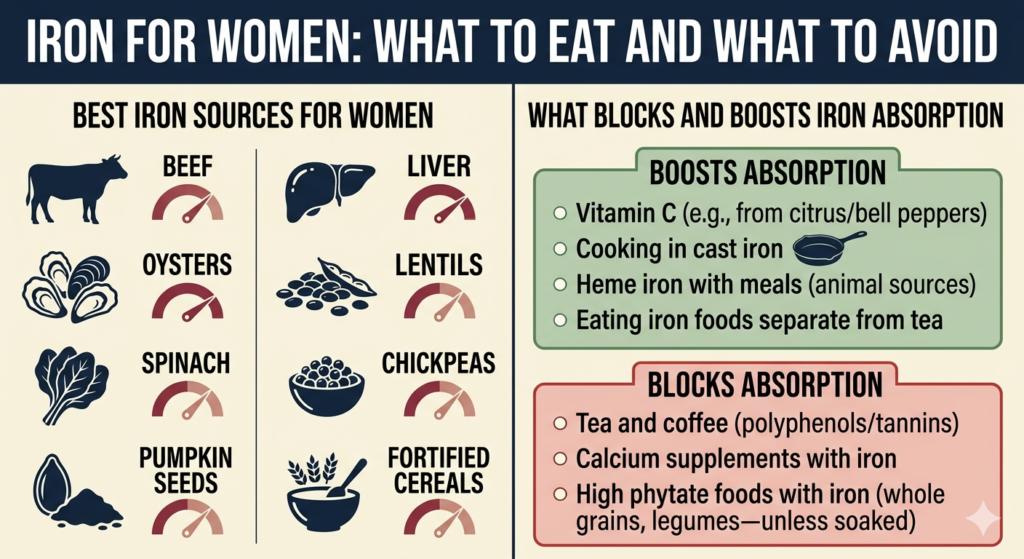
Heme iron from animal sources is the most readily absorbed form, with absorption rates of approximately 15 to 35 percent regardless of the body’s other nutritional status. The richest heme iron sources are red meat including beef and lamb, organ meats particularly liver which is extremely iron-dense, poultry including dark chicken meat, and fish and shellfish. Oysters and clams are among the richest iron sources available.
Non-heme iron from plant sources has significantly lower bioavailability of approximately 2 to 20 percent and is strongly influenced by other dietary factors. The richest plant-based iron sources include lentils, chickpeas, black beans, tofu, spinach, fortified cereals, quinoa, pumpkin seeds, and dark chocolate in small amounts.
Vitamin C dramatically enhances non-heme iron absorption when consumed in the same meal. Eating iron-rich plant foods alongside vitamin C sources including citrus fruit, bell peppers, strawberries, and broccoli can increase non-heme iron absorption by two to three times.
Certain compounds inhibit iron absorption and should not be consumed simultaneously with iron-rich meals. Tannins in tea and coffee reduce iron absorption significantly. Calcium from dairy products or supplements competes with iron for absorption. Phytates in whole grains and legumes reduce plant iron bioavailability. For women with significant iron deficiency, separating tea and coffee from meals by at least one to two hours and taking iron supplements separately from calcium significantly improves the amount of iron actually absorbed.
Iron supplementation is typically necessary when deficiency is confirmed, as dietary changes alone are often insufficient to restore depleted iron stores in a reasonable timeframe, particularly in women with heavy menstrual bleeding who continue to lose iron monthly.
Ferrous sulfate is the most commonly prescribed form and is effective, though it frequently causes gastrointestinal side effects including nausea, constipation, and stomach discomfort that lead many women to stop taking it. Taking it with food reduces gastrointestinal side effects though it also slightly reduces absorption.
Ferrous bisglycinate and ferric maltol are better-tolerated alternative forms with fewer gastrointestinal side effects at equivalent or better absorption rates, making them practical choices for women who cannot tolerate ferrous sulfate.
Supplementation schedule matters. Taking iron supplements every other day rather than daily has been shown in research to produce better net iron absorption due to the hepcidin regulatory system that limits iron absorption in the hours following an iron dose. Every-other-day dosing bypasses this regulation and results in more total iron absorbed over a week of supplementation compared to daily dosing in many women.
The duration of treatment needed to restore iron stores is longer than most women expect. While symptoms often begin improving within four to six weeks of beginning supplementation, fully restoring ferritin to optimal levels typically takes three to six months of consistent treatment, and continued supplementation or dietary vigilance is needed in women with ongoing monthly iron losses from menstruation.
For context on the nutritional deficiencies that most commonly affect women’s health alongside iron, read our articles on vitamin D3 and K2 benefits and magnesium benefits, deficiency symptoms, and food sources.
And for broader guidance on the healthy habits that support women’s overall nutritional health, read our article on healthy habits for women.
FAQ
1. What are the most common iron deficiency symptoms in women?
The most consistently reported iron deficiency symptoms in women are persistent fatigue that sleep does not resolve, shortness of breath during normal activities, brain fog and difficulty concentrating, increased hair shedding, pale skin particularly visible in the inner eyelids and gums, and heart palpitations. Multiple symptoms appearing together, particularly in a woman with heavy periods or dietary factors that limit iron intake, strongly suggests iron deficiency and warrants testing.
2. How is iron deficiency different from iron deficiency anemia?
Iron deficiency refers to depleted iron stores as measured by low ferritin, and it produces symptoms even when hemoglobin remains normal. Iron deficiency anemia develops later, when iron depletion is severe enough to compromise hemoglobin production itself. A woman can have significant fatigue, hair loss, brain fog, and other symptoms from iron deficiency without anemia. This is why testing ferritin specifically, not just hemoglobin, is essential for proper diagnosis.
3. Can iron deficiency cause hair loss in women?
Yes, and this is one of the most documented and clinically meaningful connections. Iron deficiency causes a type of hair loss called telogen effluvium, where more hair follicles than normal enter the resting and shedding phase simultaneously. Women experience this as dramatically increased shedding in the shower and when brushing. Research has consistently shown that restoring ferritin to optimal levels significantly reduces shedding and supports regrowth over three to six months of treatment.
4. How quickly do iron deficiency symptoms improve with treatment?
Most women notice some improvement in energy and mental clarity within four to six weeks of consistent iron supplementation. Hair shedding typically reduces within two to three months of treatment. Fully restoring ferritin to optimal levels and seeing the complete resolution of all symptoms takes three to six months in most cases, depending on the severity of deficiency and whether the underlying cause of loss has been addressed.
5. What is the best iron supplement for women?
Ferrous bisglycinate and ferric maltol are generally better tolerated than ferrous sulfate with fewer gastrointestinal side effects, while providing good iron absorption. Taking iron on an empty stomach increases absorption but worsens gastrointestinal side effects for many women. Taking it with a small amount of food and a vitamin C source balances absorption and tolerability. Taking iron every other day rather than daily has been shown to produce better cumulative absorption in many women due to the body’s iron regulatory system.
6. What foods are highest in iron for women?
The highest heme iron sources are beef liver, oysters, clams, red meat, and dark poultry meat. The highest plant-based non-heme iron sources are lentils, chickpeas, tofu, spinach, fortified cereals, pumpkin seeds, and quinoa. Pairing plant-based iron sources with vitamin C from bell peppers, citrus, or strawberries at the same meal significantly increases the amount absorbed. Avoiding tea and coffee for one to two hours before and after iron-rich meals also meaningfully increases absorption.
7. When should I see a doctor about iron deficiency symptoms?
You should see your doctor if you have several of the symptoms described in this article, particularly persistent fatigue, breathlessness, significant hair loss, or palpitations. Ask specifically for a ferritin test rather than relying on a standard blood count alone. See your doctor promptly if breathlessness or palpitations are severe or accompanied by chest pain. Also seek evaluation if iron supplementation does not improve your levels after three to four months of consistent treatment, as this may indicate an absorption issue such as celiac disease that requires further investigation.
Conclusion
Iron deficiency symptoms in women are among the most common, most impactful, and most consistently missed causes of fatigue, hair loss, cognitive impairment, and reduced quality of life in women of reproductive age and beyond. The gap between how common this deficiency is and how reliably it is identified and treated represents a genuine and important area of women’s health that deserves more attention.
If several of the thirteen iron deficiency symptoms in women described in this article resonate with your experience, please do not dismiss them as stress or simply the pace of modern life. Ask your doctor for a ferritin test specifically. Advocate for a complete assessment rather than accepting a normal hemoglobin result as the full picture of your iron status.
With the right diagnosis and consistent treatment, iron deficiency is entirely correctable. Most women who restore their iron levels to genuinely optimal ranges describe a significant and often dramatic improvement in their energy, mental clarity, hair quality, and overall sense of physical wellbeing that they had forgotten was possible.
Use the free tools at Vitality Nexus to support your overall health alongside your nutritional recovery. Explore our full women’s health resources for comprehensive guidance on female nutritional health. And visit our nutrition and supplements section for more detailed guidance on the nutrients that matter most for women’s health at every life stage.
You deserve to feel well. The path to getting there often begins with a simple blood test.