There is a difference between knowing what is good for you and actually building it into the rhythm of your daily life.
Most women already know the basics. Eat vegetables. Drink water. Exercise more. Sleep well. These things are not secrets. But knowing them and consistently doing them are two entirely different experiences. And the gap between the two is where most health advice completely falls apart.
The reason is that vague advice does not create habits. Habits are built through specific, repeatable actions that fit into the reality of your actual life rather than the idealized version of it.
This guide covers 14 healthy habits for women that are grounded in research, practical enough to actually implement, and designed specifically around the biological, hormonal, and emotional realities of being a woman in the modern world. Not generic wellness tips recycled from a 1990s fitness magazine. Actual habits that address the specific ways women’s bodies and minds work, and the specific challenges that women consistently face when trying to take better care of themselves.
Table of Contents
Why Healthy Habits Work Differently for Women
Before getting into the specific habits, it is worth acknowledging something that a lot of general health advice ignores entirely.
Women’s bodies are not smaller versions of men’s bodies. The hormonal architecture of the female body creates cycles, transitions, and biological rhythms that mean the same habit can produce different results at different points in the month, at different life stages, and under different conditions of stress, sleep, and nutritional status.
A training approach that builds muscle reliably in a man may need to be adjusted for a woman’s menstrual cycle to produce optimal results without hormonal disruption. A calorie target that supports healthy weight in one woman may cause hormonal suppression in another. Sleep disruption affects women’s mood regulation and cortisol levels differently than it affects men. The gut microbiome of women and men differs in composition and in how it responds to dietary changes.
This does not mean women need a completely separate rulebook for health. It means that the most effective healthy habits for women are ones that are calibrated for the specific physiology of the female body rather than simply copied from advice designed for men or for a generic human average.
According to research published by the Office on Women’s Health, women face specific health risks including cardiovascular disease presenting differently than in men, higher rates of autoimmune conditions, unique reproductive health challenges, and greater lifetime risk of depression and anxiety. Habits that actively address these specific risks produce meaningfully better health outcomes than generic wellness advice.
The fourteen habits in this guide are built with this specificity in mind.
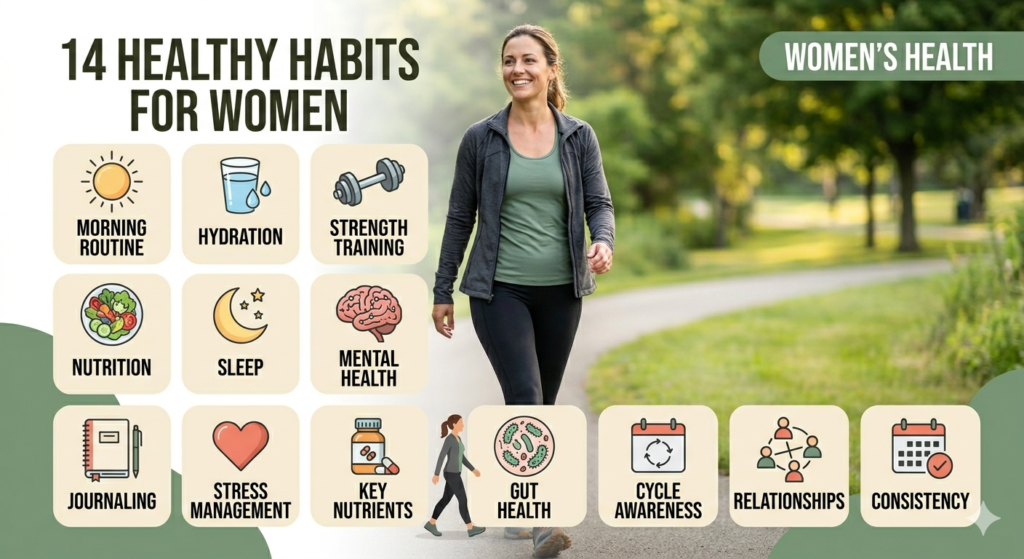
1. Build a Consistent Morning Routine
The first thirty to sixty minutes of your day set the physiological and psychological tone for everything that follows. How you begin your morning influences your cortisol curve, your blood sugar stability, your mental focus, and the likelihood that you will make the choices throughout the day that align with your health goals.
A consistent morning routine is one of the most powerful healthy habits for women not because any single element of it is miraculous, but because the consistency itself creates a hormonal rhythm that your body begins to anticipate and prepare for. Cortisol, which peaks naturally in the first hour after waking as part of the cortisol awakening response, is channeled into productive alertness when the morning routine is calm and intentional rather than reactive and stressful.
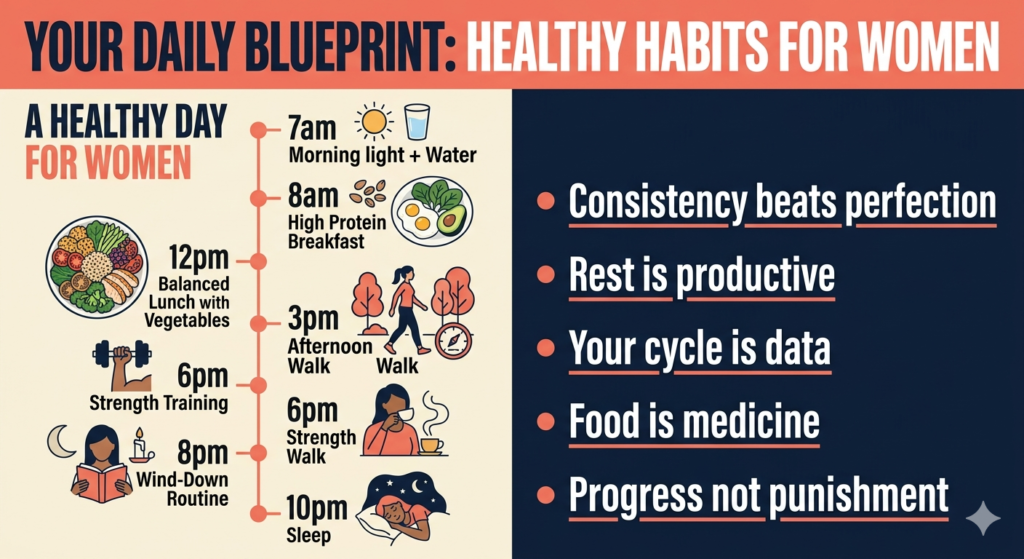
The elements of a morning routine that consistently produce the most beneficial physiological effects include opening the blinds or stepping outside to get natural light exposure within thirty minutes of waking, which sets the circadian clock and supports the melatonin and cortisol rhythms that regulate sleep and energy throughout the day. Drinking water before anything else rehydrates the body after overnight fluid loss and supports cognitive function from the start. A brief movement or stretching practice, even five minutes, activates the musculoskeletal system and blood flow gently before the demands of the day begin.
The specific content of your morning routine matters less than its consistency and its qualities of intention and calm. A morning spent rushing, reacting to notifications, and skipping breakfast leaves the nervous system in a state of reactive stress before the day has properly begun.
2. Drink Enough Water Before You Do Anything Else
Hydration is one of those health habits so consistently mentioned that it has become almost invisible. But the research behind adequate daily water intake for women’s specific health needs is worth taking seriously.
Women are more susceptible to the cognitive and physical effects of mild dehydration than men due to differences in body composition and fluid distribution. Research published in the Journal of Nutrition found that even mild dehydration of one to two percent of body weight produced measurable reductions in cognitive performance, mood, and concentration in women, with effects appearing at lower dehydration thresholds than in men.
Beyond cognitive effects, adequate hydration supports the kidney’s elimination of waste products including used estrogen metabolites, supports bowel regularity which is important for the enterohepatic recirculation of estrogen, supports skin quality which is sensitive to both hormonal fluctuations and hydration status, and reduces the fatigue and headaches that dehydration commonly causes and that are frequently attributed to other causes.
The practical daily target for most women is approximately 2 to 2.5 liters of water per day, increasing with physical activity, hot weather, and during the luteal phase of the menstrual cycle when progesterone-driven changes increase fluid requirements slightly.
Starting the morning with a large glass of water before coffee, tea, or breakfast is one of the most consistently effective ways to ensure adequate daily hydration because it establishes a baseline before the demands of the day begin competing for attention.
3. Eat Protein at Breakfast Every Morning
What you eat at breakfast sets the metabolic and appetite hormone tone for the entire day. And for women specifically, the protein content of breakfast has an outsized influence on both blood sugar stability and total daily calorie intake.
Research has consistently shown that a high-protein breakfast significantly reduces ghrelin, the primary hunger hormone, for a longer period than a carbohydrate-matched breakfast of equivalent calories. It also reduces the insulin response to subsequent meals throughout the day, an effect that is particularly relevant for women with insulin sensitivity concerns including PCOS and perimenopausal metabolic changes.
A study published in the American Journal of Clinical Nutrition found that women who ate a high-protein breakfast consumed significantly fewer total daily calories compared to those who ate a low-protein breakfast or skipped breakfast entirely, without consciously restricting their intake at other meals.
Practical high-protein breakfast options include three whole eggs in any preparation with vegetables and avocado, Greek yogurt with berries and a tablespoon of ground flaxseeds, a smoothie made with protein powder, leafy greens, berries, and nut butter, or cottage cheese with fruit. All of these provide 20 to 35 grams of protein alongside fiber and healthy fat in a combination that stabilizes blood sugar and supports satiety for three to four hours.
The habit is not about eating a perfect breakfast every single day. It is about making protein the consistent anchor of the morning meal rather than something that happens occasionally when you have time.
4. Make Strength Training a Weekly Non-Negotiable
Strength training is consistently the most underutilized tool in women’s health and consistently the one that produces the most comprehensive benefits when adopted as a regular habit. Yet it remains something that large numbers of women either do not do, do inconsistently, or approach with a level of effort that does not produce meaningful adaptation.
The specific benefits of resistance training for women go well beyond the commonly cited muscle building and fat loss outcomes.
Strength training is one of the most powerful interventions for insulin sensitivity improvement available, which is directly relevant to the hormonal health of women with PCOS, perimenopausal metabolic changes, and the general insulin resistance that tends to increase with age and sedentary behavior.
It maintains bone density, which is critical for women whose estrogen-driven protection of bone mineral density declines significantly through perimenopause and menopause. The National Osteoporosis Foundation estimates that approximately fifty percent of women over fifty will experience an osteoporosis-related fracture in their lifetime. Consistent resistance training meaningfully reduces this risk.
Strength training reduces symptoms of anxiety and depression through neurochemical effects that are comparable to moderate-dose antidepressant medication in research on mild to moderate depression. For women who experience cyclical mood disturbances alongside their hormonal cycle, regular training provides a consistent mood stabilizing effect.
Three to four sessions per week of resistance training targeting all major muscle groups through compound movements is the evidence-supported minimum for these benefits. Read our article on workout without equipment for practical routines that produce genuine adaptation from your home.
5. Walk Every Single Day
Walking is the healthy habit that requires the least resources, the least time, the least preparation, and produces one of the most impressive lists of health benefits of any exercise available to women.
The cardiovascular benefits of regular brisk walking are well-established. A large study following over 70,000 women found that walking at least 30 minutes per day on most days of the week reduced the risk of cardiovascular events by over 30 percent compared to sedentary women. Cardiovascular disease is the leading cause of death in women globally, a fact that is often overlooked because it is so strongly associated culturally with men.
Beyond cardiovascular health, walking reduces cortisol, improves insulin sensitivity through post-meal glucose management, supports sleep quality, reduces anxiety and depression symptoms, and provides the low-impact movement that supports joint health and mobility over the long term.
For women managing hormonal conditions including PCOS, thyroid dysfunction, or perimenopausal changes, a ten to fifteen minute walk after each main meal specifically has been shown in research to reduce postprandial glucose spikes meaningfully, directly addressing the insulin resistance component of these conditions.
Daily walking does not require a gym, athletic clothing, or a specific window of time. It requires shoes and the decision to move. Parking farther away, taking the stairs, walking during phone calls, and choosing a brief walk over scrolling during breaks all accumulate to meaningful daily movement.
For guidance on the optimal timing and approach for your daily walking habit, read our article on morning vs evening workout.
6. Prioritize Sleep Like Your Health Depends on It
It does. Completely and directly.
Sleep deprivation affects women’s hormonal health, cardiovascular health, immune function, mental health, metabolic function, skin quality, and cognitive performance in ways that no supplement, morning routine, or diet can adequately compensate for. Yet sleep is one of the first things women sacrifice when life becomes demanding, and it is sacrificed with a cultural acceptability that treats exhaustion as a badge of productivity rather than a serious health concern.
For women specifically, the hormonal consequences of insufficient sleep are particularly pronounced. Progesterone, which supports sleep quality through its conversion to allopregnanolone, declines with age and during specific cycle phases. When progesterone is already lower, sleep disruption creates a bidirectional worsening: low progesterone impairs sleep, and poor sleep further reduces progesterone production.
Inadequate sleep elevates cortisol, which worsens insulin resistance, promotes abdominal fat storage, suppresses thyroid function, and disrupts the appetite hormones leptin and ghrelin in ways that increase hunger for high-sugar, high-fat foods the following day. The cumulative effect of consistently poor sleep on a woman’s hormonal and metabolic health over months and years is significant and substantially underappreciated.
Seven to nine hours of quality sleep per night is a biological requirement for women’s health. Consistent wake times even on weekends, a cool and dark bedroom, no screens for the hour before sleep, and managing evening stress through a wind-down routine are the most evidence-supported practical changes.
For natural support for sleep quality, read our article on magnesium for sleep and use our Sleep Calculator to find the exact timing that aligns with your natural circadian rhythm.
7. Manage Stress Before It Manages You
Chronic stress is the most pervasive and most underaddressed health issue facing women today. The combination of professional demands, emotional labor, caretaking responsibilities, and the social expectation to always be managing and producing creates a sustained cortisol burden that has measurable consequences across every system in the female body.
Cortisol in healthy, moderate amounts is necessary and beneficial. Cortisol chronically elevated from unrelenting stress is genuinely harmful. It promotes insulin resistance and abdominal fat storage. It suppresses progesterone production by competing with it for hormonal precursors. It impairs thyroid hormone conversion. It disrupts sleep. It increases systemic inflammation. And it directly increases the risk of depression, anxiety, and cardiovascular disease.
The healthy habit here is not eliminating stress, which is not realistic. It is building genuine daily recovery into your life rather than waiting for a holiday or a breakdown to rest.
Ten minutes of mindfulness or breathing practice daily has been shown in research to produce measurable cortisol reduction within several weeks of consistent practice. Regular moderate exercise reduces cortisol through multiple neuroendocrine pathways. Time in nature, specifically spending time around trees and green spaces, reduces cortisol and activates the parasympathetic nervous system reliably and quickly.
Setting boundaries around work demands, asking for and accepting help, delegating where possible, and identifying the specific sources of chronic stress in your life are behavioral changes that address the upstream cause rather than just managing the symptoms.
Read our articles on low cortisol vs high cortisol and how stress affects women’s reproductive health for a detailed understanding of how cortisol management connects directly to female health outcomes.
8. Nourish Your Gut Every Day
The gut microbiome is increasingly recognized as a central regulator of women’s health in ways that extend far beyond digestion. Gut bacteria influence estrogen metabolism through the estrobolome, regulate insulin sensitivity, produce neurotransmitter precursors that affect mood and cognition, regulate the immune system, and influence the systemic inflammation that underlies most chronic disease.
Women have a distinctly different gut microbiome composition from men due to the influence of estrogen and progesterone on bacterial populations. This means that gut health is not a gender-neutral topic. Hormonal changes through the menstrual cycle, pregnancy, and menopause alter gut microbiome composition in ways that have downstream effects on hormonal balance, mood, and metabolic health.
Supporting the gut microbiome as a daily habit involves two consistent dietary practices. Prebiotic foods that feed beneficial bacteria should be present at most meals. These include onions, garlic, leeks, asparagus, artichokes, oats, bananas, and all fiber-rich vegetables and legumes. The diversity of plant foods matters as much as the quantity, with research suggesting that eating thirty or more different plant foods per week supports the greatest microbiome diversity.
Probiotic foods that introduce beneficial bacteria should be included regularly. Plain yogurt with live cultures, kefir, sauerkraut, kimchi, and kombucha in moderate amounts all provide different bacterial strains that support gut diversity.
Minimizing antibiotic use to genuinely necessary situations, reducing processed food consumption that harms beneficial bacterial populations, and managing stress to prevent cortisol-related gut barrier disruption all protect the gut health that supports every other aspect of female wellbeing.
9. Know and Respect Your Hormonal Cycle
This is a healthy habit that is unique to women and has no direct equivalent in men’s health. The menstrual cycle is not simply a monthly reproductive event. It is a sophisticated hormonal program that creates predictable and meaningful changes in energy, strength, cognitive function, emotional processing, and social motivation throughout the month.
Understanding this cycle and making small adjustments in response to it is a form of self-knowledge that reduces the frustration of fighting your own biology and amplifies the results of your health efforts by timing them appropriately.
In the follicular phase, which runs from menstruation through ovulation at roughly the mid-cycle point, rising estrogen supports higher energy, stronger mood, better sleep, and improved physical performance. This is typically the best window for more intense training, demanding cognitive work, and important social commitments.
In the luteal phase, from ovulation through the beginning of the next period, rising then falling progesterone gradually reduces energy, increases the need for rest, heightens sensitivity to stress and nutritional inadequacy, and increases appetite. This is the phase when PMS symptoms appear in women whose hormones are imbalanced, and when adjusting training intensity downward, prioritizing rest, increasing protein and complex carbohydrates, and managing stress more actively produces the most hormonal benefit.
Tracking your cycle through an app or physical method for several months builds the awareness needed to recognize your own patterns and make intelligent, responsive adjustments rather than applying the same rigid daily routine regardless of where you are hormonally.
For more on the specific hormonal changes across the cycle and how they affect the female body, read our article on hormone balance for women.
10. Address Nutritional Deficiencies That Affect Women Most
Women have specific nutritional requirements that differ from men in meaningful ways, and several deficiencies are significantly more prevalent in women due to menstrual blood loss, pregnancy demands, hormonal contraceptive use, and the different hormonal environment of the female body.
Iron is the most common nutritional deficiency in women worldwide, driven primarily by menstrual blood loss. Iron deficiency, even before it reaches the level of clinical anemia, causes fatigue, impaired cognitive function, reduced exercise capacity, and worsened thyroid function. Getting ferritin tested alongside hemoglobin provides a more complete picture of iron status, as ferritin can be depleted and producing symptoms before hemoglobin falls enough to show as anemia on a standard blood test.
Magnesium is depleted by the same stress that many women experience chronically. It is directly involved in over 300 enzymatic processes including progesterone production, cortisol regulation, insulin sensitivity, and sleep quality. Women with PMS, PCOS, and perimenopausal symptoms frequently have lower magnesium levels than those without these conditions.
Vitamin D deficiency is extremely common in women in northern latitudes and is associated with disrupted menstrual cycles, worsened PCOS symptoms, impaired thyroid function, reduced bone density, and increased risk of depression. Testing and supplementing to optimal levels, typically between 50 and 80 nanograms per milliliter, is one of the most widely applicable interventions for women’s health.
Omega-3 fatty acids from fatty fish or supplementation reduce the systemic inflammation that worsens virtually every hormonal condition women face, support mood regulation throughout the cycle, reduce menstrual pain through anti-inflammatory effects on prostaglandin production, and support cardiovascular health. Read our article on omega-3 fatty acids benefits and food sources for comprehensive guidance.
For detailed guidance on vitamin D supplementation, read our article on vitamin D3 and K2 benefits.
11. Protect Your Mental Health Proactively
Women are diagnosed with anxiety disorders at nearly twice the rate of men and are significantly more likely to experience depression at some point in their lives. These are not simply social or psychological phenomena. They have biological underpinnings in the interaction between the female hormonal system and the neurotransmitter systems that regulate mood, stress response, and emotional processing.
Proactive mental health maintenance is a healthy habit that many women only begin after they are already in distress, treating mental health as something to fix rather than something to tend consistently. The shift from reactive to proactive mental health care changes both the experience and the outcomes significantly.
Proactive mental health habits include regular physical movement which has effects on mood comparable to moderate-dose antidepressants in research on mild to moderate depression and anxiety. Journaling for ten minutes daily which processes emotional experiences through language and reduces their psychological weight. Mindfulness practice which builds the neural capacity to observe anxious or negative thoughts without being controlled by them. Social connection with people who genuinely support rather than drain you. And setting boundaries around the demands that consistently exceed your capacity.
For women who are experiencing persistent low mood, anxiety that interferes with daily life, or emotional distress that is not resolving with self-care strategies, seeking professional support from a therapist or counselor is not a last resort. It is an intelligent use of evidence-based tools that produce real and lasting outcomes.
Read our article on signs of a mental breakdown to understand when mental health challenges have escalated beyond what lifestyle strategies can adequately address. And explore our comprehensive mental health awareness and emotional wellness guide for broader guidance.
12. Build and Maintain Strong Social Connections
The research on social connection and women’s health is genuinely remarkable and profoundly underappreciated in mainstream health conversations.
Women are more socially oriented neurobiologically than men due to the influence of oxytocin, which is released during positive social interaction and produces direct cortisol-reducing, mood-elevating, and immune-supporting physiological effects. This means that for women, meaningful social connection is not just psychologically important. It is physically health-protective in measurable ways.
A landmark study from Harvard Medical School found that women with stronger social connections had significantly lower rates of cardiovascular disease, significantly lower rates of depression, better immune function, and longer life expectancy than socially isolated women, with effects that were comparable in magnitude to the health benefits of regular exercise and non-smoking.
The quality of social connection matters far more than the quantity. A few close relationships characterized by genuine mutual support, honesty, and care produce greater health benefits than many superficial social interactions. The experience of being truly known and supported by another person activates the hormonal systems that protect health in ways that social performance and surface-level connection do not.
This habit requires investment of time and attention in a culture that often treats social connection as a luxury rather than a health necessity. Scheduling regular time with the people who matter most, being genuinely present during that time, and prioritizing depth of connection over breadth of social network are all practices that support the health benefits this habit provides.
13. Do a Weekly Body Check-In
Most women interact with their bodies through a lens of evaluation, criticism, and comparison. They notice what does not look right, what does not feel right, and what has not changed fast enough. This relationship with the body is not just psychologically harmful. It also means that important early signals from the body are frequently missed because attention is focused on aesthetics rather than function and health.
A weekly body check-in is a short, intentional practice of noticing how your body is actually feeling, separate from how it looks. Energy levels over the past week. Sleep quality. Digestion. Skin condition. Mood and emotional stability. Physical performance in training or daily activity. Cycle regularity and any changes in symptoms.
This practice serves several important functions. It builds the body awareness that allows you to notice early signs of hormonal imbalance, nutritional deficiency, or health changes before they become significant problems. It shifts the relationship with the body from critical evaluation to curious attention. And it creates a weekly feedback loop that allows you to adjust your habits in response to what your body is actually communicating rather than following a rigid plan regardless of how you feel.
Many women discover through this practice that they can identify the first signs of an approaching viral illness, a hormonal pattern that recurs at the same cycle phase, or a response to dietary or lifestyle changes that was previously invisible because attention was never deliberately directed toward it.
Use our Body Fat Calculator and BMI Calculator as part of a monthly rather than daily check-in on physical health metrics, which gives a meaningful trend picture without the daily fluctuation that discourages rather than informs.
14. Be Consistent Rather Than Perfect
This is the healthy habit that makes all the other thirteen habits actually work over the long term.
Perfectionism is one of the most common obstacles to women’s health habits. The all-or-nothing thinking that treats one missed workout, one unhealthy meal, or one late night as a failure that justifies abandoning the entire approach until a fresh start can be made. This pattern is not a character flaw. It is a predictable response to unrealistic standards, and it keeps women cycling through health improvements and regressions rather than building the steady cumulative progress that genuinely changes health over time.
The research on habit formation is clear that consistency of behavior over time, even imperfect behavior, produces far better outcomes than perfect behavior during intense short-term efforts. A woman who exercises three times per week for two years builds dramatically better cardiovascular fitness, body composition, and hormonal health than one who exercises six times per week for two months and then stops.
The practical implication is choosing habits that are sustainable at your lowest-energy, most stressed, most time-pressured baseline rather than ones that require optimal conditions to maintain. A habit that happens eighty percent of the time indefinitely is far more valuable than one that happens one hundred percent of the time for three weeks.
When you miss a day of exercise, drink less water than planned, or eat in a way that does not align with your goals, the appropriate response is to return to the habit at the next opportunity without attaching a narrative of failure to the interruption. The habit is not the single behavior. It is the pattern over time.
For a comprehensive understanding of how consistency across all the habits in this guide produces long-term health transformation, read our article on healthy lifestyle habits for energy, focus, and productivity.
Use Our Free Tools to Support Your Health Journey
Building healthy habits for women is most effective when you understand your body’s specific needs rather than following generic targets. These free tools on Vitality Nexus give you the personalized data that makes your health habits more precise and more effective.
Optimize Your Sleep Schedule Sleep is the foundation of every other healthy habit on this list. Use our Sleep Calculator to find the sleep and wake times that align with your natural circadian rhythm and give your hormonal system the overnight recovery it genuinely requires.
Calculate Your Daily Calorie Needs Understanding how much you should eat each day prevents the accidental undereating that disrupts hormones and the overeating that undermines body composition goals. Use our Calorie Calculator for your personalized daily target.
Find Your Total Daily Energy Expenditure Use our TDEE Calculator to calculate how many calories your body burns each day accounting for your actual activity level, which gives you the accurate maintenance number that all other calorie targets are built around.
Calculate Your Basal Metabolic Rate Use our BMR Calculator to understand your resting calorie needs, which reflects your metabolic baseline and helps you identify whether nutritional support for your metabolic rate may be needed.
Check Your BMI Use our BMI Calculator to monitor overall body composition trends as your healthy habits take hold over weeks and months.
Find Your Ideal Weight Use our Ideal Weight Calculator to establish a realistic, science-based weight goal that supports both physical and hormonal health for your specific height, age, and body type.
Track Your Body Composition Scale weight does not tell the full story of health progress. Use our Body Fat Calculator to track the fat-to-muscle ratio that reflects the real outcome of your healthy habits over time.
Healthy Habits for Women at Every Life Stage
Women’s health needs shift significantly across the major life stages, and the habits that are most impactful adjust accordingly.
In your twenties, the most important healthy habits center on establishing the foundations that will protect your health for decades. Building consistent sleep habits, developing a nutritious eating pattern, beginning resistance training, and learning to manage stress before it becomes chronic are all habits whose benefits compound powerfully when started early. This is also the time to establish a relationship with a healthcare provider who takes your hormonal health seriously and to begin tracking your menstrual cycle as a vital sign rather than simply managing it as an inconvenience.
In your thirties, hormonal changes begin earlier than most women expect. Progesterone typically declines before estrogen, producing the first signs of PMS worsening, sleep disruption, and cycle irregularity that many women attribute to stress without recognizing the hormonal component. Increasing protein intake, adding resistance training if not already established, and becoming more deliberate about stress management and sleep protection become increasingly important. Fertility considerations may become relevant, and understanding the hormonal cycle in depth becomes practically valuable.
In your forties, the perimenopause transition typically begins, bringing more significant hormonal fluctuations and the metabolic changes that accompany declining estrogen and progesterone. Resistance training for bone density and metabolic rate maintenance becomes critical. Nutritional support including vitamin D, magnesium, and calcium becomes more important. Sleep protection, stress management, and cardiovascular health habits deserve increased attention and priority.
Read our article on perimenopause vs menopause for detailed guidance on navigating the specific hormonal transitions of the perimenopausal decade.
In your fifties and beyond, maintaining the healthy habits established in earlier decades becomes the primary task alongside adjusting for the post-menopausal hormonal environment. Bone density protection through resistance training, adequate calcium and vitamin D, and weight-bearing activity becomes a health priority. Cardiovascular health habits including cholesterol management and blood pressure monitoring deserve regular attention. And the consistency habit discussed at the end of this guide becomes more important than ever because the cumulative benefit of decades of consistent healthy habits is where the most dramatic differences in health and capability between women of the same age become visible.
For women navigating these transitions and the health questions they raise, explore our full women’s health resources for comprehensive, stage-specific guidance.
FAQ
1. What are the most important healthy habits for women?
The habits with the broadest and most consistently impactful effects on women’s health are adequate sleep of seven to nine hours nightly, regular resistance training, daily movement including walking, high-protein eating with stable blood sugar, stress management, gut microbiome support, and addressing nutritional deficiencies in iron, vitamin D, magnesium, and omega-3 fatty acids. These habits collectively support hormonal health, cardiovascular health, mental health, metabolic function, and physical capability simultaneously.
2. How long does it take for healthy habits to make a difference?
Different habits produce noticeable changes at different timeframes. Improved sleep and hydration typically produce noticeable energy and mood improvements within one to two weeks. Dietary changes produce meaningful hormonal improvements within four to eight weeks. Resistance training produces measurable strength improvements within two to three weeks and visible body composition changes within six to eight weeks of consistent effort. The most important outcomes, including long-term hormonal health, bone density, cardiovascular resilience, and metabolic function, compound over months and years of consistent practice.
3. What healthy habits specifically support women’s hormonal health?
The habits most directly relevant to female hormonal health are sleep protection of seven to nine hours nightly, stress management to reduce chronic cortisol elevation, resistance training for insulin sensitivity, cycle awareness and tracking, gut microbiome support for estrogen metabolism, reducing exposure to endocrine-disrupting chemicals, and addressing the specific nutritional deficiencies including magnesium, vitamin D, iron, and omega-3 fatty acids that most commonly affect female hormonal function.
4. Is it too late to start healthy habits after 40?
Never. Research consistently shows that women who begin healthy habits at any age produce meaningful improvements in health outcomes. Women who begin resistance training in their fifties build significant muscle and bone density. Women who improve their diet and sleep in their forties show measurable hormonal and metabolic improvements. Women who begin managing stress in midlife reduce their cardiovascular risk. Earlier is better, but later is always better than never, and the benefits of healthy habits do not diminish with age.
5. How do healthy habits for women differ from those for men?
Women’s health habits need to account for the hormonal cycle, which creates monthly variations in energy, appetite, sleep, and optimal training intensity. Women need to pay specific attention to iron and folate lost through menstruation. The gut microbiome responds differently to dietary and hormonal changes in women compared to men. The hormonal transitions of perimenopause and menopause require specific lifestyle adjustments that have no male equivalent. And the social and emotional dimensions of health, including the mental load and the higher rates of anxiety and depression, create different priorities for stress management and mental health habits.
6. What is the single most important healthy habit to start with?
Sleep. Not because the others are less important, but because inadequate sleep actively undermines every other healthy habit simultaneously. It increases appetite for unhealthy foods. It reduces motivation and energy for exercise. It elevates cortisol and worsens insulin resistance. It impairs cognitive function and emotional regulation. Establishing consistent, adequate sleep before any other change creates the physiological foundation from which all other habits are far more effective.
7. How do I build healthy habits that actually stick?
Habits stick when they are specific, achievable in your actual life rather than an idealized version of it, attached to existing routines, and when the consequences of missing them are low rather than all-or-nothing. Starting smaller than feels necessary, establishing consistency before adding complexity, tracking behavior rather than outcomes in the early weeks, and responding to inevitable misses by returning to the habit at the next opportunity without self-criticism are the behavioral science-supported foundations of lasting habit change.
Conclusion
Building healthy habits for women is not about becoming a different person or achieving a perfect version of yourself. It is about making the consistent, specific, evidence-based choices that allow your body and mind to function the way they are designed to.
Sleep enough. Eat enough protein. Move your body with both strength and gentleness. Manage the stress that you can and recover genuinely from the rest. Know your cycle. Nourish your gut. Address the nutritional gaps that quietly undermine your energy and hormonal health. Invest in your relationships and your mental health with the same consistency you invest in your physical health.
None of these are dramatic. None require a complete life overhaul. They require consistency over time and the understanding that small, repeated actions compound into the significant health transformation that one-time intense efforts never produce.
Use the free tools at Vitality Nexus to understand your personal calorie needs, body composition, and sleep timing. Explore our full women’s health resources for guidance specific to every stage of female health. And visit our health and fitness section for practical guidance on building the movement and nutrition habits that support everything else.
You do not need to do everything at once. You just need to start somewhere and keep going.