
Testosterone is the hormone that drives far more than most men realize. Yes, it shapes muscle mass and libido. But it also regulates energy levels, mood, cognitive sharpness, bone density, cardiovascular health, and the fundamental sense of physical vitality that makes daily life feel either full or depleted.
When testosterone levels are optimal, men feel like themselves. When levels decline, the change is not always dramatic and sudden. It is often gradual and quiet. A little more fatigue than before. A little harder to build muscle despite training consistently. A slightly shorter fuse. A libido that is not quite where it used to be. Weight that is easier to gain and harder to lose.
If any of that sounds familiar, the question of how to increase testosterone naturally is one worth answering properly. Not with miracle supplements or exaggerated claims, but with strategies that are grounded in real physiology and consistently supported by research.
This guide gives you 12 evidence-based methods to raise your testosterone levels naturally, explains exactly why each one works, and shows you how to build them into a lifestyle that supports hormonal health for the long term.
Table of Contents
Why Testosterone Declines and Why It Matters
Testosterone peaks during a man’s late teens and early twenties and then begins a slow, steady decline of approximately one to two percent per year from around age thirty onward. This is a natural process that happens to every man. The question is not whether testosterone will decline but how quickly it declines and how far it falls.
Several factors significantly accelerate this natural decline beyond what age alone would cause. Chronic stress, poor sleep, excess body fat particularly around the abdomen, nutritional deficiencies, sedentary lifestyle, excessive alcohol consumption, and exposure to endocrine-disrupting chemicals all push testosterone lower faster and further than the natural aging process alone.
Low testosterone, clinically defined as a total testosterone level below 300 nanograms per deciliter in most medical guidelines, is associated with a meaningful cluster of symptoms that reduce quality of life significantly. These include persistent fatigue and low energy, reduced muscle mass and strength despite regular training, increased body fat particularly around the waist, low libido and sexual dysfunction, mood disturbances including irritability and low motivation, difficulty concentrating, and reduced bone density.
For a comprehensive look at what low testosterone actually looks and feels like from a clinical perspective, read our article on low testosterone symptoms in men. Understanding whether your symptoms align with genuine testosterone deficiency is the starting point for an intelligent response.
The good news is that for most men, the lifestyle factors driving testosterone decline are directly addressable. You cannot stop the natural age-related decline entirely. But you can ensure that decline is not dramatically accelerated by controllable factors, and in many cases you can meaningfully raise levels from their current depressed state through targeted lifestyle changes.
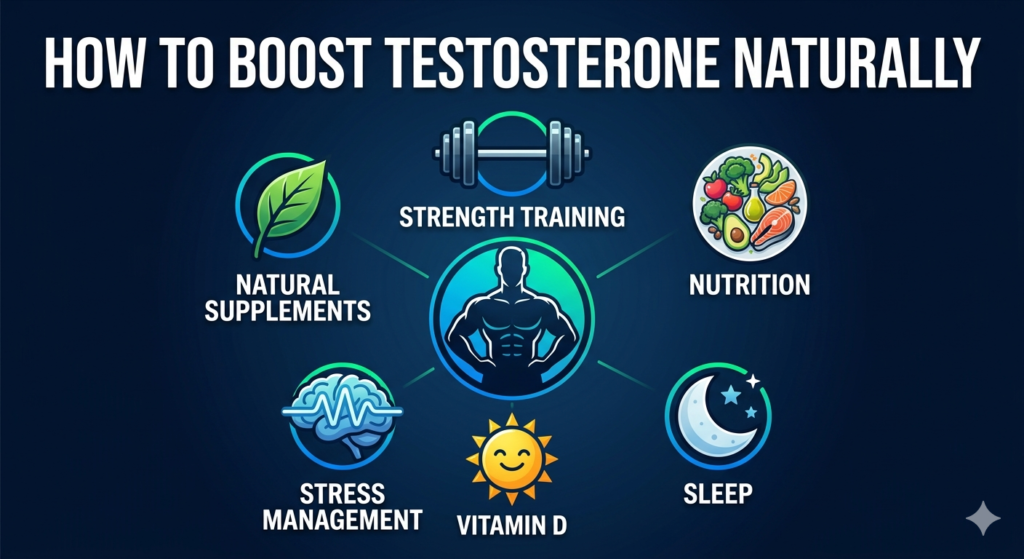
1. Lift Heavy Weights and Train with Intensity
If there is one intervention with the most direct and well-documented effect on testosterone levels, it is resistance training, specifically heavy compound lifting performed with intensity and progressive overload.
Multiple studies have confirmed that acute testosterone elevation occurs in response to resistance training sessions, particularly those involving large muscle groups through compound movements like squats, deadlifts, bench press, and rows. The hormonal response is proportional to the muscle mass recruited, the intensity of the effort, and the degree of mechanical tension applied.
The specific training variables that maximize the testosterone response from resistance training are well understood. Multi-joint compound exercises recruit more muscle mass and produce a larger hormonal stimulus than isolation exercises. Moderate to heavy loads in the range of 70 to 85 percent of one-repetition maximum produce the most consistent acute testosterone elevation. Short rest periods of 60 to 90 seconds between sets increase metabolic stress which amplifies the hormonal response. And training three to four days per week consistently produces the chronically elevated testosterone environment that translates to long-term hormonal improvement.
One important caveat: excessive cardio, particularly long-duration endurance training at high intensity performed frequently, is associated with reduced testosterone levels rather than elevated ones. This is because prolonged aerobic stress elevates cortisol substantially, and cortisol and testosterone have an inverse relationship where chronically elevated cortisol suppresses testosterone production. Moderate cardio is fine and beneficial. But for testosterone optimization, resistance training should be the foundation and cardio should be supplementary.
For practical guidance on building an effective resistance training routine, read our article on beginner gym guide which covers the fundamental movements and programming principles that drive the strongest hormonal adaptations.
2. Prioritize Deep, Quality Sleep Every Night
If you take only one thing from this entire guide, let it be this. Sleep is not a recovery tool. It is a testosterone production mechanism.
The majority of daily testosterone is produced during sleep, specifically during the rapid eye movement and slow wave sleep stages that characterize deep, restful sleep. Research has demonstrated clearly and consistently that testosterone levels are directly proportional to sleep duration and quality in healthy men.
A study published in the Journal of the American Medical Association found that restricting young healthy men to five hours of sleep per night for just one week reduced their daytime testosterone levels by 10 to 15 percent. That is equivalent to aging 10 to 15 years in terms of testosterone reduction, achieved in a single week of poor sleep.
The inverse is equally true. Men who consistently get seven to nine hours of quality sleep maintain higher baseline testosterone levels than those who chronically sleep less, even when other lifestyle factors are controlled.
The practical implication is straightforward. No supplement, no training program, and no dietary change will compensate for consistently poor sleep when it comes to testosterone. Sleep is not the final piece of the testosterone puzzle. It is the foundation everything else rests on.
Use our Sleep Calculator to find the precise sleep and wake times that align with your natural circadian rhythm and maximize the deep sleep stages where testosterone production is highest. And read our article on magnesium for sleep to understand how this essential mineral supports the sleep quality that directly drives testosterone production.
3. Lose Excess Body Fat Strategically
Body fat, particularly abdominal visceral fat, is hormonally active tissue. It contains an enzyme called aromatase that converts testosterone into estrogen. The more visceral fat a man carries, the greater the aromatase activity, and the more of his testosterone is continuously being converted into estrogen rather than remaining available for its intended functions.
This creates a self-reinforcing negative cycle. Low testosterone promotes fat storage, particularly around the abdomen. More abdominal fat increases aromatase activity. More aromatase converts more testosterone to estrogen. Lower testosterone makes fat loss harder. And the cycle continues.
Breaking this cycle through strategic fat loss is one of the most powerful natural testosterone restoration strategies available, particularly for men who are significantly overweight. Research consistently shows that weight loss in obese men produces substantial testosterone increases, often dramatically more than the modest effects of individual lifestyle changes.
The key word is strategic. Crash dieting and severe calorie restriction suppress testosterone through a different mechanism. Extreme caloric deficit signals the body that resources are scarce, which reduces the allocation of resources to reproductive hormone production as a survival adaptation. A moderate, consistent caloric deficit of 300 to 500 calories per day combined with resistance training preserves muscle mass and drives fat loss without the hormonal suppression of aggressive restriction.
Use our TDEE Calculator and Calorie Calculator to establish a smart, moderate deficit that supports fat loss without sacrificing the hormonal environment you are working to improve. And read our article on healthy fat loss and sustainable weight loss strategies for a comprehensive approach to fat loss that protects rather than undermines testosterone.
4. Manage Stress and Lower Cortisol
Cortisol and testosterone are produced from the same hormonal precursor, cholesterol, and they compete for it. When cortisol production is chronically elevated from ongoing psychological or physiological stress, less raw material is available for testosterone synthesis. This is sometimes called the cortisol steal or pregnenolone steal hypothesis, and while the biochemistry is somewhat more complex than a simple steal, the practical outcome is clear: chronic high cortisol and healthy testosterone levels do not coexist easily.
Beyond the competition for precursors, cortisol also directly inhibits the signaling pathways in the hypothalamic-pituitary-gonadal axis that regulate testosterone production. It reduces luteinizing hormone release from the pituitary, which is the signal that tells the testes to produce testosterone.
The practical implication is that stress management is not a soft lifestyle recommendation sitting at the end of a testosterone guide. It is a core hormonal health strategy. Chronic unmanaged stress is one of the most powerful testosterone suppressors available, and it is one that millions of men experience continuously without connecting it to their hormonal health.
Read our article on low cortisol vs high cortisol to understand the full spectrum of cortisol’s effects on hormonal and metabolic health. Meditation, adequate sleep, deliberate rest, manageable workloads, time in nature, and meaningful social connection all reduce cortisol through different but complementary pathways.
5. Optimize Your Vitamin D Levels
Vitamin D is not really a vitamin. It is a steroid hormone precursor, and its relationship with testosterone is direct and clinically significant.
Vitamin D receptors are present in the Leydig cells of the testes, which are the primary site of testosterone production. Research has shown that men with sufficient vitamin D levels have significantly higher testosterone levels than men who are deficient, and that vitamin D supplementation in deficient men produces meaningful testosterone increases.
A 12-month randomized controlled trial found that men who supplemented with 3,332 IU of vitamin D daily had significantly higher testosterone levels at the end of the study compared to a placebo group, with an average increase of approximately 20 percent in the supplemented group.
Vitamin D deficiency is remarkably prevalent. Estimates suggest that between 40 and 80 percent of adults in northern latitudes are deficient or insufficient, particularly in winter months when sunlight exposure is limited. Many people have no idea their levels are low because vitamin D deficiency often produces no obvious acute symptoms despite causing meaningful long-term hormonal disruption.
Getting your vitamin D level tested through a simple blood test is one of the most valuable single steps you can take for testosterone health. The target level for optimal testosterone support is generally considered to be between 50 and 80 nanograms per milliliter.
Read our comprehensive article on vitamin D3 and K2 benefits to understand why these two nutrients work together and how to supplement them correctly for maximum benefit.
6. Eat Enough Zinc and Magnesium
Two minerals play particularly direct roles in testosterone production and are among the most commonly deficient nutrients in men who exercise regularly.
Zinc is directly involved in testosterone synthesis. It is required for the activity of the enzymes that convert cholesterol into testosterone and for the proper function of the pituitary’s luteinizing hormone release. Zinc deficiency has been shown in multiple studies to suppress testosterone levels substantially, and zinc supplementation in deficient men consistently raises testosterone back toward normal ranges.
Men lose zinc through sweat, which makes athletes and regular exercisers particularly susceptible to deficiency even with a generally adequate diet. The richest food sources of zinc include oysters which contain by far the most zinc of any food, red meat, shellfish, pumpkin seeds, and legumes.
Magnesium plays a different but equally important role. It supports testosterone bioavailability by competing with sex hormone binding globulin for testosterone binding sites. Testosterone that is bound to SHBG is not available to tissues. Magnesium helps keep more testosterone in its free, biologically active form. Research has shown that magnesium supplementation increases both free and total testosterone in men with deficiency.
Like zinc, magnesium is lost through sweat and is commonly deficient in active men. Read our article on 7 types of magnesium and their specific benefits to understand which form is most bioavailable and effective for hormonal support. And explore our comprehensive guide on magnesium benefits, deficiency symptoms, and food sources for the full picture.
7. Eat Sufficient Healthy Fats and Cholesterol
Testosterone is synthesized from cholesterol. This biochemical fact has direct and often ignored dietary implications. Men who follow very low-fat diets, or who eat insufficient dietary fat overall, consistently show lower testosterone levels than those who include adequate healthy fats in their diet.
Research has found that men who derive less than 40 percent of their daily calories from fat show significantly lower testosterone levels than those eating more fat. This is not an argument for unlimited saturated fat consumption. It is an argument for not fearing dietary fat and ensuring that healthy fat sources are well-represented in your daily eating.
The most testosterone-supportive fats are monounsaturated fats from olive oil, avocados, and almonds, and saturated fats from eggs, red meat in moderate amounts, and full-fat dairy. Omega-3 fatty acids from fatty fish also support the anti-inflammatory hormonal environment that favors testosterone production and reduce SHBG levels, increasing the proportion of testosterone that remains free and biologically active.
Eggs deserve particular mention. They provide cholesterol, the direct precursor to testosterone, alongside zinc, vitamin D, and saturated fat. Whole eggs, including the yolk, are among the most testosterone-supportive foods available. The old fear of dietary cholesterol raising blood cholesterol has been substantially revised in current nutritional science. For most people, dietary cholesterol has minimal effect on blood cholesterol levels.
For more on the specific fats that support hormonal and cardiovascular health simultaneously, read our article on omega-3 fatty acids benefits and food sources.
8. Avoid or Minimize Alcohol
Alcohol is one of the most effective testosterone suppressors available without a prescription, and it is one that large numbers of men consume regularly without connecting it to their hormonal health.
The relationship between alcohol and testosterone is dose-dependent and direct. Even moderate alcohol consumption, two to three drinks per day, has been shown to reduce testosterone levels measurably in the hours following consumption. The mechanisms are multiple and complementary.
Alcohol increases the conversion of testosterone to estrogen through aromatase activity. It damages the Leydig cells of the testes that produce testosterone. It impairs the liver’s metabolism of estrogen, which allows estrogen levels to remain elevated. It disrupts sleep architecture severely, reducing the deep sleep stages where testosterone production is highest. And it raises cortisol levels, which as discussed earlier directly suppresses testosterone signaling.
Heavy chronic alcohol consumption is associated with significantly and sometimes dramatically reduced testosterone levels. But even regular moderate drinking depresses testosterone to a meaningful degree relative to the baseline a man could achieve without it.
This does not necessarily require complete abstinence for most men. But if testosterone optimization is a genuine goal, reducing alcohol consumption is one of the most impactful single changes available from a hormonal perspective.
9. Limit Exposure to Endocrine Disruptors
Endocrine disruptors are chemicals that interfere with the body’s hormonal signaling systems. Several widely prevalent chemicals in modern environments specifically disrupt testosterone production and androgenic signaling.
Bisphenol A, known as BPA, is found in many plastic containers and the lining of food and drink cans. It mimics estrogen in the body and has been shown to reduce testosterone levels with regular exposure. Switching to glass, stainless steel, or BPA-free containers and avoiding heating food in plastic containers reduces exposure meaningfully.
Phthalates are found in soft plastics, many personal care products, fragrances, and vinyl materials. They interfere with Leydig cell testosterone production directly. Choosing fragrance-free personal care products and minimizing soft plastic contact with food reduces exposure.
Parabens in cosmetics and personal care products act as weak estrogens and are absorbed through the skin. Choosing paraben-free products where practical reduces this exposure route.
Pesticide residues on conventionally grown produce contain multiple compounds with endocrine-disrupting properties. Choosing organic produce for the most heavily sprayed items reduces pesticide exposure without requiring a complete dietary overhaul.
The cumulative effect of multiple low-level endocrine disruptor exposures is an active area of research. The current evidence suggests that reducing these exposures where practical and convenient is worthwhile, particularly for men already dealing with the hormonal pressures of aging, stress, and lifestyle factors.
10. Try Evidence-Based Natural Supplements
Several natural supplements have genuine research support for modest testosterone-supporting effects, and they work through different mechanisms that can complement the lifestyle changes described above.
Ashwagandha is the most consistently supported natural testosterone-boosting supplement. Multiple randomized controlled trials have shown that ashwagandha supplementation significantly reduces cortisol and simultaneously increases testosterone levels in men, producing average testosterone increases of 10 to 22 percent in various studies. It works primarily through its cortisol-lowering adaptogenic effects, which removes one of the primary suppressors of testosterone production.
Fenugreek has shown meaningful testosterone-supporting effects in several clinical trials, with proposed mechanisms including inhibition of the enzymes that convert testosterone to estrogen and dihydrotestosterone. Studies have found improvements in free testosterone, sexual function, and body composition with regular fenugreek supplementation.
D-aspartic acid is an amino acid involved in the release of luteinizing hormone from the pituitary, which stimulates testosterone production in the testes. Studies in men with lower testosterone levels show significant increases with supplementation, though effects appear less pronounced in men who already have normal levels.
Zinc and magnesium supplementation, as discussed in tip six, are the most evidence-backed micronutrient supplements for testosterone support in men who are deficient in these minerals.
Vitamin D supplementation is appropriate for any man who tests deficient and should be a baseline supplement for most men in northern latitudes during autumn and winter.
For a broader understanding of how supplements fit into an overall nutritional health strategy, explore our nutrition and supplements category.
11. Stay Sexually Active
This recommendation surprises many people but the research behind it is consistent and interesting.
Sexual activity, and to some extent even sexual stimulation without activity, is associated with acute testosterone elevation. The relationship is bidirectional. Testosterone drives sexual desire and activity, and sexual activity in turn stimulates testosterone production.
Research in men in long-term relationships has found that testosterone levels respond measurably to sexual activity and decline during periods of sexual abstinence. The mechanism appears to involve the hypothalamic-pituitary-gonadal axis responding to behavioral cues associated with reproductive opportunity.
For practical purposes, this recommendation is less about maximizing the magnitude of the testosterone effect from any single encounter and more about avoiding the hormonal decline associated with extended periods of sexual inactivity. Regular sexual activity maintains the signaling that supports testosterone production as part of a healthy overall hormonal ecosystem.
12. Get Regular Sunlight and Spend Time Outdoors
Sunlight exposure supports testosterone through two primary mechanisms. The first is vitamin D production in the skin, which as discussed in tip five has a direct relationship with testosterone levels through its role in Leydig cell function.
The second is less widely known but equally interesting. Light exposure, particularly morning sunlight, regulates the circadian rhythm and the timing of hormonal secretion throughout the day. Testosterone production follows a strong circadian pattern, with levels peaking in the early morning hours. A well-entrained circadian rhythm, supported by consistent morning light exposure, maintains the amplitude and timing of this hormonal peak.
Research has also found that UV light exposure to the skin increases testosterone through mechanisms beyond vitamin D production, suggesting a direct relationship between sunlight and androgen production that researchers are still working to fully characterize.
Getting 15 to 30 minutes of direct sun exposure on the arms and face during midday hours on clear days, combined with consistent morning light exposure to support circadian rhythm, is a practical implementation of this recommendation for most men.
How to Know If Your Testosterone Is Actually Low
Before investing significant effort in testosterone optimization, it is worth confirming whether your levels are actually below optimal range through proper clinical measurement.
Total testosterone is measured through a simple blood test ordered by your doctor. The test should ideally be taken in the morning between 7 and 10 am when testosterone levels are at their daily peak. A single low reading should be confirmed by a second test before any clinical significance is attached to it, because testosterone levels vary day to day and can be temporarily reduced by illness, acute stress, or poor sleep.
Understanding the difference between total testosterone and free testosterone is important. Total testosterone includes all testosterone in the blood. Free testosterone is the biologically active fraction not bound to carrier proteins. Some men have normal total testosterone but low free testosterone due to high levels of sex hormone binding globulin, producing symptoms of low testosterone despite apparently normal total levels.
A comprehensive hormonal panel for men concerned about testosterone might include total testosterone, free testosterone, SHBG, LH, FSH, estradiol, DHEA-S, prolactin, and thyroid function tests. This panel provides a complete picture of the hormonal environment and helps identify the specific mechanism driving any imbalance.
Use Our Free Tools to Support Your Health Goals
Testosterone optimization is most effective when embedded in a broader lifestyle framework that supports physical health across multiple dimensions.
Calculate Your TDEE Understanding your calorie maintenance level is essential for the strategic fat loss that supports testosterone improvement. Use our TDEE Calculator to find your personalized daily calorie burn.
Set Your Calorie Target Use our Calorie Calculator to establish the moderate caloric deficit that drives fat loss without the hormonal suppression of aggressive restriction.
Check Your BMI and Body Composition Excess body fat is one of the most direct and modifiable drivers of testosterone decline. Use our BMI Calculator and Body Fat Calculator to understand where you currently stand and track progress over time.
Find Your Ideal Weight Use our Ideal Weight Calculator to set a realistic and health-supportive weight goal that also supports your hormonal health objectives.
Optimize Your Sleep Schedule Sleep is the foundation of testosterone production. Use our Sleep Calculator to find the timing that maximizes deep sleep duration and the testosterone production that accompanies it.
Foods That Boost Testosterone Naturally
Certain foods consistently appear in research as supportive of healthy testosterone levels through their nutrient profiles and hormonal effects.
Eggs provide cholesterol, vitamin D, zinc, and saturated fat, making them arguably the most testosterone-supportive single food available. Including whole eggs regularly is one of the simplest dietary changes with direct hormonal benefit.
Oysters contain more zinc per serving than any other food on earth. A single serving of six oysters provides multiple times the daily recommended zinc intake, making them extraordinarily effective at correcting zinc deficiency which is a common cause of testosterone suppression.
Fatty fish including salmon, mackerel, sardines, and tuna provide omega-3 fatty acids that reduce systemic inflammation, decrease SHBG levels, and support the overall hormonal environment that favors testosterone production.
Leafy greens including spinach and Swiss chard are among the best dietary sources of magnesium, which as discussed supports testosterone bioavailability through its effects on SHBG binding.
Pomegranate juice showed a significant testosterone-boosting effect in a study published in the journal Endocrine Abstracts, with men consuming pomegranate juice daily for two weeks showing average salivary testosterone increases of 24 percent. The mechanism appears to involve antioxidant protection of testicular tissue from oxidative stress.
Avocados, olive oil, and nuts provide the monounsaturated fats that support testosterone synthesis and are associated with better overall hormonal profiles in men who consume them regularly.
Cruciferous vegetables including broccoli, cauliflower, and brussels sprouts contain a compound called indole-3-carbinol that supports the metabolism and clearance of estrogen, which helps maintain a more favorable testosterone-to-estrogen ratio.
Foods and Habits That Crush Testosterone
Equally important to knowing what supports testosterone is knowing what suppresses it.
Processed foods and refined sugars consistently produce insulin spikes that are associated with reduced testosterone and increased estrogen levels. Chronic high-sugar diets are linked to lower testosterone in research.
Soy products in large quantities contain phytoestrogens called isoflavones that can weakly mimic estrogen. Moderate soy consumption in the context of a balanced diet is unlikely to cause meaningful hormonal disruption for most men, but very high soy intake, such as from protein powders that use soy as a primary ingredient, is worth moderating for men focused on testosterone optimization.
Mint, particularly spearmint, has been shown in research to reduce testosterone levels in women and to have mild anti-androgenic effects. Men who consume large amounts of mint tea regularly may want to moderate this habit.
Chronic excessive exercise without adequate recovery, particularly prolonged endurance training, elevates cortisol and reduces testosterone. Training smart with adequate rest is more hormonally beneficial than maximizing training volume.
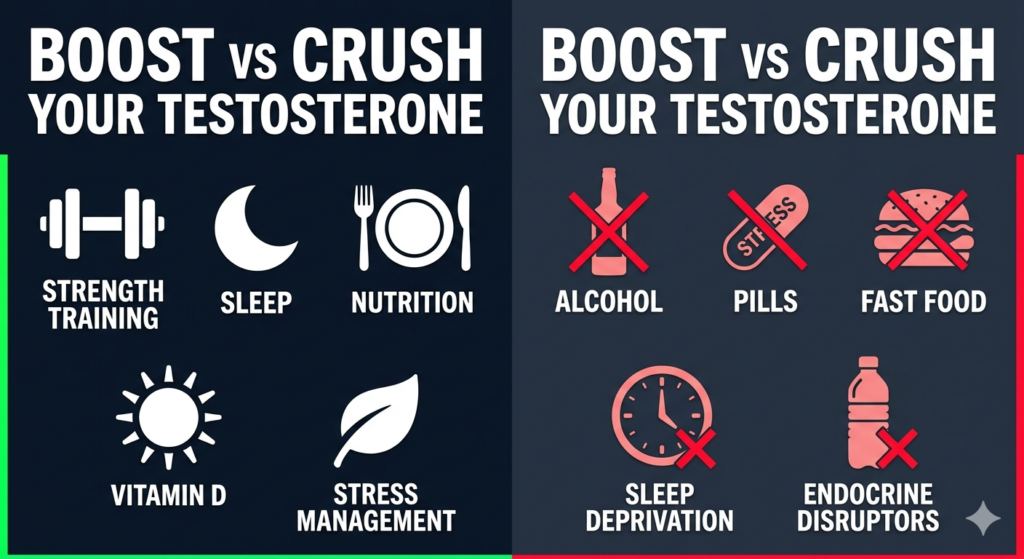
Chronic sleep deprivation, as covered extensively in tip two, is one of the most powerful testosterone suppressors available. Nothing on the dietary side of the equation compensates for consistently poor sleep.
FAQ
1. How long does it take to increase testosterone naturally?
The timeline depends on the starting point and the interventions applied. Sleep improvements can begin affecting testosterone within one to two weeks. Fat loss produces gradual improvements over months as body composition changes. Vitamin D and zinc supplementation in deficient men typically shows measurable testosterone improvements within eight to twelve weeks. Comprehensive lifestyle changes including training, sleep, nutrition, and stress management together can produce meaningful improvements in total and free testosterone within three to six months for most men.
2. What is the fastest natural way to boost testosterone?
Getting adequate sleep is the fastest and most impactful single change for most men. Even one to two weeks of prioritizing seven to nine hours of quality sleep produces measurable testosterone increases. Heavy compound resistance training produces acute testosterone elevation within the session itself. Correcting zinc deficiency through supplementation produces measurable improvements within several weeks for men who are deficient.
3. Can diet really increase testosterone?
Yes, meaningfully. Diet affects testosterone through multiple pathways including providing the cholesterol precursor for testosterone synthesis, supplying zinc and magnesium which are directly involved in production and bioavailability, influencing body fat levels which determine aromatase activity, and determining the degree of systemic inflammation which affects testicular function. A diet rich in whole foods, adequate healthy fats, sufficient protein, and key micronutrients produces a substantially more testosterone-supportive hormonal environment than a diet high in processed foods, refined sugars, and inadequate fat.
4. Does exercise boost testosterone permanently or just temporarily?
Both. An acute testosterone elevation occurs during and immediately after resistance training sessions. Over the long term, consistent resistance training produces a chronically higher baseline testosterone level compared to sedentary individuals, driven by adaptations in the hypothalamic-pituitary-gonadal axis, reduced body fat, and improved insulin sensitivity. The key is consistency over months and years rather than expecting a single workout to produce lasting hormonal change.
5. Does stress really lower testosterone that much?
Yes, significantly. Cortisol is the direct hormonal antagonist of testosterone and operates through multiple mechanisms to suppress testosterone production. Research has found that men experiencing chronic work or life stress have measurably lower testosterone than those with similar demographics but lower stress levels. The good news is that effective stress reduction through any consistent method, including exercise, meditation, better sleep, and reduced work demands, produces corresponding testosterone improvements relatively quickly.
6. Are natural testosterone boosters safe?
Well-studied natural approaches including lifestyle changes, dietary modifications, and evidence-backed supplements like ashwagandha, vitamin D, zinc, and magnesium have good safety profiles for most healthy adult men. The important distinction is between these evidence-based approaches and the many commercial testosterone booster products that make exaggerated claims while containing ineffective or poorly characterized ingredients. Stick to the interventions covered in this article and consult your doctor before starting any new supplement if you have existing health conditions or take medications.
7. When should I see a doctor about low testosterone instead of trying natural approaches?
Natural approaches are appropriate and highly effective for men with mildly reduced or low-normal testosterone driven by lifestyle factors. They are worth trying for three to six months while addressing the major lifestyle factors before considering medical intervention. See your doctor promptly if your symptoms are severe and significantly impacting quality of life, if natural approaches over three to six months have not produced improvement, if you have symptoms like severe fatigue, depression, sexual dysfunction, or bone loss, or if your measured testosterone level is below 200 to 250 nanograms per deciliter. Testosterone replacement therapy is a legitimate medical option for clinically significant hypogonadism and the decision should be made with proper medical guidance based on your complete hormonal picture.
Conclusion
Understanding how to increase testosterone naturally is ultimately about understanding the lifestyle factors that either support or suppress your body’s endogenous hormone production and then systematically working through them with consistency and patience.
No single intervention produces dramatic results in isolation. But the combined effect of consistent resistance training, optimized sleep, strategic fat loss, stress management, corrected nutritional deficiencies in vitamin D, zinc, and magnesium, reduced alcohol, limited endocrine disruptor exposure, and a diet built around whole foods and adequate healthy fats is genuinely powerful for most men over a period of several months.
These are not temporary measures. They are the lifestyle conditions under which the male hormonal system functions optimally. Building them into a sustainable daily and weekly structure produces not just better testosterone levels but better health, better energy, better body composition, and better quality of life across every dimension.
Use the free tools at Vitality Nexus to calculate your calorie targets, track your body composition, and optimize your sleep. Explore our men’s health resources and our full health and fitness section for more comprehensive guidance.
Your testosterone levels are largely within your influence. The 12 methods in this guide are where to start.