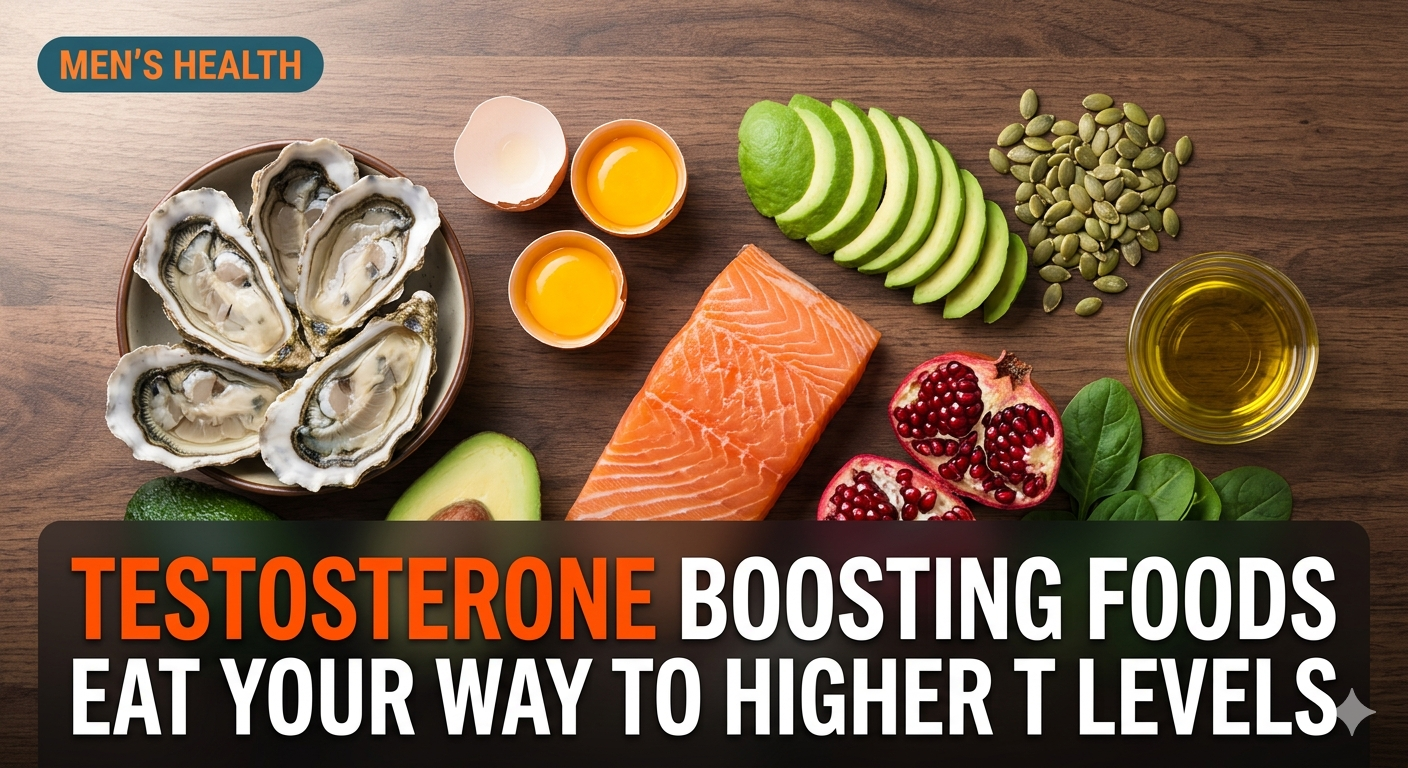
Most conversations about raising testosterone focus on supplements, training programs, and sleep optimization. All of those things matter enormously. But there is a foundational layer that sits beneath all of them that does not get nearly enough attention.
What you eat every single day is either actively supporting your testosterone production or quietly working against it. Food provides the raw materials testosterone is made from. Food supplies the minerals that regulate its synthesis. Food influences the hormonal environment that determines how much of your testosterone remains biologically active rather than converted to estrogen.
The right testosterone boosting foods do not produce the dramatic immediate effects of prescription testosterone therapy. But over weeks and months of consistent dietary choices, they create the physiological conditions in which your body produces testosterone at its natural maximum rather than a depressed fraction of it.
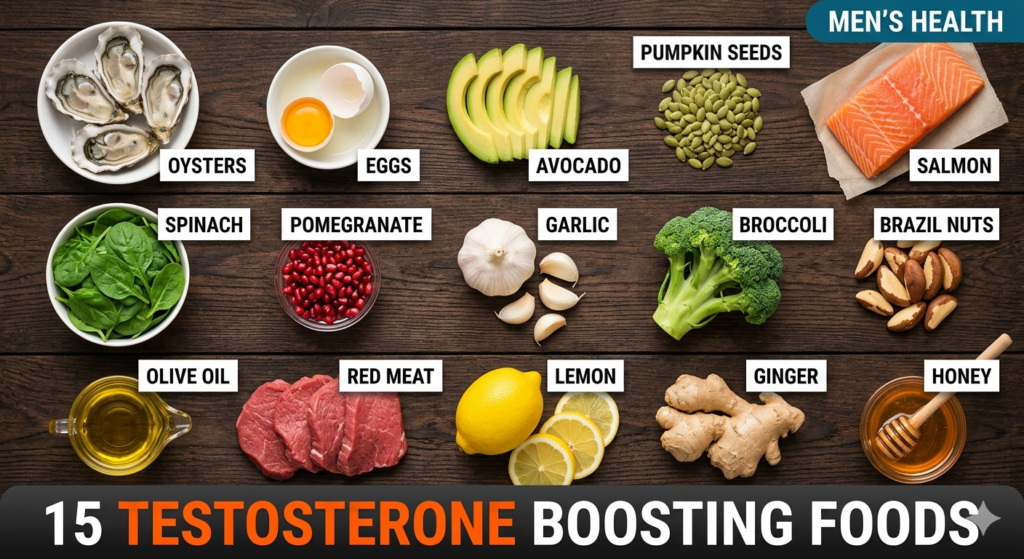
This guide covers the 15 most powerful testosterone-boosting foods that research has consistently identified, explains exactly why each one works, and shows you how to incorporate them into a daily eating pattern that genuinely supports your hormonal health for the long term.
Table of Contents
Why Food Affects Testosterone So Directly
Before getting into the specific foods, it helps to understand the three main ways that diet influences testosterone production at the biochemical level.
The first is raw material supply. Testosterone is a steroid hormone synthesized from cholesterol. Cholesterol comes primarily from dietary fat and from the liver’s own production. Men who follow severely low-fat diets consistently show lower testosterone levels than those who eat adequate fat, simply because the supply chain for testosterone synthesis is restricted.
The second is micronutrient provision. The enzymatic processes that convert cholesterol through the steroidogenic pathway into testosterone require specific vitamins and minerals as cofactors. Zinc is directly required for testosterone synthesis enzymes. Magnesium supports testosterone bioavailability. Vitamin D acts as a steroid hormone precursor with receptors in the testosterone-producing Leydig cells of the testes. When these micronutrients are deficient, testosterone production is limited regardless of how much cholesterol is available.
The third is managing the hormonal environment. Testosterone can be converted to estrogen by the enzyme aromatase, which is present in fat tissue. Certain foods and dietary compounds reduce aromatase activity, support estrogen clearance through the liver, and reduce sex hormone binding globulin levels, allowing more testosterone to remain in its free, biologically active form.
According to research published by the Endocrine Society, dietary patterns have a measurable and clinically significant influence on testosterone levels in adult men, with nutritional deficiencies being among the most commonly modifiable drivers of testosterone decline.
Understanding these three mechanisms makes it easier to see why the foods on this list work and how they complement each other when combined into a consistent dietary pattern.
1. Oysters
Oysters are the single most concentrated food source of zinc on the planet, and zinc is the most directly important mineral for testosterone synthesis. A single serving of six raw oysters provides approximately 32 milligrams of zinc, which is nearly three times the daily recommended intake for adult men.
Zinc is required for the activity of the 17beta-hydroxysteroid dehydrogenase enzyme, which catalyzes one of the final steps in the conversion of cholesterol into testosterone in the Leydig cells. When zinc is deficient, this enzymatic step is impaired and testosterone production falls measurably.
Research has consistently shown that zinc deficiency is directly associated with reduced testosterone levels, and that zinc supplementation in deficient men raises testosterone back toward normal ranges reliably. Because men lose zinc through sweat, regular exercisers are particularly susceptible to depletion even with a reasonably nutritious diet.
Beyond zinc, oysters also provide meaningful amounts of selenium, vitamin D, omega-3 fatty acids, and copper, creating a nutritional profile that supports multiple dimensions of testosterone production simultaneously.
If fresh oysters are not practical or affordable for regular consumption, canned smoked oysters are a convenient and cost-effective alternative that provides similar zinc content. They can be eaten directly, added to salads, or spread on crackers as a high-nutrient snack.
2. Eggs
Eggs are one of the most comprehensively testosterone-supportive foods available, and they have been unfairly vilified for decades based on concerns about dietary cholesterol that current nutritional science has substantially revised.
The yolk of a whole egg provides cholesterol, which is the direct biochemical precursor to testosterone and every other steroid hormone in the body. It provides vitamin D, which supports testosterone production through its role in Leydig cell function. It provides zinc and selenium, both of which are directly involved in testosterone synthesis. And it provides saturated and monounsaturated fats that support the overall hormonal environment.
Removing the yolk and eating only egg whites, which became popular during the low-fat diet era, strips out essentially all of the testosterone-supportive nutrition from the egg while retaining only the protein. For men focused on hormonal health, eating the whole egg is not just acceptable. It is the nutritionally intelligent choice.
Research has found no meaningful relationship between moderate whole egg consumption and cardiovascular disease risk in healthy adults, substantially revising the previous guidance to limit egg intake. For most men, three to four whole eggs daily as part of a balanced diet is both safe and strongly beneficial for testosterone support.
The versatility of eggs also makes them one of the most practical testosterone boosting foods. They work at breakfast, lunch, or dinner. They require minimal preparation. And they can be combined with other testosterone-supportive foods including spinach, avocado, and lean meat to create meals that address multiple hormonal support mechanisms simultaneously.
3. Fatty Fish
Fatty fish including salmon, mackerel, sardines, tuna, and herring occupy a unique position among testosterone boosting foods because they support testosterone through multiple independent pathways at once.
The omega-3 fatty acids EPA and DHA in fatty fish reduce systemic inflammation, which is one of the primary suppressors of Leydig cell function and testosterone production. Chronic low-grade inflammation, which tends to increase with age, poor diet, and excess body fat, directly impairs the cellular machinery responsible for testosterone synthesis. Omega-3s address this at the source.
Beyond inflammation reduction, research has shown that omega-3 fatty acids directly reduce sex hormone binding globulin levels. SHBG binds to testosterone in the bloodstream and renders it biologically inactive. Lower SHBG means more of your total testosterone is free and available to tissues. A study published in the Journal of Steroid Biochemistry and Molecular Biology found that higher omega-3 intake was associated with lower SHBG and higher free testosterone in adult men.
Fatty fish also provide vitamin D, zinc, selenium, and high-quality complete protein, making them among the most nutritionally comprehensive testosterone boosting foods available.
Salmon is probably the most practically accessible of these options for most people. Two to three servings of fatty fish per week is the minimum for meaningful omega-3 benefit. Read our article on omega-3 fatty acids benefits and food sources for a comprehensive breakdown of the health benefits beyond testosterone that make regular fatty fish consumption one of the most valuable dietary habits available.
4. Beef and Lean Red Meat
Lean red meat has a complex reputation in health circles, but its role as a testosterone boosting food is well-supported when consumed in appropriate quantities and as part of a balanced diet.
Beef provides zinc in meaningful quantities, around 5 to 7 milligrams per 100-gram serving, alongside the highest leucine content of any common protein source. Leucine is the amino acid most directly responsible for triggering muscle protein synthesis and it supports the anabolic environment in which testosterone functions most effectively.
Red meat also provides saturated and monounsaturated fats that support testosterone precursor availability. Research on dietary fat and testosterone consistently shows that men who include adequate saturated fat from whole food sources maintain higher testosterone levels than those following very low-fat eating patterns.
Creatine, found naturally in red meat at approximately 2 grams per 500 grams of beef, also contributes to the muscle-building and hormonal environment that training and adequate nutrition support.
The key is lean cuts and reasonable portions. Processed red meat including sausages, bacon, and deli meats have very different nutritional profiles from whole cut lean beef and are associated with worse health outcomes. Grass-fed beef when available tends to have a more favorable fat composition than conventional grain-fed beef, with higher omega-3 content and a better overall fatty acid ratio.
Three to four servings of lean whole-cut red meat per week is a reasonable target for men focused on testosterone support through diet.
5. Avocado
Avocados are one of the few predominantly plant-based foods that directly support testosterone production through their fat content, and they deserve a permanent place in any testosterone-focused diet.
A single avocado provides approximately 30 grams of fat, of which roughly 20 grams are monounsaturated oleic acid and the remainder is saturated and polyunsaturated fat. Oleic acid specifically has been associated with improved testosterone production in research examining the relationship between dietary fat composition and androgen levels.
Research published in the Journal of Steroid Biochemistry found that dietary monounsaturated fat was the fat type most positively associated with testosterone levels in men, and oleic acid from sources like avocado and olive oil was identified as a primary driver of this relationship.
Avocados also provide boron, a trace mineral that has shown promising effects on testosterone in preliminary research. Studies examining boron supplementation found that it may support free testosterone by reducing SHBG, though the evidence is less established than for zinc or magnesium.
Beyond the testosterone-specific nutrients, avocados are exceptionally rich in potassium, folate, and vitamin K, making them one of the most nutritionally dense whole foods available. Their practical versatility, working in salads, on eggs, with lean meat, or as a standalone snack, makes them one of the easiest testosterone boosting foods to incorporate daily.
6. Spinach and Leafy Greens
Spinach and other leafy greens earn their place on this list primarily through their exceptional magnesium content, and magnesium is one of the two minerals most directly involved in testosterone bioavailability alongside zinc.
A 100-gram serving of raw spinach provides approximately 79 milligrams of magnesium. Cooked spinach concentrates this to approximately 87 milligrams per 100 grams. This is one of the highest dietary magnesium concentrations available from any whole food source.
Magnesium supports testosterone through its competition with sex hormone binding globulin for testosterone binding sites. SHBG binds to testosterone and renders it inactive. Magnesium, when present in adequate amounts, competes for these binding sites and displaces testosterone, keeping more of it free and biologically active. A study published in the journal Biological Trace Element Research found that both supplemental and exercise-related increases in magnesium were associated with significant increases in free testosterone in adult men.
Spinach also provides meaningful amounts of zinc, vitamin K, folate, and nitrates. Dietary nitrates improve blood flow and exercise performance, which supports the training quality that in turn drives testosterone through exercise-related hormonal adaptation.
Swiss chard, kale, and other dark leafy greens provide similar magnesium and micronutrient profiles to spinach. Including two to three servings of leafy greens daily through salads, smoothies, or cooked dishes is an effective and highly practical testosterone dietary strategy.
For comprehensive guidance on magnesium’s role in testosterone and overall health, read our article on magnesium benefits, deficiency symptoms, and food sources.
7. Pomegranate
Pomegranate is one of the most surprising entries on this list because it is not a source of any of the usual testosterone-supporting nutrients. Its mechanism is different, and the research behind it is genuinely interesting.
A study published in the journal Endocrine Abstracts found that healthy adults who consumed pomegranate juice daily for two weeks showed an average increase in salivary testosterone of approximately 24 percent. This is a remarkable finding from a controlled study, and it has prompted significant research interest into the mechanisms behind it.
The proposed mechanism involves the exceptionally high antioxidant content of pomegranate, particularly punicalagins and punicic acid. These antioxidants protect Leydig cells from oxidative stress, which is one of the primary forms of damage that impairs testosterone production at the cellular level. The testes are particularly vulnerable to oxidative damage because the high metabolic activity of testosterone-producing cells generates significant free radical production as a byproduct.
Pomegranate also appears to inhibit aromatase activity to a degree, reducing the conversion of testosterone to estrogen and supporting a more favorable androgen-to-estrogen ratio.
Fresh pomegranate seeds or 100 percent pomegranate juice without added sugar are the most useful forms. A small glass of pure pomegranate juice or a handful of fresh seeds daily provides the antioxidant content responsible for the observed hormonal effects.
8. Brazil Nuts
Brazil nuts are the most concentrated dietary source of selenium available. A single Brazil nut provides approximately 68 to 91 micrograms of selenium, which is 100 percent or more of the daily recommended intake in a single nut.
Selenium plays a direct role in testosterone production through its involvement in the enzymatic activity of the testosterone synthesis pathway in Leydig cells. It is also a critical component of the selenoprotein family of antioxidant enzymes that protect testicular tissue from oxidative damage.
Research has found that selenium deficiency is associated with reduced testosterone levels and impaired sperm function, and that selenium supplementation in deficient men improves both hormonal and reproductive markers.
The important caveat with Brazil nuts is that more is not better. Selenium toxicity is a real concern at high doses, and consuming large quantities of Brazil nuts daily can produce selenium excess that causes its own health problems. One to three Brazil nuts per day is the appropriate target, providing optimal selenium support without risk of toxicity.
This makes Brazil nuts one of the most efficient testosterone boosting foods by volume. You need almost none of them to achieve the full benefit, which makes them an incredibly simple and convenient dietary addition.
9. Pumpkin Seeds
Pumpkin seeds are a genuinely impressive testosterone boosting food because they simultaneously provide meaningful amounts of both zinc and magnesium, the two minerals most directly involved in testosterone synthesis and bioavailability respectively.
A 30-gram serving of pumpkin seeds provides approximately 2.5 milligrams of zinc and 150 milligrams of magnesium. Combined, these two nutrients address the two most common mineral deficiencies associated with testosterone suppression in a single food source.
Pumpkin seeds also provide healthy monounsaturated and polyunsaturated fats, protein, vitamin K, and antioxidants including vitamin E. Their overall nutritional profile makes them one of the most nutritionally dense small foods available.
From a practical standpoint, pumpkin seeds are exceptionally versatile. They can be eaten as a standalone snack, added to salads, mixed into yogurt, sprinkled on oatmeal, or incorporated into trail mix with other nuts and seeds. A 30-gram portion provides meaningful micronutrient support without significant caloric impact.
Combined with Brazil nuts in a small mixed seed and nut snack, you have zinc, magnesium, and selenium covered in a portable, no-preparation format. This is one of the simplest and most cost-effective testosterone dietary strategies available.
10. Garlic
Garlic might seem like an unusual entry in a list of testosterone boosting foods. It does not contain the minerals, fats, or vitamins that most testosterone-supportive foods are known for. Its mechanism is different and specifically interesting.
Garlic contains allicin, a sulfur compound produced when garlic is crushed or chopped. Allicin has been shown in multiple animal studies and some human research to reduce cortisol levels significantly. Because cortisol and testosterone have an inverse relationship, with chronic cortisol elevation directly suppressing testosterone production, anything that meaningfully reduces cortisol creates favorable conditions for testosterone recovery.
Research in animals has shown that rats fed garlic alongside a high-protein diet had significantly higher testosterone levels than those not receiving garlic, with the proposed mechanism being cortisol reduction creating more favorable hormonal competition dynamics.
Human research specifically on garlic and testosterone is more limited but the cortisol-lowering mechanism is well-established, and cortisol management is a proven lever for testosterone optimization.
Garlic also has potent anti-inflammatory and cardiovascular benefits that support the overall hormonal environment indirectly. Including fresh garlic in cooking daily, using it in dressings, marinades, and cooked dishes, provides the allicin content responsible for its hormonal effects alongside its other well-documented health benefits.
11. Broccoli and Cruciferous Vegetables
Broccoli, cauliflower, brussels sprouts, and kale earn their place in testosterone boosting foods through a mechanism that is different from most other foods on this list. Rather than directly stimulating testosterone production, they work by managing the estrogen side of the hormonal equation.
Cruciferous vegetables contain a compound called indole-3-carbinol, which is converted in the stomach to diindolylmethane, or DIM. These compounds support the liver’s metabolism and clearance of estrogen, promoting its conversion to less potent estrogen metabolites and facilitating its elimination from the body.
When estrogen is cleared more efficiently, the testosterone-to-estrogen ratio improves even if absolute testosterone production remains unchanged. For men who have concerns about elevated estrogen, which is increasingly common given widespread dietary and environmental estrogen exposures, cruciferous vegetables provide a natural and food-based support for this hormonal balance.
Cruciferous vegetables also provide vitamin C, folate, fiber, and antioxidants that support the overall inflammatory and cellular environment in which testosterone production occurs.
Eating two to three servings of cruciferous vegetables per week provides meaningful indole-3-carbinol content. Light steaming or eating raw preserves more of the active compounds than heavy cooking.
12. Olive Oil
Extra virgin olive oil is not typically thought of as a testosterone boosting food, but the research behind it is worth knowing.
A study conducted in Morocco found that men who switched their primary cooking fat to olive oil for three weeks experienced average testosterone increases of approximately 17 percent. The proposed mechanism involves the high content of oleocanthal and other polyphenols in extra virgin olive oil, which appear to support the enzymatic activity involved in testosterone synthesis.
The monounsaturated fat content of olive oil, primarily oleic acid, also supports the dietary fat profile that research associates with higher testosterone levels. As discussed in the avocado entry, monounsaturated fat is the fat type most positively correlated with testosterone production in multiple research contexts.
Extra virgin olive oil specifically rather than refined olive oil or vegetable oils is important because the polyphenol content that drives the hormonal effects is largely absent in refined versions.
Using extra virgin olive oil as the primary fat in cooking, dressings, and food preparation rather than vegetable or seed oils provides consistent daily exposure to its testosterone-supporting polyphenols and fat profile.
13. Ginger
Ginger is best known as a digestive aid and anti-nausea remedy. But research into its effects on testosterone has produced some notably positive findings that make it worth including in a testosterone-focused diet.
A study published in the journal Tikrit Medical Journal examined men with fertility challenges who supplemented with ginger daily for three months. The results showed average testosterone increases of approximately 17 percent alongside significant improvements in other markers of male reproductive health.
The proposed mechanisms include ginger’s potent anti-inflammatory effects through its gingerol and shogaol compounds, which reduce the testicular inflammation that impairs Leydig cell function. Ginger also appears to improve blood flow to testicular tissue and has antioxidant effects that protect testosterone-producing cells from oxidative damage.
Ginger’s significant cortisol-reducing and anti-inflammatory properties also create a favorable hormonal environment for testosterone production through the indirect cortisol-testosterone competition pathway.
Fresh ginger root is the most potent form. Adding it to smoothies, stir-fries, tea, and marinades daily provides consistent exposure to its active compounds. Ground ginger is a convenient alternative that retains meaningful bioactivity.
14. Honey
Honey is not an obvious testosterone boosting food but its specific nutrient content makes it genuinely relevant to this list in meaningful ways.
Honey contains chrysin, a flavonoid compound that has been identified as a natural aromatase inhibitor in laboratory research. Aromatase is the enzyme that converts testosterone to estrogen in fat tissue. By inhibiting its activity, chrysin supports a more favorable testosterone-to-estrogen ratio.
Honey is also a rich source of boron, a trace mineral that has shown preliminary evidence for supporting free testosterone by competing with SHBG for testosterone binding sites. Studies on boron supplementation have found improvements in free testosterone and reductions in SHBG in adult men.
Additionally, honey provides nitric oxide precursors that support blood flow and vascular health, which indirectly supports the delivery of luteinizing hormone to the Leydig cells and the removal of metabolic waste products from testicular tissue.
Raw honey provides the highest concentrations of chrysin, boron, and active enzymes compared to commercially processed honey that has been heat-treated. A teaspoon of raw honey in tea, mixed into yogurt, or taken directly provides these benefits without a significant caloric impact when consumed in moderation.
15. Ashwagandha and Herbal Additions
Ashwagandha occupies a slightly different category from the other foods on this list because it is typically consumed as a supplement rather than a whole food. But its research profile for testosterone support is strong enough that it deserves inclusion in any discussion of dietary strategies for raising testosterone.
Multiple randomized controlled trials have demonstrated that ashwagandha supplementation significantly reduces cortisol and simultaneously increases testosterone in men. A study published in the journal Medicine found that men who took standardized ashwagandha extract daily for 60 days had significantly higher testosterone levels and significantly lower cortisol than the placebo group, with an average testosterone increase of approximately 15 percent.
Ashwagandha works primarily through its adaptogenic cortisol-lowering effects. By reducing chronic cortisol, it removes one of the most significant suppressors of testosterone production through the hypothalamic-pituitary-gonadal axis.
Ashwagandha root powder can be added to smoothies, warm milk, or oatmeal as a whole food form. Standardized extract supplements providing 300 to 600 milligrams of KSM-66 or Sensoril extract are the most researched forms.
Fenugreek seeds, also available in both food and supplement form, have shown meaningful testosterone-supporting effects in clinical trials through proposed mechanisms including inhibition of aromatase and 5-alpha reductase, the enzymes that convert testosterone to estrogen and dihydrotestosterone respectively.
Foods That Destroy Testosterone You Should Avoid
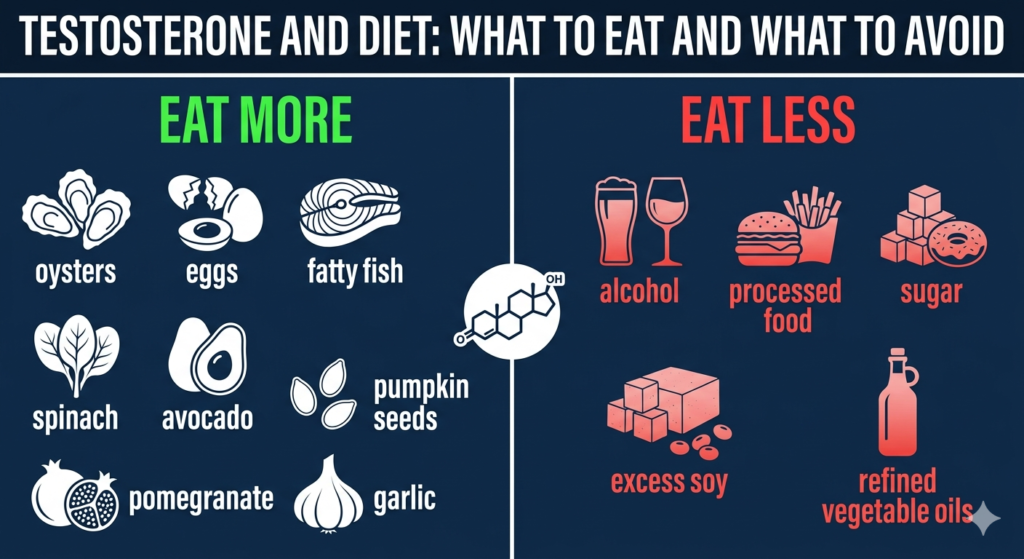
Knowing what to eat for testosterone is only half the picture. Knowing what to reduce or eliminate is equally important because several commonly consumed foods and drink directly suppress testosterone production.
Alcohol is probably the most significant testosterone-suppressing substance in the average man’s diet. Alcohol damages Leydig cells, increases aromatase activity converting testosterone to estrogen, impairs the liver’s estrogen clearance, elevates cortisol, and disrupts the sleep architecture during which most testosterone is produced. Regular moderate to heavy drinking is associated with significantly reduced testosterone levels compared to non-drinkers.
Processed foods and refined sugars produce chronic insulin spikes that are associated with reduced testosterone and increased estrogen. Men who regularly consume high-sugar, heavily processed diets consistently show lower testosterone levels than those eating whole food diets even when other lifestyle factors are matched.
Soy products in large quantities contain isoflavones that weakly mimic estrogen in the body. Moderate soy consumption in the context of a balanced diet is unlikely to cause significant hormonal disruption for most men. But protein powders, meal replacements, and other products where soy is the primary protein source, consumed in large daily quantities, are worth replacing with whey or other protein sources for men specifically focused on testosterone optimization.
Flaxseed in large amounts contains lignans that may have weak anti-androgenic effects. Occasional flaxseed is fine and nutritionally beneficial. Daily large quantities as a primary dietary addition are worth moderating for men concerned about testosterone.
Mint tea in very large quantities has shown mild testosterone-reducing effects in some research. Occasional mint tea is completely fine. Several large cups daily as a regular habit is worth moderating.
Use Our Free Tools to Support Your Health Goals
Diet is one pillar of testosterone optimization. Understanding your body composition and calorie needs gives you the full picture needed to make your dietary changes as effective as possible.
Calculate Your TDEE Your Total Daily Energy Expenditure tells you exactly how many calories your body burns each day. Eating too far below this number suppresses testosterone through adaptive hormonal responses. Use our TDEE Calculator to find your personal maintenance calorie level.
Set Your Calorie Target Use our Calorie Calculator to establish a daily intake that supports your body composition goals without the aggressive caloric restriction that suppresses testosterone.
Check Your Body Fat Percentage Excess body fat directly suppresses testosterone through elevated aromatase activity. Use our Body Fat Calculator to understand your current body composition and track changes as your diet improves.
Check Your BMI Use our BMI Calculator to monitor overall body composition trends as your dietary and lifestyle changes take effect.
Find Your Ideal Weight Use our Ideal Weight Calculator to set a realistic and health-supportive weight goal that also supports your hormonal health objectives.
Calculate Your BMR Use our BMR Calculator to understand your resting calorie burn and ensure you are not eating so far below your needs that testosterone production is suppressed.
Optimize Your Sleep Schedule Sleep is where testosterone production occurs. Dietary changes for testosterone are significantly more effective when sleep is also optimized. Use our Sleep Calculator to find the timing that maximizes deep sleep and overnight hormonal production.
How to Build a Testosterone Boosting Meal Plan
Having a list of 15 testosterone boosting foods is useful. Knowing how to combine them into daily meals that you will actually enjoy and sustain is what makes the dietary change real rather than theoretical.
The approach that works best for most men is not a rigid meal plan that must be followed exactly. It is a framework of principles that guides food choices consistently without making eating feel like a medical obligation.
Prioritize protein at every meal. Three to four whole eggs at breakfast. A portion of lean red meat, fatty fish, or chicken at lunch and dinner. Greek yogurt or cottage cheese as a snack. This pattern ensures adequate protein for muscle preservation alongside the zinc, vitamin D, and leucine content that supports testosterone directly.
Include fat at every meal from the testosterone-supportive sources listed in this guide. Olive oil on vegetables and salads. Avocado as a side or topping. Nuts and seeds as snacks. Fatty fish two to three times per week. This ensures the cholesterol and fat profile needed for testosterone synthesis is consistently present.
Make leafy greens and cruciferous vegetables a daily fixture. A large spinach salad at lunch. Broccoli or kale as a dinner side. These provide the magnesium, indole-3-carbinol, and antioxidants that support both testosterone production and estrogen clearance.
Add the specific testosterone-supportive additions as daily habits. A teaspoon of raw honey in the morning. Fresh garlic in cooking. Pomegranate seeds in yogurt or as a snack. A small handful of pumpkin seeds and Brazil nuts. Ginger in tea or smoothies. These additions are small enough to be completely sustainable and collectively meaningful for their hormonal effects.
Minimize or eliminate the foods that suppress testosterone. Reduce alcohol to occasional consumption. Replace processed snack foods with whole food alternatives. Choose whole grain or vegetable carbohydrates over refined sugar sources.
For the broader context of how this dietary approach fits within a comprehensive testosterone optimization strategy, read our article on how to increase testosterone naturally for a complete guide covering training, sleep, stress management, and supplementation alongside the nutritional foundation described here.
Also read our article on men over 40 fitness for guidance on how to combine testosterone-supporting nutrition with the training and lifestyle approach that maximizes hormonal health in the decade where these strategies matter most.
FAQ
1. What foods boost testosterone the most?
Oysters are the single most potent testosterone boosting food by virtue of their extraordinary zinc concentration. Eggs provide the most comprehensive combination of testosterone-supportive nutrients in a single whole food. Fatty fish provide omega-3s that reduce SHBG and lower inflammation suppressing Leydig cell function. Pomegranate has the most dramatic documented acute effect on testosterone in controlled research. Together, these four foods address the most important dietary mechanisms of testosterone support.
2. How long does it take for testosterone boosting foods to work?
Dietary changes that correct specific deficiencies can produce measurable testosterone improvements within four to eight weeks of consistent application. Zinc supplementation in deficient men shows effects within several weeks. The pomegranate study showed significant changes within two weeks. Broader dietary pattern changes that reduce body fat, systemic inflammation, and nutritional deficiencies produce cumulative improvements over three to six months of sustained dietary change.
3. Can diet alone significantly raise testosterone?
For men whose testosterone has been suppressed by specific nutritional deficiencies, particularly zinc, magnesium, or vitamin D, dietary correction can produce meaningful and sometimes dramatic testosterone improvements. For men with normal nutritional status, dietary optimization produces more modest improvements but still meaningfully supports testosterone relative to a poor diet. Diet alone is unlikely to raise testosterone from clinically low to optimal range without addressing the other lifestyle factors of training, sleep, and stress management simultaneously.
4. Do testosterone boosting foods work for men over 40?
Yes, and they are particularly valuable for men over 40 because the hormonal environment of this decade makes every dietary support mechanism more significant. The combination of declining testosterone, increasing cortisol, potential nutritional deficiencies, and body composition changes that characterize the post-40 hormonal landscape means that dietary optimization produces more meaningful improvements relative to doing nothing compared to younger men who have a more robust hormonal baseline.
5. Are there testosterone boosting foods for vegetarians and vegans?
Yes. Spinach, kale, and other leafy greens provide magnesium. Pumpkin seeds provide both zinc and magnesium. Brazil nuts provide selenium. Avocado and olive oil provide the monounsaturated fats that support testosterone. Pomegranate and garlic provide their respective mechanisms. Cruciferous vegetables support estrogen clearance. Plant-based men can cover most of the key testosterone-supporting nutrients through whole plant foods, though supplementation of zinc, vitamin D, and omega-3s from algae-based sources is recommended to fill the gaps that plant-exclusive diets commonly leave.
6. Does eating fat really raise testosterone?
Yes, directly. Testosterone is synthesized from cholesterol, which requires adequate dietary fat for optimal supply alongside endogenous liver production. Research consistently shows that men eating diets with adequate fat, particularly monounsaturated and saturated fat from whole food sources, have higher testosterone levels than those following very low-fat diets. This does not mean unlimited fat consumption raises testosterone indefinitely. It means that adequate dietary fat is a biochemical requirement for optimal testosterone production that very low-fat diets do not meet.
7. Should men eat eggs every day for testosterone?
For most healthy men, three to four whole eggs daily as part of a balanced diet is both safe and beneficial for testosterone support. Current evidence does not support meaningful cardiovascular harm from moderate egg consumption in healthy adults, substantially revising the previous guidance to limit egg intake strictly. The nutritional contribution of whole eggs to testosterone, including cholesterol, vitamin D, zinc, and saturated fat, makes them one of the most valuable daily dietary habits available for hormonal health.
Conclusion
The testosterone boosting foods in this guide do not work through magic. They work through well-understood biochemistry that becomes clearer and more actionable the more you understand what testosterone is made from and what it needs to be produced and maintained at optimal levels.
Oysters and pumpkin seeds for zinc. Fatty fish and olive oil for the fats and anti-inflammatory compounds that create the hormonal environment for testosterone synthesis. Spinach and leafy greens for magnesium that keeps more testosterone free and biologically active. Pomegranate and garlic for the antioxidant and cortisol-reducing effects that protect Leydig cells and clear the way for testosterone production. Eggs for the comprehensive package of everything testosterone synthesis requires in a single whole food.
No single food transforms your testosterone overnight. But a consistent dietary pattern built around the foods on this list, maintained over weeks and months, creates a genuinely different hormonal environment than the one produced by a standard modern diet high in processed foods, refined sugars, and inadequate micronutrients.
Use the free tools at Vitality Nexus to align your calorie intake and body composition goals with your testosterone optimization strategy. Explore our men’s health resources and nutrition and supplements section for comprehensive guidance on every dimension of male hormonal health.
Start with the foods you enjoy most from this list. Build the habit of including them consistently. And watch what happens to your energy, your body composition, and your sense of physical vitality over the following months.