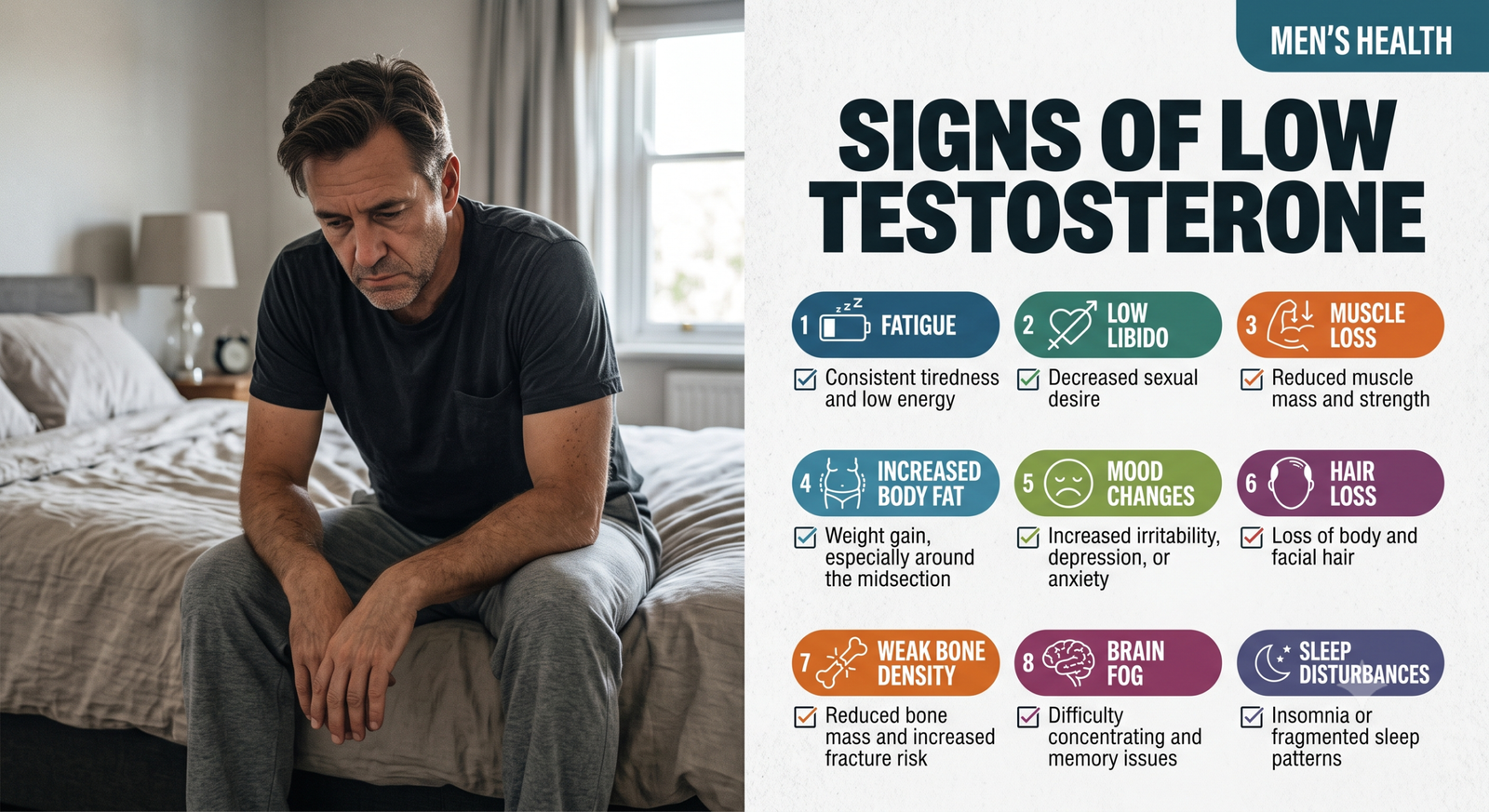
If you have been feeling tired for no clear reason, losing muscle even though you train, or simply not feeling like yourself, the signs of low testosterone could be behind it. Testosterone is the primary male hormone, and when it drops below healthy levels, the effects touch almost every part of your life.
Low testosterone, often called low T, is more common than most men realize. Levels naturally decline with age, but factors like chronic stress, poor sleep, and excess body fat can accelerate that drop in ways that are very much correctable.
In this guide, you will learn the 9 most important signs of low testosterone to watch for, what causes levels to fall, when to get tested, and what you can do naturally to support healthy hormone levels. Knowing what to look for is the first and most important step.
Table of Contents
What Is Testosterone and Why Does It Matter?
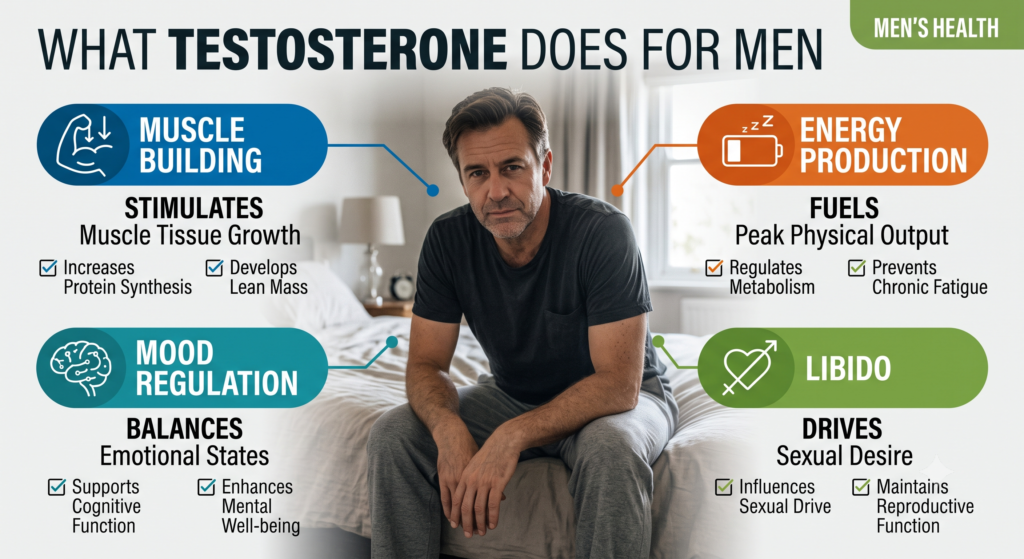
Testosterone is the hormone that shapes almost everything distinctly male. It drives muscle growth and bone density, fuels sexual drive and function, keeps your mood stable, sharpens mental focus, and supports red blood cell production. It even influences how you carry body fat.
For most men, testosterone peaks in the early 20s and then declines gradually at around one to two percent per year from age 30 onward. This steady decline is normal. The problem comes when levels fall faster than expected, or drop low enough to cause noticeable physical and psychological symptoms.
Normal testosterone levels generally range from about 300 to 1,000 nanograms per deciliter. When levels fall below 300, doctors often classify this as clinical hypogonadism. But many men feel real symptoms at levels that are technically within the normal range, especially if their levels were significantly higher before. Understanding the signs of low testosterone early gives you the best chance to act on it.
9 Clear Signs of Low Testosterone in Men
These are the nine most telling signs of low testosterone. If you recognize several of these together, that pattern is worth paying attention to and discussing with a doctor.
1. Persistent Fatigue and Low Energy
This is often the first and most frustrating sign. You get enough sleep, eat reasonably well, and still feel drained before the day has barely started. Testosterone plays a direct role in energy production at a cellular level, and when it falls, that energy supply suffers.
The fatigue from low T feels different from ordinary tiredness. It is heavy, persistent, and does not lift with rest. Many men describe it as feeling like they are running at half capacity no matter what they do.
2. Reduced Sex Drive
Testosterone is the primary driver of libido in men. A noticeable drop in interest in sex, when it represents a real change from your normal, is one of the classic signs of low testosterone. This is not about occasional low interest. It is about a sustained, unexplained shift that feels unlike you.
3. Difficulty Building or Keeping Muscle
If you are training consistently but struggling to gain muscle, or losing muscle without changing your habits, testosterone could be the reason. Testosterone is the hormone most directly responsible for muscle protein synthesis, which means lower levels make building and maintaining muscle significantly harder.
4. Increased Body Fat, Especially Around the Belly
Low testosterone and excess body fat feed each other in a frustrating loop. Low T promotes fat storage, particularly around the abdomen, and that belly fat converts testosterone into estrogen, lowering T further. If your waist is growing despite no major change in diet or activity, this hormonal loop may be part of the problem.
5. Low Mood, Irritability, or Depression
Testosterone affects the neurotransmitters that regulate mood. Men with low T often report feeling flat, irritable, unmotivated, or mildly depressed in a way that does not match their circumstances. This is not weakness. It is chemistry.
If you have noticed a change in your emotional baseline that you cannot quite explain, especially alongside other signs on this list, low testosterone is worth investigating. Our article on how to improve mental health covers related lifestyle strategies that can support both mood and hormone health.
6. Brain Fog and Poor Concentration
Testosterone supports cognitive function, including memory, focus, and mental sharpness. When levels drop, many men describe a foggy, slow quality to their thinking that makes it harder to concentrate, recall words or names, or stay mentally sharp at work.
7. Poor Sleep Quality
Low testosterone disrupts sleep architecture. Many men with low T struggle to fall asleep, wake frequently, or find that their sleep feels unrefreshing regardless of how many hours they get. Poor sleep also lowers testosterone further, creating another self-reinforcing cycle. Our guide on deep sleep benefits explains why quality sleep is one of the most direct levers for hormone health.
8. Reduced Bone Density
Testosterone helps maintain bone mineral density in men, much the same way estrogen does in women. Over time, low T accelerates bone loss, which raises the risk of fractures. This sign is invisible without a bone density scan, but it becomes increasingly relevant as men enter their 40s and 50s.
9. Decreased Motivation and Confidence
Beyond mood, low testosterone often shows up as a quiet erosion of drive, ambition, and self-confidence. Men describe feeling less competitive, less interested in goals, and less like the version of themselves they are used to being. This shift is real and rooted in biology, not character.
Signs of Low Testosterone: When to Get Tested
If you recognize several signs of low testosterone in yourself, the most useful next step is a simple blood test. A doctor will typically measure your total testosterone level, ideally in the morning when levels are highest.
A single test is often not enough. Levels fluctuate day to day, so most doctors recommend testing on at least two separate mornings before making any conclusions. Your doctor may also check free testosterone, luteinizing hormone, and other related markers to understand the full picture.
According to the Mayo Clinic, low testosterone can be addressed through lifestyle changes, medication, or hormone therapy depending on the cause and severity. A proper diagnosis is the essential starting point for any of those paths.
What Causes Testosterone Levels to Drop?
Beyond normal aging, several factors can drive testosterone lower faster than it should go. Identifying these helps you understand what might be at play in your own situation.
Chronic stress is one of the most common culprits. High cortisol directly suppresses testosterone production, which is why ongoing stress can tank your levels even if everything else is in order. Our guide on high cortisol versus low cortisol explains this relationship in detail.
Poor sleep is another major driver. Testosterone is primarily produced during deep sleep, so consistently poor rest directly reduces how much your body makes. Obesity, particularly abdominal fat, converts testosterone to estrogen as mentioned. A sedentary lifestyle reduces testosterone over time since physical activity, especially strength training, is one of the strongest natural stimulators of T production. Certain medications, alcohol excess, and medical conditions like type 2 diabetes also lower levels.
Natural Ways to Support Healthy Testosterone
Before jumping to medical treatment, lifestyle changes can meaningfully restore testosterone levels, especially for men whose low T is driven by modifiable factors.
Strength training is the most powerful natural testosterone booster. Lifting weights, particularly compound movements like squats and deadlifts, stimulates testosterone release more effectively than any other exercise. Our guide on how to build muscle after 40 covers how to train smart as your body changes.
Sleep is equally important. Prioritize seven to nine hours with consistent timing, since your body produces most of its daily testosterone during deep sleep stages. Managing stress through regular movement, breathing exercises, and sufficient recovery time reduces the cortisol that suppresses T.
Diet matters too. Foods that support testosterone production include lean meats, eggs, fatty fish, zinc-rich shellfish, and healthy fats from nuts and avocado. Our article on testosterone-boosting foods gives a practical, food-by-food breakdown. Maintaining a healthy weight also helps break the fat-to-estrogen cycle that keeps testosterone low.
According to Harvard Health, lifestyle improvements can produce real, measurable changes in testosterone levels for many men before any medical intervention is needed.

Track Your Health and Progress
If you suspect low testosterone based on the signs above, tracking your health over time gives you and your doctor a clearer picture.
Keep notes on your energy levels, mood, sleep quality, and training performance each week. These patterns are often as informative as a single blood test. For your overall physical health, use our free BMI calculator to track your weight trend and the calorie calculator to make sure your diet is supporting your hormones rather than working against them.
Our TDEE calculator helps you understand your daily energy needs, which is especially useful when building the kind of training and nutrition plan that supports healthy testosterone levels.
Frequently Asked Questions
What are the most common signs of low testosterone?
The most common signs include persistent fatigue, reduced sex drive, difficulty building muscle, increased belly fat, low mood or irritability, brain fog, poor sleep, and a general loss of motivation. Recognizing several of these together is the strongest indicator.
At what age do testosterone levels start to drop?
Testosterone typically starts declining gradually from around age 30, falling about one to two percent per year. However, factors like chronic stress, poor sleep, obesity, and a sedentary lifestyle can cause levels to drop faster and earlier.
Can low testosterone be fixed naturally?
Yes, in many cases. Consistent strength training, quality sleep, stress management, a nutritious diet with adequate protein and healthy fats, and maintaining a healthy weight can all raise testosterone meaningfully without medication, especially when lifestyle factors are the main cause.
How is low testosterone diagnosed?
A doctor measures your testosterone level with a blood test, ideally taken in the morning on two separate occasions. They may also test related hormones to understand the cause and determine the best approach.
What happens if low testosterone goes untreated?
Over time, untreated low testosterone can lead to continued muscle loss, increased body fat, reduced bone density, worsening mood, lower energy, and a higher risk of metabolic conditions. Early action gives you the best outcomes.
Does exercise increase testosterone?
Yes. Strength training is one of the most effective natural ways to stimulate testosterone production. High-intensity and compound exercises have the strongest effect. Even regular brisk walking helps maintain hormonal health over time.
When should I see a doctor about low testosterone?
See a doctor if you recognize several signs of low testosterone, especially if they have persisted for several weeks or months and are affecting your quality of life. A blood test provides clear answers and opens the door to the right treatment path.
Final Thoughts
The signs of low testosterone are real, common, and worth taking seriously. Persistent fatigue, muscle loss, low mood, reduced drive, and poor sleep are not just the inevitable cost of getting older. They are signals worth listening to.
Start by making the lifestyle changes that support healthy testosterone: train with weights, protect your sleep, manage your stress, and eat enough protein and healthy fats. If those changes do not move the needle, a simple blood test gives you the clearest next step.
Explore more of our men’s health guides on Vitality Nexus to keep building the habits that protect your strength, energy, and wellbeing for the long run.
Medical Disclaimer: This article is for general information only and is not medical advice. If you suspect you have low testosterone or any hormonal condition, please consult a qualified doctor for proper testing and guidance before making any changes to your health routine.