
It is one of the most searched nutrition questions on the internet. And yet most of the answers people find are frustratingly vague, wildly generic, or built around a one-size-fits-all number that has nothing to do with their actual body, lifestyle, or goals.
So let us answer it properly.
How many calories should I eat? The honest answer is that it depends on five specific factors that are unique to you. Get those factors right, and your calorie target becomes a precise, personalized tool that actually drives results. Get them wrong, and you are either spinning your wheels or actively working against yourself.
This guide walks you through everything you need to know to find your real number, understand what affects it, and use it intelligently to reach your goals without obsessing over every bite of food.
Table of Contents
Why There Is No Single Right Answer for Everyone
The reason nutrition guidelines often feel unhelpful is that they are built around population averages. The commonly cited figure of 2,000 calories per day for women and 2,500 for men comes from population-level dietary reference values that smooth over enormous individual variation.
A sedentary 55-year-old woman who weighs 60 kilograms has very different calorie needs from an active 28-year-old woman who weighs 75 kilograms and trains 5 days per week. Giving both of them the same number is like giving everyone the same shoe size because it is the average.
Your calorie needs are determined by a combination of biological factors you cannot change, like your age, sex, and height, and lifestyle factors you can influence, like your activity level and body composition. Understanding how each of these shapes your number is what allows you to move from a generic guideline to a genuinely useful personal target.
What Is a Calorie and Why Does It Matter?
A calorie is a unit of energy. Specifically, it is the amount of energy required to raise the temperature of one kilogram of water by one degree Celsius. In the context of nutrition, calories represent the amount of energy your body can extract from the food and drink you consume.
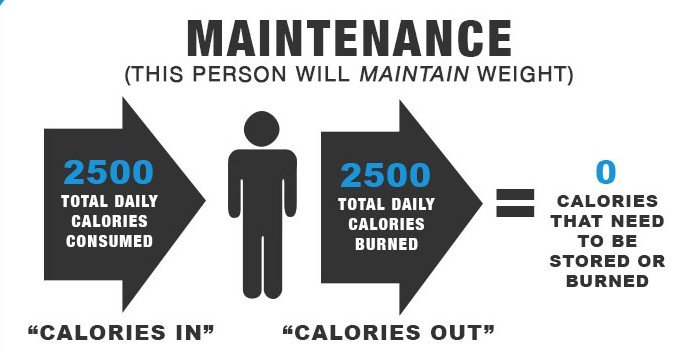
Your body uses this energy constantly to power everything from breathing and heartbeat to digestion, movement, thought, and physical activity. When the energy coming in from food matches the energy going out through these processes, your weight stays stable. When more comes in than goes out, the surplus is stored, primarily as body fat. When less comes in than goes out, the body draws on those fat stores to make up the difference.
This energy balance equation is the foundation of every weight management approach that actually works. Counting macros, intermittent fasting, low-carb eating, and every other dietary framework are all, at their most fundamental level, methods of influencing this energy equation.
According to research published by the National Institutes of Health, understanding and managing caloric intake remains one of the most effective evidence-based strategies for weight management in adults.
Factor 1: Your Basal Metabolic Rate
Your Basal Metabolic Rate, or BMR, is the number of calories your body burns at complete rest just to keep you alive. Heart beating, lungs breathing, organs functioning, cells regenerating. All of this requires energy even when you are lying completely still.
For most people, BMR accounts for 60 to 75 percent of their total daily calorie burn. This is why metabolism matters so much in the context of weight management. Even before you take a single step, your body has already burned the majority of your daily calorie needs simply by existing.
BMR is calculated using your height, weight, age, and sex through validated equations. The most widely used is the Mifflin-St Jeor equation, which research has shown to be more accurate for most people than older formulas.
For women: BMR equals 10 multiplied by weight in kilograms, plus 6.25 multiplied by height in centimeters, minus 5 multiplied by age, minus 161.
For men: BMR equals 10 multiplied by weight in kilograms, plus 6.25 multiplied by height in centimeters, minus 5 multiplied by age, plus 5.
Rather than doing this calculation manually, use our free BMR Calculator to get your precise number instantly. This single number is the foundation of everything else in this article.
For a deeper understanding of what affects your BMR and how to influence it over time, read our article on high metabolism vs low metabolism.
Factor 2: Your Activity Level
Your BMR tells you what you burn at rest. But you are not at rest all day. Every step you take, every workout you do, every time you fidget or carry groceries or climb stairs, your body burns additional calories on top of your BMR.
The combination of your BMR and all of your daily activity is called your Total Daily Energy Expenditure, or TDEE. This is the most important number for answering the question of how many calories you should eat, because it represents your true maintenance level, the intake at which your weight stays exactly the same.
Activity level is applied to BMR using a multiplier. The standard categories are:
Sedentary, meaning little or no exercise and a desk-based job, applies a multiplier of 1.2. Lightly active, meaning light exercise one to three days per week, applies 1.375. Moderately active, meaning moderate exercise three to five days per week, applies 1.55. Very active, meaning hard exercise six to seven days per week, applies 1.725. Extremely active, meaning very hard exercise and a physically demanding job, applies 1.9.
If your BMR is 1,500 calories and you are moderately active, your TDEE is approximately 2,325 calories. That is how many calories you need to eat simply to maintain your current weight.
Use our TDEE Calculator to calculate your precise Total Daily Energy Expenditure based on your actual activity level.
Factor 3: Your Goal
Once you know your TDEE, adjusting your calorie intake for your specific goal becomes straightforward.
Your goal is the single biggest determinant of whether you should be eating above, at, or below your TDEE. And the size of that adjustment matters enormously for both the results you get and how sustainable the approach feels.
For fat loss: Create a caloric deficit below your TDEE. A deficit of 300 to 500 calories per day produces a gradual and sustainable fat loss rate of approximately 0.3 to 0.5 kilograms per week, which is the range most nutrition scientists consider optimal for preserving muscle while losing fat. Larger deficits of 500 to 750 calories per day can produce faster results but increase the risk of muscle loss, hormonal disruption, and metabolic adaptation. Deficits above 750 calories per day are generally not recommended without medical supervision.
For muscle building: Create a caloric surplus above your TDEE. A modest surplus of 200 to 400 calories per day provides enough additional energy to support muscle protein synthesis without excessive fat gain. This approach produces slow but high-quality weight gain that is primarily lean tissue. Larger surpluses of 500 or more calories per day produce faster weight gain but a higher proportion of that gain will be fat rather than muscle.
For maintenance: Eat at your TDEE. This is the appropriate target for people who have reached their goal weight and want to sustain it, or for those who are happy with their current body composition and want to optimize performance and health without changing their weight.
For guidance on sustainable fat loss specifically, read our article on healthy fat loss and sustainable weight loss strategies.
Factor 4: Your Age and Sex
Age and sex are two factors baked into the BMR calculation that have profound and often underappreciated effects on calorie needs.
Age matters because metabolism changes throughout life. From our late twenties onward, BMR declines gradually, primarily because most people lose muscle mass progressively as they age through a process called sarcopenia. Muscle is metabolically expensive tissue, meaning it burns calories around the clock. Less muscle means a lower BMR and therefore lower calorie needs at the same body weight.
This is why a 50-year-old and a 25-year-old who weigh exactly the same and exercise the same amount may have meaningfully different calorie needs, with the 50-year-old typically requiring fewer calories to maintain the same weight.
The practical response to age-related metabolic decline is resistance training to preserve muscle mass. Read our article on muscle mass and metabolic health to understand how powerfully this single lifestyle factor influences your calorie needs over time.
Sex matters because men and women have different average body compositions. Men typically carry more muscle mass and less body fat at the same body weight, which produces a higher BMR. Women’s hormonal profiles, particularly estrogen, tend to favor fat storage to a greater degree, and reproductive cycles introduce hormonal fluctuations that affect both calorie needs and appetite throughout the month.
Women also experience significant hormonal transitions, particularly around perimenopause and menopause, that shift metabolism meaningfully. Read our article on perimenopause vs menopause for a deeper look at how these transitions affect women’s nutrition needs.
Factor 5: Your Body Composition
Two people can be exactly the same weight, age, height, and sex and have completely different calorie needs if their body composition differs significantly.
Muscle is metabolically active. It burns calories at rest. Fat tissue, by contrast, burns very few calories relative to its mass. A person who carries more muscle relative to fat has a higher BMR than someone of identical weight who carries more fat relative to muscle.
This is one of the most important reasons why resistance training is valuable far beyond aesthetics. Building muscle raises your BMR, which means you can eat more while maintaining the same body weight. It makes the entire energy balance equation work in your favour over the long term.
It is also why crash diets that produce rapid weight loss are self-defeating. Severe caloric restriction causes muscle loss alongside fat loss, which lowers BMR, which makes it progressively harder to maintain the weight loss and easier to regain it once normal eating resumes.
Use our Body Fat Calculator to estimate your current body fat percentage and understand how your body composition is influencing your calorie needs.
How Many Calories Should I Eat to Lose Weight?
Here is where the personalized answer really matters. The right calorie target for weight loss is not 1,200 calories. It is not 1,500. It is your TDEE minus a moderate, sustainable deficit.
For most people, this means:
Women: 1,400 to 1,900 calories per day depending on size, age, and activity level. Men: 1,800 to 2,400 calories per day depending on the same factors.
Going below 1,200 calories per day for women or 1,500 for men is not advisable without medical supervision. At very low calorie levels, it becomes extremely difficult to meet essential micronutrient needs, the body begins breaking down muscle for energy, and hormonal adaptation slows the metabolism in ways that make long-term fat loss progressively harder.
The goal is a deficit that produces steady, consistent fat loss of around 0.3 to 0.5 kilograms per week while preserving muscle mass and avoiding the metabolic adaptations that cause weight regain.
Use our Calorie Calculator to get your personalized fat loss calorie target based on your specific stats.
For more on managing weight through sustainable methods, read our article on weight gain for fast metabolism and healthy fat loss and sustainable weight loss strategies.
How Many Calories Should I Eat to Gain Weight?
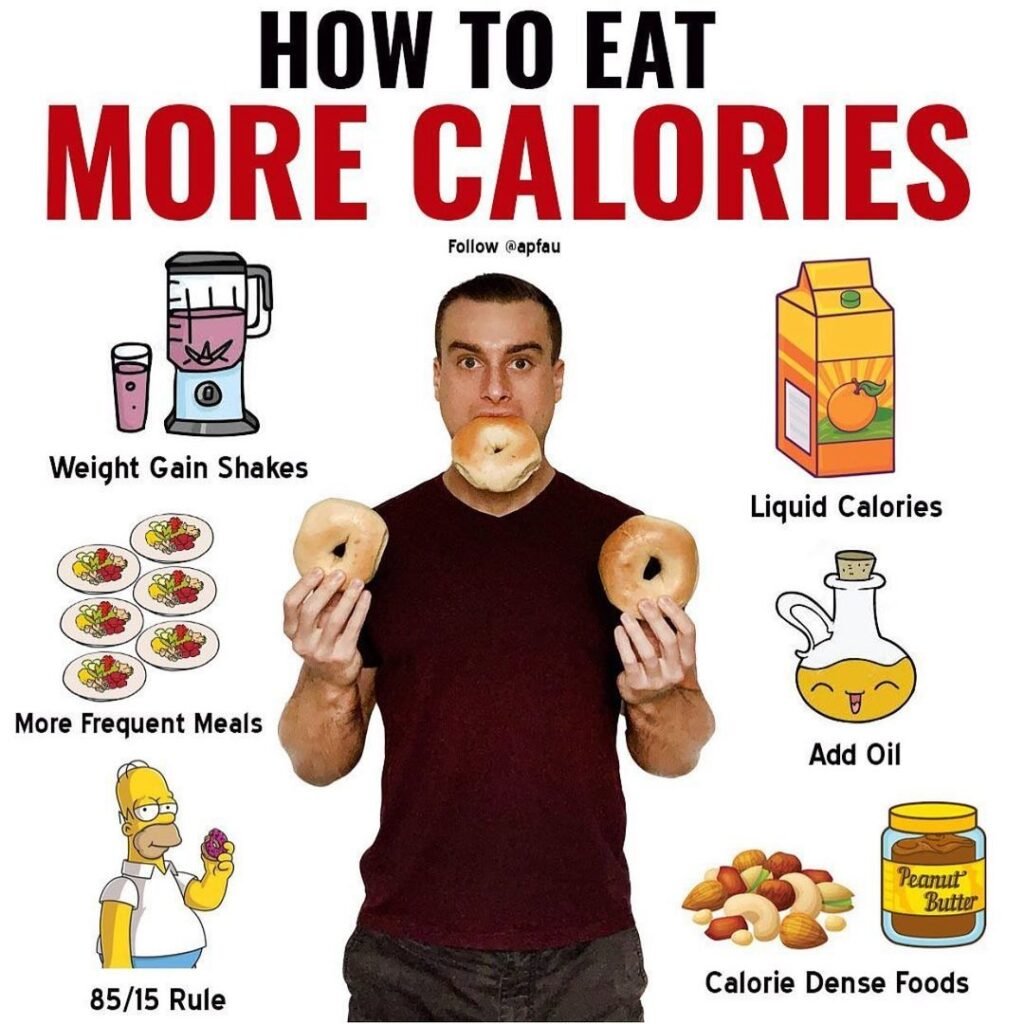
Gaining weight deliberately and healthily requires eating above your TDEE consistently. The question is how far above.
A surplus of 200 to 400 calories per day is the range most commonly recommended for lean muscle building. At this level, the body has enough additional energy to support muscle protein synthesis without accumulating excessive fat. Progress is slower than with a larger surplus but the quality of the weight gained is substantially higher.
A surplus of 400 to 600 calories per day produces faster weight gain but a greater proportion of the additional weight will be fat rather than muscle. For people who are very lean and genuinely struggling to gain any weight at all, this larger surplus may be appropriate initially.
For men specifically who find gaining weight difficult despite eating a lot, the issue is often underestimating actual calorie needs. Read our article on weight gain for fast metabolism for a practical, step-by-step approach to eating enough to actually grow.
Protein intake is equally critical for weight gain that is primarily lean muscle. Aim for 1.6 to 2.2 grams of protein per kilogram of body weight daily regardless of total calorie target.
How Many Calories Should I Eat to Maintain Weight?
Maintenance is simpler than most people expect. Eat at your TDEE and your weight stays stable over time.
The practical challenge is that TDEE changes as your body changes. When you lose weight, your TDEE decreases because there is less mass to maintain. When you gain muscle, your TDEE increases. When you become more active, it increases. When you age, it gradually decreases.
This means that maintenance is not a one-time calculation. It is an ongoing process of monitoring how your weight responds to your current intake and adjusting modestly when it drifts in an unintended direction.
The most sustainable way to maintain weight long term is through a diet built around nutritious whole foods eaten in portions that feel satisfying rather than through rigid calorie tracking that eventually becomes unsustainable. Use calorie tracking as an educational tool to build intuitive awareness of what your body needs, then gradually transition to more flexible, intuitive eating as your understanding of portion sizes and food energy content improves.
Use Our Free Tools to Find Your Exact Calorie Number
Stop guessing and start working with real, personalized numbers. These free tools on Vitality Nexus calculate your individual targets based on your actual stats.
Calculate Your BMR Your Basal Metabolic Rate is the foundation of your calorie needs. Use our BMR Calculator to find out how many calories your body burns at complete rest each day.
Calculate Your TDEE Your Total Daily Energy Expenditure is your true maintenance calorie level. Use our TDEE Calculator to find the number that accounts for your actual activity level.
Set Your Calorie Target Use our Calorie Calculator to get your personalized daily calorie target based on your goal, whether that is fat loss, muscle building, or maintenance.
Check Your BMI Use our BMI Calculator to understand where your current weight sits relative to healthy ranges and get a clearer picture of what goal you are working toward.
Find Your Ideal Weight Use our Ideal Weight Calculator to establish a realistic and healthy target weight for your height, age, and body type so you know exactly what you are aiming for.
Measure Body Fat Percentage Use our Body Fat Calculator to understand your body composition and how it is influencing your metabolic rate and calorie needs.
Optimize Your Sleep Poor sleep disrupts the hunger hormones leptin and ghrelin, making you feel hungrier than your actual calorie needs require. Use our Sleep Calculator to protect the sleep that keeps your appetite and energy in proper balance.
What to Eat Within Your Calorie Target
Calories matter enormously for weight management. But what you eat within your calorie target matters equally for your health, your energy, your muscle retention, and how satisfying and sustainable your diet feels.
Protein is the most important macronutrient to prioritize. It preserves muscle during calorie restriction, has the highest thermic effect of any macronutrient meaning your body burns more calories digesting it, and is the most satiating macronutrient per calorie. Aim for at least 1.6 grams per kilogram of body weight. Eggs, chicken, fish, Greek yogurt, legumes, and lean beef are excellent sources.
Carbohydrates are not the enemy. They are your body’s preferred fuel source for exercise and brain function. The type of carbohydrate matters more than the amount. Whole grains, vegetables, fruits, and legumes provide carbohydrates alongside fiber, vitamins, and minerals. Refined sugars and processed carbohydrates provide the same calories with far fewer nutrients and far less satiety.
Healthy fats are essential. They support hormone production, brain function, and the absorption of fat-soluble vitamins. Omega-3 fatty acids from fatty fish, walnuts, and flaxseeds provide additional anti-inflammatory benefits that support overall health and body composition. Read our article on omega-3 fatty acids benefits and food sources for a complete breakdown.
Micronutrients matter beyond macros. Even if your calorie balance is correct, deficiencies in magnesium, vitamin D, iron, and B vitamins can impair energy metabolism, worsen hunger signals, and undermine mood and recovery. Read our article on magnesium benefits, deficiency symptoms, and food sources as a starting point for understanding nutritional gaps that commonly affect weight management outcomes.
For practical meal ideas that fit a heart-healthy, balanced calorie budget, explore our collection of healthy heart recipes.
Common Calorie Mistakes That Sabotage Results
Even people with the right calorie target make these errors regularly. Knowing them saves weeks of confusion.
Underestimating portion sizes. Research consistently shows that people underestimate their calorie intake by 20 to 50 percent when not measuring food. Cooking oils, nut butters, dressings, and sauces are particularly easy to underestimate because small amounts contain large numbers of calories. Tracking food accurately with a kitchen scale for at least two to four weeks builds the intuitive awareness that makes estimation more reliable afterward.
Overestimating calorie burn from exercise. Fitness trackers and cardio machines notoriously overestimate calories burned during exercise, often by 30 to 100 percent. This creates a false sense of permission to eat more than the actual deficit requires. Use exercise as a tool to increase TDEE but calculate your targets conservatively.
Cutting calories too severely too quickly. Dropping to a very low calorie level immediately triggers adaptive thermogenesis, where the body reduces BMR to conserve energy. This makes fat loss progressively harder and sets up the metabolic conditions for rapid weight regain when calories return to normal. A moderate, consistent deficit is always more effective long-term than a dramatic short-term restriction.
Not eating enough protein. Within a calorie deficit, insufficient protein accelerates muscle loss. Losing muscle reduces BMR, which narrows the deficit you need to maintain, and makes the overall fat loss process significantly less efficient. Protein is the variable most worth prioritizing when calorie restricting.
Ignoring liquid calories. Drinks that contain significant calories, including alcohol, flavored coffee drinks, fruit juices, sports drinks, and smoothies, are frequently not accounted for in calorie tracking. A single large latte with flavored syrup can contain 300 to 500 calories. Alcohol is particularly problematic because it is calorie-dense, reduces inhibition around food choices, and disrupts sleep.
Do You Need to Count Calories Forever?
This is one of the most common and most reasonable questions people ask when they first start tracking their food intake. The good news is that the answer for most people is no.
Calorie tracking is most valuable as an educational phase. When you spend six to twelve weeks accurately tracking your food intake, you develop a genuinely accurate intuitive sense of the calorie content of common foods, appropriate portion sizes, the relative caloric density of different foods, and what a day of eating that aligns with your goals actually looks and feels like.
This knowledge does not disappear when you stop tracking. Most people who have gone through a serious tracking phase retain enough intuitive awareness to manage their calorie balance reasonably well without apps or food scales indefinitely.
Periodic return to tracking, perhaps for a week or two when weight starts drifting in an unintended direction, is a useful recalibration tool. But the goal for most people is to reach a place where their eating habits are naturally aligned with their needs without requiring constant measurement.
For broader guidance on building a sustainable healthy lifestyle around nutrition and activity, read our article on healthy lifestyle habits for energy, focus, and productivity.
FAQ
1. How many calories should I eat per day to lose weight?
The right number depends on your personal TDEE. For most women, a fat loss calorie target falls between 1,400 and 1,900 calories per day. For most men, it falls between 1,800 and 2,400 calories per day. These ranges vary based on size, age, and activity level. Calculate your TDEE using our free calculator and subtract 300 to 500 calories to find your personal fat loss target.
2. Is 1,200 calories a day enough?
For most people, 1,200 calories per day is too low for sustainable, healthy fat loss. At this level, meeting adequate protein needs becomes very difficult, muscle loss accelerates, and metabolic adaptation is more pronounced. Unless you are very small, very sedentary, and working with medical supervision, a target of 1,400 calories or above is more appropriate for most women. Men should rarely go below 1,500 calories.
3. How do I calculate how many calories I need?
The most accurate approach is to calculate your BMR using the Mifflin-St Jeor equation, multiply by your activity level multiplier to get your TDEE, then adjust from there based on your goal. Our free BMR, TDEE, and Calorie calculators on Vitality Nexus do this calculation for you in under one minute.
4. Should I eat the same calories every day?
Not necessarily. Many people find it easier and more sustainable to eat slightly fewer calories on rest days and slightly more on training days, a practice called calorie cycling. What matters most is your average intake across the week rather than hitting an identical number every single day. Some variation is normal and manageable.
5. Do calorie needs change as I lose weight?
Yes, and this is one of the most important things to understand about long-term weight management. As you lose weight, your TDEE decreases because there is less mass to maintain. This means your calorie target for continued fat loss needs to be recalculated periodically, roughly every four to six weeks or whenever you notice weight loss has stalled for more than two weeks.
6. How many calories do I need to build muscle?
To build muscle, you need to eat above your TDEE, typically by 200 to 400 calories per day for lean muscle gaining. Alongside this surplus, adequate protein intake of 1.6 to 2.2 grams per kilogram of body weight per day is essential. Without adequate protein, additional calories tend to be stored as fat rather than used to build muscle tissue.
7. Does the quality of food matter if I am within my calorie target?
Absolutely. Calories from different food sources have very different effects on satiety, muscle retention, hormonal health, energy levels, and micronutrient status. Meeting your calorie target with mostly whole foods, adequate protein, complex carbohydrates, and healthy fats produces dramatically better health and body composition outcomes than meeting the same calorie target with primarily processed, nutrient-poor foods.
Conclusion
How many calories should I eat? The answer is your TDEE adjusted for your specific goal, calculated based on your real stats, and built around a diet that prioritizes protein, whole foods, and sustainable habits over restriction and rigidity.
There is no magic number that works for everyone. But there is a right number for you specifically, and finding it takes less than five minutes with the right tools.
Use the free calculators at Vitality Nexus to calculate your BMR, TDEE, and personalized calorie target right now. Explore our nutrition and supplements resources to understand what to eat within your target for the best possible health outcomes. And visit our weight loss section for comprehensive guidance on making your calorie targets work for lasting, sustainable results.
Your number is out there. Now you know exactly how to find it.