If your mind springs to life the moment your head hits the pillow, you are not alone, and learning how to stop overthinking at night can give you back your rest. Those racing thoughts about work, money, and tomorrow feel impossible to switch off, yet they are far more common than most people realize.
Nighttime is the perfect storm for overthinking. The day’s distractions disappear, the room goes quiet, and your tired brain finally has space to replay everything you postponed. The result is a loop of worry that keeps you wide awake long after you wanted to sleep.
The good news is that this pattern is not a flaw in you, and it can be changed. In this guide, you will learn how to stop overthinking at night using daytime habits, a calming evening routine, and simple in-the-moment tricks. None of these require special tools, just a little practice and patience with yourself.
Table of Contents
Why Your Mind Races at Night
Understanding why overthinking strikes at night makes it far easier to manage. The causes are mostly practical, not personal failings.
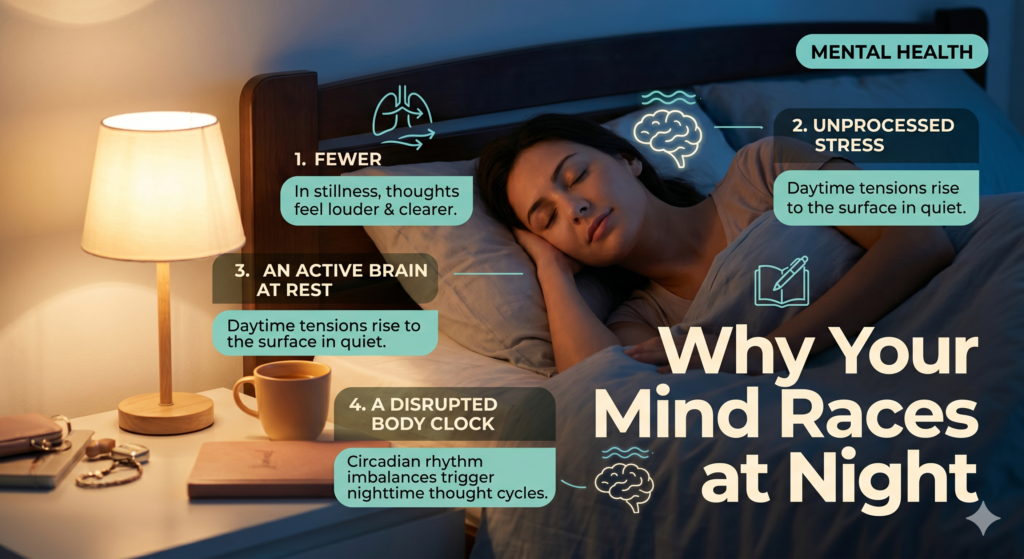
During the day, your attention is pulled in a dozen directions, which naturally distracts you from worry. At night, those distractions vanish. The silence and stillness leave your brain free to process everything it set aside, so unresolved stress rises to the surface.
Your body clock plays a role too. When your sleep and wake times are irregular, your mind struggles to wind down on cue. Stress hormones like cortisol add fuel, since high evening cortisol keeps the brain alert when it should be relaxing. Our guide on high cortisol versus low cortisol explains how this stress chemistry affects rest.
There is also a simple cycle at work. Poor sleep raises stress the next day, and higher stress makes the next night’s overthinking worse. Breaking this loop anywhere, even with one small habit, starts to calm the whole pattern.
It also helps to remember that nighttime overthinking is incredibly common. Surveys consistently find that worry and stress are among the top reasons people report trouble falling asleep. So if your brain becomes loud the moment the room goes quiet, you are sharing that experience with millions of others, and like them, you can learn how to stop overthinking at night with the right tools.
How to Stop Overthinking at Night With Daytime Habits
The most powerful way to learn how to stop overthinking at night actually starts during the day. What you do before bedtime sets the stage for how quiet your mind becomes.
Try setting aside a short “worry window” earlier in the day. Spend ten minutes writing down your concerns and any next steps, then close the notebook. This tells your brain the worries are handled, so they are less likely to resurface at midnight.
Daytime movement helps too. Regular exercise and even a short walk burn off nervous energy and lower stress hormones, making the evening calmer. Limiting caffeine after early afternoon is just as important, since it can linger for hours and keep your mind buzzing. If anxious thoughts are a daily struggle, our article on natural ways to reduce anxiety offers gentle, practical support.
A few common daytime habits quietly fuel nighttime overthinking, so it helps to spot them. Checking your phone constantly keeps your brain in a reactive, alert state that is hard to switch off later. Skipping breaks and pushing through stress without pause means all that tension waits to surface at bedtime. Scrolling distressing news or social media in the evening primes the mind for worry. Becoming aware of these patterns is a big part of learning how to stop overthinking at night, because the calmer your day feels, the quieter your mind becomes once the lights go out.
9 Proven Ways to Calm a Racing Mind at Night
When the overthinking starts, these proven, calming techniques help you break the loop. Try a few and keep the ones that work for you.
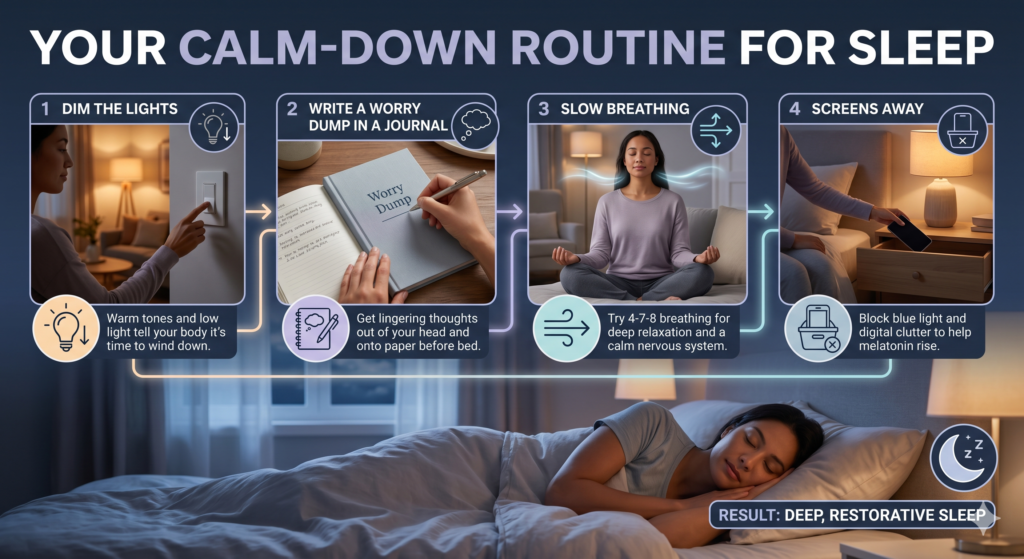
- Practice slow breathing. Inhale for four counts, hold briefly, then exhale for six. Longer exhales signal your body to relax.
- Do a worry dump. Keep a notebook by your bed and write down every racing thought to get it out of your head and onto paper.
- Get out of bed if you cannot sleep. Sit somewhere dim and calm for a few minutes, then return when you feel sleepy, so your bed stays linked to rest.
- Try a simple grounding exercise. Name a few things you can see, hear, and feel to pull your mind back to the present moment.
- Use a gentle mental cue. Quietly telling yourself “this thought can wait until morning” eases the pressure without fighting the thought.
- Shift to gratitude. Listing a few good things from your day moves your focus away from worry and toward calm.
- Keep screens away before bed. Blue light and stressful content keep your brain alert when it needs to wind down.
- Relax your body step by step. Tense and release each muscle group from your toes upward to release physical tension.
- Support your sleep naturally. Low magnesium can worsen restless nights, as explained in our guide on magnesium for sleep.
Consistency matters more than perfection. Each time you practice these tools, you gently retrain your brain toward calmer nights.
Build a Calming Evening Routine
A steady wind-down routine is one of the best long-term answers for how to stop overthinking at night. It signals your body that the day is ending and sleep is near.
Start dimming the lights about an hour before bed and switch to low-stimulation activities like reading, light stretching, or quiet music. A warm, caffeine-free drink such as chamomile tea can become a soothing ritual. Keep your bedroom cool, dark, and quiet so your senses can settle.
Most importantly, aim for consistent sleep and wake times, even on weekends. This trains your body clock so sleep arrives more easily. If you often lie awake despite a calm routine, our article on insomnia symptoms, causes, and treatment can help you understand what else might be going on, and our piece on the signs of poor sleep shows patterns worth watching.
When Overthinking Needs Professional Help
Self-help tools work well for many people, but sometimes overthinking runs deeper. Knowing when to reach out for support is a sign of strength, not weakness.
Consider speaking with a doctor or therapist if your mind races most nights rather than occasionally, if the worry affects your mood, focus, work, or relationships, or if self-help tools only help a little. Persistent rumination can be linked to anxiety, depression, or burnout, and the right support can change everything. Our guide on burnout causes, symptoms, and solutions and our mental health and emotional wellness guide are helpful starting points.
According to Harvard Health, evidence-based approaches like mindfulness and cognitive behavioral techniques can meaningfully reduce anxious, racing thoughts. A professional can match the right approach to your needs, so you do not have to figure it out alone.
Track and Improve Your Sleep
Knowing your ideal sleep window makes calming your mind easier. When you go to bed at the right time, you are less likely to lie awake overthinking.
Use our free sleep calculator to find the best times to fall asleep and wake up in line with your natural sleep cycles. Going to bed only when your body is truly tired reduces the time you spend staring at the ceiling.
Better sleep and a calmer mind support each other. The Sleep Foundation notes that mental health and sleep are deeply connected, so improving one often improves the other. Small, steady changes to your routine build real progress over a few weeks.
Frequently Asked Questions
How do I stop overthinking at night quickly?
Try slow breathing with longer exhales, write your worries in a notebook, or use a calm cue like “this can wait until morning.” If you cannot settle, get out of bed for a few minutes and return when you feel sleepy.
Why does my brain overthink the most at night?
At night there are fewer distractions, so your brain finally processes the stress you set aside during the day. A quiet, dark room and a busy mind combine to make worries feel louder than they really are.
Does writing things down really help with overthinking?
Yes. A nightly “worry dump” moves thoughts out of your head and onto paper, creating space between you and your worries. Many people find this simple habit helps them fall asleep faster.
What should I avoid before bed if I overthink?
Avoid caffeine in the afternoon and evening, stressful conversations, work emails, and screens close to bedtime. These keep your mind alert when it needs to wind down and make racing thoughts worse.
Can overthinking at night be a sign of anxiety?
It can be. Occasional overthinking is normal, but if racing thoughts happen most nights and affect your daily life, it may be linked to anxiety or stress, and talking to a professional can help.
How long does it take to calm nighttime overthinking?
Many people feel some relief within the first week of trying these techniques. Building a consistent evening routine usually brings steadier results over two to four weeks of practice.
When should I see a doctor about overthinking?
See a doctor or therapist if your mind races most nights, if worry is harming your mood, focus, or relationships, or if self-help tools are not enough. Seeking help early often leads to faster relief.
Final Thoughts
Learning how to stop overthinking at night is less about forcing your mind quiet and more about gently guiding it toward rest. With calmer daytime habits, a steady evening routine, and a few in-the-moment tools, those racing thoughts slowly lose their grip.
Start small tonight. Try one breathing exercise, keep a notebook by your bed, and dim the lights an hour before sleep. Be patient with yourself, since change takes a little practice, and remember that reaching out for professional support is always a wise option if the struggle continues.
Explore more of our mental health and sleep guides on Vitality Nexus to keep building calm, healthy habits that help you rest and feel your best.
Medical Disclaimer: This article is for general information only and is not a substitute for professional mental health care. If overthinking, anxiety, or sleep problems are affecting your daily life, please reach out to a qualified doctor or mental health professional for support.