
If every diet you have tried felt like a full-time job, intermittent fasting for weight loss might be the simplest, most sustainable approach you have not given a proper chance. Instead of telling you what to eat, it focuses on when you eat, which removes a lot of the daily decision fatigue that makes traditional diets so hard to stick to.
Intermittent fasting has become one of the most researched eating patterns in the world, and the evidence behind it for weight loss, blood sugar control, and metabolic health is genuinely strong. It is not a fad. It is a structured way of eating that works with your body’s natural hormonal rhythms rather than against them.
In this guide, you will learn how intermittent fasting for weight loss works, the best methods for beginners, nine practical tips to make it stick, what to eat during your eating window, and who should approach it with caution.
Table of Contents
What Is Intermittent Fasting and How Does It Work?
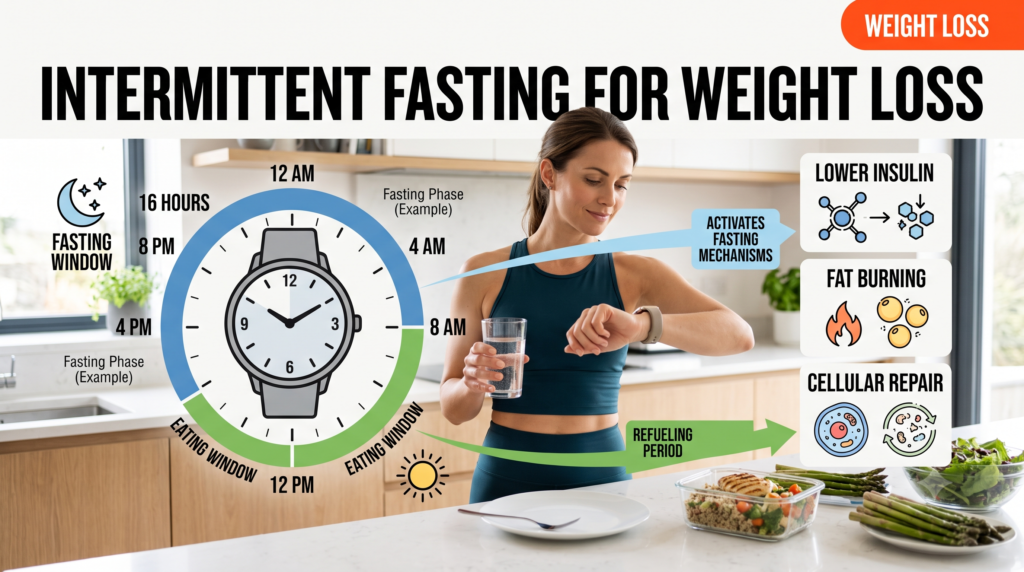
Intermittent fasting is not a diet in the traditional sense. It is an eating pattern that cycles between periods of eating and periods of fasting. During the fasting window, your body shifts from using glucose as its primary fuel to burning stored fat, which is where the weight loss benefit comes from.
When you eat, your insulin levels rise to manage blood sugar. While insulin is elevated, fat burning is largely switched off. During a fast, insulin drops, fat stores become accessible, and your body begins using them for energy. The longer and more consistently this happens, the more effective intermittent fasting for weight loss becomes.
There is also a hormonal boost. Growth hormone rises during fasting, which supports fat loss and muscle preservation. Norepinephrine, a fat-burning hormone, also increases. According to Harvard Health, the metabolic shift that happens during a fast of 12 hours or more produces real benefits for body weight, blood pressure, and blood sugar.
Intermittent Fasting for Weight Loss: The Best Methods
There are several approaches to intermittent fasting for weight loss. The right one is the one you can actually stick to.
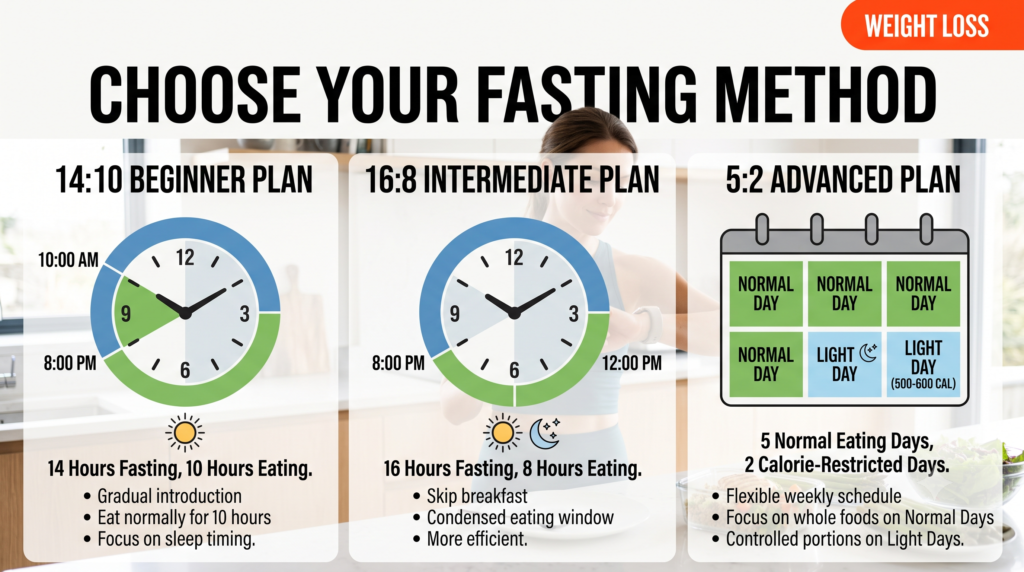
The 16:8 method is the most popular and beginner-friendly. You fast for 16 hours and eat within an 8-hour window. For most people, this means skipping breakfast and eating from noon to 8 pm. It fits naturally into a regular day and requires no calorie counting.
The 14:10 method is a gentler starting point for people who struggle with the 16-hour fast. A 14-hour fast from 8 pm to 10 am is manageable for almost everyone and still produces meaningful results.
The 5:2 method involves eating normally for five days and restricting calories to around 500 to 600 on two non-consecutive days. It suits people who prefer flexibility during the week. The Eat Stop Eat method uses a full 24-hour fast once or twice per week, which is more advanced and better suited to those with some fasting experience.
For most beginners, starting with 14:10 or 16:8 and adjusting from there is the most sensible approach.
9 Proven Tips for Intermittent Fasting Success
These nine tips make intermittent fasting for weight loss far easier to maintain and far more effective once you start.
1. Start gradually. If you are new to fasting, begin with a 12-hour fast and extend it by 30 minutes every few days. Jumping straight into 16 hours often leads to hunger-driven quitting before your body adapts.
2. Stay well hydrated during fasting hours. Water, black coffee, and plain tea are all permitted during the fast and are essential for managing hunger and energy. Dehydration is often mistaken for hunger, so drink consistently.
3. Eat your first meal wisely. Breaking your fast with a protein and fiber-rich meal sets your blood sugar and hunger hormones on a stable path for the rest of the day. Eggs, Greek yogurt with berries, or a vegetable omelette are excellent choices.
4. Keep electrolytes in balance. Longer fasts can cause sodium, potassium, and magnesium levels to dip, leading to headaches and fatigue. Adding a pinch of salt to your water or including mineral-rich foods in your eating window addresses this.
5. Fill your eating window with genuinely nutritious food. Intermittent fasting for weight loss works best when the calories you eat are nourishing rather than processed. Our guide on how to lose weight without exercise explains how food quality shapes body composition.
6. Stay consistent with your fasting window. Your body adapts faster when the eating and fasting windows are consistent day to day. A regular pattern makes hunger more predictable and easier to manage.
7. Move during your eating window. Light exercise or a short walk during your eating window rather than deep in a fast helps energy and fat burning. Our article on the benefits of walking daily shows how even modest movement amplifies fat loss results.
8. Protect your sleep. Most of your fast happens overnight, so good quality sleep extends your fasting period naturally and supports the hormones that make intermittent fasting work. Our guide on deep sleep benefits covers why quality rest matters so much for weight loss.
9. Be patient. The first week of intermittent fasting often involves hunger and adjustment. Most people find it becomes comfortable and even effortless by week two or three as hunger hormones adapt.
What to Eat During Your Eating Window
The food you eat during your eating window determines how effective intermittent fasting for weight loss becomes. Fasting creates the hormonal environment for fat burning, but food quality controls whether that environment is maintained.
Prioritize protein at every meal. It preserves muscle during a calorie deficit, reduces hunger for hours, and has minimal impact on insulin. Lean meat, fish, eggs, legumes, and Greek yogurt are your best protein anchors.
Fiber-rich vegetables, beans, and whole grains should fill the rest of your plate. They slow digestion, steady blood sugar, and keep insulin low even within your eating window. Healthy fats from nuts, avocado, and olive oil add satiety without spiking glucose.
What to limit is equally important. Sugary drinks, refined carbohydrates, and processed snacks spike insulin and work against the hormonal environment that intermittent fasting creates. If you break a 16-hour fast with a bowl of sugary cereal and a flavored coffee, you undo much of the benefit within minutes.
Intermittent Fasting for Weight Loss and Blood Sugar
One of the most clinically significant benefits of intermittent fasting for weight loss is its effect on blood sugar and insulin sensitivity. During fasting periods, insulin drops and cells become more responsive to it when eating resumes.
For people managing prediabetes or type 2 diabetes, this effect is particularly meaningful. Studies show that time-restricted eating can reduce fasting glucose, lower HbA1c, and reduce the need for some glucose-lowering medications over time. If you take diabetes medication, it is essential to discuss intermittent fasting with your doctor before starting, since fasting can affect how medication works.
Our articles on prediabetes versus type 2 diabetes and sleep and type 2 diabetes give a fuller picture of how lifestyle choices, including eating patterns and rest, connect to metabolic health. Pairing intermittent fasting with foods from our blood sugar lowering foods guide creates a particularly powerful approach for metabolic improvement.
Common Mistakes That Slow Your Progress
Even a well-structured approach to intermittent fasting for weight loss can stall if a few common mistakes creep in.
The biggest one is overeating during the eating window. Many people unconsciously compensate for the fast by eating far more than usual once the window opens. The goal is not to restrict calories severely, but to eat a normal, satisfying amount of healthy food within your window. Tracking what you eat for the first two weeks helps you calibrate without guessing.
Another mistake is choosing poor-quality foods during the eating window. Fasting time does not justify a meal of processed food and sugary drinks. A third common error is inconsistency. Shifting your eating window wildly from day to day prevents your body from adapting and makes hunger harder to manage.
Finally, some people abandon fasting in the first week because of hunger or mild headaches, which are almost always temporary. These symptoms are the body adapting, not a sign that something is wrong, and they typically resolve within a week of consistent practice.
Who Should Be Careful With Intermittent Fasting
Intermittent fasting for weight loss suits most healthy adults, but certain groups should approach it carefully or avoid it entirely without medical guidance.
Pregnant or breastfeeding women should not fast, since calorie and nutrient restriction can harm fetal or infant development. People with a history of eating disorders should approach fasting with caution and ideally with professional support, since structured restriction can trigger disordered eating patterns.
Those taking medication for diabetes, blood pressure, or other conditions need to discuss fasting with their doctor, since the effects of fasting on medication absorption and blood sugar can be significant. People who are underweight, teenagers, and children should also avoid fasting.
According to the National Institutes of Health, more research is still needed for certain populations, and personalized medical advice is always the safest starting point if you have any health conditions.
Track Your Progress and Nutrition
Knowing your numbers makes intermittent fasting for weight loss more precise and more motivating. Without tracking, it is easy to underestimate how much you eat within your window or to mistake water loss for fat loss in the early weeks.
Start with our free calorie calculator to understand your daily energy needs, and the TDEE calculator to see how many calories your body burns each day. These numbers tell you how large a deficit you are creating. Track your body composition changes with the BMI calculator and body fat calculator monthly rather than weekly to see the real trend beyond daily fluctuations.
For a complete weight loss approach that pairs well with intermittent fasting, our healthy fat loss strategies guide ties diet, movement, and recovery together into a practical, sustainable system.
Frequently Asked Questions
Does intermittent fasting really work for weight loss?
Yes. Multiple studies show that intermittent fasting produces weight loss comparable to continuous calorie restriction, and some people find it easier to sustain because it eliminates constant meal tracking and decision-making.
How much weight can I lose with intermittent fasting?
Most people lose between 0.5 and 1 kilogram per week with consistent intermittent fasting combined with healthy eating. Results vary based on starting weight, food choices, and how strictly the fasting window is maintained.
What can I drink during the fasting window?
Water, black coffee, and plain tea are the standard options. These do not raise insulin and are safe during fasting hours. Avoid anything with calories, including cream, milk, sugar, or flavored drinks.
Will intermittent fasting slow my metabolism?
Short-term fasting actually boosts certain fat-burning hormones rather than slowing metabolism. The key is not to fast for extended periods or pair it with very severe calorie restriction, both of which can reduce metabolic rate over time.
Is it normal to feel hungry during the first week?
Yes. Hunger during the first week is very normal as your body adapts to a new eating schedule. Most people find that hunger becomes much more manageable by weeks two and three as ghrelin, the hunger hormone, adjusts to the new pattern.
Can I exercise while intermittent fasting?
Yes. Light to moderate exercise is safe during fasting. Many people prefer to work out near the end of their fasting window and then eat their first meal immediately after as a recovery meal.
How long does intermittent fasting take to show results?
Most people notice changes in energy and bloating within the first one to two weeks. Visible weight loss typically becomes noticeable within three to four weeks of consistent practice paired with healthy food choices.
Final Thoughts
Intermittent fasting for weight loss is one of the most practical, evidence-backed approaches available. By working with your body’s natural hormonal cycles rather than fighting them with constant restriction, it creates the conditions for steady, sustainable fat loss without the exhaustion of traditional dieting.
Start with a 14-hour fast, stay hydrated, eat nutritious whole foods in your eating window, and be patient through the first adjustment week. Most people find that after two to three weeks, the pattern feels natural rather than effortful.
Use the free tools on Vitality Nexus to track your calorie needs and body composition, and explore our weight loss and metabolic health guides for everything else you need to build a lifestyle that supports lasting results.
Medical Disclaimer: This article is for general information only and is not medical advice. If you have diabetes, a history of eating disorders, or take regular medication, please consult a qualified doctor before starting intermittent fasting.