If your periods are irregular, your skin keeps breaking out no matter what you try, or your weight seems impossible to manage despite your best efforts, PCOS symptoms might be the explanation nobody has pointed you toward yet.
Polycystic ovary syndrome, or PCOS, is one of the most common hormonal conditions in women of reproductive age, affecting roughly one in ten women globally. Yet it remains significantly underdiagnosed, partly because its symptoms overlap with so many other conditions and partly because many women are told their irregular periods or acne are just normal variation.
They are not always normal. Knowing the PCOS symptoms allows you to advocate for yourself, get the right testing, and access treatments and lifestyle changes that genuinely make a difference.
In this guide, you will learn the 10 most important PCOS symptoms, what causes PCOS, how it is diagnosed, the health risks of leaving it unmanaged, and the natural strategies that help. Understanding what your body is telling you is the first step.
Table of Contents
What Is PCOS and Why Does It Happen?
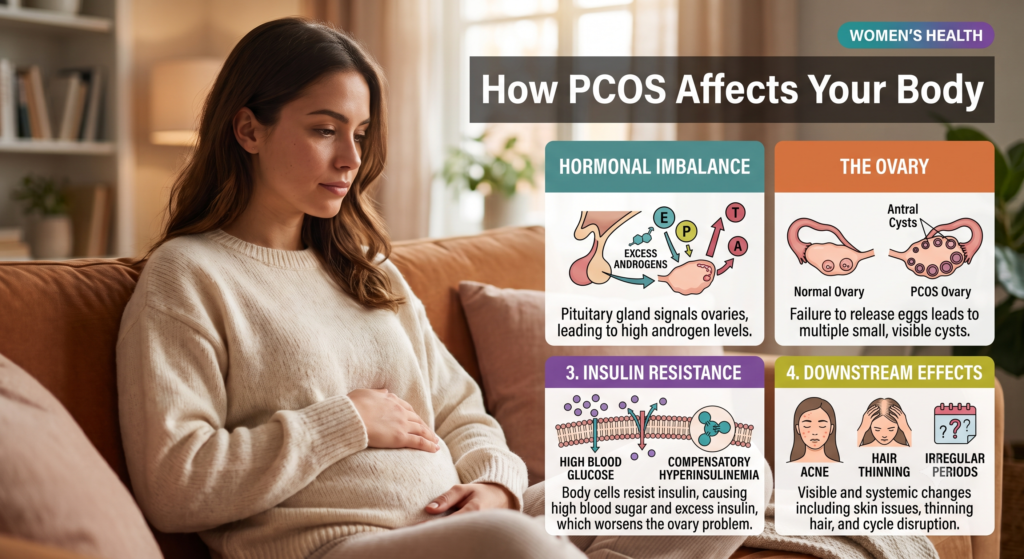
PCOS is a hormonal disorder in which the ovaries produce higher than normal levels of androgens, the male hormones that all women have in small amounts. This hormonal imbalance disrupts the normal development and release of eggs during the menstrual cycle, which is why irregular periods are one of the most defining features.
The name comes from the appearance of ovaries in many women with the condition: multiple small follicles, often called cysts though they are not true cysts, visible on an ultrasound. However, not every woman with PCOS has these follicles, and not every woman with follicles on her ovaries has PCOS.
The exact cause is not fully understood, but two factors are strongly implicated. Insulin resistance is present in most women with PCOS, causing the pancreas to produce more insulin, which in turn stimulates the ovaries to produce more androgens. Genetics also play a role: PCOS runs in families, and if your mother or sister has it, your own risk is higher.
10 Key PCOS Symptoms to Recognize
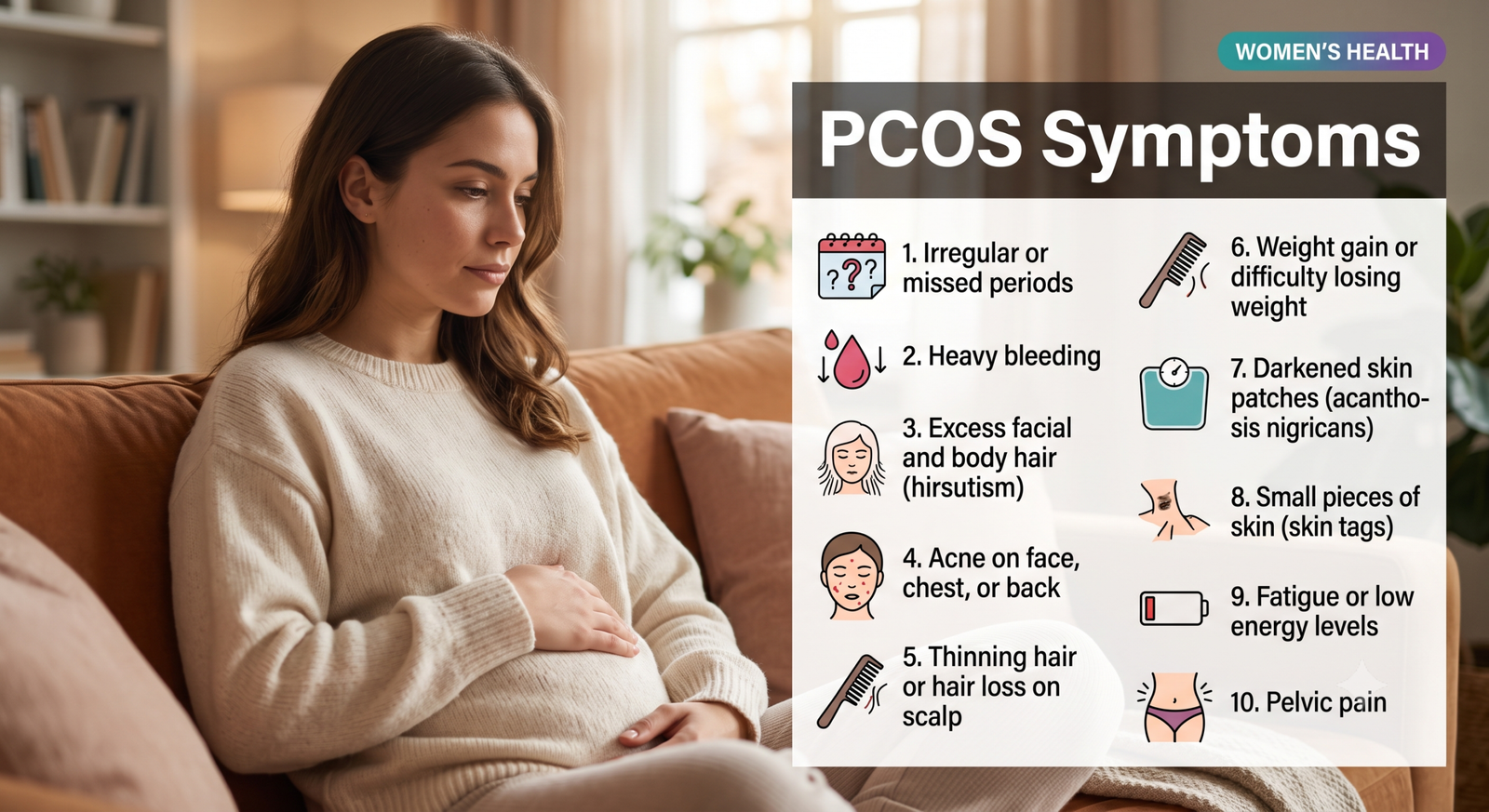
These are the ten most consistent PCOS symptoms reported in women with the condition. Most women with PCOS experience several of these rather than all of them, and the severity varies considerably from person to person.
1. Irregular or Missing Periods
This is the most defining of all PCOS symptoms. Irregular periods mean cycles that are shorter than 21 days, longer than 35 days, unpredictably spaced, or absent for three months or more. Because PCOS disrupts ovulation, the timing and regularity of the menstrual cycle is directly affected.
Many women with PCOS have fewer than eight periods per year. Others have cycles that vary wildly in length from one month to the next. If your periods have never been regular and you have been told it is just how you are, it is worth investigating whether PCOS might be the reason.
2. Excess Hair Growth on the Face or Body
Hirsutism, or excess hair growth in areas typically associated with male hair patterns, is one of the most distressing PCOS symptoms for many women. Hair may appear on the upper lip, chin, chest, abdomen, or inner thighs. This is caused directly by elevated androgens stimulating hair follicles.
The hair is usually coarser and darker than typical body hair and grows in areas where women do not normally have significant hair. If this is a new development in adulthood, PCOS is one of the most common causes.
3. Acne and Oily Skin
Androgen excess stimulates sebaceous glands in the skin to produce more oil, which leads to acne that is often hormonal in pattern: concentrated around the jaw, chin, and neck, sometimes deep and cystic, and resistant to typical topical treatments.
Women with PCOS-related acne often notice that it worsens in the days before a period, when hormonal fluctuations are greatest. Standard acne treatments rarely resolve it fully because they do not address the underlying hormonal cause.
4. Hair Thinning or Loss on the Scalp
While PCOS causes excess hair growth on the body, it can simultaneously cause hair thinning on the scalp. This pattern, called androgenic alopecia, is driven by the same elevated androgens acting on scalp follicles rather than body follicles.
The thinning is usually most noticeable at the crown of the head or along the parting, rather than the all-over shedding associated with other causes of hair loss. Our guide on iron deficiency symptoms in women covers another common cause of hair loss worth ruling out alongside PCOS.
5. Weight Gain and Difficulty Losing Weight
Many women with PCOS find that their weight creeps up despite no significant change in their diet or activity, and that losing weight is unusually difficult even with genuine effort. Insulin resistance is the primary driver: when cells do not respond normally to insulin, the body stores more fat, particularly around the abdomen.
This abdominal weight gain is itself hormonally active. Belly fat converts androgens to estrogen and contributes to the hormonal imbalance, creating a cycle that makes weight management particularly challenging in PCOS.
6. Insulin Resistance and Blood Sugar Issues
Insulin resistance affects up to 70 percent of women with PCOS and is one of the most metabolically significant of all PCOS symptoms. It causes blood sugar to rise higher than normal after meals, triggers cravings for sugar and refined carbohydrates, and dramatically raises the risk of developing type 2 diabetes over time.
Women with PCOS and insulin resistance often experience energy crashes after meals, constant hunger despite eating, and intense carbohydrate cravings that feel separate from ordinary appetite. Our article on early warning signs of type 2 diabetes explains the metabolic risks of unmanaged insulin resistance in detail.
7. Fatigue and Low Energy
Persistent fatigue is a commonly reported but often overlooked PCOS symptom. It is driven by a combination of insulin resistance causing blood sugar instability, poor sleep from hormonal disruption, and the chronic low-grade inflammation associated with the condition.
Many women with PCOS feel tired in a way that does not respond to rest, particularly in the afternoon after meals as blood sugar fluctuates.
8. Mood Changes, Anxiety, and Depression
PCOS has a strong bidirectional relationship with mental health. Women with PCOS have significantly higher rates of anxiety and depression than the general population, driven by hormonal imbalance, the chronic stress of managing a complex condition, and the direct neurological effects of androgen excess and insulin resistance.
Mood changes, irritability, and emotional sensitivity, particularly around the time of a period, are frequently reported by women with PCOS. Our article on how stress affects women’s reproductive health explains how psychological stress and hormonal health are interconnected.
9. Sleep Problems and Insomnia
Sleep disturbances are more common in women with PCOS than in the general population. Some research points to a higher prevalence of sleep apnea in PCOS, even in women who are not significantly overweight. Hormonal fluctuations through the cycle can also disrupt sleep architecture in ways that make rest feel unrefreshing.
Poor sleep worsens insulin resistance, raises cortisol, and amplifies most other PCOS symptoms, making sleep a critical target in PCOS management. Our article on magnesium for sleep covers a nutrient particularly relevant to both PCOS and sleep quality.
10. Fertility Challenges
Because PCOS disrupts ovulation, it is one of the most common causes of fertility difficulties in women of reproductive age. Without regular ovulation, natural conception is harder, though not impossible. Many women discover they have PCOS only when they begin trying to conceive and find the process more difficult than expected.
It is important to note that PCOS does not mean infertility. Many women with PCOS conceive naturally or with relatively simple interventions. However, addressing the hormonal imbalance proactively before attempting conception improves both the likelihood and safety of pregnancy.
PCOS Symptoms vs Normal Hormonal Variation
One reason PCOS is so often missed is that many of its symptoms overlap with what some doctors dismiss as normal variation. Occasional irregular periods, some facial hair, and mild acne are common enough in women without PCOS that they are sometimes normalized rather than investigated.
The distinction lies in pattern and persistence. Periods that are consistently irregular rather than occasionally late, acne that is hormonal in distribution and resistant to treatment, hair growth in clearly androgen-sensitive areas rather than light facial hair, and weight gain that is disproportionate to lifestyle changes, together these form a recognizable pattern that deserves proper investigation.
According to the Office on Women’s Health, PCOS is diagnosed when a woman has at least two of three criteria: irregular ovulation, elevated androgens, and polycystic-appearing ovaries. No single symptom alone makes the diagnosis.
How PCOS Is Diagnosed
PCOS diagnosis involves a combination of symptom history, blood tests, and often an ultrasound. There is no single definitive test.
Your doctor will typically ask about your menstrual history, check androgen levels in your blood, test fasting glucose and insulin to assess metabolic function, and may arrange a pelvic ultrasound to look at ovarian appearance. Thyroid function and prolactin levels are usually checked to rule out other conditions that can cause similar symptoms.
Getting the right testing requires clearly communicating your symptoms. If you suspect PCOS, bring a written note of your cycle history, symptoms, and how long they have been present. Many women need to see more than one doctor before receiving a proper evaluation.
Health Risks of Unmanaged PCOS
PCOS is not just a reproductive condition. Unmanaged PCOS carries significant long-term health risks that extend well beyond fertility.
The most serious is an elevated risk of type 2 diabetes. Women with PCOS develop type 2 diabetes at rates several times higher than the general population, driven by the chronic insulin resistance at the heart of the condition. They also have higher rates of cardiovascular disease, high blood pressure, and high cholesterol.
Endometrial cancer risk is elevated in women who go long periods without a period, since the uterine lining continues to thicken without being shed. Mental health conditions including anxiety and depression are significantly more common. And metabolic syndrome, a cluster of risk factors including abdominal obesity, high blood sugar, and high blood pressure, affects a large proportion of women with unmanaged PCOS.
These risks make early diagnosis and active management not just about symptom relief but about long-term disease prevention.
Natural Ways to Manage PCOS Symptoms
Lifestyle changes are genuinely powerful in PCOS, often producing improvements in symptoms and metabolic markers that rival medication in women whose PCOS is primarily driven by insulin resistance.
Diet is the most important starting point. A lower-glycemic diet that reduces blood sugar spikes improves insulin sensitivity, lowers androgen levels, and can restore more regular cycles in some women. This means prioritizing protein, healthy fats, vegetables, legumes, and whole grains while limiting refined carbohydrates and added sugar. Our guides on hormone balance for women and foods that lower blood sugar give practical frameworks for eating in a way that directly supports PCOS management.
Regular exercise improves insulin sensitivity, reduces abdominal fat, and lowers androgens. A combination of strength training and aerobic activity is particularly effective. Even consistent daily walking makes a meaningful metabolic difference over time.
Inositol, particularly myo-inositol, has strong evidence as a natural supplement for improving insulin sensitivity and ovulation frequency in women with PCOS. Magnesium, vitamin D, and omega-3 fatty acids all address specific deficiencies commonly found in PCOS. According to Harvard Health, lifestyle interventions remain the first-line recommendation for managing most PCOS symptoms before considering medication.
Stress management is equally important. Chronic stress elevates cortisol, which worsens insulin resistance and disrupts the hormonal environment further. Building consistent daily recovery practices makes the hormonal picture calmer over time.
When to See a Doctor About PCOS
You should discuss PCOS with a doctor if your periods have been consistently irregular for more than three months, if you have noticeable hair growth in androgen-sensitive areas, if you have experienced unexplained weight gain concentrated around the abdomen, or if you have been struggling with fertility.
PCOS is managed most effectively when diagnosed accurately and treated as the metabolic as well as reproductive condition it is. A gynecologist, endocrinologist, or reproductive specialist with PCOS experience can guide you through the testing, treatment options, and monitoring that your specific presentation requires.
If you are of reproductive age and suspect PCOS, do not wait for symptoms to worsen before seeking evaluation. Early intervention produces the best long-term outcomes for both fertility and metabolic health.

Track Your Health and Progress
Managing PCOS requires keeping track of several markers over time. A symptom diary noting cycle length, skin condition, energy, sleep, and weight each week gives you and your doctor a clearer picture of whether interventions are working.
For nutrition and weight tracking, use our free calorie calculator to find your daily target, the BMI calculator to monitor your weight trend, and the body fat calculator to track abdominal fat changes that are particularly relevant to PCOS. Our TDEE calculator helps you understand your daily energy needs so you can fuel your body appropriately without triggering the blood sugar fluctuations that worsen PCOS symptoms.
Frequently Asked Questions
What are the most common PCOS symptoms?
The most common include irregular or missing periods, excess facial or body hair, acne, scalp hair thinning, weight gain particularly around the abdomen, insulin resistance, fatigue, mood changes, sleep problems, and fertility difficulties.
Can you have PCOS without cysts on your ovaries?
Yes. The cysts in the name are somewhat misleading. PCOS is diagnosed based on a combination of symptoms and hormonal markers, not on the presence of ovarian cysts alone. Many women with PCOS do not have cysts visible on ultrasound.
Does PCOS go away after menopause?
The hormonal patterns of PCOS shift after menopause since the ovaries produce less estrogen, but the metabolic effects, particularly insulin resistance and elevated cardiovascular risk, often persist. PCOS requires ongoing lifestyle attention throughout life, not just during reproductive years.
Can thin women have PCOS?
Yes. While PCOS is more commonly associated with weight gain, lean PCOS is a recognized subtype. Thin women with PCOS often have less obvious metabolic symptoms but still experience irregular periods, androgen excess, and fertility challenges.
How is PCOS treated?
Treatment depends on which symptoms are most prominent and whether fertility is a goal. Hormonal contraceptives are often used to regulate periods and reduce androgen effects. Metformin addresses insulin resistance. Lifestyle changes including diet, exercise, and stress management are first-line recommendations for almost everyone with PCOS.
Can PCOS be cured naturally?
PCOS cannot be cured but its symptoms can be significantly managed and reduced through lifestyle changes. Many women achieve regular cycles, clearer skin, and improved metabolic health through diet, exercise, and targeted supplementation, particularly when insulin resistance is the primary driver.
Should I see a gynecologist or endocrinologist for PCOS?
Both can be appropriate. A gynecologist is usually the first point of contact, particularly if irregular periods or fertility are the main concerns. An endocrinologist is helpful when metabolic features like insulin resistance and blood sugar are prominent.
Final Thoughts
PCOS symptoms are real, significant, and worth taking seriously. Irregular periods, stubborn acne, weight gain, fatigue, and mood changes are not things you simply have to accept. They are signals that your hormonal system needs support.
Start by tracking your symptoms, learning your cycle, and discussing your concerns with a doctor who takes PCOS seriously. Pair medical guidance with a lower-glycemic diet, regular movement, stress management, and quality sleep, and many women see meaningful improvements in their symptoms within a few months.
Explore more of our women’s health guides on Vitality Nexus to keep building the habits and knowledge that support your hormonal health at every stage.
Medical Disclaimer: This article is for general information only and is not medical advice. If you suspect you have PCOS or are experiencing the symptoms described, please consult a qualified doctor or gynecologist for proper testing and diagnosis.