
Apple cider vinegar weight loss is one of the most searched natural health topics, and for good reason. While ACV is not a magic potion, the science behind its effects on blood sugar, appetite, and metabolism shows that it genuinely earns a place in a well-rounded weight loss plan.
What separates apple cider vinegar from most wellness trends is that it has real, documented mechanisms. It is not just anecdote and tradition. Studies on acetic acid, the active compound in ACV, show consistent and repeatable effects on blood glucose, insulin response, and satiety that directly support fat loss when paired with a healthy diet and lifestyle.
In this guide, you will learn exactly how apple cider vinegar weight loss works, what the research says, 9 practical tips to use it safely and effectively, common mistakes to avoid, and realistic expectations for what it can and cannot do.
Table of Contents
What Is Apple Cider Vinegar and Why Does It Help With Weight Loss?
Apple cider vinegar is made by fermenting crushed apples with yeast and bacteria in a two-stage process. First, the natural sugars ferment into alcohol. Then, acetic acid bacteria convert that alcohol into acetic acid, which gives ACV its sharp, sour character and is responsible for most of its health effects.
Raw, unfiltered apple cider vinegar also contains the mother, a cloudy collection of proteins, enzymes, and beneficial bacteria formed during fermentation. Most of the research on ACV uses products containing the mother, and many practitioners recommend choosing raw unfiltered varieties for this reason.
The concentration of acetic acid in most commercial ACV is around five percent, which is sufficient to produce the metabolic effects documented in research. The reason apple cider vinegar weight loss works is not through any mysterious mechanism. It works through well-understood effects on digestion speed, blood sugar response, and appetite signaling that directly support a calorie deficit.
The Science Behind Apple Cider Vinegar Weight Loss
The research base for apple cider vinegar weight loss is modest in scale but consistent in direction. Several mechanisms have been identified and replicated across multiple studies.
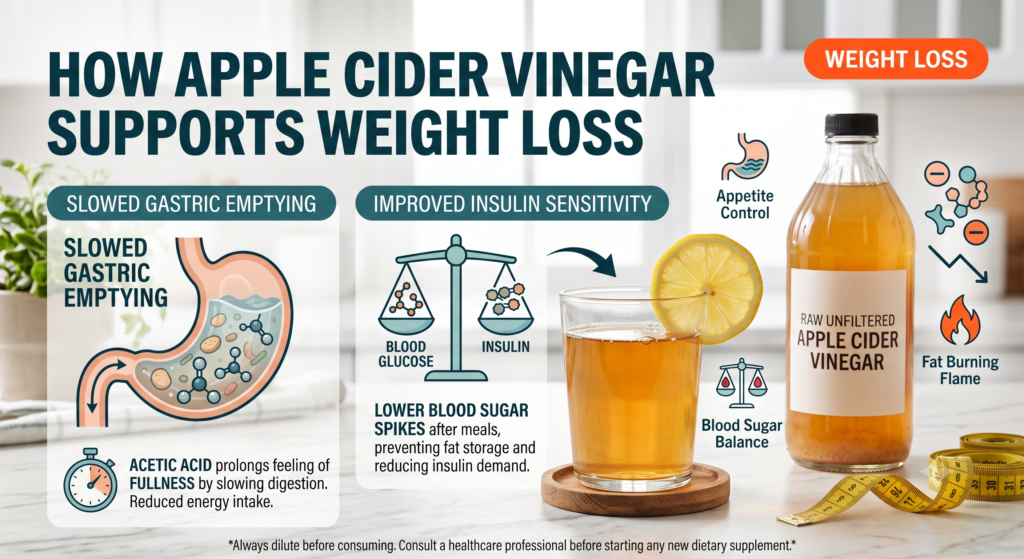
Acetic acid slows gastric emptying, which means food leaves the stomach more slowly after a meal containing ACV. This extends the feeling of fullness and reduces how quickly blood sugar rises after eating, which in turn reduces the insulin spike that promotes fat storage.
A Japanese study published in Bioscience, Biotechnology, and Biochemistry found that obese adults who consumed one to two tablespoons of ACV daily for twelve weeks lost significantly more body weight, waist circumference, and visceral fat compared to a placebo group, without changing their diet. The effects were modest but consistent and statistically significant.
Research also shows that vinegar consumption reduces post-meal blood glucose levels by 20 to 35 percent in people with insulin resistance, according to studies reviewed by the American Diabetes Association. This blood sugar effect is one of the strongest mechanisms connecting apple cider vinegar weight loss to real fat reduction rather than placebo.
Acetic acid also appears to activate AMPK, an enzyme involved in fat burning and reduced fat and sugar production in the liver. This cellular mechanism explains why ACV benefits extend beyond simple calorie effects.
9 Proven Tips for Apple Cider Vinegar Weight Loss
Here are nine practical, safe, and evidence-informed tips for using apple cider vinegar weight loss as part of a healthy daily routine.
1. Always Dilute It Before Drinking
This is the single most important safety rule. Never drink undiluted apple cider vinegar. With a pH around three, undiluted ACV is acidic enough to damage tooth enamel, irritate the esophagus, and cause throat burns with regular use.
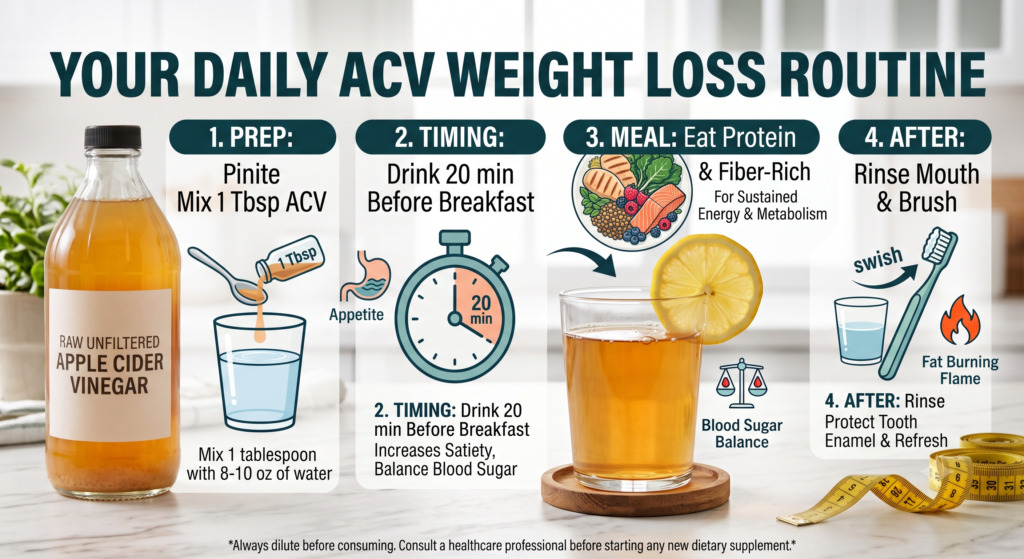
The standard dilution is one to two tablespoons of ACV in a large glass of water, at least 250 milliliters. This maintains the active dose while protecting your teeth and digestive tract.
2. Drink It Before Meals
Timing matters for apple cider vinegar weight loss. Consuming ACV fifteen to thirty minutes before a meal maximizes its effect on gastric emptying and blood glucose response to that meal.
The pre-meal window allows acetic acid to begin acting on digestive enzymes before food arrives, producing a stronger blunting effect on post-meal blood sugar spikes compared to taking it after eating.
3. Start With a Small Amount and Build Gradually
Many people experience digestive discomfort when starting ACV, including nausea, bloating, or an uncomfortable burning sensation in the chest. These effects are usually dose-dependent and avoidable by starting with one teaspoon rather than a full tablespoon.
After a week of tolerating one teaspoon comfortably, increase to one tablespoon. After another week, you can try two tablespoons if you want to match the dosage used in most weight loss research. This gradual approach avoids the discomfort that causes most people to abandon ACV before it has time to work.
4. Take It in the Morning for Blood Sugar Benefits
A morning dose before breakfast is particularly useful for blood sugar management throughout the day. Research shows that ACV taken before the first meal of the day reduces glycemic response not only to breakfast but to subsequent meals, producing a sustained blood sugar effect.
For people managing insulin resistance or blood sugar instability, this extended effect makes morning the most strategically valuable timing. Our article on insulin resistance symptoms explains why blood sugar management is so central to weight loss.
5. Pair It With a Reduced-Carb, Higher-Protein Diet
ACV is most effective when the meals it precedes are structured to support blood sugar control. A high-carb, high-sugar meal will produce a significant glucose spike regardless of ACV, limiting the effect.
Pairing ACV with meals built around protein, fiber, and healthy fat creates the ideal conditions for its blood sugar and satiety mechanisms to work most effectively. Our guide on how to lose weight without exercise covers the dietary principles that pair most powerfully with ACV.
6. Add It to Food Rather Than Drinking It Alone
Apple cider vinegar is not just a drink. Using it in salad dressings, marinades, sauces, and as a condiment delivers the same acetic acid through food, which many people find far more palatable than drinking it even diluted.
Research suggests that vinegar consumed as part of a meal, such as in a salad dressing before the main course, produces blood sugar effects comparable to drinking it before eating. This is good news for anyone who finds the taste difficult to manage as a drink.
7. Rinse Your Mouth After Drinking It
Even diluted ACV is acidic enough to soften tooth enamel temporarily after drinking. Rinsing your mouth with water immediately after taking ACV, and waiting at least thirty minutes before brushing your teeth, prevents the enamel erosion that can occur with regular long-term use.
Using a straw when drinking ACV water also reduces contact with tooth surfaces, further protecting enamel.
8. Be Consistent for at Least Eight to Twelve Weeks
The Japanese study that showed the most significant apple cider vinegar weight loss results ran for twelve weeks. Most research protocols use eight to twelve weeks of daily use before measuring outcomes.
ACV is not a fast-acting intervention. Its effects on weight accumulate gradually through daily improvements in blood sugar management, reduced appetite, and modestly improved fat metabolism. Consistency over weeks produces results that occasional use does not.
9. Use It as a Tool, Not a Replacement
This is perhaps the most important tip of all. Apple cider vinegar weight loss is real but modest. It is a useful supporting tool for a calorie deficit, a healthy diet, and an active lifestyle. It does not replace any of these.
People who use ACV alongside a genuinely healthy diet and daily movement see the strongest and most sustained results. People who take ACV while continuing to eat processed food and remain sedentary see minimal benefit. For a complete approach, our article on healthy fat loss strategies ties ACV into a broader system that actually works.
How to Use Apple Cider Vinegar for Weight Loss Safely
Beyond the tips above, a few safety principles make ACV use sustainable over the long term without causing harm.
Do not exceed two tablespoons per day. Higher doses increase the risk of digestive irritation and, in rare cases, low potassium levels with very prolonged excessive use. Most research used one to two tablespoons, which appears to be both effective and well-tolerated.
People taking insulin or blood-sugar-lowering medications should consult a doctor before using ACV regularly, since the combination can lower blood sugar further than intended. ACV may also interact with diuretics and certain heart medications that affect potassium levels.
People with gastroparesis, a condition where the stomach empties too slowly, should avoid ACV since its gastric-slowing effect could worsen symptoms. Anyone with a history of esophageal problems should approach ACV with caution and medical guidance.
Apple Cider Vinegar Weight Loss: What to Expect
Setting realistic expectations prevents the frustration that causes people to abandon ACV prematurely or, conversely, to place too much faith in it at the expense of more important habits.
The research suggests that consistent ACV use over twelve weeks, combined with a modest dietary improvement, produces weight loss in the range of one to two kilograms in obese individuals. This is a real and meaningful effect at the population level, but it is not dramatic rapid weight loss.
What many people notice more immediately than scale changes is improved energy after meals, reduced afternoon energy crashes, less hunger between meals, and reduced cravings for sweet foods. These functional improvements often motivate broader dietary changes that produce more significant weight loss over time.
Common Mistakes to Avoid
Even with good intentions, a few common mistakes undermine the effectiveness and safety of apple cider vinegar weight loss.
Drinking it undiluted is the most common and most harmful mistake, risking tooth enamel and esophageal damage. Taking too much too soon causes digestive distress that leads to quitting before any benefit builds. Expecting dramatic results without dietary changes leads to disappointment.
Some people buy the wrong product, choosing filtered, pasteurized ACV that has had the mother removed, which lacks the full complement of beneficial compounds. Choosing raw, unfiltered ACV with the mother visible as cloudy strands ensures you are getting the product most consistent with research.
If sugar cravings are making dietary change difficult alongside ACV use, our guide on how to reduce sugar cravings gives targeted strategies that work with the appetite effects ACV produces.
Apple Cider Vinegar and Blood Sugar Control
One of the most consistently documented benefits of ACV is its effect on post-meal blood glucose. This is particularly significant for apple cider vinegar weight loss because blood sugar management is central to fat storage and fat burning.
When blood sugar spikes sharply after a meal, insulin rises to manage it, and elevated insulin promotes fat storage while suppressing fat burning. ACV flattens this spike, which keeps insulin lower and maintains a more fat-burning metabolic environment for longer after eating.
For people with prediabetes or insulin resistance, this effect is especially valuable. Our articles on foods that lower blood sugar and best breakfast for diabetics cover complementary dietary strategies that work powerfully alongside ACV for blood sugar management.
According to Harvard Health, while ACV shows genuine promise for modest weight loss and blood sugar improvement, it should be viewed as one element of a healthy lifestyle rather than a standalone solution.
Track Your Progress and Nutrition
Using tools alongside your apple cider vinegar weight loss practice helps you measure whether the overall approach is producing results rather than relying solely on the scale, which fluctuates daily.
Use our free calorie calculator to ensure your diet is creating the calorie deficit that produces real fat loss. The TDEE calculator shows how many calories you burn each day. The BMI calculator and body fat calculator track body composition changes over months, giving you a clearer picture than weekly weigh-ins alone.
Frequently Asked Questions
Does apple cider vinegar really help with weight loss?
Yes, but modestly. Research shows consistent effects on blood sugar, appetite, and fat metabolism that support weight loss over eight to twelve weeks of daily use. The effects are meaningful but not dramatic, making ACV most valuable as a supportive tool within a healthy diet.
How much apple cider vinegar should I take for weight loss?
One to two tablespoons diluted in a large glass of water daily is the dose used in most weight loss research and appears to be both effective and safe for most healthy adults. Never exceed two tablespoons daily.
When is the best time to take apple cider vinegar for weight loss?
Before meals, particularly before breakfast, produces the strongest effects on blood sugar and appetite for the day. Taking it fifteen to thirty minutes before eating gives the acetic acid time to act before food arrives.
How long does apple cider vinegar take to work for weight loss?
Most research uses twelve-week protocols before measuring significant outcomes. Many people notice improved energy and reduced appetite within two to four weeks. Visible weight changes typically require eight to twelve weeks of consistent daily use alongside dietary improvements.
Can apple cider vinegar damage your teeth?
Yes, if used undiluted or without rinsing afterward. Always dilute one to two tablespoons in at least 250 milliliters of water, rinse your mouth with plain water after drinking, and wait thirty minutes before brushing teeth. Using a straw reduces enamel contact further.
Who should not take apple cider vinegar?
People taking insulin or blood-sugar-lowering medication should consult a doctor first. People with gastroparesis, esophageal problems, or those on potassium-affecting medications should use it with medical guidance. Pregnant women should discuss with their doctor before using ACV regularly.
Is apple cider vinegar better than other weight loss methods?
ACV is a useful supporting tool, not a replacement for the main drivers of weight loss, which are a calorie deficit through diet and regular physical activity. It works best as an addition to healthy habits rather than as a standalone method.
Final Thoughts
Apple cider vinegar weight loss is genuinely supported by science, but it is not a shortcut. Its real value lies in improving blood sugar control, reducing appetite, and supporting a calmer metabolic environment in which a healthy diet and active lifestyle produce better and faster results.
Start with one teaspoon diluted in a large glass of water before breakfast. Build to one tablespoon over a week. Be consistent for at least eight weeks. Pair it with a protein and fiber-rich diet and daily movement, and let the combination of habits do what no single intervention can do alone.
Use the free tools on Vitality Nexus to track your nutrition and progress, and explore our full weight loss section for more practical, evidence-based strategies that support lasting fat loss.
Medical Disclaimer: This article is for general information only and is not medical advice. If you have diabetes, take blood-sugar-lowering medication, or have any health condition, please consult a qualified doctor before adding apple cider vinegar to your daily routine.