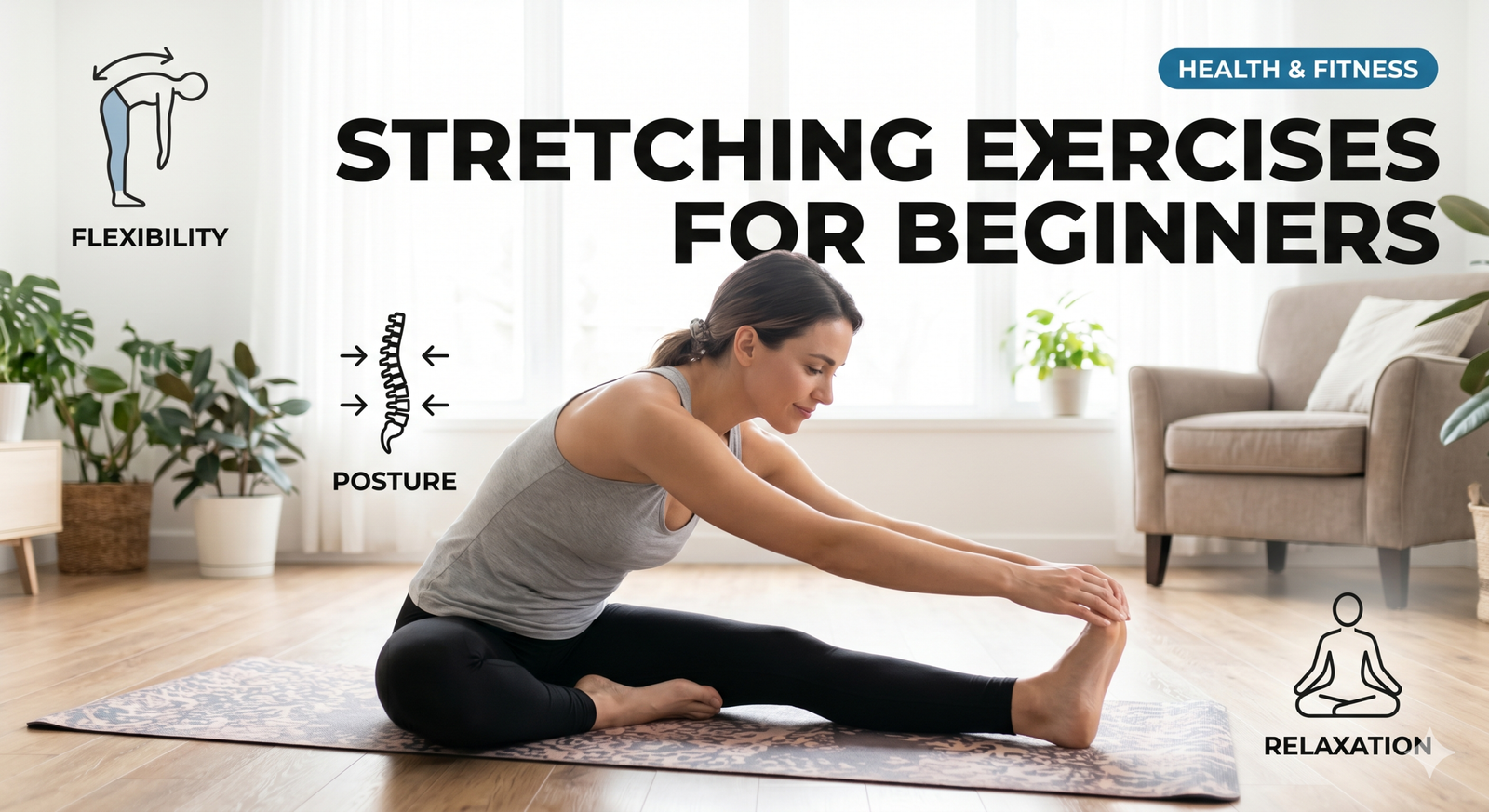
If you feel stiff, sore, or tight after sitting all day, the right stretching exercises for beginners can change how your body feels in just a few minutes. Stretching is one of the simplest ways to move better, ease tension, and protect yourself from everyday aches.
The best part is that you do not need a gym, equipment, or any experience to start. A clear floor, a few minutes, and a willingness to move gently are all it takes. Done regularly, these simple stretches improve your flexibility, posture, and even your mood.
In this guide, you will learn 10 easy stretching exercises for beginners, how to do each one safely, how often to stretch, and the common mistakes to avoid. Whether you are recovering from a sedentary routine or just want to feel looser, these stretches are a gentle place to begin.
Table of Contents
Why Stretching Exercises for Beginners Are So Important
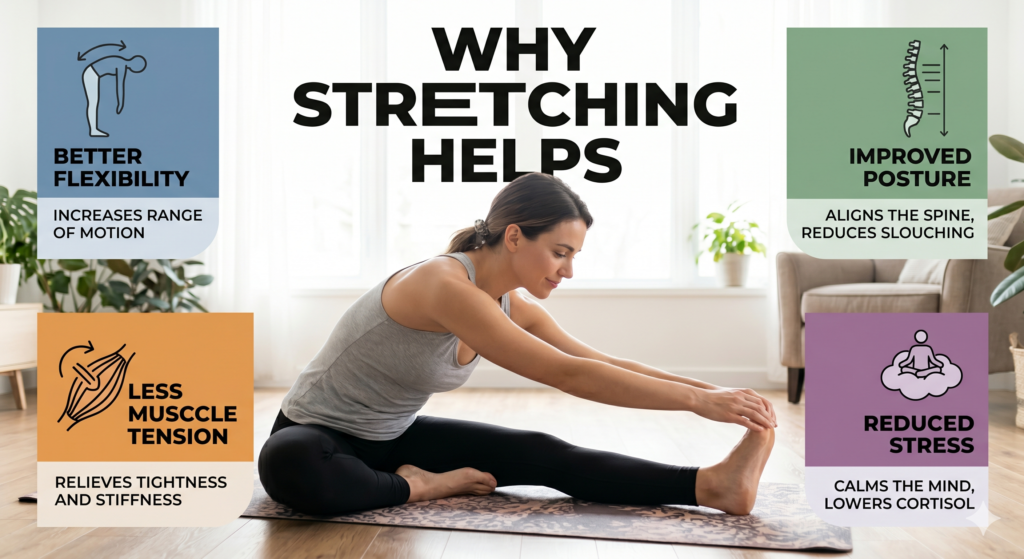
Stretching is easy to skip, yet it offers some of the biggest returns for the smallest effort. When you stretch regularly, your muscles lengthen and your joints move through a fuller range, which makes everyday movements feel smoother.
Modern life keeps us seated for hours, and that tightens the hips, shoulders, and lower back. Over time this stiffness pulls your posture out of line and leads to nagging aches. Gentle stretching gradually undoes this, easing tension and helping you stand taller.
Flexibility is not the only benefit. According to the Mayo Clinic, regular stretching can improve range of motion, boost circulation, and reduce the risk of injury during other activities. Many people also find that a few minutes of stretching calms the mind and relieves stress.
For beginners especially, stretching is a confidence builder. It is low-impact, forgiving, and suitable for almost any fitness level, which makes it the perfect first step toward a more active life.
There is a mental benefit too that often surprises people. Slowing down to stretch and breathe acts like a short reset for a busy mind, easing the stress that builds up through the day. Many beginners start stretching for their stiff backs and stay for the calm it brings. If you enjoy learning what movement does for the body, our roundup of fun fitness facts is a light, motivating read.
Tips to Stretch Safely Before You Start
A few simple rules keep your stretching effective and injury-free. Follow these before you try the routine below.
Warm up first with three to five minutes of light movement, such as walking in place or gentle arm swings. Stretching cold muscles raises the risk of strain. Move slowly into each stretch and stop at the point of mild tension, never sharp pain.
Hold each stretch for about 20 to 30 seconds and breathe steadily throughout. Avoid bouncing, since jerky movements can cause tiny muscle tears. Finally, stretch both sides evenly so your body stays balanced. If you have an injury or health condition, check with a doctor before starting.
Static vs Dynamic Stretching for Beginners
You will often hear about two types of stretching, and knowing the difference helps you use each one well. Both have a place in a beginner routine.
Static stretching means holding a position still, like the seated forward fold, for 20 to 30 seconds. It is best done after activity or on its own to build flexibility and relax tight muscles. Most of the moves in this guide are static stretches, which makes them gentle and beginner-friendly.
Dynamic stretching means moving through a controlled range, such as slow arm swings or leg swings. It works well as a warm-up before exercise because it gently raises your heart rate and loosens the joints. A simple plan is to use dynamic moves before a workout and static stretches afterward. If you exercise in the morning or evening, our comparison of a morning vs evening workout can help you decide when to fit your stretching in.
10 Best Stretching Exercises for Beginners
Here are 10 gentle stretching exercises for beginners that work the whole body. Move through them slowly and only go as far as feels comfortable.
1. Neck Stretch
Sit or stand tall. Gently tilt your head toward one shoulder until you feel a light stretch along the side of your neck. Hold, then switch sides. This eases the tension that builds from looking at screens.
2. Shoulder Rolls
Roll your shoulders slowly backward in big circles, then forward. This loosens stiff shoulders and improves posture, making it a perfect warm-up move for desk workers.
3. Cross-Body Shoulder Stretch
Bring one arm across your chest and gently support it with the other arm. Hold, then switch. This opens the upper back and shoulders that tighten from sitting.
4. Chest Doorway Stretch
Stand in a doorway, place your forearms on the frame, and lean forward gently. You will feel a stretch across your chest and shoulders. It counteracts the rounded posture of computer work.
5. Standing Side Stretch
Reach both arms overhead, clasp your hands, and lean gently to one side. This lengthens the muscles along your torso and improves side-to-side mobility.
6. Cat-Cow Stretch
On your hands and knees, slowly arch your back upward, then let it dip down as you lift your head. This gentle flow keeps the spine mobile and relieves back stiffness.
7. Seated Forward Fold
Sit with your legs straight, then hinge from your hips and reach toward your toes. Keep a soft back and stop where you feel a stretch in your hamstrings. Tight hamstrings often cause lower back pain.
8. Standing Quad Stretch
Hold a wall for balance, grasp one ankle, and gently pull your heel toward your glutes. Keep your knees close together. This stretches the front of your thigh and supports knee health.
9. Hip Flexor Lunge Stretch
Step one foot forward into a gentle lunge with the back knee on a cushion. Press your hips forward slightly to feel a stretch in the front of the back hip. This relieves the tightness caused by long sitting.
10. Child’s Pose
Kneel and sit back on your heels, then reach your arms forward and lower your chest toward the floor. This calming stretch releases the back, hips, and shoulders all at once.
How Often Should Beginners Stretch?
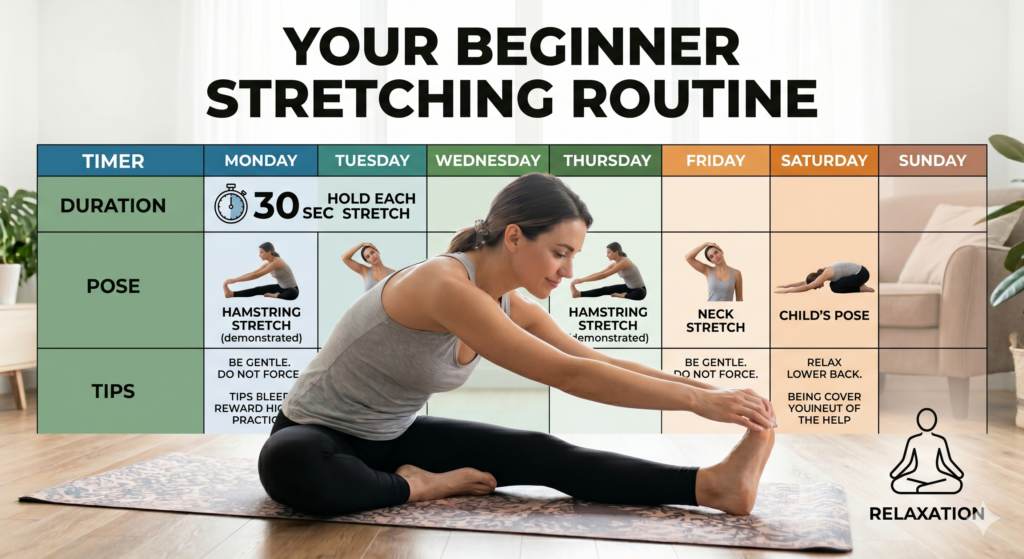
Consistency matters far more than intensity. As a beginner, aim to stretch at least two to three times a week, then build up to most days as it becomes a habit.
A full routine of these 10 stretches takes only 10 to 15 minutes when you hold each one for 30 seconds. If you are short on time, pick three to five stretches that target your tightest areas, such as the neck, hips, and hamstrings.
You can stretch at any time of day. Morning stretches wake up the body, while evening stretches help you unwind. Stretching after exercise is especially useful, as covered in our guide on recovery after a workout. The key is to keep it gentle and regular.
Common Stretching Mistakes to Avoid
Even simple stretching can go wrong if you rush it. Avoiding these common mistakes keeps your routine safe and effective.
The first mistake is stretching cold muscles without a warm-up, which raises injury risk. The second is pushing into pain. Stretching should feel like mild tension, never a sharp pull, so ease off if it hurts. The third is bouncing into a stretch instead of holding it steadily.
Another mistake is holding your breath. Slow, steady breathing helps your muscles relax and deepen the stretch. Finally, many beginners stretch only one side or rush through, which creates imbalance. Give each side equal time and move with patience rather than speed.
Build Stretching Into Your Daily Routine
Stretching works best when it becomes part of your day rather than a one-time effort. Linking it to an existing habit makes it stick. Stretch while your coffee brews, during TV breaks, or right before bed.
Pairing stretching with light activity multiplies the benefits. A short daily walk plus a few stretches keeps your whole body mobile. If you want to add more movement, our guides on home workouts without equipment and the best home workouts for beginners are easy next steps.
As you grow stronger and looser, you can explore other gentle options. The low-impact cardio routines on our site pair beautifully with stretching, and you can find more practical tips in our full health and fitness section. According to Harvard Health, keeping muscles flexible through regular stretching is essential for maintaining mobility as you age.
Frequently Asked Questions
What are the best stretching exercises for beginners?
Gentle moves like neck stretches, shoulder rolls, the chest doorway stretch, seated forward fold, hip flexor lunge, and child’s pose are ideal. They cover the whole body and require no equipment.
How long should beginners hold each stretch?
Hold each stretch for about 20 to 30 seconds while breathing steadily. Avoid bouncing, and stop at the point of mild tension rather than pushing into pain.
Can I do stretching exercises for beginners every day?
Yes. Daily gentle stretching is safe for most people and helps improve flexibility and reduce stiffness. Just keep the movements smooth and never force a stretch beyond comfort.
Do I need any equipment to start stretching?
No. Most beginner stretches need only a clear space and a soft mat or carpet. A wall or chair can help with balance for standing stretches.
When is the best time to stretch?
Any time works. Morning stretches loosen a stiff body, evening stretches help you relax, and post-workout stretches aid recovery. The most important thing is to stretch consistently.
Can stretching help with back and neck pain?
Yes, gentle stretching often eases pain caused by poor posture and long sitting. Moves like cat-cow and the seated forward fold relieve tightness in the back, while neck stretches ease tension up top.
How soon will I see results from stretching?
Many people feel looser and more relaxed right away. Noticeable gains in flexibility usually appear within two to four weeks of stretching a few times each week.
Final Thoughts
The best stretching exercises for beginners are simple, gentle, and easy to fit into any day. A few minutes of stretching can ease stiffness, improve your posture, and leave you feeling calmer and more capable in your body.
Start small. Pick three or four stretches from this guide, hold each one gently, and breathe through it. As it becomes a habit, add more moves and more days until stretching feels like a natural part of your routine.
Explore more of our health and fitness guides on Vitality Nexus to pair your stretching with simple walks and beginner workouts, and keep building a body that moves and feels its best.
Medical Disclaimer: This article is for general information only and is not medical advice. If you have an injury, chronic pain, or a health condition, please consult a qualified doctor or physiotherapist before starting any new stretching routine.