
There is a particular kind of exhaustion that comes with hormonal imbalance. It is not just physical tiredness. It is waking up already depleted. It is mood changes that feel completely disconnected from what is actually happening in your life. It is weight that appears in places it never used to despite no meaningful change in your diet or activity. It is a brain that cannot quite focus the way it used to and a body that feels unfamiliar.
Millions of women live with these experiences and never connect them to their hormones. They attribute them to stress, aging, being too busy, not sleeping enough, or simply not trying hard enough. Some are told by their doctors that everything looks normal. Others are given prescriptions that address symptoms without ever examining the underlying hormonal imbalances driving them.
Hormone balance for women is one of the most important and most consistently overlooked aspects of female health. The good news is that hormonal health is not fixed or beyond your influence. The lifestyle, nutritional, and behavioral choices you make every day have a profound and measurable impact on how your hormones behave.
This guide gives you 12 evidence-based strategies to restore hormonal balance, explains the science behind each one, and shows you how to build a lifestyle that supports healthy hormonal function naturally.
Table of Contents
What Is Hormonal Imbalance in Women and Why Does It Happen?
Hormones are chemical messengers produced by glands throughout the body that regulate virtually every physiological process. In women, the primary reproductive hormones are estrogen, progesterone, and testosterone, though dozens of other hormones including cortisol, insulin, thyroid hormones, DHEA, and leptin all interact in a complex network that determines how a woman feels physically, mentally, and emotionally.
When this network is functioning optimally, the hormonal fluctuations of the menstrual cycle occur within ranges that the body handles without dramatic symptoms. Energy is stable. Mood is relatively predictable. Sleep is restorative. Weight responds normally to eating and activity habits.
Hormonal imbalance occurs when one or more hormones are produced in quantities that are too high or too low, or when the ratios between hormones shift outside the ranges the body functions best within. This imbalance can be driven by lifestyle factors, nutritional deficiencies, environmental exposures, health conditions, or the natural hormonal transitions that occur across a woman’s life.
The most common patterns of hormonal imbalance in women include estrogen dominance, where estrogen is high relative to progesterone. Low progesterone, which is often the first hormonal shift to occur as women approach their late thirties and forties. Elevated cortisol from chronic stress, which disrupts the production and metabolism of all reproductive hormones. Insulin resistance, which alters the hormonal environment in ways that worsen conditions like PCOS. And thyroid dysfunction, which affects every cell in the body through its regulation of metabolism and energy.
According to research published by the Office on Women’s Health, hormonal imbalances affect women at every stage of life and are among the most common reasons women seek medical care, yet they remain significantly underdiagnosed and undertreated in many healthcare settings.
Understanding the specific pattern of your hormonal imbalance through proper testing is the starting point for an intelligent response. The strategies in this guide support overall hormonal health across multiple patterns simultaneously.
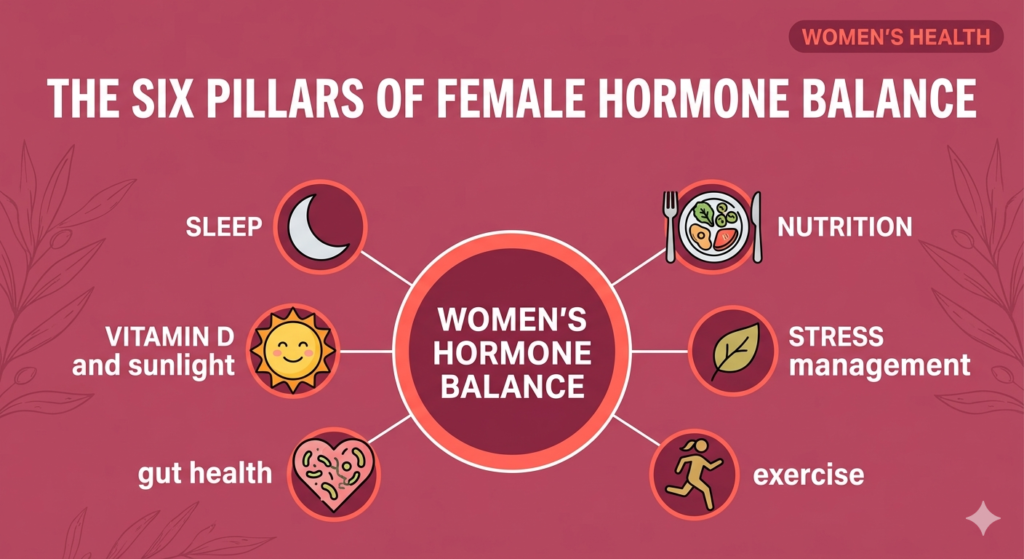
Signs Your Hormones Are Out of Balance
Before getting into the solutions, recognizing the symptoms that point to hormonal imbalance helps you understand why these strategies matter and what you are working to resolve.
Common signs of hormonal imbalance in women include irregular or painful periods, heavy menstrual bleeding, persistent fatigue that does not resolve with adequate sleep, mood swings and irritability particularly in the week before your period, anxiety or depression that feels cyclical rather than constant, difficulty losing weight especially around the abdomen and hips, sleep disruption particularly waking between 2 and 4am, brain fog and difficulty concentrating, acne particularly around the jawline and chin, hair loss or thinning, dry skin and brittle nails, low libido, and headaches that follow a cyclical pattern.
The presence of multiple symptoms together is more significant than any single symptom in isolation. If you recognize yourself in several of these descriptions and have been attributing them to stress or aging without investigating further, getting a comprehensive hormonal panel from your doctor is a worthwhile and important next step.
For more on how specific hormonal shifts manifest across different life stages, read our articles on perimenopause vs menopause and how hormones affect women’s skin for a detailed understanding of the specific hormonal patterns behind common female health experiences.
1. Prioritize Sleep Above Everything Else
If the twelve strategies in this guide were ranked by impact on hormone balance for women, sleep would sit at the top by a significant margin. Not because the others are unimportant, but because sleep deprivation undermines every other strategy simultaneously while poor sleep is normalized in modern life to a degree that has become genuinely dangerous for women’s hormonal health.
The hormonal consequences of insufficient sleep are direct and rapid. Even one week of sleeping five to six hours per night in women who normally sleep seven to nine hours produces measurable elevations in cortisol, disruptions in the timing of luteinizing hormone pulses that regulate the menstrual cycle, increased insulin resistance, and altered levels of the appetite hormones leptin and ghrelin that drive cravings for high-sugar, high-fat foods.
For women specifically, the cyclical nature of reproductive hormones makes sleep even more critical than the general research on sleep and health suggests. Progesterone has a natural sleep-promoting effect through its conversion to allopregnanolone, which acts on GABA receptors similarly to a mild sedative. When progesterone is low, which is the pattern in the premenstrual phase and in the hormonal decline of perimenopause, sleep becomes significantly harder to achieve and maintain. Addressing the lifestyle factors that support progesterone, particularly stress management and adequate sleep hygiene, creates a positive feedback loop that benefits both the hormone and the sleep it supports.
Seven to nine hours of quality sleep per night is the baseline requirement for female hormonal health. Consistent sleep and wake times, a cool and dark sleep environment, no screens for the hour before bed, and avoiding alcohol in the evening are the most evidence-backed sleep hygiene practices.
Use our Sleep Calculator to find the sleep timing that aligns with your natural circadian rhythm. And read our article on insomnia, symptoms, causes, and treatment for deeper guidance on overcoming the sleep disruption that hormonal imbalance commonly causes.
2. Manage Cortisol and Chronic Stress
Cortisol is often called the master hormone disruptor in the context of women’s health, and that description is earned. When cortisol is chronically elevated from ongoing stress, it does not disrupt hormonal balance through a single mechanism. It disrupts it through many simultaneously.
High cortisol suppresses progesterone production by competing with it for the same hormonal precursor in a process sometimes called the pregnenolone steal. It elevates insulin and promotes insulin resistance. It impairs thyroid hormone conversion from the inactive T4 form to the active T3 form. It reduces DHEA, which is a precursor to both estrogen and testosterone and an important buffer against stress-related hormonal damage. And it disrupts the sleep that everything else depends on.
The stress-cortisol-hormonal imbalance pathway is one of the most common drivers of the hormonal patterns women experience in their thirties and beyond. Career demands, emotional labor, caretaking responsibilities, and the persistent undervaluing of women’s own rest and recovery needs in cultural and social contexts all contribute to a sustained cortisol burden that the hormonal system was simply not designed to handle indefinitely.
Effective stress management for hormonal health is not about eliminating stress, which is not possible. It is about building genuine recovery into daily life, not waiting for a holiday or a breakdown to rest. Meditation, breathwork, time in nature, adequate leisure and play, meaningful social connection, and setting firm boundaries around the demands on your time and energy all reduce cortisol through complementary pathways.
Read our article on low cortisol vs high cortisol to understand the full spectrum of cortisol’s effects on female hormonal health. And explore our article on how stress affects women’s reproductive health for a detailed look at the specific reproductive and hormonal consequences of chronic stress in women.
3. Eat for Hormonal Health Not Just Calories
What you eat provides the raw materials from which hormones are made, the nutrients that enzymes require to process and clear hormones, and the signaling environment that determines whether hormonal receptors respond appropriately to hormonal messages.
Dietary fat is essential for hormone production because all steroid hormones, including estrogen, progesterone, testosterone, and cortisol, are synthesized from cholesterol. Women who follow very low-fat diets consistently show disruptions in reproductive hormone production and menstrual cycle regularity. Adequate healthy fat intake is a biological requirement for hormonal health, not an optional nutritional choice.
Protein provides the amino acid precursors for peptide hormones including insulin, growth hormone, and thyroid-stimulating hormone, and supports liver function for estrogen metabolism and clearance. Adequate protein at every meal also stabilizes blood sugar, which directly influences insulin and cortisol throughout the day.
Fiber is particularly important for hormone balance for women because it binds to estrogen metabolites in the intestines and facilitates their excretion through the bowel. Without adequate fiber, estrogen metabolites are reabsorbed through a process called enterohepatic recirculation, contributing to the estrogen accumulation that drives estrogen dominance. Thirty grams of fiber daily from vegetables, fruits, legumes, and whole grains is the target.
Cruciferous vegetables including broccoli, cauliflower, and kale contain indole-3-carbinol and its metabolite DIM, which support the liver’s conversion of estrogen to its less potent metabolites and improve overall estrogen clearance. For women with estrogen dominance or PCOS, these vegetables are particularly valuable dietary additions.
For a comprehensive understanding of how specific nutrients support female hormonal health, read our article on vitamin deficiency skin signs in women which also covers the broader nutritional gaps that commonly underlie female hormonal symptoms.
4. Balance Your Blood Sugar Every Single Day
Blood sugar regulation is central to hormone balance for women in ways that most women and many healthcare providers underestimate. The relationship between blood sugar, insulin, and the reproductive hormones is direct, bidirectional, and enormously impactful for the most common hormonal conditions women face.
Insulin is itself a hormone. When blood sugar is chronically elevated from a diet high in refined carbohydrates and sugars, insulin levels remain elevated. Chronically high insulin directly stimulates the ovaries to produce more testosterone, which is the primary driver of the hormonal pattern in PCOS including the androgen excess symptoms of acne, hair loss, and irregular periods. Insulin resistance also disrupts the normal feedback loops that regulate estrogen and progesterone production.
Even for women without PCOS, chronic blood sugar instability from erratic eating, high-sugar diets, and frequent meal skipping creates cortisol spikes as the body responds to falling blood glucose. These cortisol spikes then flow through all the cortisol-related hormonal disruptions described in the previous section.
Practical blood sugar stabilization strategies include eating a meal or substantial snack every three to four hours rather than allowing long gaps that lead to hypoglycemia and cortisol spikes. Including protein and fat alongside carbohydrates at every meal to slow glucose absorption and blunt insulin response. Choosing complex carbohydrates from whole grains, vegetables, and legumes rather than refined sugars and processed foods. And avoiding high-sugar breakfasts that create a blood glucose spike and crash that sets an unstable metabolic tone for the entire day.
For women with suspected insulin resistance or PCOS, getting a fasting insulin test alongside standard fasting glucose is more informative than glucose alone and is worth requesting from your doctor.
Use our Calorie Calculator to ensure your daily intake is adequate. Undereating is one of the most common causes of blood sugar instability and hormonal disruption in women who are restricting calories.
5. Support Your Gut Microbiome
The gut microbiome influences hormone balance for women through multiple pathways that are only beginning to be fully understood by researchers, but are already clinically significant enough to warrant serious dietary attention.
The estrobolome is the specific collection of gut bacteria responsible for metabolizing and regulating estrogen. These bacteria produce an enzyme called beta-glucuronidase that deconjugates estrogen metabolites in the intestine. When the estrobolome is healthy and diverse, estrogen metabolism and clearance proceed normally. When it is disrupted by antibiotics, processed food consumption, chronic stress, or other factors, estrogen metabolism is impaired and contributes to the estrogen accumulation associated with estrogen dominance, endometriosis, and estrogen-sensitive conditions.
Beyond the estrobolome, gut bacteria produce short-chain fatty acids that reduce systemic inflammation, influence cortisol metabolism, support thyroid hormone conversion, and regulate appetite hormones including leptin and ghrelin. A healthy, diverse microbiome supports every dimension of female hormonal health through these pathways.
Supporting the gut microbiome for hormonal health requires two dietary strategies working together. Prebiotics, which are the fiber-rich foods that feed beneficial bacteria, come from vegetables, fruits, legumes, oats, and other whole plant foods. Probiotics, which introduce beneficial bacteria directly, come from fermented foods including plain yogurt with live cultures, kefir, sauerkraut, kimchi, and kombucha in moderate amounts.
Minimizing antibiotic use to when it is genuinely necessary, reducing processed food consumption that harms beneficial bacteria populations, and managing stress to prevent the cortisol-related gut barrier disruption that allows bacteria to translocate into systemic circulation are all important protective strategies for the gut-hormone axis.
6. Exercise the Right Way for Your Hormones
Exercise is genuinely one of the most powerful tools for hormone balance for women. But the type, intensity, and amount of exercise matters significantly for hormonal outcomes, and the commonly prescribed approach of maximum cardio for weight management can actually worsen hormonal imbalance when applied without nuance.
Resistance training is the most hormonally beneficial form of exercise for most women. It improves insulin sensitivity, reduces visceral fat, supports healthy testosterone levels, and builds the muscle mass that acts as a metabolic buffer against the insulin resistance that worsens with age. Three to four sessions of progressive resistance training per week is the foundation of an exercise approach that supports hormonal health.
Moderate-intensity cardiovascular exercise reduces cortisol, improves mood, supports cardiovascular health, and helps maintain healthy body weight. Walking, cycling, swimming, and low-impact aerobic exercise all provide these benefits without the cortisol-elevating effects of very high-intensity training performed daily.
The hormonal concern with exercise arises when training volume or intensity is excessive relative to recovery capacity. Female athletes who train at very high volumes or who chronically under-fuel relative to their training load can experience hypothalamic amenorrhea, where the hormonal axis regulating the menstrual cycle essentially shuts down in response to perceived energy scarcity. This is an extreme case, but the underlying principle that excessive exercise stress without adequate recovery and nutrition suppresses female reproductive hormones applies across a spectrum.
For most women, the most hormonally supportive exercise approach combines three to four resistance sessions per week with daily moderate activity like walking and two to three moderate cardio sessions. This provides comprehensive metabolic and hormonal benefits without the chronic cortisol elevation of excessive high-intensity training.
Read our article on low impact cardio for seniors for joint-friendly cardio options that work well for women at every age and fitness level. And read our article on morning vs evening workout for guidance on timing exercise in ways that work with rather than against your hormonal rhythms.
7. Optimize Vitamin D and Key Micronutrients
Nutritional deficiencies are among the most common and most easily correctable drivers of hormonal imbalance in women, yet they remain significantly underdiagnosed because standard medical blood panels often do not include the tests needed to identify them.
Vitamin D is a steroid hormone precursor with receptors throughout the reproductive system. Vitamin D deficiency is associated with irregular menstrual cycles, worsened PCOS symptoms, impaired thyroid function, and increased risk of endometriosis. An estimated 40 to 80 percent of adults in northern latitudes are deficient or insufficient in vitamin D, making supplementation one of the most widely applicable hormonal support interventions available.
Magnesium is directly involved in more than 300 enzymatic reactions including those regulating cortisol production, insulin sensitivity, sleep quality, and the synthesis of progesterone. Women with PMS, PCOS, and perimenopausal symptoms often have lower magnesium levels than those without these conditions. Magnesium glycinate is the most bioavailable and best-tolerated supplemental form for most women.
Zinc supports progesterone production, thyroid function, and the immune regulation of the endometrium. It is commonly depleted in women who take oral contraceptives, which is particularly relevant because pill use is so widespread and the nutritional consequences are rarely discussed.
Iron deficiency affects a significant proportion of menstruating women due to regular blood loss and is associated with fatigue, brain fog, impaired thyroid function, and worsened PMS symptoms. Testing ferritin alongside hemoglobin gives a more accurate picture of iron status than hemoglobin alone.
B vitamins, particularly B6, B12, and folate, support the methylation processes involved in estrogen metabolism and neurotransmitter production that influence mood throughout the menstrual cycle.
Read our comprehensive articles on vitamin D3 and K2 benefits and magnesium benefits, deficiency symptoms, and food sources for detailed guidance on optimizing these critical hormonal health nutrients.
8. Reduce Exposure to Endocrine Disruptors
Endocrine disruptors are chemicals that interfere with hormonal signaling by mimicking, blocking, or altering the production and metabolism of natural hormones. Women are disproportionately exposed to and affected by many of these chemicals due to higher rates of personal care product use and certain food and beverage consumption patterns.
Bisphenol A, found in many plastic food containers, the lining of canned foods, and thermal receipt paper, mimics estrogen in the body and contributes to the estrogen load that drives estrogen dominance and disrupts the estrogen-to-progesterone ratio. Switching to glass, stainless steel, and BPA-free food storage and avoiding heating food in plastic containers significantly reduces exposure.
Parabens, used as preservatives in many cosmetics, shampoos, and skin care products, are absorbed through the skin and have weak estrogenic activity. Choosing paraben-free personal care products where practical reduces this daily exposure route.
Phthalates, found in soft plastics, fragrances, nail polish, and many personal care product ingredients, interfere with steroidogenesis and are associated with disrupted menstrual cycles and reproductive health outcomes in research. Choosing fragrance-free products and minimizing soft plastic contact with food reduces phthalate exposure meaningfully.
Pesticide residues on conventionally grown produce include multiple compounds with estrogenic and anti-androgenic properties. Prioritizing organic versions of the most heavily pesticide-contaminated produce reduces this exposure in a practical and targeted way.
Making these changes does not require a complete lifestyle overhaul. Targeting the highest-exposure items first, primarily food storage, cosmetics, and cleaning products, and replacing them gradually with lower-exposure alternatives produces meaningful cumulative reduction in endocrine disruptor exposure.
9. Support Liver Health for Estrogen Clearance
The liver is the primary organ responsible for metabolizing and clearing estrogen from the body. When liver function is impaired or overburdened, estrogen metabolism slows, inactive estrogen metabolites accumulate, and the estrogen load in the body increases even when estrogen production is normal.
This is why alcohol has such a pronounced negative effect on hormone balance for women. Alcohol impairs the liver enzymes responsible for estrogen phase one and phase two metabolism, leading directly to elevated circulating estrogen. Women who drink regularly typically have measurably higher estrogen levels than non-drinkers regardless of other hormonal health factors.
Supporting liver health for hormonal purposes involves several practical dietary strategies. Cruciferous vegetables provide the glucosinolates that support phase two liver detoxification of estrogen. The antioxidants in vegetables and fruits protect liver cells from oxidative damage that impairs their enzymatic activity. Adequate protein supports the amino acid availability needed for liver detoxification reactions. And reducing alcohol, processed food, and the overall toxic load on the liver allows its metabolic resources to be directed more fully toward hormonal clearance.
Specific liver-supporting nutrients include choline from eggs and meat, NAC from protein foods, milk thistle as a supplement, and the B vitamins required as cofactors in estrogen methylation. Regular bowel movements also matter because estrogen cleared by the liver is released into the bile and excreted through the bowel. Constipation allows reabsorption of these estrogen metabolites, returning them to circulation and contributing to the estrogen accumulation that drives symptoms.
Adequate fiber intake to support regular bowel function is therefore directly relevant to liver-driven estrogen clearance and hormone balance for women.
10. Understand Your Cycle and Work with It
This is a strategy that is unique to women’s hormonal health and has no male equivalent. The menstrual cycle is not a monthly inconvenience. It is a sophisticated hormonal program that creates predictable windows of different energy, strength, cognitive function, and emotional processing throughout the month.
Understanding these windows and working with them rather than against them is a form of hormonal intelligence that supports overall balance by reducing the stress of constantly fighting your biology.
The follicular phase, which runs from the first day of menstruation through ovulation at roughly the mid-cycle point, is driven by rising estrogen. This phase typically brings increasing energy, mental sharpness, physical strength, and social motivation. It is the window when new projects, intense training, important conversations, and high-demand cognitive work feel most accessible.
The luteal phase, from ovulation through the beginning of the next period, is driven by progesterone’s rise and subsequent fall. Energy gradually decreases toward the end of this phase, the need for rest and recovery increases, and sensitivity to stress, poor sleep, and nutritional inadequacy is highest. This is also the phase when PMS symptoms arise if hormonal balance is disrupted.
Cycle syncing, adjusting training intensity, workload demands, social commitments, and dietary choices to match the hormonal phase you are in, reduces the physiological and psychological stress of working against your hormonal rhythms. It does not require a rigid schedule. Even a broad awareness of which phase you are in and making modest adjustments in response produces meaningful reductions in PMS symptoms and improvements in overall wellbeing over several cycle lengths.
Apps including Clue, Flo, and Natural Cycles support cycle tracking with varying degrees of detail. Physical tracking methods including basal body temperature measurement and cervical mucus observation provide direct hormonal information. Both approaches build the cycle awareness that supports intelligent hormonal self-management.
11. Address Thyroid Health Proactively
The thyroid gland sits at the top of the metabolic hierarchy in the body. Its hormones, primarily T3 and T4, regulate the speed of cellular metabolism in every tissue in the body, including the ovaries, the uterine lining, and the hormonal feedback systems that regulate the menstrual cycle.
Thyroid dysfunction is significantly more common in women than in men, with women being five to eight times more likely to develop thyroid conditions over their lifetime. Hypothyroidism, where the thyroid is underactive and produces insufficient thyroid hormone, is particularly prevalent and is associated with a cluster of hormonal symptoms that overlap substantially with other forms of hormonal imbalance: fatigue, weight gain, brain fog, hair loss, dry skin, irregular periods, depression, and difficulty conceiving.
The problem is that standard thyroid testing using TSH alone misses many cases of thyroid dysfunction. TSH is a pituitary signal that tells the thyroid to produce more hormone. A TSH within the reference range does not necessarily mean the thyroid is producing adequate amounts of active T3, or that the T4 being produced is being effectively converted to the active T3 form. Requesting a full thyroid panel including TSH, Free T4, Free T3, and thyroid antibodies gives a complete picture of thyroid function and rules out autoimmune thyroid disease.
Nutritional support for thyroid health includes adequate iodine from seafood, dairy, or iodized salt, selenium for T4 to T3 conversion, zinc for thyroid hormone synthesis, and iron for the thyroid peroxidase enzyme. Gluten sensitivity in some women appears to be associated with elevated thyroid antibodies, and a trial elimination is worth considering for women with confirmed or suspected autoimmune thyroid conditions.
12. Consider Evidence-Based Herbal and Nutritional Support
Several herbal and nutritional compounds have meaningful research support for specific aspects of hormone balance for women and are worth considering as targeted additions to the lifestyle foundation described above.
Vitex, also known as chasteberry, is the most researched herbal supplement for female hormonal balance. Multiple clinical trials have demonstrated its effectiveness for reducing PMS symptoms, supporting progesterone relative to estrogen in the luteal phase, and improving cycle regularity. It works by reducing prolactin through its mild dopaminergic activity and by supporting the progesterone-dominant luteal phase. Research supports daily use over three to six months for meaningful benefit.
Myo-inositol, a naturally occurring compound related to the B vitamin family, has compelling research support for improving insulin sensitivity in women with PCOS, restoring cycle regularity, and improving the hormonal profile of women with insulin-resistant hormonal patterns. It is one of the most evidence-backed nutritional supplements for PCOS specifically.
Ashwagandha has shown significant effects on female stress hormones and thyroid function in clinical research. A randomized controlled trial found that ashwagandha supplementation meaningfully reduced cortisol and improved thyroid markers in women with subclinical hypothyroidism. Read our article on natural ways to reduce anxiety for more on ashwagandha’s stress and cortisol benefits in the context of broader mental and hormonal health.
Evening primrose oil provides GLA, a fatty acid that supports prostaglandin balance and is particularly useful for reducing breast tenderness and cycle-related pain that is driven by prostaglandin imbalance.
Omega-3 fatty acids from fish oil reduce the systemic inflammation that drives hormonal symptoms, support healthy estrogen metabolism, and have shown meaningful benefits for reducing period pain through their anti-inflammatory effects on prostaglandin production. Read our article on omega-3 fatty acids benefits and food sources for comprehensive guidance.
Always discuss herbal supplements with your healthcare provider before starting them if you are taking any medications, particularly hormonal contraceptives or thyroid medications, as several herbal compounds have clinically significant interactions.
How Perimenopause and Menopause Affect Hormonal Balance
The hormonal transitions of perimenopause and menopause represent the most dramatic shift in female hormonal life outside of puberty and pregnancy, and they deserve specific attention in any guide to hormone balance for women.
Perimenopause typically begins in the mid-to-late thirties or early forties, often much earlier than women expect, and is characterized by increasing irregularity in the hormonal patterns that have governed the menstrual cycle. Progesterone is usually the first hormone to decline meaningfully, followed eventually by estrogen as the ovarian reserve depletes.
The symptoms of perimenopause include cycle irregularity, worsening PMS, sleep disruption, hot flashes, mood changes, increasing difficulty managing weight particularly around the abdomen, brain fog, and reduced libido. These symptoms can be significant and can profoundly affect quality of life for five to fifteen years before the final menstrual period that defines menopause.
The lifestyle strategies in this guide become even more important during this transition. Sleep protection, stress management, resistance training to preserve muscle and bone density, blood sugar stabilization, and targeted nutritional support all produce meaningful symptom reduction and support hormonal resilience through the perimenopausal years.
For a detailed understanding of what differentiates the different stages of this transition and how to navigate them most effectively, read our article on perimenopause vs menopause.
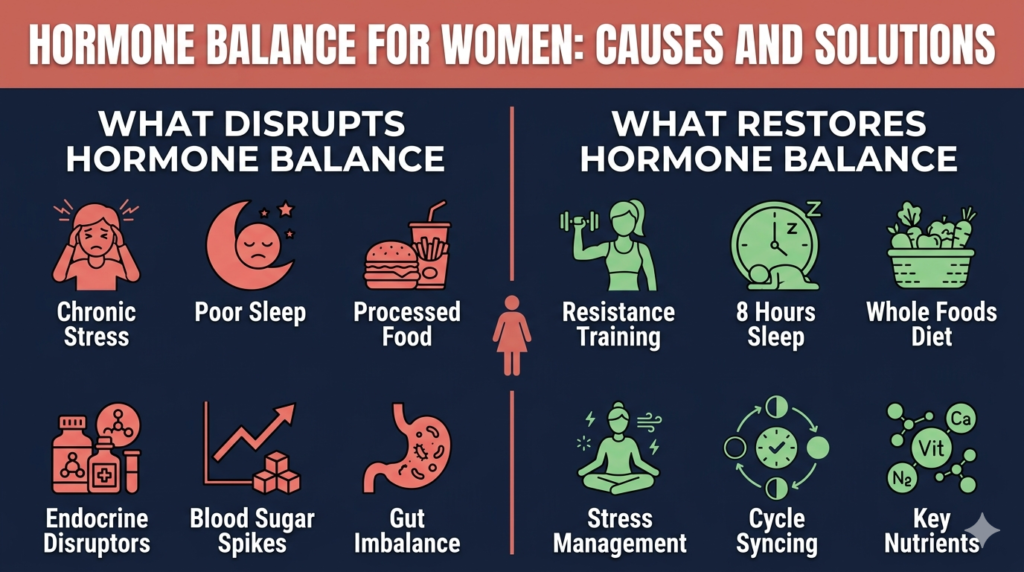
Use Our Free Tools to Support Your Hormonal Health
Hormone balance for women is closely connected to physical health metrics including body weight, calorie balance, and sleep timing. These free tools on Vitality Nexus give you the personalized data that supports every strategy in this guide.
Optimize Your Sleep Schedule Sleep is the single most impactful intervention for female hormonal health. Use our Sleep Calculator to find the sleep timing that aligns with your natural circadian rhythm and maximizes the hormonal recovery that overnight sleep provides.
Calculate Your Daily Calorie Needs Both undereating and overeating disrupt hormonal balance in different ways. Use our Calorie Calculator to find your personalized daily intake target that supports your health and hormonal goals.
Find Your TDEE Use our TDEE Calculator to calculate how many calories your body burns each day based on your actual activity level, giving you the foundation for a nutrition plan that supports hormonal health without the restriction that suppresses it.
Check Your BMI Body composition influences hormonal health significantly. Both excess body fat and insufficient body fat disrupt hormonal balance in different ways. Use our BMI Calculator to understand where your current weight sits relative to healthy ranges.
Find Your Ideal Weight Use our Ideal Weight Calculator to set a realistic and health-supportive weight goal that supports hormonal health alongside physical wellbeing.
Track Your Body Fat Percentage Use our Body Fat Calculator to understand your body composition and how it relates to your hormonal environment.
Calculate Your BMR Use our BMR Calculator to understand your resting calorie needs and ensure you are not inadvertently under-fueling in ways that suppress hormonal production.
Foods That Support Hormone Balance for Women
Building your diet around foods that actively support female hormonal health is one of the most impactful and sustainable strategies available. These are the most consistently valuable options.
Flaxseeds deserve the top position on this list because they contain lignans that modulate estrogen activity by competing with more potent estrogens for receptor binding sites. Two tablespoons of ground flaxseeds daily have been shown in research to reduce estrogen dominance symptoms and support a more favorable estrogen metabolite profile. Ground flaxseeds sprinkled on yogurt, oatmeal, or salads are a simple and effective daily habit.
Whole eggs provide the cholesterol, vitamin D, choline, and protein that support progesterone production, liver function, and overall hormonal synthesis. Including whole eggs regularly is as important for female hormonal health as it is for male hormonal health.
Cruciferous vegetables provide DIM and indole-3-carbinol for estrogen clearance. Broccoli, cauliflower, kale, and brussels sprouts eaten several times per week support the liver-based estrogen metabolism that prevents estrogen accumulation.
Fatty fish provide omega-3s that reduce the prostaglandin-driven inflammation behind menstrual pain, support healthy mood throughout the cycle, and reduce systemic inflammation that disrupts hormonal signaling.
Fermented foods including plain yogurt with live cultures, kefir, and sauerkraut support the gut microbiome and estrobolome health that regulates estrogen metabolism and clearance.
Nuts and seeds, particularly pumpkin seeds for zinc and magnesium, walnuts for omega-3s and antioxidants, and sunflower seeds for vitamin E, provide the micronutrient density that supports multiple dimensions of female hormonal health.
Leafy greens provide the magnesium and folate that support progesterone production, cortisol regulation, and estrogen metabolism. Including spinach, kale, or Swiss chard daily through salads, smoothies, or cooked dishes provides consistent micronutrient support for hormonal balance.
Sweet potatoes and other complex carbohydrates provide the sustained glucose that supports adrenal function and prevents the cortisol spikes associated with hypoglycemia. Women with hormonal imbalances, particularly adrenal-related fatigue and cortisol dysregulation, often find that including adequate complex carbohydrates significantly reduces energy crashes and mood instability.
For women interested in additional dietary strategies specifically for mental and emotional wellbeing that connects directly to hormonal health, read our article on mental health awareness and emotional wellness.
FAQ
1. What are the most common signs of hormonal imbalance in women?
The most commonly reported signs include irregular or painful periods, persistent fatigue, mood swings particularly in the week before menstruation, unexplained weight gain especially around the abdomen, sleep disruption, brain fog, acne around the jaw and chin, hair thinning, low libido, and cyclical headaches. The presence of multiple symptoms together is more diagnostically meaningful than any single symptom in isolation.
2. How long does it take to rebalance hormones naturally?
This depends on the specific hormonal pattern and the severity of imbalance. Most women notice initial improvements in energy, mood, and sleep within four to six weeks of consistently implementing the lifestyle strategies in this guide. Meaningful improvements in cycle regularity and PMS symptoms typically take two to four menstrual cycles of consistent application to become clearly evident. Addressing deeper patterns including insulin resistance, thyroid dysfunction, or significant nutritional deficiencies may take three to six months of sustained effort to produce substantial hormonal improvement.
3. Can diet really balance hormones?
Significantly and demonstrably yes. Dietary choices provide the raw materials for hormone synthesis, supply the cofactors needed for hormonal enzymatic processes, influence the gut microbiome that regulates estrogen metabolism, support liver function for hormonal clearance, and directly influence insulin and cortisol through meal timing and composition. A dietary pattern designed for hormonal health is not a minor peripheral intervention. It is central to whether hormonal balance can be achieved and maintained.
4. What foods cause hormonal imbalance in women?
The most hormonally disruptive dietary patterns include high consumption of refined sugars and processed carbohydrates which elevate insulin and worsen PCOS-related hormonal patterns. Alcohol which impairs estrogen clearance by the liver and elevates circulating estrogen. Very low-fat diets which restrict the cholesterol and fat needed for steroid hormone synthesis. Excessive soy in the form of processed soy products daily in large quantities due to phytoestrogen content. And diets very low in fiber which impair estrogen excretion through the bowel and contribute to estrogen reabsorption.
5. Is exercise good or bad for hormone balance?
Both, depending on type and amount. Moderate resistance training and moderate cardiovascular exercise are powerfully beneficial for female hormonal health through improvements in insulin sensitivity, cortisol reduction, and metabolic function. Excessive high-intensity training without adequate recovery, rest, and nutrition can suppress the hypothalamic hormonal axis that regulates the menstrual cycle, particularly in women who are already under significant stress or eating inadequately. The key is consistent, moderate, progressive exercise with adequate fueling and recovery rather than maximum training volume.
6. Do birth control pills cause hormonal imbalance?
Hormonal contraceptives do not cause hormonal imbalance in the traditional sense during use because they work by suppressing the natural hormonal cycle and replacing it with synthetic hormones. However, they do deplete several nutrients including zinc, magnesium, B vitamins, and vitamin C that are important for natural hormonal function. After stopping hormonal contraceptives, some women experience a period of cycle irregularity while the natural hormonal axis recovers, which can take anywhere from one to twelve months. Supporting nutritional status during and after hormonal contraceptive use helps minimize these effects.
7. When should I see a doctor about hormonal imbalance?
See your doctor if you have had irregular or absent periods for three months or more, if PMS symptoms are severe enough to significantly impact your daily functioning, if you are experiencing significant unexplained weight changes, significant hair loss, or nipple discharge, if you are having difficulty conceiving, if you have symptoms of thyroid dysfunction including persistent fatigue with cold intolerance or unexplained weight gain, or if your symptoms are progressively worsening rather than stable. A comprehensive hormonal panel including reproductive hormones, thyroid function, fasting insulin, and key nutrients gives your doctor the most informative picture of what is driving your symptoms.
Conclusion
Hormone balance for women is not a passive state that either exists or does not. It is something that is actively created or undermined by the daily choices you make around sleep, food, stress, movement, and environmental exposure.
The twelve strategies in this guide address the most important and most modifiable drivers of female hormonal imbalance from the foundation of sleep and stress management through to nutrition, exercise, liver support, cycle awareness, thyroid health, and targeted supplementation. They are not quick fixes. They are the conditions under which a woman’s endocrine system can function the way it was designed to.
Start with the strategies that resonate most strongly with your current symptoms and current life circumstances. Sleep and stress management if you are consistently depleted and reactive. Blood sugar stabilization if your energy crashes throughout the day. Gut and liver support if estrogen dominance symptoms are prominent. Thyroid investigation if fatigue, weight gain, and brain fog are dominant.
Use the free tools at Vitality Nexus to understand your physical health baseline and support your nutritional strategy. Explore our full women’s health resources and health and fitness section for more comprehensive guidance.
You deserve to feel well. You deserve to understand what is happening in your own body. And you deserve a health strategy that is built around your actual biology rather than a generic approach designed for someone else.