If you have PCOS and you have been trying to lose weight, you already know that the standard advice does not work the way it does for everyone else.
Eat less, move more. Count your calories. Cut carbs. Try intermittent fasting. You may have tried all of these, done them diligently, and still found that the scale barely moved while your energy, mood, and motivation took a significant hit.
This is not a willpower problem. It is not a discipline problem. It is a biology problem.
Polycystic ovary syndrome changes the way your body handles food, stores fat, and responds to exercise in ways that make standard weight loss approaches far less effective. Until you address those underlying biological mechanisms directly, you are essentially trying to drive a car with the handbrake on.
This guide covers 12 PCOS weight loss tips that address the actual root causes of weight gain in PCOS rather than simply telling you to eat less. Every strategy here is grounded in research specific to PCOS rather than general weight loss science, because the two are genuinely not the same.
Table of Contents
Why Losing Weight with PCOS Is Genuinely Different
PCOS is not simply a condition that makes periods irregular. It is a metabolic and hormonal condition that fundamentally alters how the body processes food and regulates fat storage.
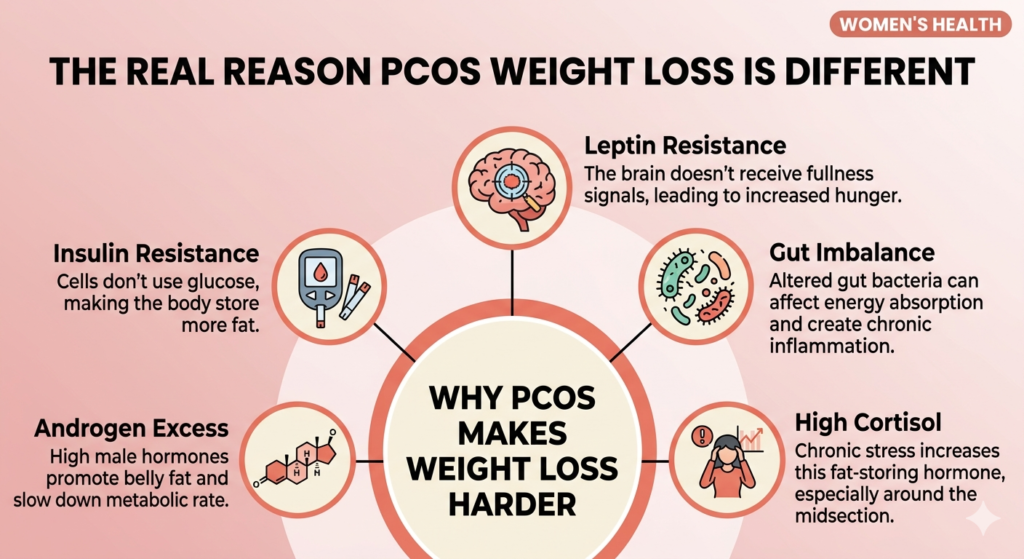
The most important mechanism is insulin resistance. Research estimates that 50 to 70 percent of women with PCOS have some degree of insulin resistance, regardless of their body weight. Insulin resistance means the cells of the body respond poorly to insulin’s signals. The pancreas compensates by producing more insulin. Chronically elevated insulin directly stimulates the ovaries to produce more androgens including testosterone, which worsens the PCOS hormonal profile and promotes fat storage particularly in the abdominal area.
This creates a cycle. PCOS drives insulin resistance, which elevates insulin, which elevates androgens, which promotes weight gain, which worsens insulin resistance, which worsens PCOS. Standard calorie restriction without addressing this cycle often makes it worse because the hormonal stress of undereating further elevates cortisol, which further worsens insulin resistance.
Women with PCOS also tend to have higher levels of leptin resistance, meaning the brain receives hunger signals less accurately and fullness signals less reliably, making calorie regulation genuinely harder than it is for women without the condition.
Additionally, women with PCOS have been shown in research to have a lower resting metabolic rate compared to women without PCOS at the same body weight, meaning they burn fewer calories at rest and require a more carefully calibrated approach to creating a caloric deficit.
According to research published in the journal Human Reproduction Update, even a five to ten percent reduction in body weight in women with PCOS can produce meaningful improvements in insulin sensitivity, hormonal profiles, cycle regularity, and fertility outcomes. Small, consistent progress matters enormously. The goal does not need to be dramatic weight loss to produce significant hormonal improvement.
1. Fix Insulin Resistance First
Of all the PCOS weight loss tips in this guide, this is the one that everything else builds on. Trying to lose weight with PCOS without addressing insulin resistance is like trying to empty a bath without turning off the tap. You can make some progress, but the underlying mechanism keeps working against you.
Fixing insulin resistance is not a single action. It is a combination of dietary, lifestyle, and in some cases pharmacological strategies that work together over time to restore normal insulin sensitivity.
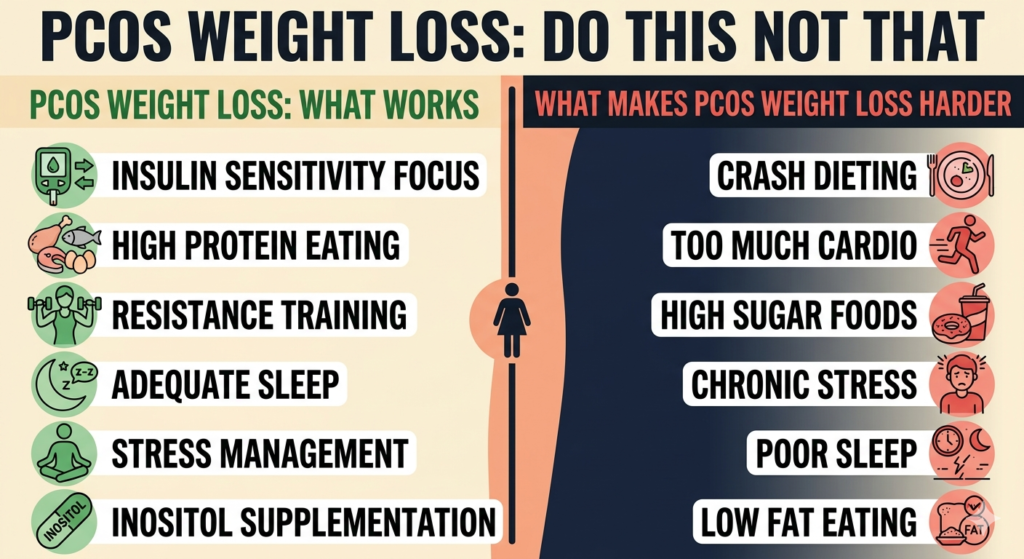
The dietary approach that most consistently improves insulin sensitivity in women with PCOS involves reducing the total glycemic load of the diet by limiting refined carbohydrates and sugars, increasing fiber intake to slow glucose absorption, distributing carbohydrate intake across the day rather than concentrated in large single meals, and pairing carbohydrates with protein and fat at every eating occasion to blunt the insulin response.
Resistance training is one of the most powerful non-dietary tools for improving insulin sensitivity because skeletal muscle is the primary site of insulin-stimulated glucose disposal. More muscle mass means more disposal capacity. Regular resistance training increases both muscle mass and the activity of the glucose transporters within muscle cells.
Walking after meals, even for ten to fifteen minutes, has been shown in research to meaningfully reduce postprandial blood glucose spikes. This is one of the simplest and most evidence-supported habits for managing insulin resistance in PCOS that most women can implement immediately.
Inositol supplementation, particularly myo-inositol and d-chiro-inositol, has strong clinical evidence for improving insulin sensitivity specifically in women with PCOS, which we discuss in more detail in tip ten.
2. Eat Protein at Every Single Meal
Protein is the most important macronutrient for PCOS weight loss for several specific reasons that go beyond its general benefits for satiety and muscle preservation.
First, protein has a minimal insulin response compared to carbohydrates. Replacing some dietary carbohydrate with protein reduces the total insulin burden of the diet, which is directly relevant to the insulin-resistance-driven hormonal cycle in PCOS.
Second, protein is the most satiating macronutrient per calorie. It suppresses ghrelin more effectively than carbohydrates or fat, and women with PCOS tend to have dysregulated ghrelin signaling that makes hunger management harder. Higher protein intake partially compensates for this by providing stronger and longer-lasting satiety signals.
Third, adequate protein supports muscle mass preservation during the caloric deficit that weight loss requires. For women with PCOS who already have a lower metabolic rate, losing muscle alongside fat makes the metabolic situation worse over time. High protein intake protects against this.
The research on protein intake for PCOS specifically suggests that aiming for 25 to 30 percent of total calories from protein, or approximately 1.6 to 2.0 grams per kilogram of body weight daily, provides meaningful benefits for insulin sensitivity, satiety, and weight loss outcomes compared to lower protein approaches.
Practical sources include eggs, chicken, turkey, fatty fish, Greek yogurt, cottage cheese, lean beef, legumes, and protein supplements when whole food sources are not sufficient for meeting daily targets. Including a protein source at breakfast is particularly important because research shows that a high-protein breakfast significantly reduces total daily caloric intake and improves appetite hormone patterns throughout the day.
3. Cut Out Refined Sugar and Processed Carbohydrates
This is possibly the most impactful single dietary change a woman with PCOS can make, and it works through the insulin resistance mechanism that is central to the condition.
Refined sugars and highly processed carbohydrates, including white bread, pastries, sugary drinks, white rice in large quantities, breakfast cereals, and packaged snack foods, produce rapid and significant blood glucose spikes. These spikes trigger large insulin responses. In a woman with PCOS and insulin resistance, these large insulin spikes are the primary driver of the hormonal cascade that promotes androgen production and fat storage.
Eliminating these foods does not mean eliminating all carbohydrates. It means replacing high-glycemic processed carbohydrates with lower-glycemic whole food alternatives that produce a much gentler and more manageable blood glucose response.
Practical swaps include replacing white bread with sourdough whole grain bread, replacing sugary breakfast cereals with oats, eggs, or Greek yogurt, replacing white rice with cauliflower rice or smaller portions of brown rice paired with protein and vegetables, replacing sugary drinks with water, sparkling water, or herbal teas, and replacing processed snack foods with whole food options like nuts, seeds, and vegetables with hummus.
These changes do not require calorie counting or rigid restriction. They require consistent replacement of the carbohydrate sources that most aggressively drive the insulin-androgen cycle with alternatives that do not.
4. Do Not Eat Low Fat
This is a PCOS weight loss tip that surprises many women because low-fat eating has been promoted as a health strategy for decades. For most women, and particularly for women with PCOS, eating very low fat is counterproductive in several important ways.
Dietary fat slows the digestion and absorption of carbohydrates. When fat is removed from a meal, carbohydrates are digested and absorbed faster, producing a higher and faster blood glucose spike and a larger insulin response. Adding fat back to meals flattens this glucose curve and reduces the insulin load that women with PCOS are trying to manage.
Steroid hormones including estrogen, progesterone, and testosterone are all synthesized from cholesterol. Women with PCOS already have disrupted hormonal production patterns. Restricting the dietary fat that provides the raw materials for hormonal synthesis adds another layer of hormonal suppression that is counterproductive.
Additionally, fat is the most satiating macronutrient per calorie from a volumetric perspective. Meals containing adequate fat keep women full for significantly longer than low-fat meals of equivalent calories, which reduces overall food intake more reliably than conscious restriction.
The fat sources that are most beneficial for women with PCOS include monounsaturated fats from avocados, olive oil, and almonds, and omega-3 fatty acids from fatty fish, walnuts, and flaxseeds. These fats specifically reduce the inflammation that worsens PCOS symptoms and support the anti-inflammatory hormonal environment that makes the condition more manageable. Read our article on omega-3 fatty acids benefits and food sources for comprehensive guidance on incorporating these essential fats.
5. Add Resistance Training to Your Routine
Resistance training is not just a weight loss tool for women with PCOS. It is a direct treatment for the insulin resistance that drives the condition.
Skeletal muscle is the body’s largest site of glucose disposal. When you eat carbohydrates, a large portion of the resulting blood glucose should be taken up by muscle cells and stored as glycogen. When muscle mass is low or inactive, this disposal capacity is reduced and blood glucose stays elevated for longer, requiring more insulin to clear it.
Resistance training addresses this through two mechanisms simultaneously. First, it increases total muscle mass over time, permanently increasing glucose disposal capacity. Second, the muscle contractions during resistance training themselves stimulate glucose uptake through an insulin-independent pathway, immediately reducing blood glucose during and after the session regardless of insulin sensitivity status.
Research specific to PCOS has shown that resistance training improves insulin sensitivity, reduces testosterone levels, improves cycle regularity, and produces better body composition outcomes than cardiovascular exercise alone in women with the condition. A combined approach of resistance training plus moderate cardio produces the best results.
For women with PCOS, two to three resistance training sessions per week targeting all major muscle groups through compound exercises is an appropriate starting point. This provides the insulin sensitivity benefits and metabolic rate support without the excessive cortisol elevation of very high-frequency training that can worsen the hormonal environment.
For practical workout guidance, read our article on best home workouts for beginners for accessible routines that work well for women starting a resistance training habit.
6. Do Not Overtrain or Undereat
This is a PCOS weight loss tip that goes against the instinct of many women who have been frustrated with slow results and respond by cutting calories more aggressively or exercising more intensely.
For women with PCOS, excessive caloric restriction and excessive exercise are both significant hormonal stressors that activate the hypothalamic-pituitary-adrenal axis and elevate cortisol. Chronic cortisol elevation worsens insulin resistance, promotes abdominal fat storage, suppresses thyroid function, and disrupts the already fragile hormonal regulation of the menstrual cycle.
Research has shown that women with PCOS have higher baseline cortisol levels than women without the condition, meaning they have less cortisol buffer before the negative effects of stress become pronounced. Adding the physiological stress of severe caloric restriction and excessive training on top of this already elevated baseline produces hormonal consequences that actively undermine weight loss efforts.
The most effective approach for PCOS weight loss is a moderate caloric deficit of 300 to 400 calories below maintenance rather than the aggressive 500 to 800 calorie deficits that weight loss programs often recommend. Combined with three to four moderate training sessions per week that include resistance work alongside moderate cardio, this approach creates the conditions for sustainable fat loss without the hormonal stress that derails progress.
Eating enough, resting enough, and training moderately and consistently is genuinely more effective for PCOS weight loss than training hard and eating very little. This is not intuitive, but it is what the research supports.
7. Prioritize Sleep as a PCOS Treatment Tool
Sleep is not just relevant to PCOS weight loss because it affects energy and food choices, though it does both of those things significantly. It is relevant because sleep directly influences the insulin sensitivity and cortisol regulation that are central to PCOS pathophysiology.
Research has found that women with PCOS have higher rates of sleep disorders including obstructive sleep apnea and insomnia compared to women without the condition, and that sleep disruption further worsens insulin resistance and hormonal imbalance in ways that go beyond the effects of sleep deprivation in women without PCOS.
Even one week of sleeping five to six hours per night produces measurable increases in insulin resistance and cortisol levels that directly worsen the hormonal environment driving PCOS symptoms. For women whose PCOS is already creating insulin and cortisol challenges, adding the metabolic stress of sleep deprivation compounds the problem significantly.
Seven to nine hours of quality sleep per night is a direct PCOS management tool, not a peripheral lifestyle recommendation. Consistent sleep and wake times, a cool and dark sleep environment, and avoiding alcohol and screens in the hour before bed are the most evidence-supported practices.
For natural strategies to improve sleep quality, read our article on magnesium for sleep. Magnesium glycinate specifically supports both sleep quality and insulin sensitivity, making it particularly valuable for women with PCOS.
Use our Sleep Calculator to find the sleep timing that aligns with your natural circadian rhythm and gives your hormonal system the overnight recovery it genuinely needs.
8. Manage Stress Because Cortisol Makes PCOS Worse
Chronic stress and PCOS form a particularly destructive partnership. PCOS creates physiological stress through its hormonal dysregulation. Chronic psychological stress elevates cortisol. Elevated cortisol worsens every major mechanism driving PCOS including insulin resistance, androgen production, inflammation, and appetite dysregulation. And worsening PCOS creates more psychological and physiological stress.
Breaking this cycle through active stress management is a genuine PCOS treatment strategy that directly supports weight loss by addressing the cortisol-insulin-androgen pathway that makes fat loss so difficult with the condition.
The practical strategies that have the strongest evidence for cortisol reduction include regular moderate physical activity such as walking and yoga, consistent sleep, mindfulness and meditation practice even for ten minutes daily, deliberate rest and leisure time built into the week rather than waiting for exhaustion to force it, and meaningful social support and connection.
For women with PCOS who are also managing the emotional weight of dealing with a chronic condition and its effects on body image, fertility, and self-esteem, addressing the psychological dimension of stress with professional support is equally important as the lifestyle strategies.
Read our article on how stress affects women’s reproductive health for a detailed understanding of why stress management is not peripheral to PCOS management but central to it.
9. Support Your Gut Microbiome Actively
Research into the relationship between the gut microbiome and PCOS is relatively recent but already clinically significant. Women with PCOS consistently show reduced diversity in their gut bacteria compared to women without the condition, and this microbiome disruption appears to contribute to both the insulin resistance and the androgen excess that characterize PCOS.
The gut microbiome influences PCOS through multiple pathways. Gut bacteria produce short-chain fatty acids that improve insulin sensitivity and reduce systemic inflammation. The estrobolome, which is the specific population of gut bacteria that metabolizes estrogen, influences the hormonal balance between estrogen and androgens. And gut bacteria influence leptin and ghrelin signaling that regulates appetite.
Improving gut microbiome diversity for PCOS involves two practical dietary strategies. Increasing prebiotic fiber from vegetables, fruits, legumes, and whole grains feeds the beneficial bacteria populations that support insulin sensitivity and hormonal balance. Including probiotic foods such as plain yogurt with live cultures, kefir, and fermented vegetables introduces beneficial bacteria that support the gut environment.
A clinical trial published in the European Journal of Nutrition found that probiotic and prebiotic supplementation in women with PCOS significantly improved insulin sensitivity, reduced testosterone levels, and improved inflammatory markers compared to placebo. These are the three core mechanisms of PCOS, all improved by gut microbiome support.
Minimizing antibiotic use to when genuinely necessary, reducing processed food consumption that depletes beneficial bacteria, and managing stress to prevent the cortisol-related gut barrier disruption all support the gut health that benefits PCOS management.
10. Use Inositol Before Considering Other Supplements
If you have been researching PCOS supplements, you will have encountered a long list of options. Among them, myo-inositol stands out as the most evidence-backed nutritional intervention specific to PCOS that most women are not yet using.
Inositol is a naturally occurring compound related to the B vitamin family. In women with PCOS, research has consistently found reduced tissue levels of inositol alongside abnormal inositol metabolism that contributes to insulin resistance. Supplementing with myo-inositol appears to restore normal inositol signaling within the insulin pathway, improving insulin sensitivity through a mechanism that is specifically relevant to PCOS rather than general metabolic health.
Multiple randomized controlled trials have found that myo-inositol supplementation in women with PCOS produces significant improvements in fasting insulin and glucose levels, reduction in testosterone levels, improvement in cycle regularity, improvement in ovulation rates in women trying to conceive, and reduction in body weight alongside improvements in body composition.
The standard dosage studied in most clinical trials is 2 to 4 grams of myo-inositol per day. Some research suggests combining myo-inositol with d-chiro-inositol in a 40:1 ratio for optimal results, though myo-inositol alone produces meaningful benefits.
Inositol has an excellent safety profile with no serious adverse effects reported in clinical trials and is widely considered one of the most evidence-supported first-line nutritional supplements for PCOS management.
Before spending money on less evidence-backed PCOS supplements, establishing a consistent myo-inositol routine alongside the dietary and lifestyle changes in this guide gives you the most scientifically grounded foundation available.
11. Track the Right Metrics Not Just Your Weight
This is a PCOS weight loss tip that addresses one of the most significant sources of discouragement for women with the condition. The scale is a particularly unreliable measure of progress in PCOS because the hormonal fluctuations of the condition produce significant water retention that creates scale weight variation that has nothing to do with fat loss.
Women with PCOS frequently retain water during the luteal phase of the cycle, in response to dietary changes, and during periods of hormonal fluctuation. Seeing the scale move up by one to two kilograms in a week despite doing everything correctly is disheartening and leads many women to abandon approaches that are actually working at the fat loss level.
Tracking body measurements, specifically waist circumference and key circumferences around the hips, thighs, and arms, gives a more reliable picture of body composition change than scale weight. Waist circumference is particularly meaningful for PCOS because abdominal fat is both a driver and a consequence of insulin resistance, and reductions in waist measurement reflect direct improvements in the metabolic PCOS pattern.
Progress photographs taken under consistent conditions every four weeks show changes that the daily mirror cannot detect because changes are too gradual to see on a day-to-day basis.
Energy levels, cycle regularity, skin condition, and the severity of PMS symptoms are all meaningful indicators of hormonal improvement that the scale cannot measure. A woman with PCOS whose periods are becoming more regular, whose acne is improving, and whose energy is more stable is making genuine progress even if the scale has not moved dramatically.
Use our Body Fat Calculator to track changes in body composition rather than relying on scale weight alone. And use our BMI Calculator alongside waist measurements for a more complete picture of your physical progress over time.
12. Work with Your Doctor to Address the Hormonal Root
All of the lifestyle strategies in this guide are genuinely powerful and evidence-based. For many women with PCOS, implementing them consistently produces significant improvements in weight, hormonal markers, and quality of life without any medical intervention.
However, for some women, the severity of insulin resistance, the degree of androgen excess, or the presence of complicating factors including thyroid dysfunction or significant inflammation means that lifestyle changes alone produce limited results without medical support.
Metformin is the most commonly prescribed medication for insulin resistance in PCOS and has a strong evidence base for improving insulin sensitivity, reducing testosterone levels, and supporting weight loss alongside lifestyle changes. It works through similar metabolic pathways as the inositol discussed in tip ten, though through a different mechanism.
Newer medications including GLP-1 receptor agonists have been showing significant results in women with PCOS for both weight management and insulin resistance and are worth discussing with your endocrinologist or gynecologist if lifestyle approaches have been applied consistently without adequate response.
Getting a comprehensive hormonal panel including fasting insulin, testosterone, DHEAS, SHBG, LH, FSH, and thyroid function alongside standard glucose gives your doctor the full picture of which mechanisms are most active in your specific PCOS pattern and allows treatment to be targeted accordingly.
Read our article on hormone balance for women for a complete understanding of the broader hormonal picture in which PCOS sits, and our article on when is women’s mental health month for support resources relevant to the emotional challenges that PCOS often brings alongside the physical ones.
The Best PCOS Weight Loss Diet Approach
Rather than a rigid meal plan, the most effective dietary approach for PCOS weight loss is a set of consistent principles that guide food choices every day.
The Mediterranean diet and the low glycemic index diet are the two dietary patterns with the strongest research support for PCOS management. Research comparing different dietary approaches in women with PCOS consistently finds that both the Mediterranean and low-GI approaches produce better insulin sensitivity, hormonal, and weight outcomes than standard low-fat calorie-restricted diets.
The practical daily eating pattern that emerges from the research looks like this.
Breakfast should include protein as the centerpiece. Three whole eggs scrambled with spinach, avocado, and a slice of whole grain sourdough, or Greek yogurt with berries and a tablespoon of ground flaxseed, provide high protein, healthy fat, and fiber in a combination that stabilizes blood sugar from the start of the day.
Lunch and dinner should be built around lean protein, non-starchy vegetables as the largest volume component, a small serving of complex carbohydrates like sweet potato, brown rice, or legumes, and a source of healthy fat. This combination provides sustained energy, minimizes insulin response, and meets protein targets effectively.
Snacks should be protein and fat focused rather than carbohydrate focused. A handful of almonds, Greek yogurt, boiled eggs, or cottage cheese with cucumber are all appropriate options that support blood sugar stability between meals without producing insulin spikes.
Reducing or eliminating alcohol is particularly important for women with PCOS because alcohol worsens insulin resistance and liver estrogen clearance in ways that directly amplify PCOS mechanisms.
For guidance on specific calorie targets and nutritional needs alongside this dietary pattern, read our article on how many calories should I eat.
Use Our Free Tools to Support Your PCOS Journey
Managing PCOS weight loss effectively requires understanding your personal body composition and calorie needs rather than following generic advice. These free tools on Vitality Nexus give you the real numbers you need.
Calculate Your Daily Calorie Needs Women with PCOS often have a lower resting metabolic rate than expected, which means generic calorie targets are frequently too high or too low. Use our Calorie Calculator to establish a personalized daily intake target that supports fat loss without the aggressive restriction that worsens insulin resistance.
Find Your TDEE Use our TDEE Calculator to calculate exactly how many calories your body burns each day at your current activity level. This is the foundation of any nutrition approach for PCOS that is both effective and hormonally safe.
Calculate Your BMR Use our BMR Calculator to find your resting calorie burn and understand your metabolic baseline, which is particularly relevant for women with PCOS who may have a lower BMR than typical estimates suggest.
Track Your Body Composition Use our Body Fat Calculator to track changes in fat-to-muscle ratio over time rather than relying on scale weight, which fluctuates misleadingly with the water retention common in PCOS.
Check Your BMI Use our BMI Calculator as one of several markers of physical progress over time.
Find Your Ideal Weight Use our Ideal Weight Calculator to set a realistic and health-supportive weight goal.
Optimize Your Sleep Use our Sleep Calculator to find the sleep timing that maximizes insulin sensitivity recovery and hormonal regulation overnight.
Foods to Eat and Avoid with PCOS
The dietary choices you make daily either support or worsen the insulin resistance and hormonal imbalance at the core of PCOS. Here is a practical reference.
Foods that support PCOS management:
Leafy greens including spinach, kale, and Swiss chard provide magnesium for insulin sensitivity and folate for hormonal metabolism. Including them daily through salads, smoothies, and cooked dishes provides consistent micronutrient support.
Fatty fish including salmon, mackerel, and sardines provide omega-3 fatty acids that reduce the systemic inflammation that worsens PCOS symptoms, support insulin sensitivity, and provide high-quality complete protein.
Berries including blueberries, raspberries, and strawberries are among the lowest glycemic fruits available and provide powerful antioxidants that protect against the oxidative stress that is elevated in PCOS.
Legumes including lentils, chickpeas, and black beans provide a unique combination of protein, fiber, and complex carbohydrate that produces a very low glycemic response alongside excellent satiety. They are among the best carbohydrate sources specifically for insulin-resistant conditions.
Avocados and olive oil provide the monounsaturated fats that support hormonal synthesis and the anti-inflammatory environment that reduces PCOS symptom severity.
Ground flaxseeds provide lignans that support estrogen clearance and omega-3 fatty acids, making them one of the most specifically beneficial foods for female hormonal conditions including PCOS.
Eggs provide complete protein, vitamin D, choline, and healthy fat in a combination that supports insulin sensitivity, hormonal production, and satiety simultaneously.
Foods to limit or avoid with PCOS:
Refined sugars and high-fructose corn syrup drive the insulin spikes that are the primary dietary driver of PCOS hormonal dysregulation. Removing them from the diet is the single most impactful dietary change for most women with PCOS.
Processed and ultra-processed foods produce rapid glucose responses, deplete gut bacteria diversity, and contribute to the chronic inflammation that worsens PCOS. Replacing them with whole food alternatives is a high-priority change.
Dairy in large quantities is controversial in PCOS. Some research suggests that certain dairy hormones and the insulin-stimulating properties of dairy may worsen PCOS for some women. Full elimination is not necessary for most, but monitoring personal response to dairy and moderating intake if symptoms worsen is sensible.
Alcohol worsens insulin resistance and impairs liver estrogen clearance, both of which are directly relevant to PCOS. Reducing or eliminating alcohol is one of the most impactful single changes for women with PCOS.
High-glycemic starchy foods including white bread, white rice in large portions, and sugary breakfast cereals should be replaced with their whole grain, lower-glycemic equivalents rather than eliminated entirely, as complete carbohydrate elimination can worsen cortisol and thyroid function.
FAQ
1. Why is it so hard to lose weight with PCOS?
Weight loss is harder with PCOS primarily because of insulin resistance, which is present in 50 to 70 percent of women with the condition. Insulin resistance means the body produces excess insulin, which directly stimulates androgen production and promotes fat storage particularly around the abdomen. Women with PCOS also tend to have lower resting metabolic rates, disrupted appetite hormone signaling, and higher baseline cortisol levels, all of which make standard weight loss approaches less effective than they are for women without the condition.
2. What diet is best for PCOS weight loss?
The dietary patterns with the strongest research support for PCOS are the Mediterranean diet and low glycemic index approaches. Both emphasize whole foods, adequate protein, healthy fats, fiber-rich vegetables and legumes, and minimal refined sugar and processed carbohydrates. These approaches address insulin resistance directly through food choices rather than simply restricting calories.
3. How much weight loss helps PCOS?
Research consistently shows that even a five to ten percent reduction in body weight in women with PCOS who are overweight produces clinically meaningful improvements in insulin sensitivity, testosterone levels, cycle regularity, fertility outcomes, and overall symptom severity. This means that for a 75-kilogram woman, losing four to seven and a half kilograms can produce significant hormonal improvement. The goal does not need to be reaching a specific ideal weight to produce meaningful PCOS benefit.
4. Does intermittent fasting help with PCOS weight loss?
The evidence on intermittent fasting specifically for PCOS is mixed. Some women with PCOS find that extended fasting periods worsen cortisol and blood sugar instability, which can worsen the hormonal picture. Others find that time-restricted eating helps manage insulin levels effectively. If intermittent fasting appeals to you, starting with a moderate 12 to 14 hour overnight fast rather than aggressive 16 to 20 hour fasting windows is a gentler starting point that is less likely to trigger the stress hormone response that more extreme fasting can produce in women with PCOS.
5. Is exercise good for PCOS weight loss?
Yes, particularly resistance training. Resistance training improves insulin sensitivity through insulin-independent glucose uptake in muscle tissue, increases metabolic rate, and has been shown to reduce testosterone levels in women with PCOS. Combined with moderate cardio, it produces better body composition and hormonal outcomes than cardio alone. The key is moderate, consistent training rather than excessive volume that elevates cortisol and worsens the hormonal environment.
6. Can you lose weight with PCOS without medication?
Yes, many women with PCOS produce meaningful and sustained weight loss through the lifestyle strategies covered in this guide without medication. The combination of insulin-sensitivity-focused eating, resistance training, sleep optimization, stress management, and inositol supplementation addresses the core mechanisms of PCOS and produces genuine results for a significant proportion of women. Medication becomes more relevant when lifestyle changes have been applied consistently over several months without adequate response, or when insulin resistance is severe enough to significantly limit the effectiveness of lifestyle interventions alone.
7. What supplements help with PCOS weight loss?
Myo-inositol has the strongest and most specific evidence base for PCOS, improving insulin sensitivity, reducing testosterone, and supporting weight loss through mechanisms directly relevant to the condition. Magnesium supports insulin sensitivity and sleep quality, both of which are relevant to PCOS management. Vitamin D addresses the deficiency that is common in women with PCOS and supports both hormonal and metabolic function. Omega-3 fatty acids reduce the inflammation that worsens PCOS symptoms. These four supplements, alongside the dietary and lifestyle strategies in this guide, represent the most evidence-grounded supplementation approach for PCOS available.
Conclusion
Losing weight with PCOS is genuinely harder than it is without it. That is not an excuse. It is a biological reality that deserves to be acknowledged rather than dismissed. When you understand the mechanisms that make weight loss harder with PCOS, you can choose strategies that directly address those mechanisms rather than working against your own biology.
The 12 PCOS weight loss tips in this guide address the actual root causes. Fixing insulin resistance through diet and exercise. Eating protein at every meal to manage appetite and preserve metabolic rate. Sleeping well because overnight recovery directly influences insulin sensitivity. Managing stress because cortisol worsens every PCOS mechanism. Supporting the gut because it regulates the estrogen and insulin signaling that underpins PCOS. And measuring the right things because the scale is a poor guide to real hormonal progress.
Progress with PCOS weight management is possible. It requires patience, the right approach, and the understanding that even modest improvements in body weight produce meaningful hormonal improvements that reduce symptoms, improve cycle regularity, and enhance quality of life significantly.
Use the free tools at Vitality Nexus to establish your personalized calorie and body composition targets. Explore our full women’s health resources for comprehensive guidance on female hormonal health. And visit our weight loss section for more practical strategies that complement the PCOS-specific approach in this guide.
You are not broken. Your body is responding to a hormonal environment that makes things harder. The right strategies, applied consistently, change that environment one day at a time.