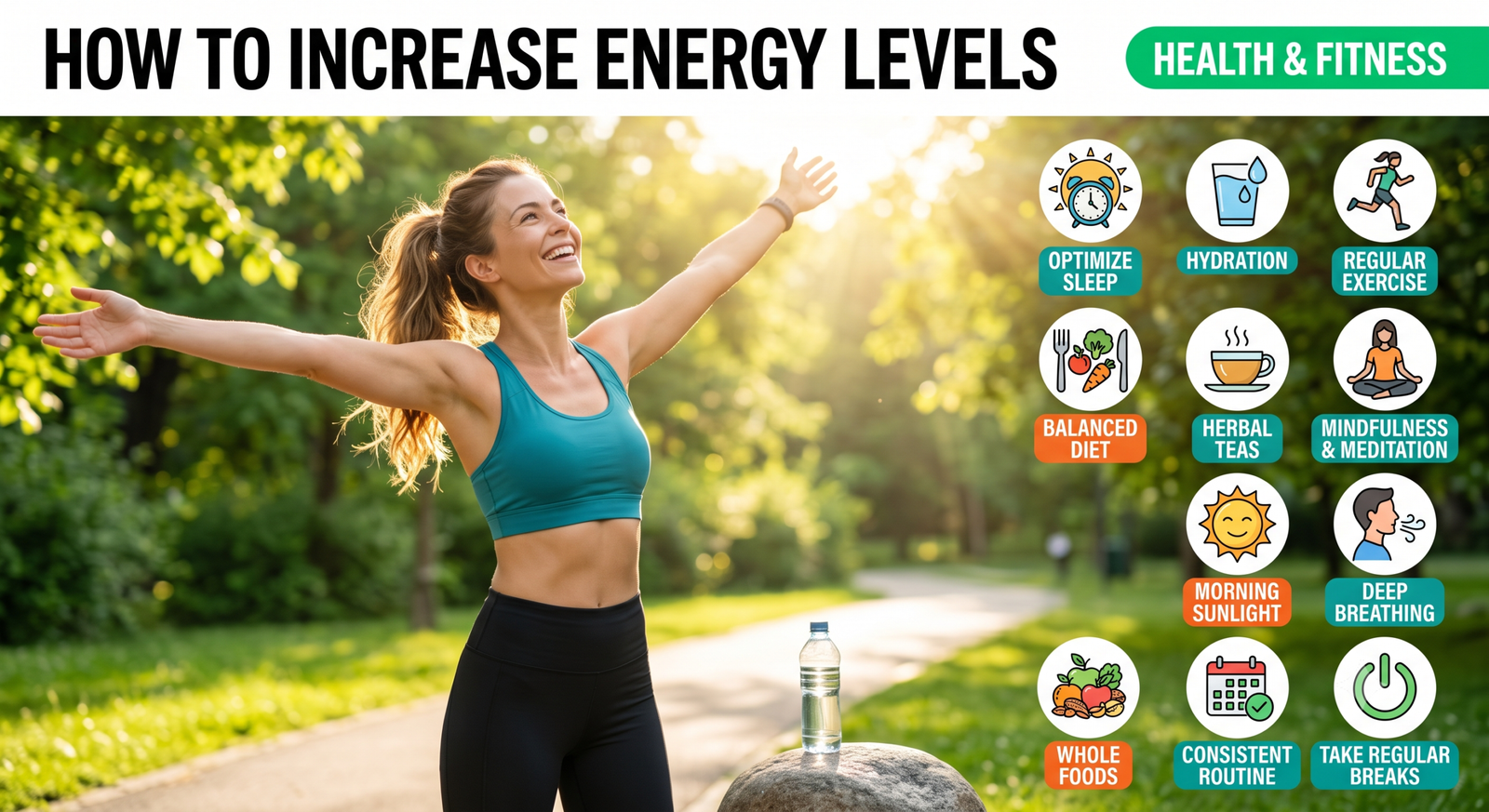
If you spend most of your day feeling drained, reaching for your third coffee, or struggling to get through the afternoon, you are not alone. Learning how to increase energy levels is one of the most searched health topics in the world, and with good reason.
Low energy is rarely about laziness. More often, it is the result of specific, fixable gaps in how you sleep, eat, move, and manage stress. The encouraging part is that most of the causes are well within your control, and knowing how to increase energy levels through these gaps is genuinely life-changing.
In this guide, you will learn 11 proven, natural ways to increase energy levels that go far beyond the usual advice of drinking more water. These are practical habits grounded in physiology, and they work because they address the real biological reasons your energy is low.
Table of Contents
Why Your Energy Keeps Crashing
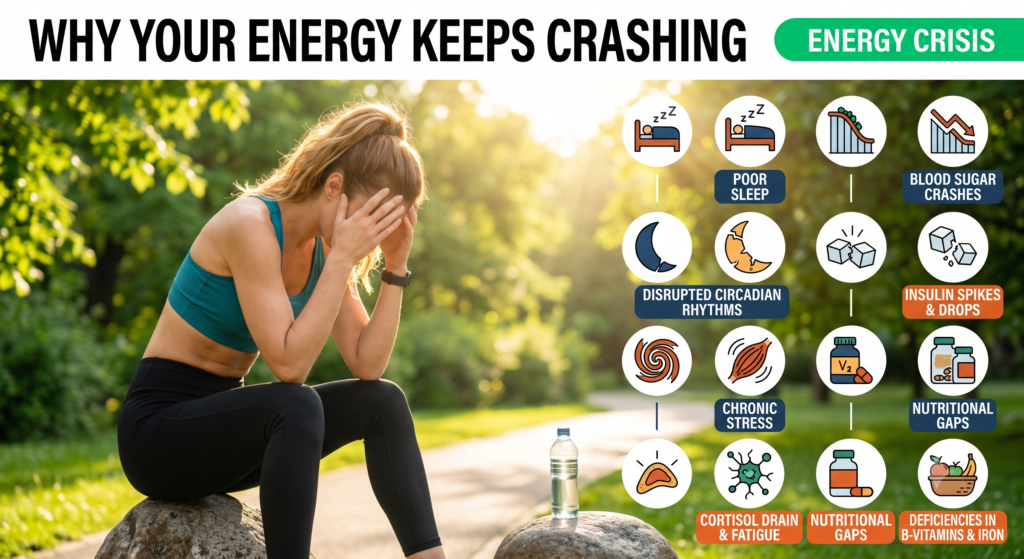
Before fixing your energy, it helps to understand why it drops in the first place. Most chronic low energy comes from one or more of four root causes.
The first is poor sleep. Even one hour less than you need consistently reduces cognitive performance, mood, and physical stamina. The second is blood sugar instability. Meals heavy in refined carbs and sugar cause a quick energy spike followed by a sharp crash that leaves you foggy and tired. The third is chronic stress, which burns through energy reserves and keeps cortisol elevated in ways that are physically exhausting. The fourth is nutritional deficiency, particularly in iron, magnesium, vitamin D, and B vitamins, all of which directly power cellular energy production.
Identifying which of these is your main driver makes fixing low energy much faster and more targeted.
How to Increase Energy Levels With Sleep
Sleep is the foundation of everything else. If you consistently under-sleep, no supplement, diet, or habit will fully compensate. Your body does its most critical repair and hormone regulation during deep sleep, and skimping on it depletes energy at the cellular level.
Most adults need seven to nine hours, but quality matters as much as quantity. Waking during the night, failing to reach deep sleep stages, and irregular sleep timing all reduce how restorative your sleep is. Use our free sleep calculator to find the exact sleep and wake times that align with your natural cycles for maximum recovery.
A consistent bedtime, a cool and dark bedroom, no screens in the hour before sleep, and a short wind-down routine all meaningfully improve sleep quality within days. Our guide on deep sleep benefits explains exactly what your body does during quality sleep and why it is irreplaceable for energy.
11 Natural Ways to Increase Energy Levels
Here are 11 proven, natural strategies for how to increase energy levels without relying on caffeine or quick fixes.
1. Fix Your Sleep First
As covered above, sleep is the single highest-leverage intervention for low energy. Prioritize seven to nine hours with consistent timing before changing anything else. Everything else works better when sleep is solid.
2. Eat Protein and Fiber at Every Meal
Blood sugar stability is the second biggest driver of energy throughout the day. Meals built around protein and fiber digest slowly, releasing energy steadily rather than in a sharp spike and crash. Start with a protein-rich breakfast and notice how much less you need that mid-morning coffee.
Our guide on how many calories you should eat helps you understand whether you are eating enough to fuel your day, since chronic undereating is itself a major but often overlooked cause of fatigue.
3. Move Your Body Every Day
It sounds counterintuitive, but movement creates energy rather than spending it. Regular aerobic exercise increases mitochondrial density in your cells, which literally means your body becomes better at producing energy over time. Even a 20-minute brisk walk raises energy and alertness for hours afterward.
Our article on the benefits of walking daily shows exactly what consistent movement does for your energy, mood, and overall health.
4. Stay Properly Hydrated
Mild dehydration of just one to two percent of body weight reduces cognitive performance, physical endurance, and mood. Most people do not notice they are dehydrated until they are already feeling the effects. Drinking water consistently through the day, rather than in large amounts occasionally, maintains the steady hydration your brain and muscles need.
Start with a large glass of water first thing in the morning before anything else, then keep a water bottle visible throughout the day as a reminder.
5. Manage Your Stress Actively
Chronic stress is one of the most underrated energy drains. Elevated cortisol keeps your nervous system in a state of low-level alert that burns through fuel reserves and impairs the deep sleep you need to recover. Over weeks and months, this produces the kind of bone-deep exhaustion that rest alone cannot fix.
Building a daily stress management practice, even ten minutes of deep breathing, a short walk, or journaling, reduces cortisol over time and gives your energy system space to recover. The Mayo Clinic notes that emotional stress and overcommitment are among the most common and most overlooked causes of persistent low energy in otherwise healthy adults. Our article on high cortisol versus low cortisol explains how stress hormones directly affect your energy and what to do about it.
6. Address Nutritional Deficiencies
Several nutritional deficiencies directly reduce energy production. Iron deficiency is the most common, particularly in women, causing fatigue that no amount of sleep fixes. Vitamin D deficiency causes persistent tiredness that feels disproportionate to any obvious cause. Magnesium is needed for over 300 enzymatic processes including energy metabolism. B vitamins power the cellular machinery that converts food into usable energy.
If you have tried improving sleep and diet without much improvement, a simple blood test checking these levels is the most useful next step. Our guide on magnesium benefits and deficiency covers one of the most commonly missed energy nutrients.
7. Reduce Sugar and Refined Carbohydrates
Sugar and refined carbs create energy spikes that feel good briefly before crashing, leaving you more tired than before. Over time, this roller coaster trains your body to crave more sugar for energy, creating a cycle that keeps your baseline energy perpetually low.
Replacing sugary snacks with protein, fat, and fiber-based options stabilizes your blood sugar and smooths out your energy through the day. If sweet cravings are a struggle, our guide on how to reduce sugar cravings gives specific, practical strategies.
8. Spend Time Outdoors in Natural Light
Natural light exposure in the morning sets your circadian rhythm and boosts serotonin, both of which have a direct effect on daytime energy and alertness. Even 15 minutes of outdoor light within the first hour of waking improves energy, mood, and sleep quality later the same night.
This is especially important in winter months or for people who work indoors. It costs nothing and produces real, measurable improvements in energy within days.
9. Optimize Your Caffeine Timing
Caffeine does not create energy, it borrows it. It blocks adenosine, the chemical that makes you feel sleepy, but the debt still gets paid later. The key is timing caffeine strategically rather than relying on it throughout the day.
Delaying your first coffee by 90 to 120 minutes after waking allows your cortisol to peak naturally first, making caffeine more effective when you do use it. Cutting caffeine off by 2 pm prevents it from disrupting the deep sleep stages that restore your energy overnight.
10. Take Short Movement Breaks Through the Day
Sitting for long periods slows circulation and reduces oxygen delivery to the brain, which directly causes the afternoon energy dip most people experience. A five-minute walk or a few minutes of stretching every 90 minutes keeps blood moving and energy up throughout the workday.
These micro-breaks are more effective for afternoon energy than another coffee, and they compound over a day into genuinely significant improvements in focus and output.
11. Build and Protect Social Connection
Energy is not only physical. Emotional and relational energy drain is real and powerful. Spending time with people who lift you up genuinely restores energy, while draining relationships or isolation create a subtle but persistent fatigue.
Research consistently shows that people with strong social connections have better mood, better sleep, and more physical energy. Protecting time for meaningful connection is not indulgent. It is a legitimate energy management strategy.
How Nutrition Affects Your Energy All Day
The way you structure your eating through the day shapes your energy curve more than most people realize. A few principles make a significant difference.
Eating breakfast with protein and healthy fat, rather than sugary cereal or nothing, sets a stable blood sugar foundation for the morning. Including fiber from vegetables, legumes, and whole grains at lunch prevents the post-meal slump that many people attribute to eating too much, when the real cause is eating the wrong foods.
Snacking on protein and fat, rather than chips or biscuits, bridges the gap between meals without the sugar crash. Our article on healthy snacks for weight loss is full of options that fuel energy rather than drain it. Avoiding very large meals, especially at dinner, prevents the heavy, lethargic feeling that follows and protects the sleep quality that restores your energy overnight.
According to Harvard Health, the foods you eat, when you eat them, and how much you eat all profoundly shape your daily energy in ways that are under your direct control.
How to Increase Energy Levels With Movement
Exercise is the most counterintuitive energy solution, since it feels like effort, yet it creates more energy than it costs. The mechanism is mitochondrial. Regular aerobic exercise increases the number and efficiency of mitochondria in your muscle cells, which are the tiny structures that produce ATP, your body’s primary energy currency.
This means that a person who exercises regularly produces energy more efficiently at every moment of the day, not just during the workout. Over weeks of consistent movement, your baseline energy rises, your endurance improves, and the same daily demands feel easier.
You do not need intense exercise to get this effect. Walking, cycling, swimming, or any sustained movement three to five times per week is enough to build genuine, lasting energy over time. Our roundup of the best cardio exercises gives practical options for every fitness level.
Stress, Burnout, and Energy Drain
There is a difference between normal tiredness and burnout. Normal tiredness resolves with a good night of sleep and a restful day. Burnout does not. It is the result of sustained stress and depletion over weeks or months, and it requires a more deliberate recovery approach.
If your low energy comes with emotional numbness, reduced motivation, cynicism, or a feeling that rest does not help, you may be experiencing burnout rather than simple fatigue. Our guide on burnout causes, symptoms, and solutions covers the difference and what to do in each case.
For ongoing energy and focus that holds up under daily demands, our energy optimization guide ties all of these strategies into a complete, practical system.

Track Your Energy and Health
Tracking your energy objectively over time helps you identify which habits are making the most difference and keeps you motivated to continue.
Keep a simple weekly energy note rating your average daily energy out of ten. Over four to eight weeks of applying these habits, most people see a steady upward trend. Alongside this, use our free BMI calculator and calorie calculator to make sure your nutrition is supporting your energy needs, and the TDEE calculator to understand how much fuel your body actually needs each day.
Understanding how to increase energy levels is ultimately about understanding your own body and giving it what it needs consistently. The habits above do not work as one-time fixes. They work as a system, and the longer you apply them, the more energy you have to build on.
Frequently Asked Questions
What is the fastest way to increase energy levels naturally?
Drinking water, eating a protein-rich snack, stepping outside for natural light, and taking a short walk are all effective within minutes to hours. For sustained energy, improving sleep quality and eating more protein and fiber at meals produces the most reliable results.
Why am I always tired even when I sleep enough?
Possible causes include nutritional deficiencies in iron, vitamin D, or magnesium, blood sugar instability from poor diet, chronic stress, thyroid dysfunction, or sleep quality issues even when sleep duration is adequate. A doctor’s visit with basic blood tests is the most useful next step.
How can I increase my energy levels without caffeine?
Prioritizing sleep, eating protein and fiber at every meal, staying hydrated, exercising regularly, spending time in natural light, and managing stress all increase energy levels naturally without relying on caffeine.
Does exercise really give you more energy?
Yes. Regular exercise increases the efficiency of your body’s energy production at the cellular level, raises mood-boosting hormones, and improves sleep quality, all of which result in higher and more stable energy throughout the day over time.
What foods give you energy immediately?
Bananas, nuts, whole grain crackers with nut butter, and Greek yogurt all provide a fast, stable energy boost without a sugar crash. These combine carbohydrates with protein and fat to slow digestion and keep energy steady.
Can stress cause low energy?
Yes, significantly. Chronic stress elevates cortisol over prolonged periods, which burns through energy reserves, disrupts sleep, and creates a persistent fatigue that rest alone does not fix. Addressing the stress itself is essential alongside sleep and nutrition.
How long does it take to increase energy levels naturally?
Most people notice improvements in energy within one to two weeks of better sleep, more hydration, and dietary changes. Bigger gains from regular exercise and addressing deficiencies usually become clear within four to eight weeks of consistent effort.
Final Thoughts
Learning how to increase energy levels is not about one magic habit. It is about building a system where your sleep, nutrition, movement, and stress management all work together rather than against each other.
Start with sleep. Then add protein to your meals. Move a little more. Drink water consistently. Reduce sugar. These five changes alone will produce noticeable improvements in energy within two weeks for most people.
Use the free tools on Vitality Nexus to understand your calorie and sleep needs, and explore more of our health and fitness guides to keep building a lifestyle that powers your best days.
Medical Disclaimer: This article is for general information only and is not medical advice. If you experience persistent fatigue that does not improve with lifestyle changes, please consult a qualified doctor to rule out underlying medical conditions.