
Most people assume that getting weaker and losing muscle as they age is simply inevitable. Something that happens to everyone, starts around middle age, and there is not much to be done about it beyond accepting it gracefully.
That assumption is wrong. And it is costing people years of physical capability, metabolic health, independence, and quality of life.
Muscle loss after 30 is real, it is measurable, and it begins earlier than most people expect. But it is not a passive sentence handed down by biology. It is a process that is profoundly influenced by how you live, how you eat, how you train, and how consistently you apply the strategies that the science of sarcopenia has made very clear over the past two decades.
This guide explains exactly what happens to your muscles after 30, why it matters far more than most people realize, and the 10 most effective evidence-based strategies to slow, stop, and in many cases reverse the process regardless of where you are starting from today.
Table of Contents
What Is Sarcopenia and When Does It Actually Start?
Sarcopenia is the medical term for the age-related loss of skeletal muscle mass, strength, and function. It comes from the Greek words for flesh and loss, and it describes a process that is far more clinically significant than the word suggests.
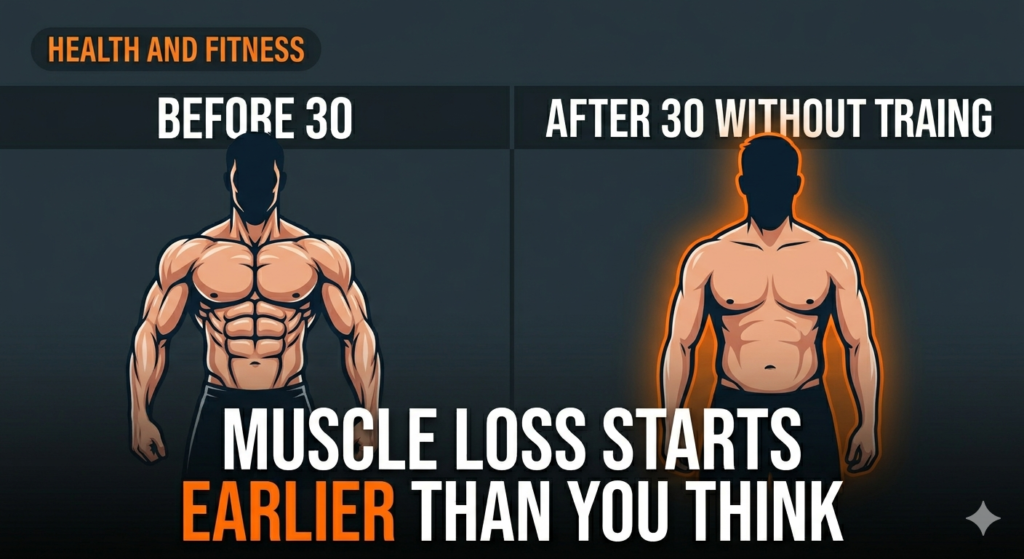
Most people associate severe muscle loss with very old age. The reality is that the process begins much earlier. Research consistently shows that muscle mass and strength begin their measurable decline in the late twenties to early thirties in people who are not actively working against it.
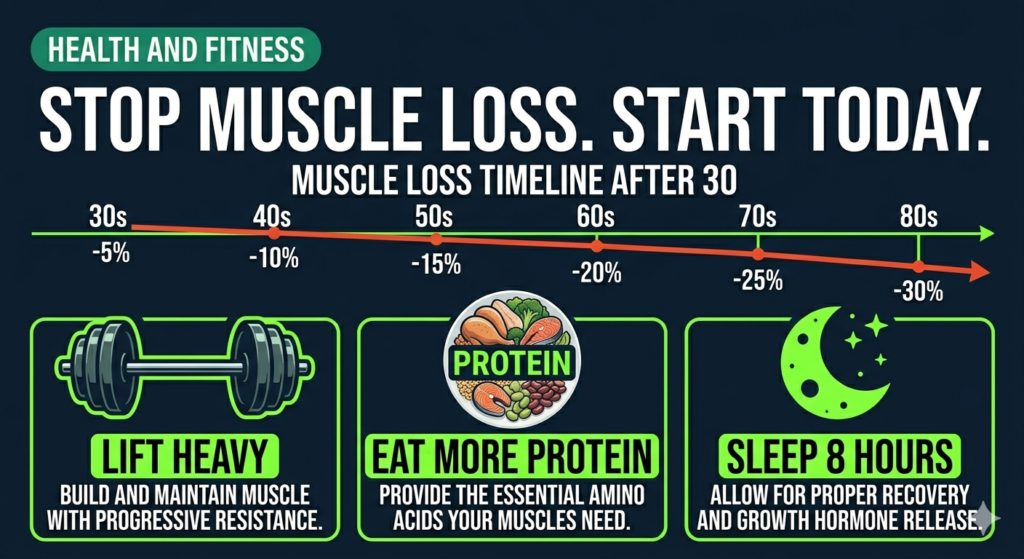
The rate of decline is not dramatic from year to year. Most studies show a loss of approximately three to five percent of total muscle mass per decade between the ages of 30 and 60, with the rate accelerating to five to ten percent per decade after 60. Over a lifetime, an untrained person can lose 30 to 40 percent of their total muscle mass between age 30 and 80.
What makes this particularly significant is that muscle loss is not a cosmetic issue. It is a health issue. Muscle tissue is metabolically active, meaning it burns calories at rest. It is structurally protective, surrounding joints and supporting the spine. It is metabolically regulatory, playing a central role in glucose disposal and insulin sensitivity. And it is functionally essential, underpinning every physical task from climbing stairs to catching yourself if you stumble.
According to research published by the National Institute on Aging, sarcopenia affects an estimated 10 to 30 percent of adults over 60 and is a major contributing factor to falls, fractures, metabolic disease, loss of independence, and mortality in older adults. But its roots, and its most preventable phase, lie in the decades before it becomes clinically apparent.
Why Muscle Loss After 30 Matters More Than You Think
If you are in your thirties or forties and this is not on your radar yet, here is why it deserves to be.
Every pound of muscle you lose reduces your resting metabolic rate, meaning you burn fewer calories at rest. This creates a progressively more difficult weight management challenge as you age, even with identical eating and activity habits. The commonly experienced phenomenon of weight creeping on in your thirties and forties despite no obvious change in diet or lifestyle is largely a metabolic consequence of muscle loss.
Beyond metabolism, muscle is your body’s primary glucose disposal mechanism. When you eat carbohydrates, a large proportion of the resulting blood glucose is taken up by muscle tissue and stored as glycogen. As muscle mass declines, this disposal capacity reduces, blood glucose runs higher for longer after meals, and insulin resistance develops progressively. This is why the incidence of type 2 diabetes rises sharply with age and why muscle loss and metabolic disease are so closely linked.
Structurally, muscle loss removes the protective cushioning around joints, contributes to postural changes, and reduces the reactive strength that prevents falls. Falls become significantly more dangerous as bone density also declines with age, and the combination of reduced muscle and reduced bone is the primary driver of the fracture risk that defines later-life frailty.
For a comprehensive look at how muscle mass connects to metabolic health across every dimension discussed above, read our article on muscle mass and metabolic health.
The motivating truth is that most of this is preventable and much of it is reversible with the right approach applied consistently.
What Causes Muscle Loss After 30?
Understanding the mechanisms behind muscle loss after 30 allows you to target the specific drivers rather than applying generic recommendations.
Anabolic resistance is the central biological mechanism. As we age, the muscle protein synthesis response to protein intake and resistance training stimulus becomes progressively blunted. The same amount of protein and the same training stimulus that drives robust muscle growth in a 22-year-old produces a smaller response in a 42-year-old. This does not mean the response is absent. It means it requires somewhat higher protein doses and training stimulus to achieve similar outcomes.
Hormonal decline plays a significant role. Testosterone in men and estrogen in women both support muscle protein synthesis and are central to the anabolic environment that maintains muscle mass. Both decline meaningfully with age. Testosterone specifically begins declining at approximately one to two percent per year from age 30 onward in men. Growth hormone and IGF-1, which are also critical anabolic signals, follow similar declining trajectories.
Reduced physical activity is the most directly controllable driver. The older people become, the more sedentary most become. A muscle that is not regularly challenged with sufficient load and movement has no biological reason to maintain its mass. The body is extraordinarily efficient at eliminating tissue that is not being used.
Chronic inflammation, which tends to increase with age in ways that are collectively described as inflammaging, promotes muscle protein breakdown through multiple signaling pathways. This low-grade inflammatory state is worsened by poor diet, excess body fat, insufficient sleep, and chronic psychological stress.
Nutritional inadequacies, particularly in protein intake, vitamin D, magnesium, and omega-3 fatty acids, accelerate the muscle loss that hormonal and activity changes initiate.
1. Make Resistance Training Non-Negotiable
There is no more direct, more evidence-based, or more powerful intervention for preventing and reversing muscle loss after 30 than consistent resistance training. Nothing else comes close in terms of effect size or the breadth of the adaptations it produces.
Resistance training preserves muscle mass by providing the mechanical stimulus that signals the body to maintain and build muscle tissue rather than catabolize it. It increases testosterone and growth hormone acutely and over the long term. It improves insulin sensitivity through increased glucose uptake by trained muscle. It reduces systemic inflammation. It maintains bone density. And it preserves the neuromuscular connections that keep muscle fibers functional and under voluntary control.
The research on resistance training and sarcopenia prevention is unambiguous. A systematic review published in the British Journal of Sports Medicine found that progressive resistance training significantly increases muscle mass, strength, and functional capacity in adults at every age from 30 to 90 and beyond. The response exists at every age. It is somewhat blunted compared to younger adults, but it is absolutely real and clinically significant.
The practical prescription for muscle preservation after 30 is resistance training two to four times per week, targeting all major muscle groups through compound movements, with progressive overload applied consistently over time. The specific exercises matter less than the consistency and the principle of gradual progressive challenge.
For a complete beginner’s approach to building a resistance training foundation, read our article on beginner gym guide. For those who prefer training at home without equipment, our article on workout without equipment provides effective bodyweight progressions that produce genuine muscle preservation stimulus.
2. Eat More Protein Than You Think You Need
The protein required to maximally stimulate muscle protein synthesis is higher in adults over 30 than conventional dietary guidelines suggest, and higher still in adults over 50 and 60.
The standard dietary reference intake for protein is 0.8 grams per kilogram of body weight per day. This is the minimum required to prevent deficiency. It is not the amount required to preserve or build muscle in older adults. Research consistently shows that muscle protein synthesis is maximally stimulated in adults over 30 at protein intakes significantly above this level.
Current sports nutrition and muscle aging research supports protein intakes of 1.6 to 2.2 grams per kilogram of body weight per day for adults actively trying to preserve or build muscle. For a 75-kilogram person, that is 120 to 165 grams of protein daily. For a 90-kilogram person, it is 145 to 200 grams.
The anabolic resistance of aging muscle, which was described in the causes section, means that more protein is needed per meal to achieve the same muscle protein synthesis response that a smaller amount would produce in a younger person. Research suggests that meals containing 35 to 40 grams of high-quality protein, rather than the 20 to 25 grams that maximizes the response in young adults, are needed to fully stimulate muscle protein synthesis in adults over 40 and 50.
This means prioritizing protein at every meal rather than concentrating it at dinner, and choosing the highest biological value protein sources available. Eggs, chicken, beef, fish, Greek yogurt, cottage cheese, and whey protein concentrate are your most valuable sources.
3. Distribute Protein Evenly Across Your Day
How you distribute your protein intake across the day matters for muscle preservation almost as much as the total amount you consume.
Research on muscle protein synthesis timing shows that the muscle protein synthesis response to a protein-containing meal lasts approximately four to five hours before returning to baseline. To maximize the total daily time that muscle protein synthesis is elevated, protein intake should be distributed across three to four separate meals rather than consumed primarily at one meal.
Many people habitually eat a low-protein breakfast, a moderate-protein lunch, and a very high-protein dinner. This pattern means muscle protein synthesis is only substantially elevated for a fraction of the day, leaving significant anabolic opportunity untapped.
A more optimal pattern for muscle preservation after 30 distributes 30 to 40 grams of protein across each of three main meals, with an optional protein-containing snack. Breakfast becomes as protein-focused as dinner. This pattern keeps muscle protein synthesis elevated for a much larger proportion of each 24-hour period, which accumulates to meaningfully greater muscle protein accretion over weeks and months.
Pre-sleep protein is particularly valuable. Consuming 30 to 40 grams of casein protein before bed provides a sustained amino acid release through the overnight period, when muscle protein synthesis would otherwise be limited by the absence of dietary amino acids. Read our article on healthy snacks for weight loss for practical high-protein snack options that work before sleep without disrupting it.
4. Prioritize Sleep as a Muscle Preservation Tool
Sleep is where the majority of muscle repair, protein synthesis, and growth hormone secretion occurs. A fact that most people intellectually know but very few actually act on by protecting their sleep as a training priority rather than sacrificing it when life gets busy.
Growth hormone is secreted in its largest daily pulse during the first slow wave sleep cycle of the night. This growth hormone pulse stimulates muscle protein synthesis, mobilizes fat for energy, and supports the regenerative processes that maintain muscle tissue quality. When sleep is cut short or fragmented, this growth hormone pulse is reduced or disrupted, and the anabolic recovery that should accompany each night is compromised.
Research has shown that sleep restriction increases muscle protein breakdown through elevated cortisol and reduced anabolic hormone signaling. Even one to two weeks of sleeping five to six hours per night in people who normally sleep seven to eight hours produces measurable reductions in lean mass preservation during calorie restriction.
Beyond the hormonal effects, sleep deprivation reduces training performance, motivation, and recovery capacity in ways that compound over time into less effective training sessions and slower adaptation.
Seven to nine hours of quality sleep per night is a muscle preservation requirement, not a lifestyle luxury. Use our Sleep Calculator to establish the sleep timing that maximizes deep sleep duration and the anabolic recovery that accompanies it. For natural strategies to improve sleep quality, read our article on magnesium for sleep.
5. Optimize Vitamin D and Testosterone Levels
Both vitamin D and testosterone have direct relationships with muscle protein synthesis, muscle fiber size, and neuromuscular function. Both commonly decline with age. And both are directly addressable through lifestyle intervention and supplementation.
Vitamin D receptors are present in skeletal muscle tissue, and vitamin D signaling influences muscle protein synthesis directly through genomic and non-genomic pathways. Research has found that vitamin D deficiency is associated with reduced muscle mass, reduced muscle strength, and increased fall risk in older adults, and that supplementation in deficient individuals produces measurable improvements in muscle function.
Given that vitamin D deficiency affects an estimated 40 to 80 percent of adults in northern latitudes, and that the consequences for muscle health are significant, testing vitamin D levels and supplementing to optimal ranges is one of the most accessible and impactful interventions available.
Testosterone is a primary anabolic hormone for muscle maintenance in men. Its age-related decline is one of the main biological drivers of muscle loss after 30. The lifestyle strategies that support testosterone, including resistance training, adequate sleep, healthy fat intake, zinc and magnesium sufficiency, and stress management, are largely the same strategies that support muscle preservation through other mechanisms. They reinforce each other comprehensively.
Read our articles on vitamin D3 and K2 benefits and how to increase testosterone naturally for complete practical guidance on optimizing both of these muscle-critical hormones through evidence-based lifestyle approaches.
6. Use Progressive Overload Consistently
Progressive overload is the principle that drives continued muscle adaptation in response to training. It is what ensures that your resistance training continues to produce muscle-preserving stimulus rather than simply maintaining a baseline level of fitness that the body has long since adapted to.
The principle is simple. To continue driving muscle protein synthesis and prevent the adaptive plateau that follows the body’s adjustment to any given training stimulus, the challenge placed on the muscle must increase gradually over time. This can be achieved through adding weight, adding reps, adding sets, reducing rest periods, slowing the movement tempo, or advancing to harder exercise variations.
Without progressive overload, a resistance training routine that was highly effective in its first weeks becomes a maintenance activity for the nervous system rather than a genuine muscle preservation stimulus. The body has adapted to the demand and no longer needs to invest resources in maintaining or building muscle tissue to meet it.
For people who have been performing the same exercises at the same weights for months or years without any systematic progression, introducing even modest progressive overload produces renewed muscle protein synthesis and can restart a muscle preservation or building process that had stalled.
The practical application is straightforward. Keep a training log. Record what you lifted and how many reps you completed every session. Aim to improve something, however modestly, each week or at minimum every two weeks. Small, consistent improvements compound into significant cumulative progress over months and years.
7. Add Creatine to Your Daily Routine
Creatine monohydrate is the most extensively researched and most consistently effective supplement for supporting muscle mass and strength, and its value specifically for combating muscle loss after 30 is particularly well-established.
Creatine works by increasing the phosphocreatine stores in muscle tissue, which enhances the regeneration of ATP, the primary energy currency used during high-intensity exercise. This allows greater training volume and intensity before fatigue, which produces a stronger training stimulus and greater muscle protein synthesis over time.
Beyond its performance-enhancing effects, creatine has been shown in research to directly stimulate muscle protein synthesis through mechanisms independent of training performance. It also draws water into muscle cells, which increases cell volume and is associated with enhanced anabolic signaling.
For older adults specifically, creatine supplementation has been shown in multiple studies to meaningfully augment the muscle and strength gains from resistance training compared to resistance training alone. A meta-analysis published in the journal Medicine and Science in Sports and Exercise found that older adults who combined creatine supplementation with resistance training gained significantly more lean mass and strength than those who trained without creatine.
The standard supplementation protocol is 3 to 5 grams of creatine monohydrate per day, taken consistently without the need for a loading phase for long-term use. It is one of the safest, most affordable, and most evidence-backed supplements available for this purpose.
8. Manage Cortisol and Chronic Stress
Cortisol is a catabolic hormone, meaning at chronically elevated levels it promotes the breakdown of tissue for energy, including muscle tissue. The relationship between chronic stress, elevated cortisol, and accelerated muscle loss is direct and well-documented.
Cortisol inhibits muscle protein synthesis through multiple pathways. It directly opposes the anabolic signaling of insulin, testosterone, and growth hormone. It promotes the ubiquitin-proteasome pathway, which is the primary cellular mechanism through which muscle protein is degraded. And chronically elevated cortisol suppresses testosterone production, removing one of the key hormonal supports for muscle maintenance.
For people in their thirties and forties who are managing demanding careers, young families, financial pressures, and the various stressors of modern adult life, chronic cortisol elevation is common and often normalized. The muscle loss consequences of this sustained stress state compound with the age-related hormonal changes happening simultaneously.
Effective stress management is therefore a genuine muscle preservation strategy, not a lifestyle recommendation tangentially connected to fitness. Meditation, adequate sleep, deliberate rest and recovery periods, manageable workload, regular time in nature, and meaningful social connection all reduce cortisol through complementary pathways.
For a detailed understanding of how cortisol affects body composition and muscle health, read our article on low cortisol vs high cortisol.
9. Stay Consistently Active Between Sessions
Structured resistance training sessions provide the primary stimulus for muscle preservation. But what you do between those sessions matters more than most people realize.
Non-exercise activity thermogenesis, which is all the physical movement you do outside of formal exercise, plays an important role in maintaining the metabolic and neuromuscular activity that supports muscle health between training sessions. People who are generally active throughout their day, walking frequently, taking stairs, standing rather than sitting for extended periods, maintain better muscle quality and metabolic health than those who are sedentary between gym sessions.
Extended periods of complete inactivity, such as desk-bound work for eight or more hours with minimal movement, produce measurable reductions in muscle protein synthesis rates and increase markers of muscle protein breakdown. Breaking up sedentary time with brief movement every 30 to 60 minutes maintains the metabolic signaling that supports muscle health throughout the day.
Light walking is particularly valuable in this context because it is gentle enough to do daily without recovery cost while still maintaining blood flow to muscle tissue, supporting glucose disposal, and preserving the neuromuscular activity patterns that keep muscle fibers engaged.
For guidance on incorporating more daily movement in a sustainable and joint-friendly way, read our articles on low impact cardio for seniors and morning vs evening workout for timing strategies that maximize the metabolic benefits of daily activity.
10. Address Nutritional Deficiencies That Accelerate Muscle Loss
Several specific nutritional deficiencies beyond protein directly accelerate the muscle loss associated with aging by impairing the hormonal, inflammatory, and cellular environments in which muscle tissue is maintained.
Magnesium is involved in over 300 enzymatic reactions in the body, many of which are directly relevant to muscle function, protein synthesis, and energy metabolism. Magnesium deficiency impairs testosterone production, worsens sleep quality, increases systemic inflammation, and reduces insulin sensitivity, all of which accelerate muscle loss through different pathways. It is also among the most prevalent nutritional deficiencies in adults who exercise, because sweat losses deplete magnesium faster than dietary intake typically replaces it.
Omega-3 fatty acids, particularly EPA and DHA from fatty fish, directly stimulate muscle protein synthesis in older adults through an anabolic sensitization mechanism. Research has shown that omega-3 supplementation augments the muscle protein synthesis response to both amino acids and insulin in older adults, effectively addressing the anabolic resistance that is a core mechanism of age-related muscle loss. Read our article on omega-3 fatty acids benefits and food sources for comprehensive guidance on incorporating these essential fats.
Vitamin B12 and folate support the methylation reactions involved in muscle protein synthesis and are commonly deficient in older adults due to reduced absorption capacity. A B-complex supplement is a reasonable and low-cost insurance policy for adults over 40 concerned about muscle health.
Zinc is directly involved in the anabolic signaling pathways that drive muscle protein synthesis, including the insulin-like growth factor signaling cascade. Zinc deficiency blunts the anabolic response to training and is particularly common in men who train regularly due to sweat losses. Read our article on magnesium benefits, deficiency symptoms, and food sources for more on how to identify and address these deficiencies through diet and supplementation.
How Much Muscle Can You Actually Regain After 30?
This is a question people ask with genuine hope and some skepticism, and it deserves a direct and honest answer.
The answer depends on how much muscle you have lost, how long it has been lost, your current hormonal environment, and how seriously you apply the strategies covered in this guide.
For men and women in their thirties and forties who have been sedentary but have not yet experienced dramatic muscle loss, returning to resistance training and optimizing nutrition typically produces meaningful muscle mass gains within the first three to six months, often described as muscle memory as previously trained muscle fibers return to their former size relatively quickly.
For people in their fifties, sixties, and beyond, the research is genuinely encouraging. Multiple controlled trials have shown that older adults who begin resistance training programs gain significant muscle mass and strength within 12 to 24 weeks, regardless of starting age. A landmark study published in the Journal of Applied Physiology found that 12 weeks of progressive resistance training produced substantial muscle hypertrophy in men and women in their seventies and eighties who had been completely sedentary.
The rate of muscle gain slows with age and the hormonal conditions are less favorable than in youth. But the capacity for muscle growth never disappears entirely. The muscle you can regain is meaningful, the time frame for seeing results is realistic, and the health benefits extend far beyond aesthetics into metabolic health, functional independence, and longevity.
Use Our Free Tools to Track Your Progress
Fighting muscle loss after 30 is most effective when you track the right metrics and align your nutrition with your specific needs. These free tools give you the personalized data you need.
Calculate Your BMR Your Basal Metabolic Rate reflects how many calories your body burns at rest and is directly influenced by your muscle mass. Use our BMR Calculator to establish your current baseline and track how it improves as your muscle mass increases.
Find Your TDEE Your Total Daily Energy Expenditure tells you how many calories you need to eat to fuel your training and recovery without losing the muscle you are working to preserve. Use our TDEE Calculator to find your personalized maintenance number.
Set Your Calorie and Protein Target Use our Calorie Calculator to build a daily intake that supports muscle preservation alongside any fat loss goals, making sure protein targets are met before anything else.
Track Your Body Composition The scale alone does not show muscle gain. Use our Body Fat Calculator to track the actual muscle-to-fat ratio that reflects your real physical progress over time.
Check Your BMI Use our BMI Calculator to monitor your overall body composition trends as your muscle preservation program takes hold.
Find Your Ideal Weight Use our Ideal Weight Calculator to set a realistic and health-supportive goal weight that accounts for increasing muscle mass rather than simply minimizing scale weight.
Optimize Sleep for Recovery Use our Sleep Calculator to find the sleep timing that maximizes overnight growth hormone secretion and muscle protein synthesis, the two most important recovery processes for muscle preservation.
Foods That Fight Muscle Loss After 30
Building your diet around foods that directly support muscle protein synthesis and the hormonal environment for muscle preservation is one of the most impactful and sustainable strategies available.
Eggs are one of the most complete muscle-supporting foods available. They provide high biological value complete protein, cholesterol for testosterone synthesis, choline for neurological health, and vitamin D. Including three to four whole eggs per day is a simple and highly effective dietary choice for muscle preservation.
Greek yogurt delivers 15 to 20 grams of high-quality protein per 200-gram serving alongside calcium, probiotics, and a favorable amino acid profile for muscle protein synthesis. It is one of the most convenient and protein-dense whole foods available for meeting the elevated protein targets needed after 30.
Salmon and fatty fish provide complete protein alongside EPA and DHA omega-3 fatty acids that directly stimulate muscle protein synthesis and combat the anabolic resistance of aging muscle. Eating fatty fish two to three times per week provides meaningful amounts of these muscle-protective nutrients.
Lean beef and chicken provide the highest absolute amounts of leucine, the amino acid most directly responsible for triggering the muscle protein synthesis response, alongside zinc and B vitamins that support the hormonal and enzymatic environment for muscle maintenance.
Legumes including lentils, black beans, and chickpeas provide plant-based protein alongside fiber, magnesium, and zinc that support multiple dimensions of muscle health. They are particularly valuable for people following predominantly plant-based diets who need to ensure adequate leucine intake from complementary protein sources.
Nuts and seeds, particularly pumpkin seeds and almonds, provide magnesium, zinc, and healthy fats alongside moderate protein, making them one of the most nutritionally complete snacks available for adults focused on muscle preservation.
For comprehensive meal planning guidance that supports weight management alongside muscle preservation, read our article on how many calories should I eat to ensure your overall caloric strategy is aligned with your muscle health goals.
FAQ
1. When does muscle loss after 30 actually start?
Muscle loss begins measurably in the late twenties to early thirties for most people who are not actively training to prevent it. The rate is gradual in the thirties and forties, approximately three to five percent of muscle mass per decade, and accelerates significantly after age 60. Starting a resistance training and high-protein nutrition program in your thirties or forties is the most effective time to intervene, as the hormonal environment is still relatively favorable and the accumulated muscle loss is still largely reversible.
2. How much muscle do you lose after 30 each year?
The average rate of muscle loss without intervention is approximately one to two percent of total muscle mass per year from the early thirties onward. This equates to approximately 0.3 to 0.5 kilograms of lean mass per year for a typical adult. The rate is higher in people who are sedentary, nutritionally deficient, sleep-deprived, under chronic stress, or experiencing hormonal decline. Consistent resistance training can prevent this loss almost entirely and can reverse it in many cases.
3. Can you build muscle after 30?
Yes, absolutely. The capacity for muscle hypertrophy does not disappear after 30. It requires more consistent effort, higher protein intake, and more deliberate attention to recovery than it did in your twenties. But multiple well-controlled studies have demonstrated significant muscle mass gains in adults across their forties, fifties, sixties, and even seventies and eighties in response to appropriate resistance training and nutrition. The biology supports it. The effort required to access it simply increases modestly with each decade.
4. What is the best exercise to prevent muscle loss after 30?
Compound resistance training exercises that recruit the largest amounts of muscle tissue simultaneously produce the greatest hormonal stimulus and muscle preservation effect. Squats, deadlifts, bench press, rows, and overhead presses are the most valuable exercises for this purpose. These should form the foundation of any muscle preservation training program, supplemented with isolation exercises where needed for balanced development. Two to four sessions per week of progressive compound training is the most evidence-supported prescription.
5. Does diet affect muscle loss after 30?
Profoundly. Protein intake is the most important dietary variable. Insufficient protein accelerates muscle loss by limiting the amino acid availability for muscle protein synthesis during the continuous protein turnover that maintains muscle tissue. Adequate calories, sufficient healthy fats for testosterone production, and key micronutrients including vitamin D, zinc, magnesium, and omega-3 fatty acids all directly influence the hormonal and cellular environment in which muscle is maintained or lost.
6. Is sarcopenia reversible?
Yes, to a meaningful degree. Early to moderate sarcopenia responds well to resistance training and nutritional optimization, often producing substantial muscle mass recovery within three to six months. Even advanced sarcopenia in elderly adults shows meaningful reversal with consistent progressive resistance training in clinical research. The degree of reversal achievable depends on the severity of loss, the hormonal environment, the consistency of the intervention, and the adequacy of nutritional support. Earlier intervention produces better outcomes, but it is never too late to benefit.
7. What supplements help with muscle loss after 30?
The most evidence-backed supplements for muscle preservation after 30 are creatine monohydrate which directly augments the muscle-building response to resistance training, protein supplementation from whey or casein when whole food intake is insufficient to meet elevated protein targets, vitamin D3 which supports muscle fiber function and testosterone production, magnesium which supports sleep quality, hormonal health, and muscle function, and omega-3 fatty acids which directly stimulate muscle protein synthesis in older adults. These supplements work best as additions to a solid training and nutritional foundation rather than substitutes for it.
Conclusion
Muscle loss after 30 is not a fixed biological fate that you are simply required to accept. It is a process driven by specific, identifiable, and largely controllable factors. The research is clear that the people who maintain the greatest muscle mass and physical capability into their fifties, sixties, and beyond are not genetically exceptional. They are consistent. They train with resistance and progressively challenge their muscles. They eat adequate protein distributed across the day. They sleep well. They manage stress. They address their nutritional deficiencies. And they keep showing up over years rather than weeks.
The ten strategies in this guide give you everything you need to implement this approach starting today. Not all at once and not perfectly. But consistently, progressively, and with a genuine understanding of the biology that makes each strategy effective.
Use the free tools at Vitality Nexus to calculate your calorie and protein targets, track your body composition over time, and optimize your sleep and recovery. Explore our full health and fitness resources and our nutrition and supplements section for comprehensive guidance on every aspect of the lifestyle that fights muscle loss effectively.
Your muscles do not know how old you are. They only know whether or not you are giving them a reason to stay.